Complete Guide to Hitotsuyanagi Castle (Seki City, Gifu Prefecture): History, Highlights, and Access
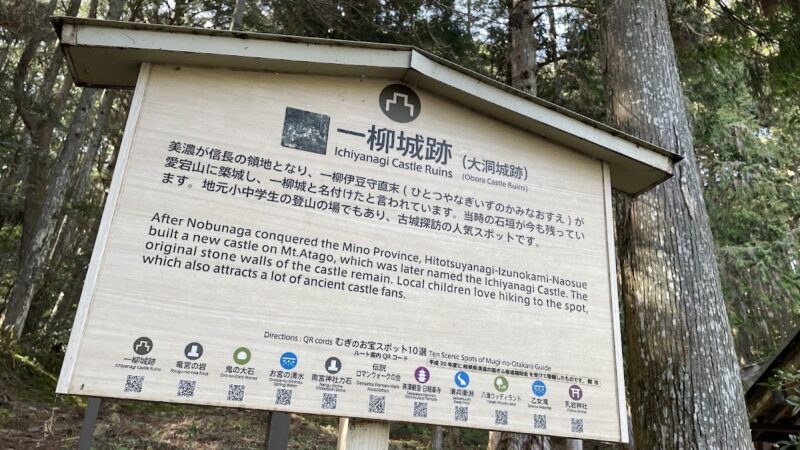
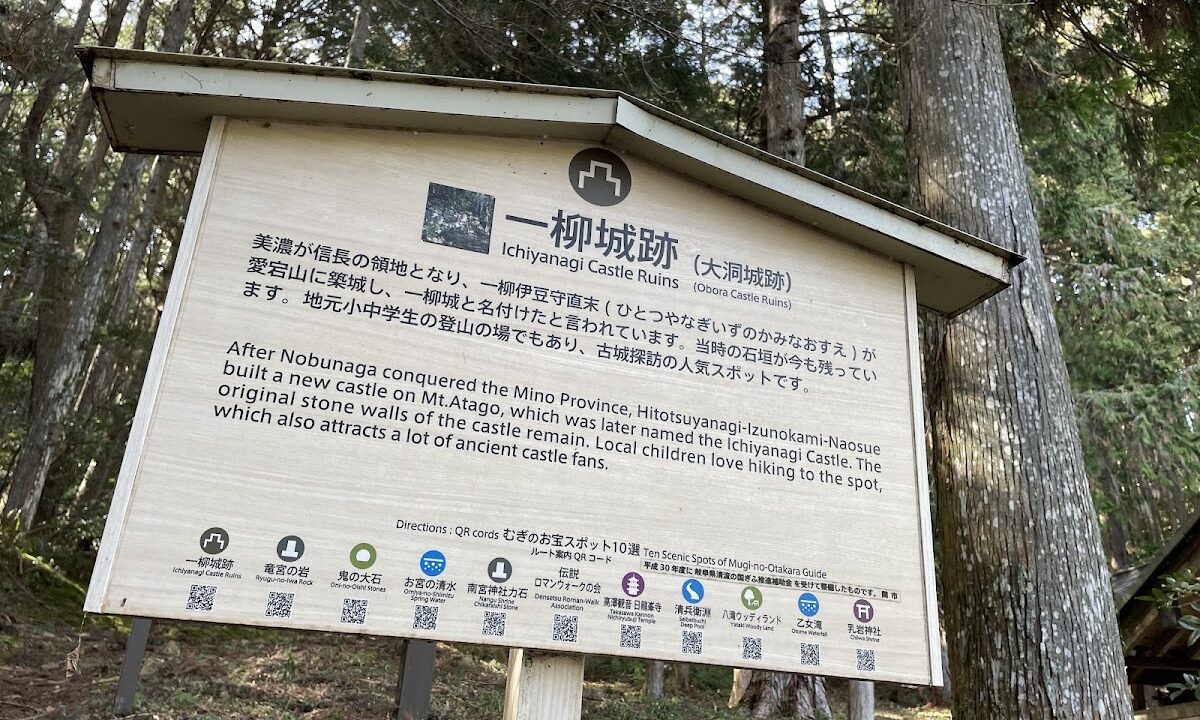
Hitotsuyanagi Castle is a historic mountain castle located in the Tominohō district of Seki City, Gifu Prefecture. Also known as Ōbora Castle and Tsubo Castle, it is known as a castle that played an important role in Mino Province during the Sengoku period (Warring States period). Even today, the remains of the castle are well-preserved in the mountains, making it a must-see spot for castle enthusiasts.
This article comprehensively introduces everything you need to know before visiting Hitotsuyanagi Castle, including its detailed history, structure, highlights you can see on site, access methods, and surrounding tourist information.
Basic Information on Ichiyanagi Castle
Location: Ichiyanagi, Tominohō, Seki City, Gifu Prefecture
Other Names: Ōdō Castle, Tsubo Castle
Castle Structure: Mountain Castle
Construction Period: Sengoku Period (Warring States Period)
Main Lords: Ichiyanagi Clan, Seki Clan, etc.
Elevation: Approximately 400 meters
Current Status: Forest (Remains Remain)
Ichiyanagi Castle is a typical Sengoku period mountain castle built on a mountaintop overlooking the Tsubo River basin. It is a valuable historical site with relatively well-preserved remains among the many medieval mountain castles remaining in Gifu Prefecture.
History of Ichiyanagi Castle
Background of Construction and the Sengoku Period
The exact date of Ichiyanagi Castle’s construction is unclear, but it is believed to have existed during the Sengoku period. The Tominohō area of Mugi District, Mino Province, was a crucial transportation hub connecting the Tōno region and the central part of Mino, and was an important base for monitoring and defending the road along the Tsubo River.
The name of the Ichiyanagi clan is recorded as the castle lord, and the place name “Ichiyanagi” is thought to originate from this family. The Ichiyanagi clan, as local lords within Mino Province, maintained power in this region during the turbulent Sengoku period.
Changes in the Sengoku Period
The Sengoku period in Mino Province was a turbulent era, with rulers shifting from the Toki clan to the Saito clan and then to the Oda clan. It is presumed that Ichiyanagi Castle survived amidst these powerful forces, sometimes maintaining independence and sometimes becoming subordinate to powerful daimyo.
In particular, during the Eiroku era (1558-1570), when Oda Nobunaga advanced his conquest of Mino, many surrounding castles were engulfed in war. While there are no clear records of when and how Ichiyanagi Castle was abandoned, it is believed that after the Oda clan’s pacification of Mino during the Tensho era (1573-1592), its military role ended with the end of the Sengoku period.
From the Edo Period Onward
During the Edo period, Ichiyanagi Castle was completely abandoned, and the castle site reverted to forest. However, it was remembered locally as “Shiroyama” (Castle Mountain) and has been cherished as a historical symbol of the region to this day.
In recent years, investigations by castle researchers and history enthusiasts have progressed, resulting in the creation of layout maps and documentation of remains. This has led to a re-evaluation of Ichiyanagi Castle’s value, and it is now recognized as one of the important medieval mountain castles in Gifu Prefecture.
Structure and Layout of Ichiyanagi Castle
Overall Layout
Ichiyanagi Castle is a multi-bailey mountain castle built around the summit of a mountain approximately 400 meters above sea level. Multiple baileys are arranged along the ridge, with defensive structures such as moats and earthworks strategically placed.
The castle area extends approximately 300 meters east-west and 200 meters north-south, a typical size for a medium-sized mountain castle. The layout, which skillfully utilizes the terrain, is a valuable resource that conveys the castle-building techniques of the Sengoku period.
Main Enclosure (Honmaru)
Located on the mountaintop, the main enclosure is an oval-shaped flat area measuring approximately 40 meters east-west and 30 meters north-south. Even today, it can be clearly identified as a leveled area, and traces of earthworks remain around it.
From the main enclosure, one can see the entire Tsubogawa River basin, demonstrating its suitable location for monitoring roads and controlling the surrounding area. On clear days, it is possible to see as far as Gifu Castle, suggesting that information transmission via beacon fires was also possible.
Second and Third Enclosures
Several secondary enclosures are arranged around the main enclosure. In particular, clear enclosures remain on the east and south sides, and a stepped structure can be observed. These enclosures are thought to have been used for troop garrisons and storage of supplies.
Each enclosure is separated by a steep, artificial slope, a design intended to enhance defensibility. ### Moats and Vertical Moats
A notable feature of Ichiyanagi Castle’s defensive structures is its multiple moats. Clear moats remain on the north and south sides of the main enclosure, reaching depths of over 5 meters in some places. These moats, by cutting across the ridge, served as an important defensive line, preventing enemy incursions.
Furthermore, vertical moats (ditches running vertically) can be seen on the slopes, demonstrating a design intended to hinder lateral movement. These remains are excellent examples of typical defensive techniques found in mountain castles of the Sengoku period.
Earthworks and Cut Slopes
Earthworks remain partially around the main and secondary enclosures. In particular, an earthwork approximately 1.5 meters high is well-preserved on the north side of the main enclosure, allowing us to imagine the defensive structure of the time.
The cut slopes between the enclosures are also clearly visible, with steep slopes of 3 to 5 meters in height in various places. These were constructed by modifying the natural terrain, demonstrating the advanced civil engineering techniques of the time.
Highlights and Notes on Ichiyanagi Castle
Well-Preserved Remains
The greatest appeal of Ichiyanagi Castle lies in the remarkably well-preserved remains of this Sengoku period mountain castle. In particular, the layout of the moats and baileys is clear, making it easy to understand the castle’s structure.
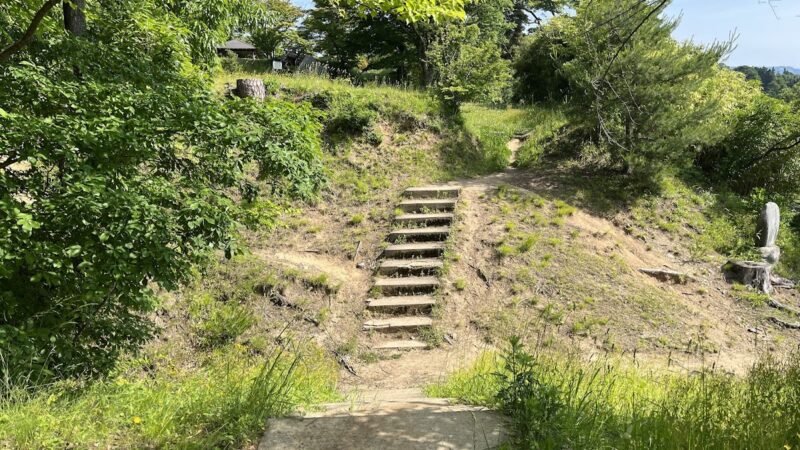
As you proceed along the path to the castle, the first thing you encounter is a large moat. Standing at the bottom of the deeply excavated moat, you can truly appreciate the high level of castle-building technology and the fierce determination to defend the castle at the time. The path from the moat to the main bailey is a route that truly allows you to experience a Sengoku period mountain castle.
Magnificent Views
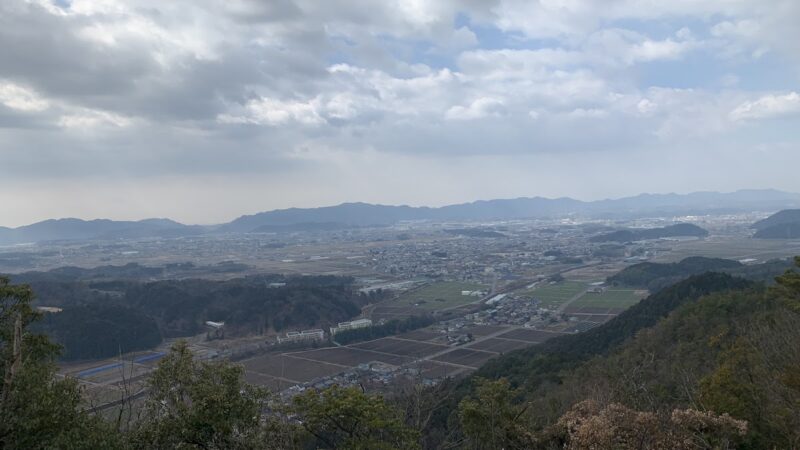
The view from the main bailey is another highlight of Ichiyanagi Castle. The rural landscape of the Tsubogawa River basin spreads out below, and on a clear day, you can see as far as Gifu City.
This view is not only aesthetically pleasing but also important for understanding the castle’s military function. You can truly appreciate the crucial role of this castle in monitoring the roads and detecting enemy movements early from this vantage point.
Stunning Views
A Castle Ruin Integrated with Nature
The current site of Ichiyanagi Castle is a forest, possessing a unique atmosphere where nature and history harmonize. You can enjoy the changing scenery of each season, from the fresh greenery of spring to the vibrant autumn foliage.
The period from autumn to winter, when the leaves have fallen, is particularly ideal for observing the remains. With the leaves gone, the shapes of the moats and earthworks become much clearer.
The Atmosphere of a Silent Mountain Castle
Ichiyanagi Castle is a simple mountain castle that hasn’t been commercialized for tourism, and because few people visit, you can quietly stroll through the castle ruins. In this tranquil environment where only the chirping of birds and the sound of the wind can be heard, you can spend a luxurious time contemplating the Sengoku period.
Unlike large-scale tourist castles such as Gifu Castle or Gujo Hachiman Castle, Ichiyanagi Castle is characterized by its charm as a simple, untouched mountain castle.
Access to Ichiyanagi Castle
Location and Nearest Station
Address: Ichiyanagi, Tominohō, Seki City, Gifu Prefecture
Nearest Station: Nagaragawa Railway “Tomika Station” or “Seki Tomioka Station” (approximately 15 minutes by car from either station)
Access by Car
Access by car is the most convenient.
- Approximately 20 minutes from the Tokai-Hokuriku Expressway “Mino IC”
- Approximately 15 minutes from the Tokai-Kanjo Expressway “Tomika-Seki IC”
From the center of Seki City, it takes about 30 minutes via prefectural roads. There is no dedicated parking lot around the castle ruins, but there is parking space on the roadside near the entrance to the castle (approximately 2-3 cars).
Access by Public Transportation
Access by public transportation is inconvenient. We recommend taking a taxi from the nearest Nagaragawa Railway station or renting a car.
Ascent Route and Estimated Time
From the entrance to the main keep, there is a well-trodden mountain path, taking approximately 20-30 minutes one way. The path is relatively clear, but there are some steep sections, so appropriate hiking attire and shoes are necessary.
Recommended Equipment:
- Trekking shoes or athletic shoes
- Long-sleeved shirt and long pants (for protection against bushes and insects)
- Drinking water
- Insect repellent spray (spring to autumn)
- Map or GPS (smartphone app is also acceptable)
Precautions for Visiting
- There are no signposts or well-maintained walking paths, so it is recommended to check the location beforehand using a map of the castle grounds.
- Avoid visiting alone; if possible, visit with multiple people.
- In winter, there is a possibility of snow, so please check the weather before visiting.
- There are areas where cell phone signals are weak, so please be aware of this.
Surrounding Tourist Information and Other Castles
Tourist Spots in Seki City
Seki City, where Ichiyanagi Castle is located, is known as the “City of Cutlery” and is one of Japan’s leading cutlery production areas. In addition to visiting the castle ruins, you can also enjoy the following spots.
Seki Swordsmithing Museum: A facility showcasing the history and techniques of cutlery making in Seki City.
Oze Cormorant Fishing: Traditional cormorant fishing held on the Nagara River (May to October).
Seki Zenkoji Temple: An ancient temple affectionately known as “Seki’s Zenkoji Temple.”
Surrounding Castles
Numerous castles remain in Gifu Prefecture, and visiting them along with Ichiyanagi Castle will allow you to gain a deeper understanding of Mino Province’s castle culture.
Seki Castle (Seki City): A flatland castle located in the center of Seki City. Currently, a stone monument remains near the Seki City Hall.
Gifu Castle (Gifu City): Famous as the residence of Oda Nobunaga. A magnificent mountain castle on the summit of Mt. Kinka.
Gujō Hachiman Castle (Gujō City): Although it does not have an existing keep, it is a beautiful mountain castle with a reconstructed wooden keep.
Mino Kanayama Castle (Kani City): A mountain castle designated as a national historical site. Well-preserved stone walls
Naegi Castle (Nakatsugawa City): A magnificent mountain castle with unique stone walls utilizing massive rocks.
Gifu Castle, in particular, is located in Mino Province, the same province as Ichiyanagi Castle, and is an indispensable castle when discussing the history of the Sengoku period. By comparing a regional mountain castle like Ichiyanagi Castle with a central castle like Gifu Castle, you can truly appreciate the differences in the role and scale of castles.
Nearby Hot Springs and Accommodations
Mugegawa Onsen: A day-trip hot spring facility in Mugegawa-cho, Seki City
Itadorigawa Onsen: A hot spring resort rich in nature in the Itadori area of Seki City
Nagaragawa Onsen: A hot spring town along the Nagara River in Gifu City (approximately 40 minutes by car)
For accommodation, business hotels in Seki City and accommodations in Gifu City are convenient.
Ichiyanagi Castle Photography Guide
Recommended Photography Spots
Horikiri: The most impressive remaining structure as a defensive facility of the castle. Photographed from an angle that conveys depth and scale
Main Enclosure: A spacious leveled area and surrounding earthworks. Captures the atmosphere of the castle’s central area.
View: The view of the Tsubogawa River basin from the main enclosure. Expresses the castle’s location and strategic importance.
Best Time for Photography
Spring (April-May): Beautiful new greenery and a refreshing atmosphere.
Autumn (November-December): Autumn leaves and fallen leaves make the remains clear. Ideal for photography.
Winter (January-February): Leaves have completely fallen, and the shape of the remains is most clearly visible.
Summer is unsuitable for photography because the vegetation is overgrown and the remains are difficult to see.
Things to Know Before Visiting Ichiyanagi Castle
Estimated Visit Time
Approximately 1 hour for a round trip from the entrance to the main enclosure. Allow 1 hour 30 minutes to 2 hours if you want to thoroughly explore the remains within the castle.
Difficulty Level
The difficulty level of the climb is beginner to intermediate. While there are some steep slopes, there are few dangerous sections, and those with average physical fitness can climb without problems.
Best Season
From the perspective of observing the ruins, the best season is the leaf-fall period from autumn to winter. However, it is safer to avoid the snowy season.
Useful Items to Bring
- Castle layout map (available online beforehand)
- Compass (for checking direction)
- Camera (for recording ruins)
- Notebook (for recording observations)
- Binoculars (for checking views)
Historical Value and Future Preservation of Ichiyanagi Castle
Importance in Castle Research
Ichiyanagi Castle has a typical structure for a mountain castle of a local powerful family during the Sengoku period, making it a valuable resource for studying the castle construction techniques and defensive philosophies of the time. It is highly valued for having retained its original appearance relatively well due to not undergoing major alterations.
Current Status and Challenges of Preservation
Currently, Ichiyanagi Castle ruins are not under any special protection designation and are being preserved by local volunteers and castle enthusiasts. It is hoped that appropriate preservation management and research will be advanced in the future.
While increased visitor numbers are raising interest in the castle ruins, the protection of the remains is also crucial. When visiting, please be mindful of proper etiquette and avoid damaging the remains.
Summary: The Charm of Ichiyanagi Castle
Ichiyanagi Castle (also known as Odō Castle or Tsubo Castle) is a Sengoku period mountain castle located in Seki City, Gifu Prefecture. It is a simple mountain castle that has not been commercialized for tourism, but precisely because of this, it retains much of its original appearance, making it a highly worthwhile spot for castle enthusiasts.
The clearly defined moats, well-preserved baileys, and panoramic views of the Tsubo River basin fully convey the charm of a Sengoku period mountain castle. Its quiet atmosphere, unlike famous castles such as Gifu Castle or Gujō Hachiman Castle, is also one of its charms.
If you’re planning a castle tour in Gifu Prefecture, or if you’re interested in mountain castles from the Sengoku period, be sure to add Ichiyanagi Castle to your list. This castle ruin, nestled quietly amidst nature, will be a special place that evokes a sense of historical romance.
When visiting, please ensure you have appropriate equipment, gather information beforehand, and prioritize safety while fully appreciating the charm of this Sengoku-era mountain castle.