A Complete Guide to the History and Highlights of Nagase Castle (Ibigawa Town, Gifu Prefecture)
Located in Tanigumi, Ibigawa Town, Ibi District, Gifu Prefecture, Nagase Castle is an important mountain castle that played a significant role in the history of Mino Province from the Nanboku-cho period to the Sengoku period. Although many of its remains have been lost, its historical value and role in the region are highly regarded by castle researchers and history enthusiasts.
History of Nagase Castle
Construction and Early History during the Nanboku-cho Period
The origins of Nagase Castle date back to the turbulent Nanboku-cho period. Before the Battle of Tanigumi in 1337 (Engen 2), Horiguchi Sadamitsu, a general of the Southern Court, built a fort in this location, which is considered the beginning of Nagase Castle. Horiguchi Sadamitsu was a general known as a member of the Nitta Yoshisada family, and he strategically positioned this fort as a base for the Southern Court forces.
The Battle of Tanigumi was one of the important battles fought in Mino Province during the escalating conflict between the Northern and Southern Courts. This region was a crucial transportation hub connecting Kyoto and eastern Japan, and a vital strategic base for both the Southern and Northern Courts. The fort built by Horiguchi Sadamitsu was born within this military context.
Full-scale Castle Development by the Takatsukasa Clan
Around the Oei era (1394-1428), Nagase Castle was fully developed into a fortress by Takatsukasa Fuyumoto. The Takatsukasa clan was a prestigious noble family, and a branch of their family that settled in Mino Province and became a samurai family became the lords of Nagase Castle.
Initially, the Takatsukasa clan belonged to the Toki clan, the powerful shugo daimyo (provincial governor) of Mino Province. The Toki clan ruled Mino Province throughout the Muromachi period, and the Takatsukasa clan, as their subordinates, governed the area around Tanigumi with Nagase Castle as their base. It is believed that during this period, Nagase Castle developed from a mere fort into a full-fledged flatland castle equipped with earthworks and moats.
The Era of Saito Dosan and Nagase Castle
With the arrival of the Sengoku period (Warring States period), the political situation in Mino Province changed dramatically. When Saito Dosan seized control of Mino Province from the Toki clan, the Takatsukasa clan also became subordinate to the Saito clan. The lord of Nagase Castle during this period was Takatsukasa Masamitsu, who served as a senior retainer of Saito Dosan.
While Saito Dosan was working to unify Mino Province, he was also engaged in fierce conflict with Oda Nobuhide (father of Oda Nobunaga) of Owari Province. The conflict between the two sides led to numerous military clashes along the Mino-Owari border, and Nagase Castle was caught in the middle of these battles.
The Fall and Abandonment of Nagase Castle
In 1547 (Tenbun 16), an event occurred that brought an end to the history of Nagase Castle. Takatsukasa Masamitsu, who sided with Saito Dosan, fought against Oda Nobuhide’s forces and was killed in a fierce battle. Having lost its lord, Nagase Castle fell to the Oda army and is said to have been abandoned.
This battle was a crucial turning point in the power struggle between Mino and Owari provinces. Oda Nobuhide repeatedly invaded Mino Province, and the capture of Nagase Castle was part of this effort. Takatsukasa Masamitsu’s death was a major blow to Saito Dosan, but ultimately the Saito clan maintained control of Mino Province.
Structure and Remains of Nagase Castle
Location and Layout of the Castle
Nagase Castle was built on a plateau located approximately 500 meters northeast of Tanigumiguchi Station on the Tarumi Railway. This plateau utilized the slightly elevated topography of a flat hill, giving it a strategic position overlooking the Tanigumi region.
The central part of the castle is a section called “Donoyashiki,” which is believed to correspond to the main keep. The lord’s residence was laid out as a rectangular plot, surrounded by earthen ramparts, and further outside, a moat. This structure represents the typical form of a flatland castle from the medieval to the Sengoku period.
Current Status of Remains
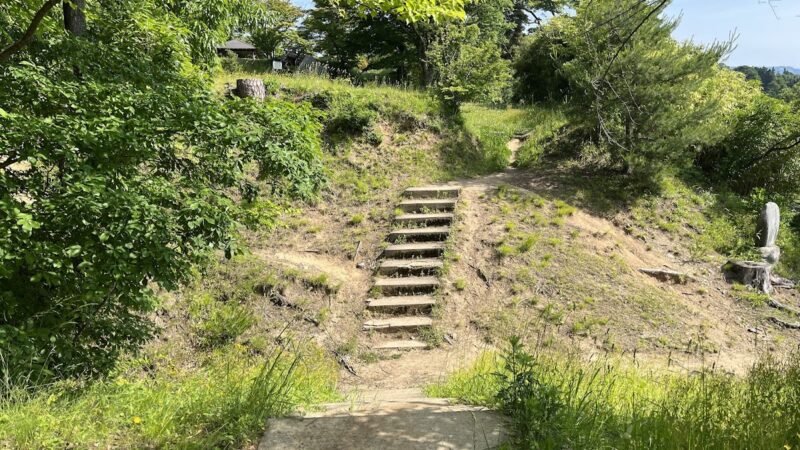
Unfortunately, very little remains of Nagase Castle exist today. The castle site underwent significant changes during the modernization process after the Meiji era.
First, the construction of the Tarumi Railway divided the lord’s residence plot. The railway was built to penetrate the center of the castle site, resulting in the loss of the unity of the main keep. Furthermore, subsequent land consolidation projects leveled the remaining earthen ramparts and moats, making it difficult to clearly identify castle remains today.
Excavation and Research Results
While no large-scale excavations have been conducted on Nagase Castle, research continues by local historians and castle researchers. Attempts are being made to reconstruct the former appearance of the castle through analysis of historical documents, topographical surveys, and interviews. In particular, historical documents such as Edo period maps and Meiji period cadastral maps allow us to understand the topography and land divisions before land consolidation, providing clues to estimating the size and structure of the castle. Based on these studies, it is estimated that Nagase Castle was a fortress approximately 100 meters east-west and 80 meters north-south.
Access and Visiting Guide to Nagase Castle
Access by Public Transportation
The most convenient way to reach the Nagase Castle ruins is by using the Tarumi Railway. Get off at Tanigumiguchi Station on the Tarumi Railway and walk northeast for about 7 minutes to reach the area around the castle ruins. The path from the station to the castle ruins is flat and easy to walk.
The Tarumi Railway runs from Ogaki Station towards Tanigumi and is known as a local line running through peaceful rural scenery. Enjoying the scenery along the line is also recommended in conjunction with your visit to the castle ruins.
Access by Car
If traveling by car, it’s approximately a 40-minute drive from the Ogaki or Sekigahara Interchanges on the Meishin Expressway, via National Route 21 and prefectural roads. Following the road signs towards Tanigumi-san Kegonji Temple will make it easier to find.
There is no dedicated parking lot around the castle ruins, but there are parking spaces near Tanigumiguchi Station. However, since these are also local residents’ roads, please avoid street parking and be considerate of others.
Points to Note During Visits
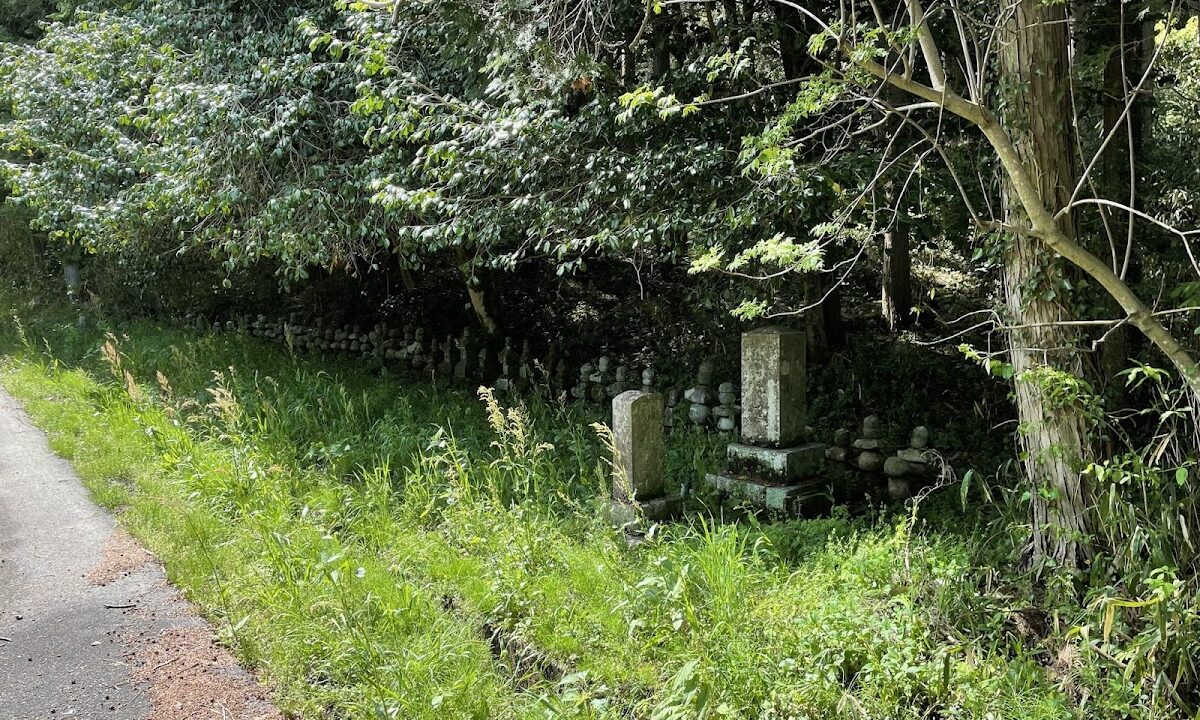
The Nagase Castle ruins are currently farmland and residential areas, and no clear remains are left. When visiting, please be careful not to trespass on private property.
To get a feel for the castle ruins, observe the topography of the plateau from around Tanigumiguchi Station and look in the direction where the castle once stood to imagine its location. Gathering information beforehand at local history museums will also deepen your understanding.
Nearby Tourist Attractions
Tanigumi-san Kegonji Temple
Located approximately 3 kilometers north of Nagase Castle, Tanigumi-san Kegonji Temple is a renowned temple known as the 33rd stop on the Saigoku Thirty-Three Kannon Pilgrimage. It is also famous for its cherry blossoms and autumn foliage, offering beautiful scenery throughout the seasons.
It is said that the Takatsukasa clan, the lords of Nagase Castle, had a deep connection with Kegonji Temple. Visiting the temple in conjunction with a visit to the castle ruins will provide a deeper understanding of the region’s history at that time.
Ibigawa Town Historical and Folk Museum
This facility allows visitors to learn about the history and culture of Ibigawa Town, and exhibits materials related to castles in the town, including Nagase Castle. Gaining some background knowledge here before your visit will make your castle ruin tour more fulfilling.
Nearby Castles
Many other medieval and Sengoku period castle ruins are scattered around Nagase Castle. Horinji Castle, Ibi Castle, and Okuwa Castle are located relatively close to each other, making them easily accessible as part of a tour of castles in Mino Province.
Okuwa Castle, in particular, is an important mountain castle known as the base of the Toki clan, and is closely related to understanding the history of Nagase Castle. If you have enough time, it is recommended to visit these castle ruins in combination.
Nagase Castle and the Sengoku Period History of Mino Province
Strategic Importance of Mino Province
Mino Province was a crucial transportation hub where the Tokaido and Nakasendo roads intersected, making it a strategically important region connecting Kyoto with eastern Japan. Therefore, it was constantly the stage for power struggles from the Nanboku-cho period to the Sengoku period.
The Ibi River basin, where Nagase Castle is located, is in the western part of Mino Province, close to the borders of Omi and Echizen Provinces. Due to this geographical characteristic, Nagase Castle functioned as one of the important bases for the western defense of Mino Province.
The Conflict Between Saito Dosan and Oda Nobuhide
The abandonment of Nagase Castle was rooted in a fierce conflict between Saito Dosan and Oda Nobuhide. Their rivalry was not merely a border dispute, but a full-scale war for control of Mino Province.
Oda Nobuhide repeatedly invaded Mino Province and attempted to capture Inabayama Castle (later Gifu Castle), but was repelled by Saito Dosan’s skillful strategies. The Battle of Nagase Castle was part of this series of battles, and was an attempt by the Oda clan to expand their power in western Mino Province.
From the Sengoku Period to the Era of Oda Nobunaga
After the abandonment of Nagase Castle, the situation in Mino Province changed further. After Saito Dosan’s death, his son, Saito Yoshitatsu, ruled Mino Province, but eventually Oda Nobunaga conquered Mino Province, renamed Inabayama Castle Gifu Castle, and made it his base for unifying Japan.
Nagase Castle, as a fortress that witnessed a moment in the turbulent history of Mino Province, is a significant historical site in the region.
Cultural Value of Nagase Castle
Significance in Medieval Castle Research
Despite the scarcity of remaining structures, Nagase Castle has attracted the attention of researchers as a valuable example of the transformation of castles from the medieval period to the Sengoku period.
In particular, it contains many interesting elements for castle history research, such as its development from a fort during the Nanboku-cho period to a hilltop castle during the Sengoku period, and the fact that the Takatsukasa clan, a samurai family of court noble origin, served as its lords.
Importance in Local History
Nagase Castle occupies an important position in understanding the history of the Seino region, including Ibigawa Town. The activities of the Takatsukasa clan, based at this castle, and historical events such as the Battle of Tanigumi, are elements that form the region’s identity.
Local efforts continue to pass on the history of Nagase Castle to future generations, and its use as a resource for local history education and tourism is being promoted.
The Significance of Visiting Nagase Castle
At first glance, the Nagase Castle ruins might seem unremarkable because no significant remains are left. However, visiting the castle ruins holds great significance.
First, standing on the site allows you to directly experience the topography and location conditions in which the castle was built. You can perceive elements that are difficult to understand from maps or photographs alone, such as the height of the plateau, the surrounding views, and the relationship with water sources, through all your senses.
Furthermore, reflecting on the historical fact that a castle once stood here, where people lived and battles were fought, helps you understand history not merely as knowledge, but as a real event.
In addition, visiting lesser-known castle ruins like Nagase Castle provides an opportunity to learn about the diversity and complexity of regional history that is not apparent from visiting only famous castles. During the Sengoku period, Mino Province had numerous small and medium-sized castles like Nagase Castle, in addition to large castles like Gifu Castle and Ogaki Castle, each playing an important role in the region’s history.
Summary
Nagase Castle was a hilltop castle located in Ibigawa-cho, Gifu Prefecture, dating from the Nanboku-cho period to the Sengoku period. Beginning with its construction by Horiguchi Sadamitsu, it developed as the residence of the Takatsukasa clan and functioned as an important base in western Mino Province for approximately 200 years until its fall during a battle with Oda Nobuhide in the time of Saito Dosan.
Although very few remains of the castle exist today, its historical value remains undiminished. Learning about the history of Nagase Castle is crucial for understanding the Sengoku period history of Mino Province and the development of medieval castles.
When visiting the castle ruins, combining it with sightseeing in the surrounding area, such as Tanigumi-san Kegonji Temple, will make for a more fulfilling historical exploration. The scarcity of remains allows for the enjoyment of using your imagination to envision its former glory.
Gifu Prefecture boasts many famous castles, including Gifu Castle, Ogaki Castle, Iwamura Castle, and Naegi Castle. However, by also paying attention to locally rooted castle ruins like Nagase Castle, you can experience a deeper and richer world of castles.