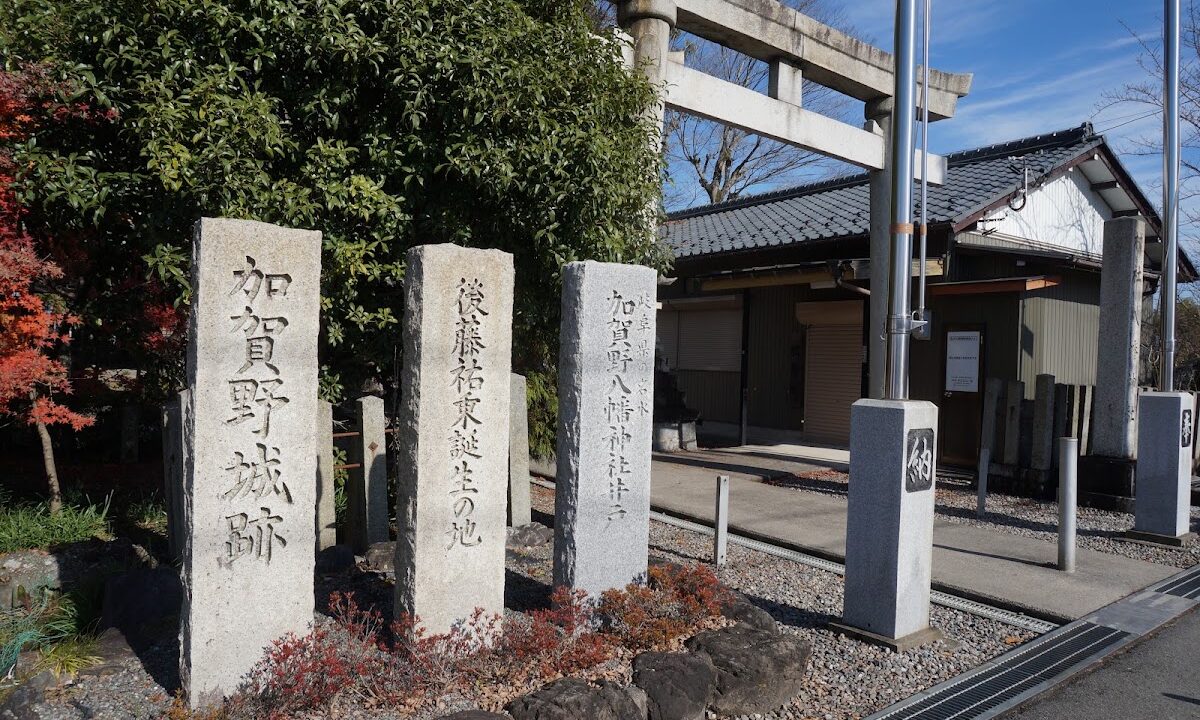
Kagano Castle (Gifu Prefecture): History and Present State of a Sengoku Period Flatland Castle Along the Kiso River
Introduction
Kagano Castle (Kagano-jo) was a flatland castle from the Sengoku period located in Kaganoi, Shimonaka-cho, Hashima City, Gifu Prefecture. Also written as Kaganoi Castle (Kaganoi-jo) or Kagai Castle, it is known as a castle built on low ground on the right bank of the Kiso River. Although most of the remains have been lost, it is designated as a Gifu Prefecture Historic Site and a Hashima City Historic Site, making it an important historical site for understanding the Sengoku period history of the Mino region.
This article will comprehensively explain the historical background of Kagano Castle, the achievements of its builder, Kaganoi Yahachiro Hidemochi, the structure and scale of the castle, and its current state.
Historical Background of Kagano Castle
Construction History and Historical Context
Kagano Castle is believed to have been built during the Tensho era (1573-1592). This period was a turbulent era, marked by Oda Nobunaga’s rise to power in his quest for national unification, followed by Toyotomi Hideyoshi’s rise to supremacy after his death. Mino Province, adjacent to Owari Province (Oda Nobunaga’s base), was strategically crucial.
The Kiso River basin has long been a vital transportation hub, considered important as a junction for both water and land routes. Kagano Castle, located on the right bank of the Kiso River, is believed to have served as a base for monitoring river traffic and controlling the region.
About Kagano Yahachiro Hidemochi
Kagano Yahachiro Hidemochi, believed to be the builder of Kagano Castle, was a samurai who was active from the Sengoku period to the early Edo period. According to historical records, after Oda Nobunaga’s death, Yahachiro served Nobukatsu, Nobunaga’s second son, and was granted a fief of 10,000 koku.
Oda Nobuo was a figure who clashed with Toyotomi Hideyoshi over his father Nobunaga’s inherited territory after the Honnoji Incident. The fact that Kaga-no-i Yahachiro served Nobuo suggests that Kaga-no-jo Castle existed in close connection with the Oda family.
However, detailed records concerning Kaga-no-i Yahachiro Hidemochi are limited, and many aspects of his origins and specific activities remain unconfirmed. His existence and achievements are currently inferred from local traditions and fragmentary historical materials.
Mino Province and Kaga-no-jo Castle in the Sengoku Period
Mino Province saw a succession of rulers during the Sengoku period, from the Toki clan to the Saito clan and then to the Oda clan. The Tensho era, when Kaga-no-jo Castle was built, coincided with the period when Oda Nobunaga’s rule over Mino was already established, and the era transitioned to that of Toyotomi Hideyoshi.
Many other castles existed in this region, and Kaga-no-jo Castle is thought to have played a part in this castle network. The Kiso River basin, in particular, was a crucial region connecting Owari and Mino provinces, occupying a strategically important position both militarily and economically.
Structure and Scale of the Castle
Characteristics as a Flatland Castle
Kagano Castle is classified as a flatland castle. A flatland castle is a castle built on flat land, and unlike mountain castles or hill castles, it cannot rely on natural terrain for defense. Instead, it emphasizes artificial defensive structures such as moats and earthworks.
Located in the lowlands on the right bank of the Kiso River, Kagano Castle had a location that allowed it to utilize the river itself as a natural moat. Furthermore, the surrounding rice paddies likely functioned as obstacles to hinder enemy advances.
Scale of the Castle
According to tradition, Kagano Castle originally boasted a size of eight cho square (approximately 870 meters square). This indicates a considerably large castle complex, suggesting that it functioned not merely as a fort or residence, but as a full-fledged castle.
A size of eight cho square is considered standard to slightly larger than average for a local lord’s castle at the time. The castle likely contained facilities such as a residence, barracks, and warehouses, and may have also served to accommodate surrounding villagers in times of emergency.
Layout and Defensive Structures
While it is difficult to reconstruct a detailed layout (castle blueprint) due to the loss of existing remains, based on the general structure of flatland castles, the following facilities are thought to have existed:
- Moat: A water or dry moat surrounding the castle
- Earthwork: An earthen defensive wall built inside the moat
- Gate: An entrance to the castle
- Watchtower: A structure for observation and defense
- Residence: The lord’s residence and administrative office
Considering its location near the Kiso River, it is presumed that constructing a water moat would have been relatively easy. Furthermore, it is highly likely that the castle was built on slightly elevated ground to account for the Kiso River’s flooding.
The History and Abandonment of Kagano Castle
Period of Existence
There are no clear records regarding the specific date of Kagano Castle’s abandonment. It is believed to have been built during the Tensho era and used for several decades afterward, but it is highly likely that it was abandoned early in the Edo period.
The Edo Shogunate’s “One Castle Per Province” decree (1615) forced the abandonment of many castles. Kagano Castle may have been abandoned around this time, or it may have already ceased use before then.
Changes After Abandonment
After its abandonment, the site of Kagano Castle was gradually converted into farmland. The moats were filled in, the earthworks were leveled, and traces of the castle gradually disappeared. Throughout the Edo period, this area was developed as a rice-growing region, and the memory of the castle remained only in place names and legends.
Development continued even after the Meiji era, and the remains were further lost, particularly due to modern land consolidation and urban development. Currently, only traces of the castle remain in a small area.
Current Status of Kagano Castle Ruins
Current State of Remains
The current site of Kagano Castle is located in a corner of the rice paddy area of Kagano-i, Shimonaka-cho, Hashima City. The vast castle grounds, once said to have covered an area of eight cho (approximately 800 meters) on each side, now remain only as a grassy area of about 50 square meters along a rice paddy path.
A marker post (information board) has been installed at the castle site, indicating that a castle once stood here, but no clear remains such as moats or earthworks can be confirmed. The surrounding area has been completely converted into farmland, making it difficult to imagine any trace of the castle’s former appearance.
Historic Site Designation
Despite the near-complete loss of remains, Kagano Castle Ruins have received dual designation as a Gifu Prefecture Historic Site and a Hashima City Historic Site. This is because the historical value of this castle is recognized.
The historic site designation ensures the protection and public awareness of the ruins, and certain restrictions are placed on development activities. It is also used as a site for local history education.
Location in relation to Kiso River Bridge
The Kagano Castle ruins are located on the right bank downstream from the Kiso River Bridge. The Kiso River Bridge is an important bridge carrying National Route 22 across the Kiso River and remains a vital transportation hub. The presence of the castle ruins near this bridge indicates that this area was once a key transportation point.
The location of the castle ruins can also be seen from the embankment road on the right bank of the Kiso River, allowing visitors to appreciate the relationship between the river and the castle.
Access and Visit Information
Location
- Address: Near 848 Kaganoi, Shimonaka-cho, Hashima City, Gifu Prefecture
- Designation: Gifu Prefecture Designated Historic Site, Hashima City Designated Historic Site
Transportation Access
By Public Transportation:
- Approximately 30 minutes on foot from Meitetsu Hashima Line “Shin-Hashima Station”
- Approximately 10 minutes by taxi from JR Tokaido Shinkansen “Gifu-Hashima Station”
- Bus services are limited, so using a taxi is recommended.
By Car:
- Approximately 15 minutes from Meishin Expressway “Gifu-Hashima IC”
- Approximately 5 minutes from National Route 22 “Kisogawa Bridge”
- There is no designated parking area, so please park in a location that does not inconvenience the surrounding area.
Notes for Visitors
The castle ruins are located within farmland and may include private property. Please note the following points when visiting:
- Be considerate and avoid interfering with agricultural work.
- Do not trespass on private property.
- Always take your trash with you.
- Limit your visit to the area around the marker post.
- Be considerate of the living environment of the surrounding residents.
Related Historical Sites in the Surrounding Area
Castle Ruins in Hashima City
Besides Kagano Castle, there are several other castle ruins in Hashima City. Visiting these together will allow you to gain a deeper understanding of the Sengoku period history of this region.
Castle Groups in the Kiso River Basin
Many castles were built in the Kiso River basin. There are also several castle ruins on the Aichi Prefecture side of the river, forming a castle network across the Kiso River. By comparing and studying these castles, you can see aspects of regional control at that time.
Hashima City Historical and Folk Museum
The Hashima City Historical and Folk Museum exhibits the history of the city, including Kagano Castle. Visiting before or after visiting the castle ruins will provide a deeper understanding.
Historical Significance of Kagano Castle
Position in the Sengoku History of Mino Province
Kagano Castle functioned as a base for regional control in the Sengoku period history of Mino Province. While there are no records of it being the site of large-scale battles, it is believed to have played an important role in regional stability and control.
Documentary Value for Flatland Castle Research
Although the remains have been lost, it holds research value as a typical example of a flatland castle. In particular, it is often referenced in castle research as an example illustrating the nature of flatland castles in the Kiso River basin.
Importance in Regional History
Kagano Castle is an indispensable element in discussing the history of Hashima City and the surrounding areas. As a historical heritage site that forms the regional identity, its protection and utilization are expected to continue.
Castles Easily Confused with Kagano Castle
Differences from Kagano Castle (Ogaki City)
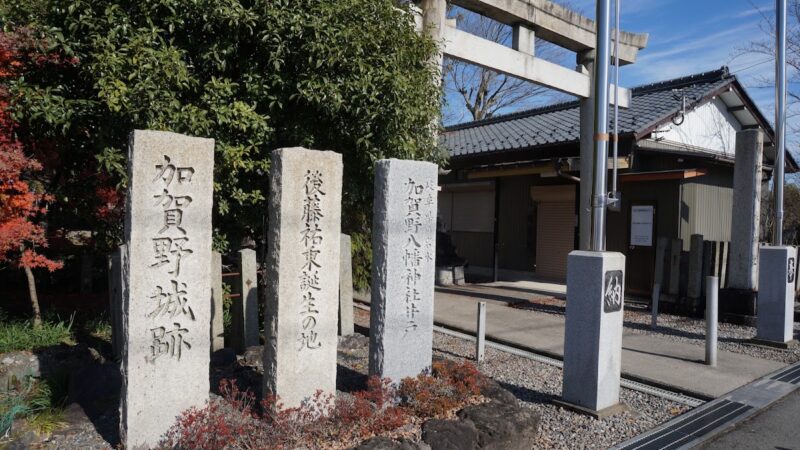
There is also a castle named “Kagano Castle” in Ogaki City, Gifu Prefecture. This was the castle of the Goto clan, who served the Toki clan, the shugo (military governor) of Mino Province. It is known as the birthplace of Goto Yujo, a renowned metalworker of the Muromachi period.
Characteristics of Kagano Castle in Ogaki City:
- Construction Period: Muromachi period
- Builder: Goto clan
- Location: Ogaki City, Gifu Prefecture
- Features: A self-flowing well exists within the grounds of Kagano Hachiman Shrine, and it has been selected as one of Japan’s 100 Best Waters of the Heisei Era.
This is a different castle from Kagano-i Castle in Hashima City; care should be taken not to confuse them.
Current Status and Challenges of Research
Limitations of Historical Sources
Primary sources concerning Kagano Castle are extremely limited, and many aspects, such as the builder, construction date, and abandonment period, remain unconfirmed. Further research may lead to the discovery of new historical materials.
Need for Archaeological Investigation
To date, no full-scale archaeological excavations have been conducted. Future archaeological investigations could yield new insights into the castle’s structure, duration, and the lifestyle of its inhabitants.
Contribution to Local History Research
Research on Kagano Castle will deepen our understanding of the history of Hashima City, the Kiso River basin, and the overall Sengoku period history of Mino Province. Continued research by local historians and researchers is anticipated.
Summary
Kagano Castle (Kaganoi Castle) was a flatland castle from the Sengoku period located in Hashima City, Gifu Prefecture. It is believed to have been built during the Tensho era by Kaganoi Yahachiro Hidemochi and was situated at a strategic point on the right bank of the Kiso River. While it is said to have boasted a vast scale of eight cho (approximately 800 meters) on each side, only about 50 square meters of grassland remains today.
Although most of the remains have been lost, it is designated as a Gifu Prefecture Historic Site and a Hashima City Historic Site, and is recognized as an important historical heritage of the region. Many points remain unclear due to the limitations of historical sources, but it is a valuable case study for understanding the Sengoku period history of Mino Province. When you visit the site, why not quietly trace the traces of history, while reflecting on the vast castle that once stood here and the lives of the people who lived during the Sengoku period? A marker post standing quietly amidst the farmland serves as a reminder of the lost castle.