Complete Guide to Sakurabora Castle (Gifu Prefecture) | A Thorough Explanation of the History and Highlights of the Winter Castle of the Hida Miki Clan
Sakurabora Castle is a Sengoku period mountain castle located in Hagiwara-cho, Gero City, Gifu Prefecture. Known as the residence of the Miki clan, who unified Hida Province, it is also affectionately known as “Fuyujiro” (Winter Castle). Currently preserved as a Gero City designated historical site, it retains valuable remains that convey the history of the Sengoku period in the Hida region.
Overview of Sakurabora Castle
Sakurabora Castle was a flatland castle located in Sakurabora, Gero-go, Masuda-gun, Hida Province (present-day Sakurabora, Hagiwara-cho, Gero City, Gifu Prefecture). Built on the tip of a river terrace formed by the flow of the Hida River, at an altitude of approximately 450 meters, it was a highly defensible castle that skillfully utilized the terrain.
Basic Information
- Location: 1721 Sakurabora, Hagiwara-cho, Gero City, Gifu Prefecture
- Castle Structure: Hilltop Castle
- Builder: Miki Naoyori
- Year of Construction: Eisho Era (1504-1521)
- Year of Abandonment: Tensho 13 (1585)
- Common Name/Alternate Name: Winter Castle
- Designated Cultural Property: Gero City Designated Historic Site
- Remains: Enclosures, stone walls, earthworks, dry moats (horizontal moats)
The most distinctive feature of Sakurabora Castle is that even after the Miki clan unified the entire Hida region and built Matsukura Castle in the Takayama Basin, they continued to use it as their winter residence. This is deeply related to the harsh winter climate of the Hida region and illustrates the climatic advantage of the Gero region, which is warmer than the Takayama Basin.
History of Sakurabora Castle
The Rise of the Miki Clan and the Construction of Sakurabora Castle
The history of Sakurabora Castle is closely intertwined with the history of the Miki clan, a Sengoku period daimyo of Hida Province. Generally, based on the description in the “Hishu-shi” (Hishu Chronicle), it is believed to have been built by Miki Naoyori during the Eisho era (1504-1521).
The Miki clan were originally local lords based in Masuda County, Hida Province. They began to expand their power during Naoyori’s time, conquering the Masuda area and growing into a powerful warlord in southern Hida. Sakurabora Castle served as the Miki clan’s base, playing a crucial role as the political and military center.
Unification of Hida by Miki Yoritsuna
The Miki clan reached its peak under Miki Yoritsuna, the son of Miki Naoyori. From the Tenbun era to the Eiroku era, Jitsuna successively conquered various forces within Hida Province, eventually achieving the unification of the entire region.
After unifying Hida, Jitsuna built Matsukura Castle in the Takayama Basin as his new main castle. Matsukura Castle, a sturdy mountain castle situated on a mountain approximately 856 meters above sea level, functioned as a symbol of his rule over Hida Province. However, Jitsuna adopted a two-castle system, using Matsukura Castle as his “summer castle” and Sakurabora Castle as his “winter castle.”
This distinction was largely influenced by the unique climatic conditions of the Hida region. The Takayama Basin experiences heavy snowfall in winter, making it extremely difficult to survive the winter in a mountain castle. On the other hand, the Gero region is relatively mild, providing a more habitable environment even in winter. Therefore, the Miki clan employed a rare castle management strategy nationwide, moving their residence according to the season.
Structure and Scale of Sakurabora Castle
Sakurabora Castle was primarily a residence, but it also featured excellent defensive design. It utilized the natural fortifications of the Hida River’s river terrace, with a deep valley called Sakuradani on the north side serving as a natural moat. A terrace developed on the west side, and the castle’s layout maximized these topographical features.
The castle contained multiple baileys, each demarcated by earthworks and dry moats. While a medium-sized hilltop castle, it possessed sufficient space for the Miki clan’s residence and functioned as a place for conducting official affairs.
Invasion and Fall of Kanamori Nagachika
The Miki clan’s prosperity underwent a major turning point during the Tensho era. After the Honnoji Incident in 1582, Hida was incorporated into Toyotomi Hideyoshi’s sphere of influence amidst the succession struggle following Oda Nobunaga’s death.
Hideyoshi ordered Kanamori Nagachika to conquer Hida Province. Kanamori Nagachika was from Echizen Province and a samurai who served both Oda Nobunaga and Toyotomi Hideyoshi. In 1585, Kanamori Nagachika’s forces invaded Hida, and the conflict with the Miki clan began.
With overwhelming numbers, the Kanamori army successively captured Miki-controlled castles throughout Hida. Sakurabora Castle also came under attack from the Kanamori army and fell after fierce fighting. This battle completely destroyed the Miki clan’s power, marking the end of their era in Hida.
Abandoned Castle and its Aftermath
After the fall of Sakurabora Castle, Kanamori Nagachika became the ruler of Hida Province and built a new castle town in Takayama. The Kanamori clan temporarily used Matsukura Castle before building Takayama Castle and making it their base.
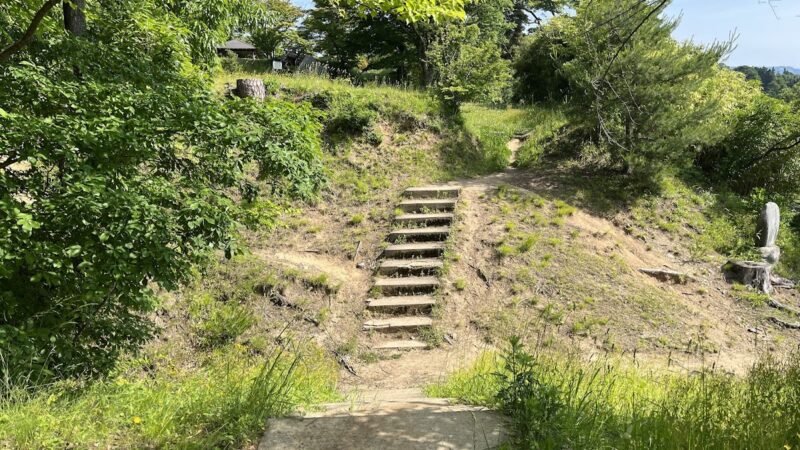
Sakurabora Castle lost its strategic value under the control of the Kanamori clan and was abandoned in 1585. Afterward, the castle site was used for farmland, and over time, many of the remains were lost. However, remnants of the baileys, dry moats, and earthworks still remain, allowing us to imagine its former appearance.
Remains of Sakurabora Castle
Characteristics of Existing Remains
Currently, the following remains are preserved at the Sakurabora Castle site:
Bailey Remains: Multiple baileys (flat areas) can be identified in the central part of the castle. The group of baileys, arranged in a stepped pattern around the main bailey, conveys the layout of the castle at that time. Although most of the area is now farmland and residential land, the arrangement of the baileys can be deciphered from the topography.
Dry Moats (Horizontal Moats): Parts of the dry moats, which played an important role as defensive structures for the castle, remain. The moat was dug to demarcate the baileys and prevent enemy intrusion, and is an important relic that demonstrates the military character of Sakurabora Castle.
Earthworks: Earthworks were built around the baileys. Some of these earthworks still remain today, and although their height has decreased, their traces can still be seen.
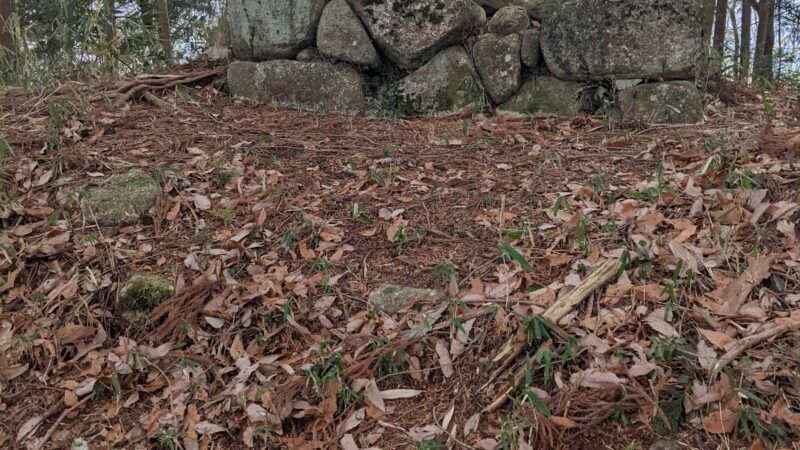
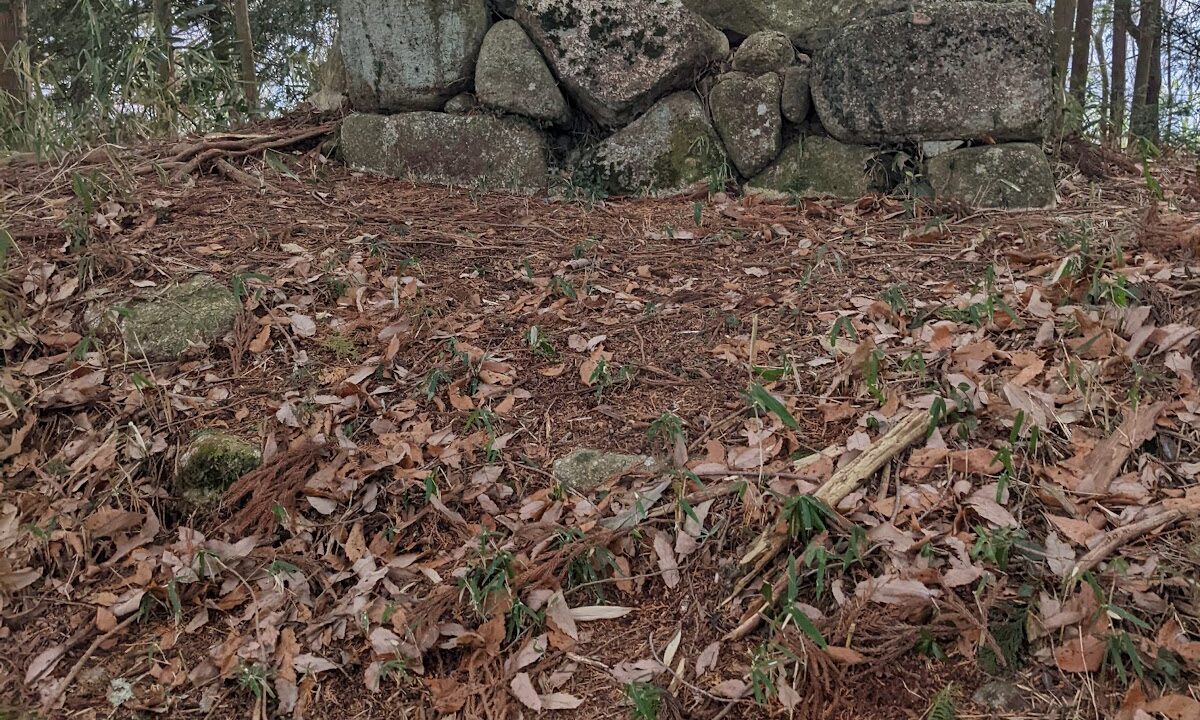
Stone Walls: Stone walls were also used in some parts of Sakurabora Castle. Although not large-scale, they are noteworthy as valuable relics that demonstrate the castle-building techniques of the Sengoku period.
Preservation Status of Relics
Sakurabora Castle ruins are protected as a Gero City designated historical site, but many of the remains are located on private land, and many have been altered by years of development. Nevertheless, the location on a terrace along the Hida River remains unchanged, allowing one to appreciate the topographical advantages for which the castle was built.
The area around the castle ruins is now residential and farmland, but local history enthusiasts and researchers continue their research and preservation activities, carefully protecting it as a valuable historical site that tells the history of the Miki clan.
Access and Transportation Information
Access by Public Transportation
Train: Located very close to the station, approximately an 8-minute walk from Hida-Hagiwara Station on the JR Takayama Line. Hida-Hagiwara Station is the second station from Gero Station towards Takayama, and is a stop for express trains.
From Nagoya, it’s convenient to use the JR Takayama Line’s “Wide View Hida” express train. The journey from Nagoya Station to Hida-Hagiwara Station takes approximately 2 hours.
From Takayama, it takes approximately 30 minutes by the “Wide View Hida” express train, or about 40 minutes by local train.
Access by Car
Via Chuo Expressway: Approximately 75 minutes from the Nakatsugawa Interchange on the Chuo Expressway via National Route 257. After exiting the Nakatsugawa Interchange, head north on National Route 257 towards Gero City.
Via Tokai Loop Expressway: Approximately 85 minutes from the Tokai Loop Expressway’s Tomika-Seki Interchange via Prefectural Road 58 and National Route 41. From Tomika-Seki IC, take Prefectural Road 58 towards Minokamo, then merge onto National Route 41 and head north.
Via National Route 41: If heading south on National Route 41 from the Gero Onsen area, you will arrive in Hagiwara Town in approximately 15 minutes. From the Takayama area, head south on National Route 41; it takes approximately 1 hour.
Parking Information
There is no dedicated parking lot for Sakurabora Castle Ruins, but there are public parking lots around Hida-Hagiwara Station. When visiting the castle ruins, please be considerate of local residents and avoid causing any inconvenience.
Precautions During Visits
Since much of the Sakurabora Castle Ruins is private property, please note the following points when visiting:
- Avoid trespassing on private property and limit your visit to areas accessible from public roads.
- Be considerate and avoid interfering with agricultural work.
- Always take your trash with you.
- Do not damage or remove any historical remains.
- Be sure to greet local residents.
Nearby Tourist Attractions
Gero Onsen
Gero Onsen, located about 15 minutes by car from Sakurabora Castle, is a renowned hot spring resort and one of Japan’s three most famous. You can relax and unwind in the hot springs after visiting Sakurabora Castle. The Gero Onsen area boasts numerous inns and hotels, as well as plenty of day-trip bathing facilities.
Zenshoji Temple
Zenshoji Temple, located in Hagiwara-cho, Gero City, is an ancient temple of the Rinzai sect, Myoshinji school, and houses valuable Buddhist statues designated as important national cultural properties. It is close to the Sakurabora Castle ruins and has strong ties to the Miki clan. Its beautiful garden is another highlight, offering beautiful scenery throughout the seasons.
The Townscape of Hida-Hagiwara
The area around Hida-Hagiwara Station retains its old townscape, making it perfect for a stroll. Buildings that evoke the atmosphere of a former post town, and shops selling local specialties, offer a relaxing experience.
Places Associated with Kanamori Nagachika
The ruins of Takayama Castle, built by Kanamori Nagachika after his conquest of Sakurabora Castle, and the old townscape of Takayama are also worth visiting. Many historical sites from the Kanamori clan era remain in Takayama City, allowing for a deeper understanding of Hida’s Sengoku period history.
The Charm and Highlights of Sakurabora Castle
A Castle Ruin Evoking Historical Romance
The greatest charm of Sakurabora Castle is the opportunity to experience firsthand the history of the Miki clan, who unified Hida. Unlike castles with ornate keeps and stone walls, its simple remains allow for a realistic imagination of the lives and battles of local powerful families during the Sengoku period.
Unique Operation as a “Winter Castle”
The unique operation of using the castle in both summer and winter, a rare practice nationwide, is deeply intertwined with the climate and geography of the Hida region. Learning about the unique history of this region is a major attraction of Sakurabora Castle.
Castle Ruins Integrated with Nature
Located on the river terraces of the Hida River, the castle’s location creates a landscape where natural beauty and the history of the castle blend seamlessly. The surrounding nature is particularly beautiful during the cherry blossom season in spring and the autumn foliage season, making it ideal for a stroll.
Easy Access
Sakurabora Castle’s easy accessibility, being within walking distance of Hida-Hagiwara Station, is another of its charms. It’s easy to combine a visit with a trip to Gero Onsen, making it a convenient stop.
Points to Consider When Visiting Sakurabora Castle
Recommended Prior Study
Since the remains of Sakurabora Castle are limited, studying the history of the Miki clan and the Sengoku period history of Hida beforehand will make your visit more fulfilling. We recommend researching related materials at the Gero City Local History Museum and Library, or gathering information online.
Seasonal Expressions
As the name Sakurabora Castle suggests, cherry blossoms bloom beautifully in spring. Furthermore, it displays different expressions in each season: the lush greenery of summer, the vibrant autumn foliage, and the snowy landscape of winter. Visiting in winter, in particular, will give you a real sense of why it was used as a “winter castle.”
Interacting with Locals
Local people live around the castle ruins, and you can sometimes hear valuable stories. If you treat them respectfully, they may share local legends about the Miki clan or anecdotes related to the castle ruins.
Summary
Sakuraba Castle is a valuable historical site from the Sengoku period remaining in Gero City, Gifu Prefecture. As the residence of the Miki clan, who unified Hida, and as a castle with the unique function of being a “winter castle,” it conveys the history of the region to the present day.
Interacting with Locals
Local people live around the castle ruins, and you can sometimes hear valuable stories from them. While it lacks a large keep or stone walls, the remains of baileys, dry moats, and earthworks offer insights into the castles of local powerful families during the Sengoku period. Its location, utilizing the topography of the Hida River’s river terrace, speaks to the strategic thinking of the time of its construction, making it a fascinating historical site from the perspective of castle research.
Visiting it in conjunction with nearby tourist attractions such as Gero Onsen and Zenshoji Temple will allow you to gain a deeper understanding of the history and culture of the Hida region. Its convenient location, within walking distance of JR Hida-Hagiwara Station, is also a major draw, making it easily accessible even for travelers using public transportation.
This historical site is recommended for a variety of people, including those interested in the history of Hida during the Sengoku period, those interested in regional castles, and those looking to add another historical spot to their Gero Onsen trip. Why not visit Sakurabora Castle and reflect on the Sengoku history of Hida?