Akechi Jinya (Ena City, Gifu Prefecture) Complete Guide: History, Remains, and Access Information
The Akechi Jinya, located in Akechi-cho, Ena City, Gifu Prefecture, is a valuable remnant of a hatamoto (shogunate retainer) residence built in the early Edo period. After Akechi Castle was abandoned due to the “One Castle Per Province” decree, this residence, built in 1615 by Toyama Katakage, functioned as the Toyama clan’s administrative base until the end of the Edo period. Even today, the moat beside the main gate and the magistrate’s residence remain, conveying the atmosphere of an Edo-period jinya town.
This article comprehensively introduces the charm of this historical building, including its detailed history, the background of its construction, the highlights of the existing remains, and useful access information for visitors.
What is Akechi Jinya?
The Akechi Jinya was a hatamoto residence located in Akechi, Ena District, Mino Province (present-day Akechi-cho, Ena City, Gifu Prefecture). A jinya was a facility used by daimyo and hatamoto (direct retainers of the shogun) who governed territories of less than 10,000 koku during the Edo period. While not as large as a castle, it played a crucial role as the center of territorial administration.
The Akechi Jinya was built at the western foot of Akechi Castle, near the former main gate. The Akechi Toyama clan ruled this area throughout the Edo period, and it remained the Toyama family’s administrative base until the abolition of the feudal domains and establishment of prefectures during the Meiji Restoration.
Scale and Structure of the Jinya
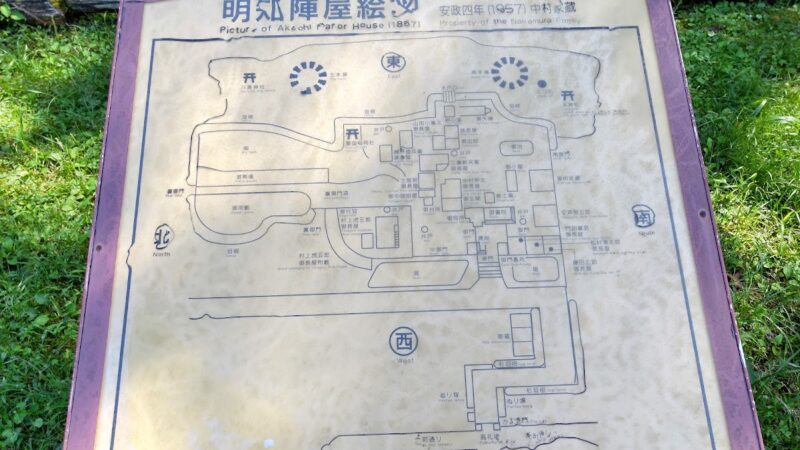
The Akechi Jinya had the typical structure of a hatamoto jinya. While it lacked the high stone walls and keep of a castle, it was demarcated by moats and earthen ramparts, and housed the lord’s residence, administrative buildings, and a magistrate’s office.
Current remains indicate that the jinya was located near the main gate of Akechi Castle, emphasizing its connection to the castle town. This suggests that the jinya functioned more as an administrative and governing center than as a military base.
The History of the Akechi Jinya (Fortified Residence)
From Akechi Castle to the Jinya: The Impact of the One Castle Per Province Decree
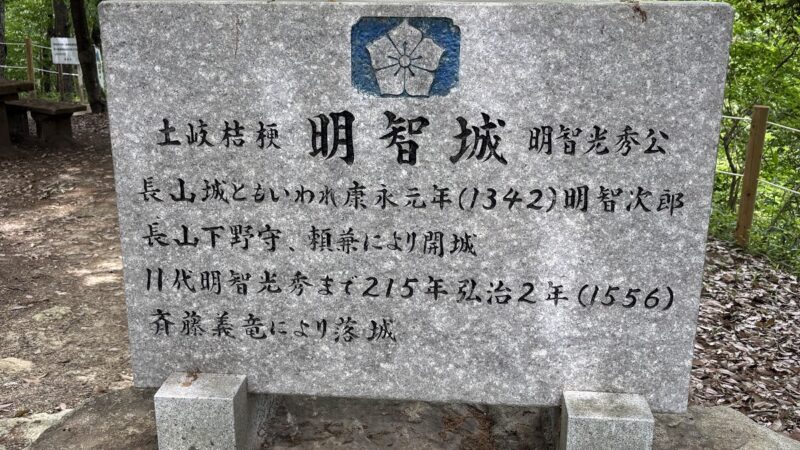
To understand the history of the Akechi Jinya, it is necessary to first understand the history of Akechi Castle. Akechi Castle served as the residence of the Toyama Akechi family (Akechi Toyama clan) and was a key base in this region throughout the Sengoku period.
In 1570 (Genki 1), Akechi Castle temporarily fell to an attack by the Takeda clan of Kai Province, but was later recaptured by the Toyama clan. However, in June 6th, Genna 1 (1615), when the Edo Shogunate issued the One Castle Per Province Decree, Akechi Castle was forced to be abandoned.
The One Castle Per Province Decree was a shogunate policy that allowed only one castle per domain, aiming to alleviate military tensions during the Sengoku period and limit the military power of daimyo. Many castles throughout the country were demolished as a result of this decree, and Akechi Castle was no exception.
Construction by Masakage Toyama
After the abandonment of Akechi Castle, Masakage Toyama built the Akechi Jinya (fortified residence) near the main gate at the foot of the mountain as a new administrative base. Masakage Toyama was the head of the Akechi Toyama clan, a hatamoto (direct retainer of the shogun), and was entrusted with governing this region.
The construction of the Jinya was not merely the construction of a residence, but represented a major shift in the base of territorial management, moving it to the plains. The relocation from the mountain castle of Akechi Castle to the flatland Jinya symbolizes the change in the form of governance during the peaceful Edo period.
The Toyama Clan’s Governance Throughout the Edo Period
The Akechi Jinya functioned as the administrative base of the Akechi Toyama clan throughout the Edo period. The Toyama clan served the shogunate as hatamoto and were responsible for the administration of this region. The Murakami clan was permanently stationed at the Jinya as a magistrate, handling daily administrative tasks.
The Akechi Toyama clan were hatamoto (direct retainers of the shogun) who held a fiefdom of approximately 5,000 koku throughout the Edo period. Their territory centered around Akechi in Ena District, Mino Province, and included surrounding villages. The jinya (fortified residence) handled a wide range of administrative duties, including tax collection, maintaining public order, judicial affairs, and public works projects.
Relationship with Toyama no Kinsan
A descendant of the Akechi Toyama clan is Toyama Kagemoto (Toyama Kinshiro), famous as an Edo town magistrate. He is the model for the historical drama “Toyama no Kinsan” and played an active role as the Edo North Town Magistrate during the Tenpo Reforms.
Toyama Kagemoto belonged to a branch family of the Akechi Toyama clan and enhanced the Toyama family’s reputation by holding important positions in the shogunate. This historical connection is an interesting point to consider when visiting the Akechi Jinya.
The Meiji Restoration and the End of the Jinya
With the abolition of the feudal domains and establishment of prefectures following the Meiji Restoration, the Akechi Jinya lost its function as a center of governance. Following the abolition of the feudal domains in 1871 (Meiji 4), the territories of the hatamoto (direct retainers of the shogun) became directly controlled by the new government, and the jinya (fortified residences) were abolished.
Although many of the jinya buildings were subsequently demolished, remnants such as a portion of the moat and the magistrate’s residence remain to this day.
Remains and Highlights of the Akechi Jinya
Moat Next to the Main Gate
The most impressive remnant of the Akechi Jinya is the moat remaining next to the main gate. This moat, still filled with water, is a valuable relic that conveys the scale and structure of the Edo-period jinya.
It is believed that the moat served more as a symbolic representation of the lord’s authority than as a defensive function for the jinya. Walking around the moat allows one to imagine the extent and layout of the jinya at that time.
Murakami Residence
The residence of the Murakami family, who served as the magistrate, still remains at the jinya site. Mr. Murakami was a retainer of the Toyama clan and was in charge of the practical affairs of the jinya (fortified residence).
The residence retains the characteristics of a samurai residence from the Edo period and is a valuable resource for understanding the lifestyle and architectural styles of the time. The structure of the residence reveals the role of the magistrate and their position within the jinya.
Townscape of the Jinya Town
Around the Akechi Jinya, some of the townscape from the Edo period as a jinya town remains. Akechi town developed as a jinya town and also flourished as a post town on a side road of the Nakama Kaido.
The Nakama Kaido was an important trade route connecting Shinshu and Mikawa, and Akechi thrived as a center for the collection and distribution of goods. Even today, townhouses from the Edo to Taisho periods remain throughout the town, creating a historical atmosphere.
Relationship with Akechi Castle Ruins
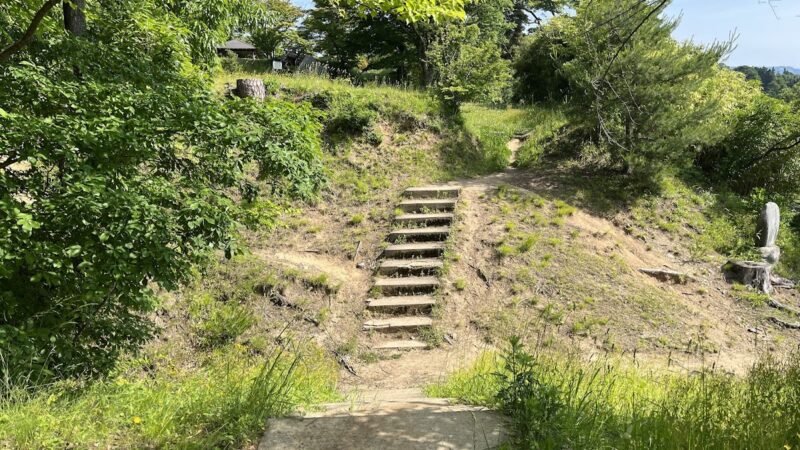
When visiting the Akechi Jinya, be sure to also visit the Akechi Castle Ruins. The ruins of Akechi Castle are visible from the encampment, allowing you to appreciate the relative positions of the two.
Akechi Castle is a typical medieval mountain castle, with well-preserved remains such as baileys and moats that utilize the natural terrain. It’s a valuable site for understanding the historical transition from a mountain castle to a flatland encampment, along with the actual topography.
Access to Akechi Encampment
Access by Train
The nearest station to Akechi Encampment is Akechi Railway Akechi Station. The Akechi Railway is a local line connecting Ena Station to Akechi Station, a charming route running through tranquil rural scenery.
- Get off at JR Chuo Main Line Ena Station
- Transfer to the Akechi Railway and travel for approximately 30 minutes to the final stop, Akechi Station
- Approximately 10 minutes on foot from Akechi Station to the Akechi Encampment Ruins
The Akechi Railway operates approximately once an hour, so it is recommended to check the timetable in advance.
Access by Car
The following routes are convenient for access by car:
- Approximately 20 minutes from the Ena Interchange on the Chuo Expressway via National Route 363
- Approximately 40 minutes from the Toyota Kanpachi Interchange on the Tokai-Kanjo Expressway via National Route 153 and Prefectural Route 33
There is some parking space around the Jinya (fortified residence), but you can also use the public parking lots around Akechi Station.
Nearby Tourist Attractions
When visiting Akechi Jinya, we recommend also visiting the nearby historical sites.
Akechi Castle Ruins
As mentioned above, this is the mountain castle that preceded Akechi Jinya. It takes about 30 minutes to climb to the castle, but the view from the summit and the well-preserved remains are well worth seeing.
Japan Taisho Village
Akechi Town has an area called “Japan Taisho Village,” which recreates the architecture and atmosphere of the Taisho era. You can enjoy strolling through the townscape and feeling the romance of the Taisho period.
Iwamura Castle Ruins
Iwamura Castle, located in Ena City, is a famous castle considered one of Japan’s three greatest mountain castles. It is approximately a 30-minute drive from the Akechi Jinya (fortified residence), and its remains, such as stone walls, are remarkably well-preserved.
Cultural Value of the Akechi Jinya
Valuable Remains of a Hatamoto Jinya
Among the many Hatamoto Jinya (fortified residences) that existed throughout Japan, the Akechi Jinya is a valuable example with relatively well-preserved remains, including moats and residences. While many Jinya were lost after the Meiji Restoration, the remains of the Akechi Jinya serve as important historical materials that convey the reality of local governance during the Edo period.
Importance in Local History
The Akechi Jinya is an indispensable historical site for understanding the Edo period governance system in eastern Mino Province (present-day Tono region). It sheds light on diverse aspects of local history, including the governance by the Toyama clan, its relationship with the Nakasendo road, and its interactions with surrounding farming villages.
Points to Note When Visiting the Akechi Jinya Site
Estimated Visit Time
Allow 30 minutes to 1 hour to visit the Akechi Jinya site. This is sufficient time to walk around the moat, view the Murakami family residence from the outside, and stroll through the surrounding townscape.
If you also plan to visit the Akechi Castle site, please allow an additional 1 to 1.5 hours for the round trip.
Best Time to Visit
While the Akechi Jinya site is open year-round, the following times are particularly recommended:
- Spring (April-May): Beautiful cherry blossoms and fresh greenery make it an ideal season for a stroll.
- Autumn (October-November): Beautiful autumn foliage and mild weather make it suitable for historical walks.
- Winter (December-February): Fewer tourists, allowing for a quiet visit to the historical site.
Photography Tips
The moat is the most distinctive feature of the Akechi Jinya site, so we recommend photographing it from various angles. Photographs that capture the surrounding scenery reflected on the water’s surface, or compositions combining the moat and the residence, are particularly beautiful.
Aerial photographs from the Akechi Castle ruins also provide valuable records showing the relative positions of the encampment and the castle.
Akechi Encampment and Local History and Culture
Relationship with Akechi Mitsuhide
Many people might imagine a connection to the Sengoku period warlord Akechi Mitsuhide from the place name Akechi-cho. In fact, this region is considered one of the birthplaces of the Akechi clan, and a connection to Akechi Mitsuhide has been pointed out.
However, the Akechi Toyama clan and the Akechi clan of Akechi Mitsuhide were separate families and not directly related by blood. Nevertheless, the two are closely intertwined in the region’s history and culture, and there are numerous spots related to Mitsuhide scattered throughout Akechi-cho.
Nakasendo Road and Post Town
Akechi, where the Akechi encampment was built, was also an important post town on the Nakasendo Road. The Nakama Kaido road flourished as a trade route transporting salt and seafood from Shinshu and goods from Mikawa, and Akechi developed as a center for the collection and distribution of these goods.
With its dual characteristics as both a jinya town and a post town, Akechi became an important base in the Tono region throughout the Edo period.
Preservation and Utilization in Modern Times
Currently, the Akechi Jinya site is preserved as a local historical heritage site. Ena City and local residents continue preservation activities, including the maintenance of the moat and the improvement of the surrounding environment.
Efforts are also underway to utilize it as a local tourism resource while maintaining its value as a historical building. This includes the development of tourist routes in cooperation with the Akechi Railway and the training of historical guides.
Summary: The Charm of Akechi Jinya
Akechi Jinya in Akechi-cho, Ena City, Gifu Prefecture, is a valuable historical site that conveys the appearance of a hatamoto (shogunate retainer) jinya from the Edo period. Built in 1615 by Toyama Katakage, this jinya (fortified residence) served as the administrative center after the abandonment of Akechi Castle due to the “One Castle Per Province” decree, and functioned until the Meiji Restoration.
The moat beside the main gate and the Murakami family residence, which still remain today, are important historical relics that convey the scale and structure of the jinya at the time. It’s a place where you can feel the depth of multi-layered history, considering its relationship to the Akechi Castle ruins, the townscape as a jinya town, and its history as a post town on the Nakasendo highway.
Access via the Akechi Railway adds to the travel experience, and visiting it along with the nearby Akechi Castle ruins and Iwamura Castle ruins allows you to experience the rich history and culture of the Tono region. It’s a recommended historical site not only for history buffs but also for those who want to enjoy the tranquil rural scenery and historical townscape.
The Akechi Jinya, remaining in a quiet mountain town, is an irreplaceable historical heritage that tells us about the realities of local governance during the Edo period and the appearance of samurai society in a peaceful era.