Kukuri Castle (Kani City, Gifu Prefecture): A mountain castle ruin that tells the story of the Sengoku period, from the residence of the Toki clan to its fall at the hands of Mori Nagayoshi
Located in Kani City, Gifu Prefecture, Kukuri Castle was a mountain castle that served as the residence of the Kukuri clan, a branch of the Toki clan, the shugo (military governor) of Mino Province, from the Nanboku-cho period to the Sengoku period. It played an important role as a power base for the Toki clan in the Tono region, and even today, the castle ruins from the Sengoku period, such as the double moats and the masugata koguchi (square-shaped gate), are well-preserved. This article provides a detailed explanation of Kukuri Castle’s history, from its construction to its fall, notable remains, and access information.
History and Background of Kukuri Castle’s Construction
Construction by Toki Yasusada and the Establishment of the Kukuri Clan
The exact construction date of Kukuri Castle is unclear, but it is believed to have been built during the En’en and Shōhei periods (1336-1370) by Toki Yasusada, the younger brother of Toki Yoriyasu, the governor of Mino Province. The earliest possible date for its construction can be traced back to the mid-14th century during the Nanboku-chō period, and it is thought to have been built by the Toki clan to solidify their control over the Tōno region amidst the political turmoil of the time.
Toki Yasusada, also known as Mikawa-no-kami Akugorō, was a renowned warrior. He is believed to have died in battle during the Nanboku-chō conflict in 1352 (Shōhei 7), and it is said that his son, Yukiharu, adopted the name Kukuri. The Kukuri clan passed down the name “Akugorō” through generations, and this nickname became established as a title indicating the head of the Kukuri clan.
The Position of the Kukuri Clan in the Muromachi Period
The Kukuri clan established their position as a branch of the Toki clan, the shugo (military governor) of Mino Province, and as retainers of the Muromachi Shogunate. The retainers were a group of samurai who functioned as a military force directly under the Shogun. The Kukuri clan held a special position, being a powerful local lord while also having connections to the central government. This dual status formed the basis for the Kukuri clan’s significant power in the eastern Mino region.
Kukuri Castle was not merely a military base, but also the political and economic center of the Kukuri clan’s headquarters. It is believed that the castle town was home to the Kukuri clan’s retainers and merchants and artisans, and developed as a regional center.
The Relationship Between the Kukuri Clan and Surrounding Forces in the Sengoku Period
With the arrival of the Sengoku period, Mino Province became the stage for gekokujo (overthrowing superiors) by Saito Dosan. During the time when Dosan ruled Mino Province, the Kukuri clan engaged in independent military actions, such as assassinating Saito Myoshun, Dosan’s adopted son and lord of Karasumine Castle (Kanayama Castle). This demonstrates that the Kukuri clan possessed the power to act as an independent force, rather than merely being subordinates of the shugodai (deputy governor).
In 1565, when Oda Nobunaga invaded eastern Mino, Mori Yoshinari was appointed as the lord of Kanayama Castle. At this time, the Kukuri clan became subordinates of the Mori clan, maintaining their position under the Oda regime. However, this relationship was one of subservience for the Kukuri clan, foreshadowing a later tragedy.
The Honnoji Incident and the Fall of Kukuri Castle
The Mass Uprising of Local Lords and the Suppression of Mori Nagayoshi
On June 2, 1582, when Oda Nobunaga was killed by Akechi Mitsuhide in the Honnoji Incident, the situation in Mino Province changed dramatically. Upon learning of Nobunaga’s death, the local lords of Tono, led by Kukuri Yorikoshi, rose up in unison to break free from the Mori clan’s rule. This was a movement by local forces, oppressed under the Oda regime, to regain their independence following Nobunaga’s death.
Mori Nagayoshi (son of Mori Yoshinari), lord of Kanayama Castle, adopted a policy of thoroughly suppressing this rebellion of the local lords. Mori Nagayoshi was known as a fierce warrior nicknamed “Oni Musashi” (Demon Musashi), and his harsh character was feared by the local lords of Tono.
The End of Kukuri Yorikoshi and the Fall of the Castle
In 1583, Mori Nagayoshi invited Kukuri Yorikoshi to Kanayama Castle and held a banquet. While ostensibly a forum for reconciliation, it was actually a plot to destroy the Kukuri clan. On his way back from the banquet, Kukuri Yorikoshi was murdered by Mori Nagayoshi’s men. Having lost its lord, Kukuri Castle was attacked and fell to the forces of the Mori clan.
This incident marked the end of the Kukuri clan, which had held power in the Tono region for approximately 230 years since the Nanboku-cho period. After its fall, Kukuri Castle functioned as a branch castle of the Mori clan, and it is said that Toda Kanzaemon, a retainer of the Mori family, was appointed as the castle lord.
Mori Nagayoshi was killed in the Battle of Komaki and Nagakute in 1584, and afterwards his younger brother, Mori Tadamasa, became the lord of Kanayama Castle. However, it is unclear how long Kukuri Castle remained functional. It is likely that it was abandoned in the early Edo period and ceased to function as a castle.
Structure and Layout Characteristics of Kukuri Castle
Complex Castle Structure Utilizing Two Ridges
Kukuri Castle has a unique structure that spans two ridges: the eastern ridge and the western ridge. The eastern ridge featured a castle section with terraced enclosures (kuruwa), while the western ridge housed a residential area divided into rectangular sections. This structure is a typical example of a Sengoku period mountain castle, separating military and residential functions.
The castle as a whole was relatively large, with multiple enclosures arranged around the main enclosure (honmaru). Each enclosure was separated by steep, artificial cliffs called kirigishi, demonstrating ingenuity in making enemy intrusion difficult. The particularly large kirigishi are noteworthy as remnants that attest to the immense power of the Kukuri clan.
Traces of the Original Construction and Late Sengoku Period Modifications
Observing the remains of Kukuri Castle reveals a mixture of the simpler construction from the initial construction and the advanced defensive facilities introduced in the latter half of the Sengoku period. This is evidence that the castle was used over a long period and underwent modifications according to the times.
It is believed that the castle initially had a relatively simple layout of baileys, but in the latter half of the Sengoku period, advanced defensive techniques such as flanking fire, square-shaped gates, and horizontal moats were introduced. These were ingenious methods to attack enemy movements from the flanks and to enhance the defensive capabilities of the gates (entrances), demonstrating the development of castle construction technology during the Sengoku period.
Notable Remains of Kukuri Castle
Double Moat: The Key to the Castle’s Defense
One of the greatest highlights of Kukuri Castle is the double moat located behind the main keep. A moat is a dry moat dug to cut across a ridge, serving to prevent enemy intrusion and clearly define the castle’s boundaries. The double moat at Kukuri Castle is large in scale and sufficiently deep, allowing one to appreciate the high level of its defensive capabilities at the time.
The double moat is not simply a single moat, but a clever design that doubled the defensive power by arranging two moats in succession. Even after breaching the first moat, the next moat awaited, making it an extremely difficult obstacle for the attacking side. These remains, still clearly visible today, are a must-see point when visiting Kukuri Castle.
Masugata Koguchi (Square Gate) of the Third Bailey
The Masugata Koguchi remaining in the Third Bailey is also an important point of interest. A Masugata Koguchi is a defensive structure with an entrance bent like the Japanese character “挝” (masu), preventing the enemy from entering in a straight line. This allows for concentrated attacks from surrounding baileys on enemies forced to pass through a narrow passage.
The Masugata Koguchi at Kukuri Castle is thought to have been introduced during renovations in the latter half of the Sengoku period, demonstrating a highly developed form of gate. These remains are attracting attention from researchers as a model case of Sengoku period castles, illustrating the high level of castle-building technology of the time.
Terraced Baileys and Cut Embankments
The terraced baileys unfolding on the eastern ridge are also impressive. Multiple baileys are arranged in a stepped fashion, each clearly separated by cut embankments. The height of the cliffs varies depending on the location, but in some places they reach several meters, creating extremely difficult, steep slopes to climb.
These enclosures functioned as troop encampments and supply storage areas during peacetime, and formed a multi-layered defensive line during wartime. Even today, the flat surfaces of each enclosure are well-preserved, making them important remains for understanding the scale and structure of the castle.
Moats and Earthworks
Within the castle grounds, moats (ditches dug along the slopes of the ridges) and earthworks (retaining walls made of piled-up earth) can also be observed. Moats restricted enemy lateral movement and limited attack routes. Earthworks provided protection from arrows and gunfire, as well as blocking enemy lines of sight.
These remains indicate that Kukuri Castle was not a simple mountain castle, but a sophisticated fortress incorporating the latest technology of the Sengoku period. The castle site is still well-maintained, allowing for clear observation of these remains.
Current Status and Preservation of Kukuri Castle Ruins
Charm as a Lush Green Mountain Castle
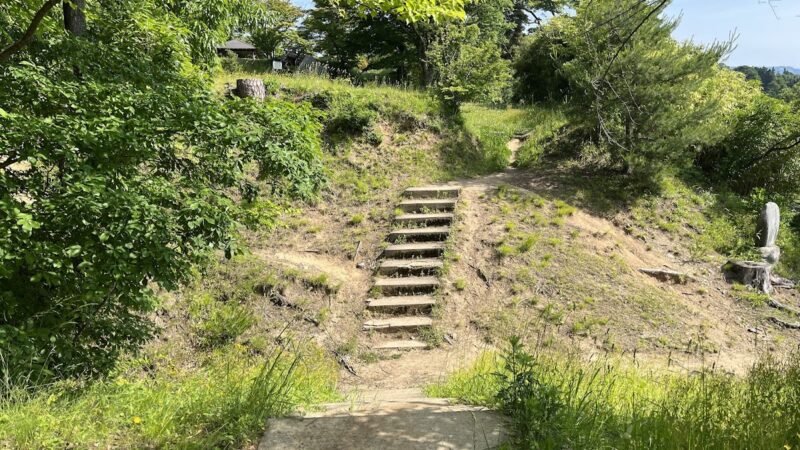
The current Kukuri Castle ruins are covered in lush green forest, creating a space where nature and history harmonize. The fresh greenery in spring and the autumn foliage are beautiful, allowing visitors to enjoy the changing seasons while exploring the castle grounds. The climbing path is well-maintained and relatively easy to walk, making it accessible even for those new to mountain castles.
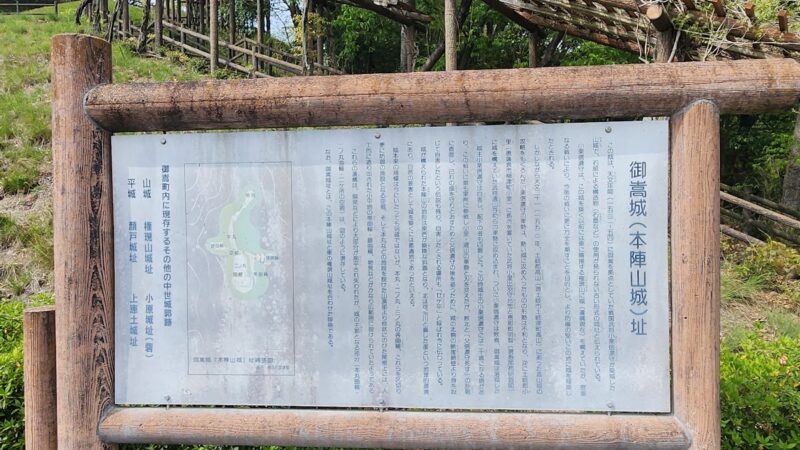
The castle ruins are properly managed by the local preservation society and the local government, and explanatory signs are installed at the main remains. Regular maintenance, such as grass cutting, is carried out, making it easy to observe the remains and earning high praise from castle enthusiasts.
Protection as a Cultural Property by Kani City
The Kukuri Castle ruins are designated as an important cultural property of Kani City, and efforts are being made to protect and utilize them. The Kani City Local History Museum exhibits materials related to Kukuri Castle, allowing visitors to learn in detail about the castle’s history and structure. In addition, guided tours and tours of the castle ruins are held regularly, allowing visitors to explore the site while listening to explanations from experts.
In recent years, the group of mountain castles in Kani City, including Kukuri Castle, has attracted attention as “Mino Kanayama Castle Ruins and Surrounding Mountain Castles,” and its value as a regional historical resource is being re-recognized.
Access and Visiting Guide to Kukuri Castle
Location and Basic Information
Location: Kukuri, Kani City, Gifu Prefecture
Castle Classification: Mountain Castle
Construction Period: Mid-14th Century (Nanboku-cho Period)
Builder: Toki Yasusada
Main Lords: Kukuri Clan, Mori Clan
Abandonment Period: Late 16th Century to Early 17th Century (Estimated)
Access by Car
Access to Kukuri Castle Ruins is convenient by car. It is approximately 15 minutes from the Kani-Mitake Interchange on the Tokai-Kanjo Expressway and approximately 25 minutes from the Tajimi Interchange on the Chuo Expressway.
Parking is available at the Kukuri District Center (1644-1 Kukuri, Kani City). From here, it’s about a 5-minute walk to the castle ruins trailhead. Parking is free and restrooms are available. Alternatively, the Kani City Local History Museum also has parking and restrooms, which can be used as a base.
Access by Public Transportation
If using public transportation, the nearest stations are JR Taita Line “Kani Station” or Meitetsu Hiromi Line “Kani Station”. From the station, take the Totetsu Bus bound for “Kukuri” and get off at the “Kukuri” bus stop. The castle ruins trailhead is approximately a 10-minute walk from there. However, bus service is limited, so it is recommended to check the timetable in advance.
Precautions When Visiting the Castle
Kukuri Castle is a mountain castle, so the following preparations and precautions are necessary when visiting:
- Clothing: Comfortable clothing and non-slip shoes (trekking shoes recommended)
- Estimated Time: Approximately 20-30 minutes from the entrance to the main enclosure, and 1.5-2 hours including sightseeing inside the castle
- Items to Bring: Drinking water, insect repellent (summer), rain gear (in case of unstable weather)
- Season: Spring to autumn is suitable for visiting, but be careful of mosquitoes and bees in summer
- Solo Visit: Visiting with multiple people is preferable if possible
The castle ruins include steep slopes and areas with poor footing, which become especially slippery after rain. Explore at your own pace and prioritize safety.
Nearby Related Spots
Kani City Local History Museum
When visiting Kukuri Castle, a visit to the Kani City Local History Museum (1644-1 Kukuri, Kani City) is highly recommended. Here, you can learn in detail about the history and structure of castles, including Kukuri Castle, through exhibits related to castle ruins in Kani City. Visiting before exploring the castle ruins will allow you to view them with a deeper understanding.
Mino Kanayama Castle Ruins
The Mino Kanayama Castle Ruins, located about 15 minutes by car from Kukuri Castle, are also a must-see. Known as the residence of Mori Yoshinari and his son Nagayoshi, it played a significant role in the fall of Kukuri Castle. Designated a national historic site, the remains, such as the stone walls and gate, are well-preserved. Visiting both Kukuri Castle and Mino Castle together will provide a more comprehensive understanding of the history of the Tono region during the Sengoku period.
Akechi Castle Ruins
The Akechi Castle Ruins, believed to be related to the origins of Akechi Mitsuhide, are located about 20 minutes away by car. Considered the base of the Akechi clan in Mino Province, it is an important historical site for understanding Mitsuhide’s life. Along with Kukuri Castle and Mino Kanayama Castle, it is a popular route for exploring the Sengoku period history of Mino.
Summary: The Historical Value and Appeal of Kukuri Castle
Kukuri Castle occupies an important position in regional history as the residence of the Kukuri clan, who wielded power in the eastern Mino region from the Nanboku-cho period to the Sengoku period. The Kukuri clan’s dual status—being a branch of the Toki clan, the shugo (military governor) of Mino, while also serving as retainers of the Muromachi Shogunate—indicates that this castle was not merely the castle of a local powerful family, but an important base with connections to the central government.
The uprising of local lords triggered by the Honnoji Incident, the thorough suppression by Mori Nagayoshi, and the tragic end of Kukuri Yorikoshi symbolize the fierce power struggles of the Sengoku period. This castle, where the history of the Kukuri clan, which lasted for approximately 230 years, came to an end overnight, bears the indelible mark of the turbulent Sengoku period.
As for the castle’s remains, important structures demonstrating the castle-building techniques of the Sengoku period are well-preserved, including double moats, a square-shaped gate, and terraced enclosures. The castle’s transformation from its initial simple structure to the sophisticated defensive facilities of the late Sengoku period can also be observed, making it a valuable historical site from the perspective of castle research.
Preserved and properly managed as a lush, green mountain castle, the Kukuri Castle ruins are a recommended spot not only for history buffs but also for those who enjoy nature walks. When visiting Kani City in Gifu Prefecture, why not visit this historic mountain castle and feel the spirit of the Sengoku period?