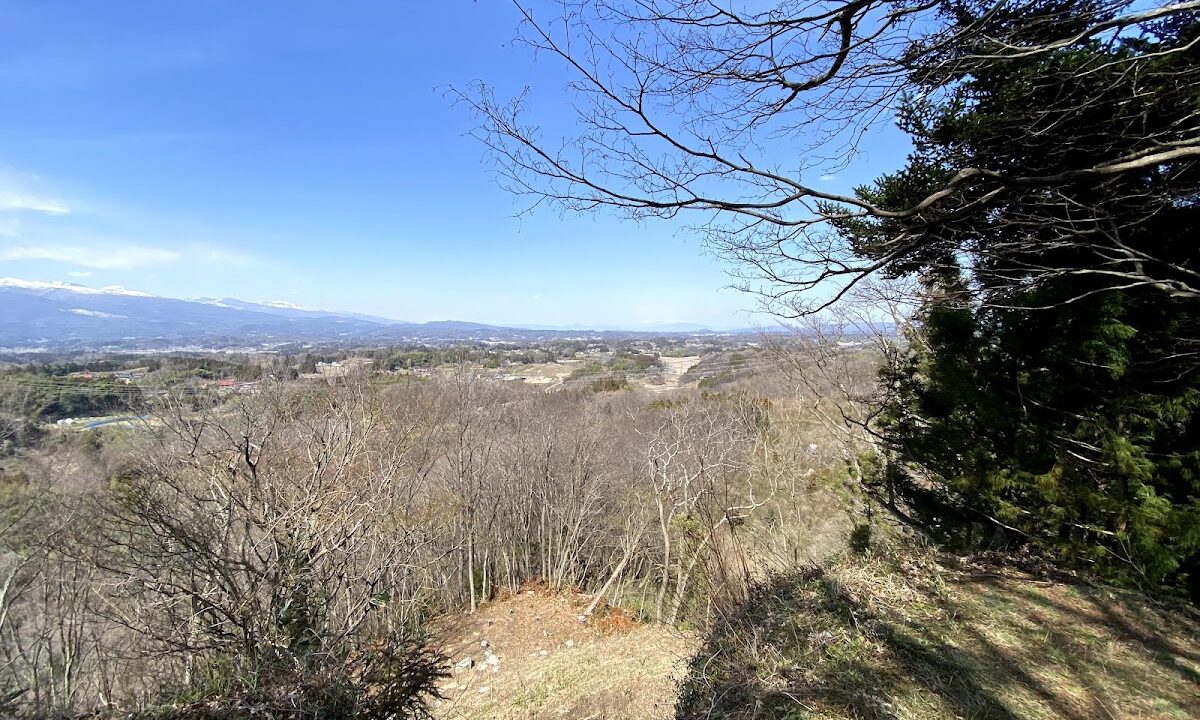
Iwakado Castle (Fukushima Prefecture) Complete Guide: A Thorough Explanation of History, Remains, and Access
Iwakado Castle, located in Fukushima Prefecture, was a mountain castle that played an important role from the medieval period to the Sengoku period. This article provides detailed information useful for castle enthusiasts and history fans, including the historical background of Iwakado Castle, its builder, the current state of its remains, and how to access the site.
Basic Information on Iwakado Castle
Iwakado Castle is one of the medieval mountain castles built in Fukushima Prefecture. While there are several theories regarding its exact location, it is generally believed to have been located in the southern part of Fukushima Prefecture.
Castle Overview
- Castle Type: Mountain Castle
- Construction Period: Medieval Period (details below)
- Builder: Local Powerful Clan (various theories exist)
- Main Lord: Local Lord
- Abandonment Period: Late Sengoku Period to Early Modern Period
- Remains: Enclosures, earthworks, moats, etc.
History of Iwakaku Castle
Background and Period of Construction
While historical records are limited regarding the exact period of construction of Iwakaku Castle, it is believed to have been built during the turbulent medieval period, particularly from the Nanboku-cho period to the Muromachi period. During this time, southern Fukushima Prefecture was a region through which important transportation routes in Oshu passed, and mountain castles were built in various locations as defensive strongholds.
Iwakaku Castle is also presumed to have been built by a local lord due to the need for regional control and defense. The mountain castle form was chosen in the tactics of the time to monitor the enemy from high ground and to make the most of the advantageous terrain for defense. ### Role in the Sengoku Period
During the Sengoku period, southern Fukushima Prefecture became a frontline where the spheres of influence of multiple Sengoku daimyo intersected, including the Ashina clan of Aizu, the Yuki clan of Shirakawa (later the Shirakawa Yuki clan), and the Satake clan, which expanded its power from the south.
Iwakaku Castle is thought to have played the following roles in these power struggles:
- Border Guard: A forward base to monitor the border with neighboring spheres of influence.
- Management of Transportation Routes: A base to monitor and manage important roads.
- Center for Regional Control: An administrative and military center for governing the surrounding area.
- Emergency Shelter: A place of refuge for the local population during wartime.
Changes in Castle Lords
Only fragmentary historical records remain regarding the successive lords of Iwakaku Castle, but it is believed that local lords served as lords for generations. It is highly likely that the rulers changed in accordance with the shifts in the power dynamics of the Sengoku period.
Particularly in the latter half of the 16th century, as the Date clan expanded its power, many castles in southern Fukushima Prefecture came under their influence. It is possible that Iwakaku Castle was also incorporated into the Date clan’s control during this period.
History of Abandonment
The period when Iwakaku Castle was abandoned is estimated to be after Toyotomi Hideyoshi’s unification of Japan, or around the time of the “One Castle Per Province” decree (1615) in the early Edo period.
With the arrival of the Edo period, flatland castles and encampments, suitable for peaceful times, became the centers of political power, and many mountain castles lost their military value. Iwakaku Castle was no exception, and it is thought to have been abandoned during this period, gradually returning to nature afterward.
Layout and Structure of Iwakaku Castle
Characteristics as a Mountain Castle
Iwakaku Castle possesses the typical characteristics of a medieval mountain castle. Mountain castles maximize the use of natural terrain, minimizing artificial modifications while incorporating various features to enhance defensive capabilities.
Main Defensive Structures:
- Kuruwa (Enclosure): A flat, leveled area used for buildings and soldier placement.
- Dorui (Earthwork): A raised earthen wall to prevent enemy intrusion.
- Horikiri (Moat): A moat dug across a ridge to block enemy movement.
- Tatebori (Vertical Moat): A moat dug along a slope to hinder lateral movement of the enemy.
- Koguchi (Tiger’s Mouth): An entrance with a complex defensive structure.
Layout of the Castle
The layout of Iwakaku Castle (the design and arrangement of the castle) is presumed to have been a linear or terraced structure, with multiple enclosures arranged along the mountainous terrain.
Typical Layout:
- Main Enclosure (Honmaru): Located at the highest point, this was where the lord’s residence and command post were located.
- Second and Third Enclosures: Secondary enclosures defending the main enclosure.
- Belt Enclosure: A long, narrow enclosure surrounding the main enclosure in a belt-like shape.
- Outlying Enclosure: An enclosure that protrudes from the main structure, serving as a base for surveillance and attack.
Defensive System
The defenses of medieval mountain castles consist of differences in terrain elevation and complex movement patterns. It is believed that the following defensive systems were employed at Iwakaku Castle:
- Multi-layered defense: A structure where the main enclosure could not be reached without passing through multiple baileys.
- Flanking fire: A design that allows for attacks on the enemy’s flanks through the arrangement of baileys.
- Masugata koguchi: A complex entrance designed to prevent a large number of enemies from entering at once.
- Shielding effect: Earthworks and steep slopes to protect against arrows and firearms from the enemy.
Remains and current state of Iwakaku Castle
Existing remains
Even today, several centuries after its construction, several remains of Iwakaku Castle still exist. However, due to natural erosion and tree growth, it does not completely retain its original appearance.
Possible Remains that Can Be Confirmed:
- Flat Area of the Enclosure: A leveled area remains today.
- Traces of Earthworks: Evidence of piled-up earth can be seen as topographical undulations.
- Moat: Traces of a moat dug to cut across a ridge.
- Cut Slope: A steep slope artificially carved out.
- Traces of a Fortified Entrance: Topographical changes suggesting the presence of an entrance.
Preservation Status of Remains
The preservation status of the Iwakaku Castle ruins varies depending on the location and management. Generally, the remains of mountain castles change due to the following factors:
- Natural erosion: Soil runoff due to rainwater and wind
- Influence of vegetation: Destruction of remains by tree roots and burial by fallen leaves
- Human alteration: Destruction due to post-war development and forest road construction
- Preservation activities: Maintenance and management by local preservation societies and municipalities
Status of archaeological excavations
Regarding whether or not a full-scale archaeological excavation has been conducted at Iwakaku Castle, it is necessary to check the records of the local board of education and local history research organizations. Generally, in many cases, small mountain castles in rural areas have not undergone large-scale excavations.
However, with the recent advances in castle research, previously overlooked rural mountain castles are now receiving attention. In increasing cases, the overall picture of a castle is becoming clear through surveying and the creation of layout maps.
Access and visiting information for Iwakaku Castle
Location and transportation access
Specific access methods to the Iwakaku Castle ruins vary depending on the exact location. As preparation for a typical mountain castle visit, we recommend checking the following information beforehand:
Pre-visit information:
- Exact location: Confirm with the local board of education or local history museum.
- Access route: Nearest train station/bus stop, availability of parking.
- Condition of the climbing route: Availability of a well-maintained hiking trail, difficulty level.
- Estimated time required: Time from the entrance to the main enclosure.
- Presence of private property: Whether a permit is required to enter the mountain.
Precautions during your visit
When visiting a mountain castle, please pay attention to the following points for safety and preservation of the remains:
Safety:
- Appropriate clothing (long sleeves, long pants, trekking shoes)
- Be careful of slippery areas and steep slopes.
- Avoid traveling alone; visiting in groups is recommended.
- Check cell phone signal strength beforehand.
- Prepare for sudden weather changes (rain gear, etc.).
- Be careful of bees and venomous snakes in summer.
Preservation of remains:
- Do not damage the earthworks or baileys.
- Do not unnecessarily walk on the ruins.
- Do not collect plants.
- Always take your trash with you.
- Do not excavate without permission.
Related Historical Sites in the Surrounding Area
When visiting Iwakaku Castle, visiting the related historical sites in the surrounding area will give you a deeper understanding of the region’s history:
- Other Mountain Castle Ruins: Ruins of nearby castles built during the same period.
- Ancient Battlefield Sites: Places where battles took place during the Sengoku period.
- Temples and Shrines: Temples and shrines associated with the castle lord.
- Local History Museums: Facilities exhibiting the history of the region.
- Traces of the Castle Town: Areas where the town layout from that time remains.
Historical Significance of Iwakaku Castle
Position in Regional History
Iwakaku Castle is one of the important historical sites for understanding the medieval history of Fukushima Prefecture. While not a large-scale castle, it possesses the following historical significance:
- Reality of Regional Governance: Demonstrates how regional governance was practiced in the medieval period.
- Castle Construction Techniques: Conveys the castle construction techniques and defensive philosophies of the time.
- Power Relationships: Served as a frontline in the power struggles between Sengoku-period daimyo (feudal lords).
- Traces of Life: Provides clues to the lives of the people who lived in the castle.
Value in Castle Research
Recent castle research has focused not only on large-scale castles but also on smaller, regional mountain castles. Regional mountain castles like Iwakaku Castle offer:
- Regional Diversity: Shows unique development in accordance with the topography and history of each region.
- Dissemination of Castle Construction Techniques: Shows how central technology spread to the provinces.
- Network: Part of a coordinated defensive system involving multiple castles.
- Historical Transition: Shows the transition process from the medieval to the early modern period.
These studies are leading to a more detailed understanding of the entire history of Japanese castles.
Things to Know Before Visiting Iwakaku Castle
Recommended Pre-Visit Study
Before visiting Iwakaku Castle, studying the following methods will deepen your understanding at the site:
Recommended Study Methods:
- Local History Books: Browse relevant books at your local library.
- Local Government Materials: Cultural property materials published by the Board of Education.
- Castle-Related Books: General books on medieval mountain castles.
- Internet: Blogs and reports by castle researchers.
- Topographic Map Check: Understand the terrain beforehand using topographic maps from the Geospatial Information Authority of Japan.
Points for Photography and Recording
When visiting the castle ruins, keeping a record will allow you to look back later:
- Overall Photo: A wide shot showing the entire enclosure.
- Detailed Views of Remains: Details of earthworks, moats, etc.
- Direction Record: Record the direction from which the photo was taken.
- Sketch: Sketch the topographical features that are difficult to see in photographs.
- GPS Log: Records the walking route using GPS
Differences in Visiting Depending on the Season
Visiting mountain castles varies greatly depending on the season:
Spring (March-May)
- Advantages: Mild weather, beautiful fresh greenery
- Disadvantages: Grass grows, making it difficult to see the remains
Summer (June-August)
- Advantages: Longer daylight hours
- Disadvantages: Overgrown vegetation obscures the remains, hot, many insects
Autumn (September-November)
- Advantages: Grass withers, making the remains easier to see, pleasant weather, beautiful autumn foliage
- Disadvantages: Early sunset
Winter (December-February)
- Advantages: Fallen leaves make the remains easiest to see, few insects
- Disadvantages: Cold, possibility of snow, early sunset
Generally, castle researchers prefer visiting from late autumn to winter, when the remains are most easily visible.
Future Preservation and Utilization of Iwakaku Castle
The Importance of Preservation Activities
If left unattended, rural mountain castles like Iwakaku Castle will revert to nature, and eventually their remains will be lost. For preservation:
- Regular mowing: Removal of vegetation covering the remains
- Survey: Creation of an accurate layout map
- Installation of markers and explanatory signs: Providing information to visitors
- Maintenance of access routes: Ensuring a safe viewing environment
- Preservation of records: Storage of photographs, drawings, and documents
Utilization for regional revitalization
Castle ruins are valuable historical assets of the region, and their appropriate utilization can contribute to regional revitalization:
- Historical tourism: Attracting castle enthusiasts and history lovers
- Educational activities: Local history education for local children
- Event hosting: Guided tours of the castle ruins and historical lectures
- Information dissemination: Publication of information on websites and social media
- Collaboration with other historical sites: Setting up routes to visit surrounding historical sites
Possibilities for citizen participation
The preservation and utilization of castle ruins requires the participation of citizens as well as the government:
- Formation of Preservation Society: A preservation group formed by local volunteers
- Volunteer Activities: Grass cutting and cleaning activities
- Cooperation with Research: Providing historical documents and cooperating with interviews
- Public Relations Activities: Activities to widely promote the castle’s appeal
Summary: The Charm of Iwakaku Castle
Iwakaku Castle is a valuable historical site that conveys the medieval history of Fukushima Prefecture. While not a large-scale castle, it provides important clues to understanding the region’s history and the lives of the people at that time.
The castle’s layout, which utilizes the natural terrain unique to mountain castles, conveys the castle-building techniques and defensive philosophies of the time. Furthermore, as a frontline in the power struggles of the Sengoku period, it is a historical witness that has observed a turbulent era.
When visiting the castle ruins, please take sufficient safety precautions and reflect on the wisdom and ingenuity of our ancestors. Each remaining structure, such as earthworks and moats, tells the story of people’s lives hundreds of years ago.
Visiting a local mountain castle like Iwakaku Castle is also a journey to discover regional history that is not found in textbooks. Why not visit Iwakaku Castle, one of Fukushima Prefecture’s rich historical treasures?
Pre-Visit Checklist:
□ Confirm location and transportation
□ Check weather forecast
□ Prepare appropriate clothing and equipment
□ Prepare topographic map and compass
□ Carry drinking water and snacks
□ Confirm emergency contact information
□ Confirm whether a mountain entry permit is required
□ Confirm sunset time
We hope your visit to Iwakaku Castle will be a meaningful historical experience.