Kakeda Castle (Fukushima Prefecture) Complete Guide: A Thorough Explanation of History, Remains, and Access
Kakeda Castle, located in Kakeda, Ryozen-machi, Date City, Fukushima Prefecture, is a valuable mountain castle site that conveys the history of the Nanboku-cho period. Also known as Kakeda Castle, Chausu Castle, Chausu Manor, Sakura Manor, and Kojoyama, it is highly regarded in castle history research for its well-preserved appearance as a castle from that era. This article provides a comprehensive explanation of Kakeda Castle, from its historical background to the details of its remains and highlights for visitors.
Basic Information on Kakeda Castle
Kakeda Castle is a medieval mountain castle built near the summit of Chausuyama (Kojoyama), on the opposite bank of the Oguni River, which flows east of the town of Kakeda.
Location: Kojōyama, Kaketa, Ryōzen-machi, Date City, Fukushima Prefecture
Former Province: Date District, Mutsu Province (Iwashiro Province)
Classification/Structure: Terraced mountain castle
Elevation: 255.2 meters
Relative Height Difference: Approximately 125 meters
Builder: Takamatsu Sadataka
Year of Construction: Kenmu 2 (1335)
Main Lords: Kaketa clan
Remains: Enclosures, earthworks, moats, dry moats, outer enclosures, well remains
Designated Cultural Property: Date City Designated Historic Site
History of Kaketa Castle
Construction History and Kitabatake Akiie
The history of Kaketa Castle begins during the turbulent period of the Nanboku-chō era. Takamatsu Sadataka, who had resided at Takamatsu Castle in Sugime-go (present-day Fukushima City) since 1325, moved his base to Kakeda in April 1335, at the command of Kitabatake Akiie, who was the governor of Mutsu Province and governed the Tohoku region. From this point onward, Takamatsu Sadataka adopted the name Kakeda.
Kitabatake Akiie was a court noble and warrior who enjoyed the deep trust of Emperor Go-Daigo and was an important military leader for the Southern Court. He expanded his power centered around Reizan Castle as a base for the Southern Court forces in the Tohoku region, and Kakeda Castle was positioned as an important military base playing a key role in its network of branch castles.
The Kakeda Clan during the Nanboku-cho Period
The Kakeda clan served Kitabatake Akiie and were active as influential warriors on the Southern Court side. Records show that during the Shōhei era (1346-1370), the Kakeda clan maintained their power with Kakeda Castle as their base.
During the turbulent Nanboku-chō period, the Tohoku region was an important sphere of influence for the Southern Court. In particular, the area centered around Ryōzen Castle became the largest Southern Court stronghold in Tohoku under the rule of Kitabatake Akiie, and Kakeda Castle played a key role in its defense line. It is evident that the castle’s strategic placement, utilizing the natural moat of the Oguni River, took advantage of its mountainous terrain.
Changes from the Late Medieval Period Onward
While there are few clear records of how Kakeda Castle evolved after the unification of the Nanboku-chō, it is believed to have been incorporated into the sphere of influence of the Date clan during the Sengoku period. The exact date of its abandonment is unclear, but it is presumed to have ended its military role as a mountain castle with the end of the Sengoku period.
Layout and Remains of Kaketa Castle
Overall Structure
Kaketa Castle is a terraced mountain castle built on Mt. Kojō, at an elevation of 255.2 meters. Taking advantage of the steep terrain with a relative elevation difference of approximately 125 meters, it features a highly defensible structure with multiple baileys arranged in a stepped fashion. Even today, it retains its castle form well and is highly valued as a historical site.
Main Bailey (Honmaru)
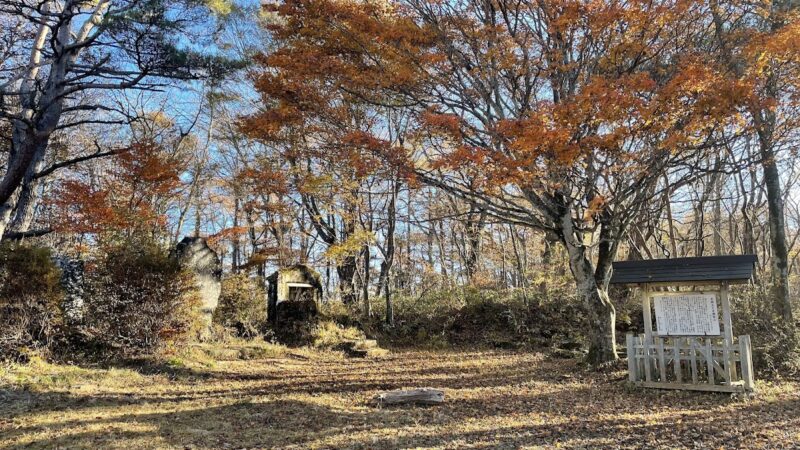
The main bailey, located at the mountaintop, is a vast, leveled area. This main bailey forms the core of Kaketa Castle, and it is believed to have housed the lord’s residence and important military facilities. A clear earthen embankment surrounds the main bailey, indicating its high level of defensive capability.
From the main bailey, one can see the town of Kaketa and the Oguni River basin, indicating an ideal location for military surveillance. Good visibility was a crucial factor in detecting enemy movements early.
Earthworks and Dry Moats
One of the greatest highlights of Kaketa Castle is its well-preserved earthworks and dry moats. Earthworks, dividing multiple enclosures around the main keep, can be seen in various locations, demonstrating a typical defensive structure of a medieval mountain castle.
Particularly noteworthy are the presence of horizontal moats (dry moats). These dry moats not only separated the enclosures but also functioned as important defensive structures to prevent enemy intrusion. Multiple trenches have also been identified, showing ingenuity in preventing enemy entry from the ridge.
The height of the earthworks and the depth of the dry moats vary depending on the location, but some retain their original form well, making them valuable resources for learning about medieval castle construction techniques.
Belt Enclosures and Enclosure Arrangement
Around the main keep are long, narrow enclosures called belt enclosures (obiguruma). These belt enclosures formed double and triple defensive lines to protect the main keep.
The castle’s terraced structure features multiple baileys arranged in a stepped pattern along the mountain slope, each functioning as an independent defensive stronghold while forming an organic defensive system as a whole. This layout demonstrates the high level of castle-building technology during the Nanboku-cho period.
Well Remains and Living Structures
Well remains have been confirmed within the castle grounds, indicating that water supply was considered during sieges. Securing water was a matter of life and death for mountain castles, and the presence of a well suggests a design philosophy prepared for prolonged sieges.
During the confirmation survey of the main bailey remains, artifacts related to daily life were unearthed, revealing evidence that it was not merely a military facility but also a place where people lived on a daily basis.
Cultural Value of Kakeda Castle
Evaluation as a City-Designated Historic Site
Kaketa Castle ruins are designated as a historic site by Date City (formerly Ryozen Town) and are protected as an important historical heritage of the region. It is highly valued for its well-preserved castle form and as a valuable historical site that conveys the history of the Nanboku-cho period.
Excavation surveys have also been conducted by the Ryozen Town Board of Education, and the results were published in 1989 as the “Report on the Confirmation of the Main Enclosure Remains at Kakeda Castle Site” (Ryozen Town Cultural Property Survey Report No. 8). These academic surveys have made the historical value of Kakeda Castle clearer.
Importance as a Southern Court Historical Site in the Tohoku Region
Kaketa Castle holds an important position in the study of Japanese medieval history as one of the strongholds of the Southern Court forces in the Tohoku region. Because it is a castle associated with the famous warlord Kitabatake Akiie, and because it is a site that concretely illustrates the political and military situation in the Tohoku region during the Nanboku-cho period (Northern and Southern Courts period), it is a historical site that attracts attention nationwide.
Along with the surrounding Southern Court-related castles, including Ryozen Castle, it is indispensable for understanding the power distribution and defense network of the time.
Local Visit Guide
Access Methods
Access by Car:
- Approximately 30 minutes from Fukushima-Nishi Interchange on the Tohoku Expressway via National Route 115
- From National Route 115, take the prefectural road to Kaketa town center
- Parking is available around the castle ruins (please check with Date City for details)
Public Transportation:
- Approximately 40 minutes by car from Fukushima Station on the JR Tohoku Main Line
- Bus service is limited, so please check the timetable in advance
Points to Note During Your Visit
Kaketa Castle Ruins are currently maintained as a park and are open to the public. However, as it is a mountain castle, please note the following points:
Clothing and Equipment:
- Comfortable walking shoes (trekking shoes recommended)
- Seasonal clothing
- Insect repellent (spring to autumn)
- Drinking water
Estimated Time Required:
- Approximately 1-2 hours from ascent to the main enclosure and descent
- Allow 2 hours or more if you want to carefully observe the remains
Best Season:
- Spring (April-May): Beautiful fresh greenery and mild weather
- Autumn (October-November): Stunning autumn foliage and excellent views
- Winter: Caution is needed due to the possibility of snow
Main Highlights
- The Vast Leveled Area of the Main Enclosure: From the main enclosure at the summit, you can enjoy a panoramic view of the surrounding landscape, experiencing the scenery the castle lord saw at the time.
- Clear Earthworks: The earthworks separating each enclosure are well-preserved and ideal for understanding the defensive structure of a medieval castle.
- Dry Moats and Ditches: Multiple dry moats and trenches can be seen, making it a popular spot for photography.
- View: The panoramic view of the Oguni River, the town of Kaketa, and even the distant Mt. Reizan is a must-see.
Related Historical Sites in the Surrounding Area
Reizan Castle
Located approximately 10 kilometers northeast of Kaketa Castle, Reizan Castle was an important base for the Southern Court, known as the headquarters of Kitabatake Akiie. It functioned as the center of Southern Court power in Tohoku until its fall in 1337 to an attack by the Northern Court. Visiting both Kaketa Castle and Reizan Castle together will provide a deeper understanding of the history of the Tohoku region during the Nanboku-cho period.
Kaketa Town
The Kaketa district, which developed as a castle town of Kaketa Castle, retains old streets and temples and shrines. A stroll through the area in conjunction with a visit to the castle ruins allows you to experience the region’s history dating back to the Middle Ages.
Kaketa Town ### Cultural Facilities in Ryozen-cho, Date City
Date City has facilities such as a local history museum where you can see exhibits and materials related to the history of the region, including Kakeda Castle. Visiting these facilities before your visit will allow for a more fulfilling castle ruins experience.
Current Status and Challenges of Kakeda Castle Research
Results of Archaeological Excavations
The 1989 main enclosure remains confirmation survey revealed building remains and living structures, clarifying the specific usage of the castle. Excavated artifacts suggest the castle was active from the 14th to the 15th centuries.
However, many aspects remain unclear, such as the overall layout survey and detailed dating. Continued research is expected to further reveal the full picture of Kakeda Castle.
Preservation and Utilization
While Kakeda Castle has high historical value, its nature as a mountain castle presents challenges such as weathering of remains and erosion by vegetation. Balancing appropriate preservation management with utilization for historical education and tourism is a crucial issue.
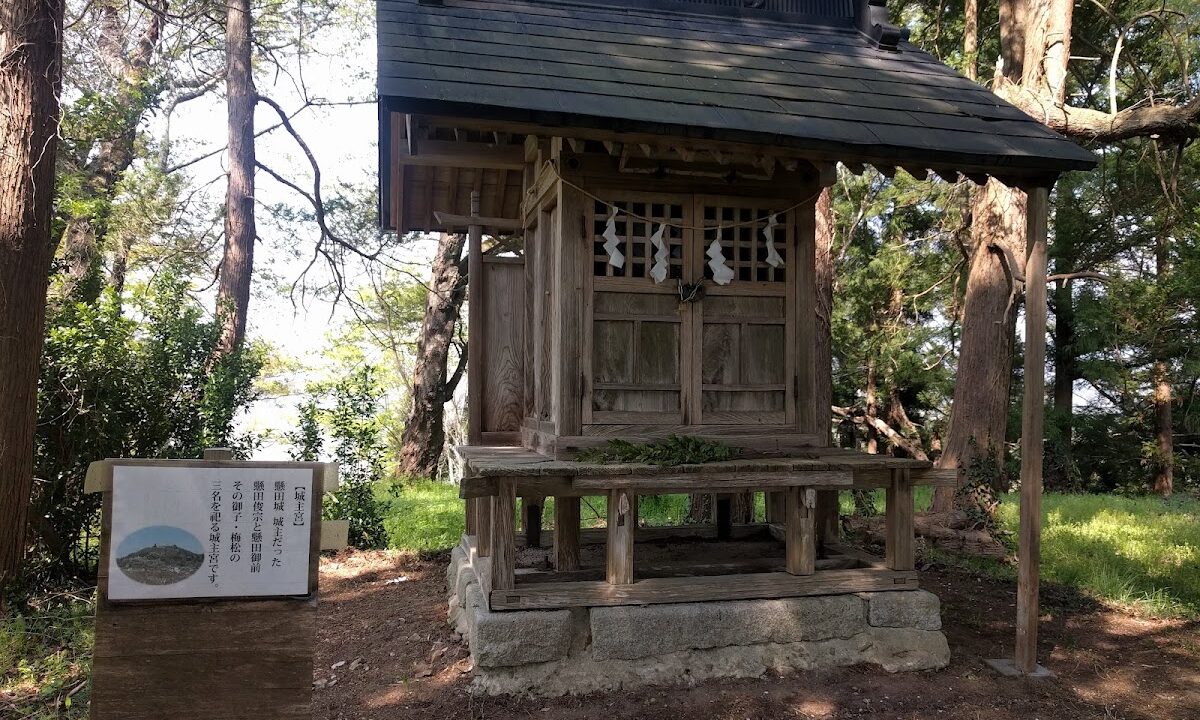
In Date City, efforts are being made to protect the historical site, and efforts are being made to create an environment where visitors can safely enjoy the site, such as by installing information boards and improving walking paths.
Summary: The Historical Significance of Kakeda Castle
Kaketa Castle is a valuable historical site that conveys the political and military situation of the Tohoku region during the Nanboku-cho period, a crucial turning point in Japanese history. Built by order of the outstanding warrior Kitabatake Akiie, and continuously defended by the Kakeda clan as a base for the Southern Court, this castle conveys to the present day the lives of people who survived a turbulent era.
The earthworks, dry moats, and vast main enclosure remaining on the mountaintop at an altitude of 255 meters demonstrate the high level of castle construction technology of the time and preserve the typical form of a medieval mountain castle in excellent condition. Kakeda Castle continues to fascinate many people not only as a resource for castle history research, but also as a tourist spot where one can feel the romance of history.
When you visit Fukushima Prefecture, be sure to visit the Kakeda Castle ruins and stand on the stage of history from over 600 years ago. The view from the mountaintop overlooking the Oguni River will surely overlap with the scenery seen by the warlords of that time, deepening your understanding of history.