Takakurayama Castle (Fukushima Prefecture) Complete Guide | Thorough Explanation of History, Remains, and Access
Located in Hirono-machi, Futaba-gun, Fukushima Prefecture, Takakurayama Castle is an important mountain castle that served as the front line in the power struggle between the Iwaki and Soma clans during the Sengoku period. This article comprehensively introduces information useful for castle enthusiasts and history fans, from the historical background of Takakurayama Castle to existing remains, points of interest for visitors, and access methods.
Overview of Takakurayama Castle
Takakurayama Castle is a medieval mountain castle built on a hill approximately 200 meters above sea level in Hirono-machi, Futaba-gun, Fukushima Prefecture. Because there is another castle with the same name, “Takakura Castle,” in Hiwada-machi, Koriyama City, Fukushima Prefecture, it is generally called “Takakurayama Castle” to distinguish it.
Basic Information
- Location: Shimokitazako, Hirono-machi, Futaba-gun, Fukushima Prefecture
- Castle Structure: Mountain Castle
- Construction Period: Around 1534 (Tenbun 3)
- Builder: Igari Chikugo-no-kami Takakiyo
- Main Lords: Igari Clan
- Remains: Enclosures, earthworks, moats, vertical moats
- Designated Cultural Property: None
Takakurayama Castle is a valuable historical site that conveys the military tension in the Hamadori region during the Sengoku period, serving as a frontline defensive base built by the Iwaki clan in preparation for an invasion by the Soma clan.
History of Takakurayama Castle
Background of Construction and the Iwaki Clan’s Sphere of Influence
In the first half of the 16th century, when Takakurayama Castle was built, the Hamadori region of Fukushima Prefecture was a fierce battleground where two major powers, the Iwaki clan and the Soma clan, vied for supremacy. The Iwaki clan was a prestigious family that had existed since the late Heian period. Based at Iwaki-Taira Castle (present-day Iwaki City), they expanded their influence from the southern to central Hamadori region.
Meanwhile, the Soma clan, who controlled the northern area, were a samurai family that had migrated from Shimosa Province as a branch of the Chiba clan during the Kamakura period, and they were gradually pursuing a southward expansion policy. The boundary between the two clans’ spheres of influence was fluid, and military clashes occurred frequently.
The Tenbun Rebellion and Castle Construction
In 1534 (Tenbun 3), the Soma clan launched a large-scale southward expansion, successively capturing Tomioka Castle, Naraha Castle, and other castles that were under the control of the Iwaki clan. This invasion forced the Iwaki clan to retreat to the Hirono, Hisanohama, and Yotsukura areas.
Subsequently, a peace agreement was reached between the two clans, and the lands of Hirono, Hisanohama, and Yotsukura were returned to the Iwaki clan, but Tomioka and Naraha remained as Soma territory. This peace agreement made the Hirono region the northernmost point of the Iwaki territory, and thus the front line against the Soma clan.
Igari Chikugo-no-kami Takakiyo, a senior retainer of the Iwaki clan, built a castle on Takakurayama, a strategically important location in Hirono, to protect this new border. Takakurayama Castle functioned as a military base to monitor the movements of the Soma clan and prepare for invasions.
The Role of the Igari Clan and the Castle
The Igari clan, as influential vassals of the Iwaki clan, had been responsible for the defense of this region for generations. Takakurayama Castle is believed to have functioned not only as a military base but also as a governing center for the Hirono region.
The castle’s main enclosure is located on the top of a hill approximately 200 meters above sea level, offering a panoramic view of the surrounding plains. Its structure is particularly designed to guard the northern area, close to the border with the Soma territory, with multiple trenches and vertical moats on the northern slope.
Developments in the Late Sengoku Period
In the latter half of the 16th century, the entire Tohoku region was engulfed in a wave of unification among the Sengoku daimyo. The Iwaki clan faced a period of difficulty in managing their relationships with powerful forces such as the Date and Satake clans.
While there are no clear records of when Takakurayama Castle was last used, it is believed that after the establishment of the Iwaki-Taira Domain in the early Edo period, Takakurayama Castle was abandoned due to the concentration of administrative functions at Taira Castle (Iwaki-Taira Castle).
Structure and Layout of Takakurayama Castle
Overall Structure
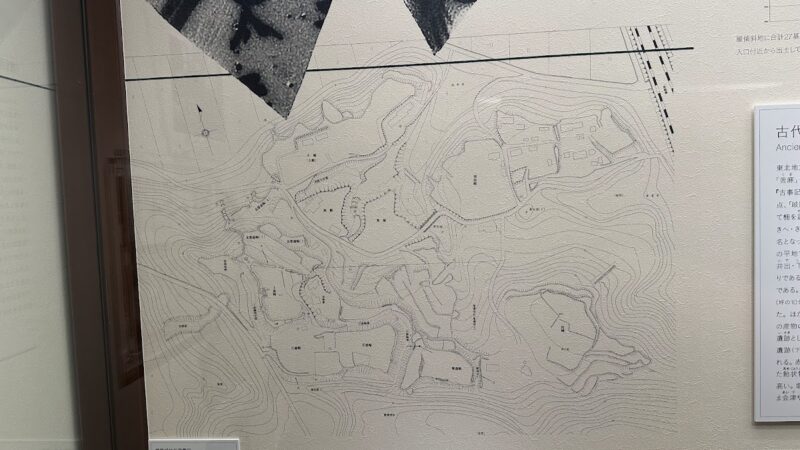
Takakurayama Castle is a mountain castle of the Ren-Kan style, with multiple enclosures arranged along the ridge from the top of the hill. The remains extend approximately 300 meters east-west and 200 meters north-south, centered around the main enclosure.
Main Enclosure (Honmaru)
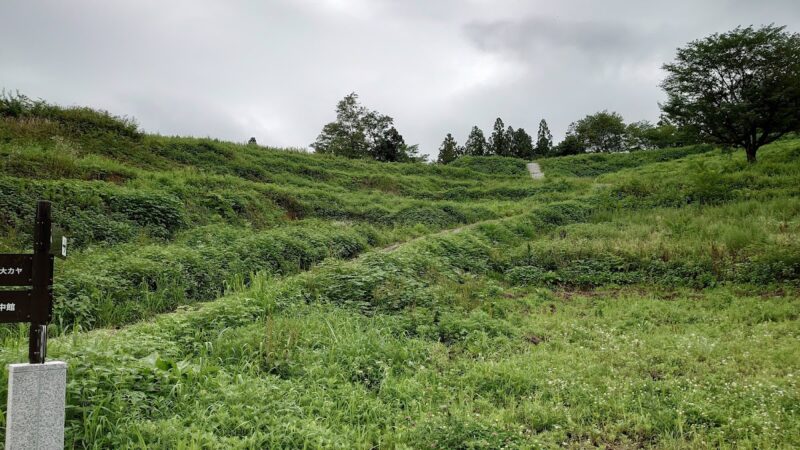
The main enclosure, the center of the castle, is located at the highest point of the hill and measures approximately 40 meters east-west and 30 meters north-south. Earthen ramparts surround it, and the ramparts on the north and east sides, in particular, are relatively well-preserved, exceeding 2 meters in height.
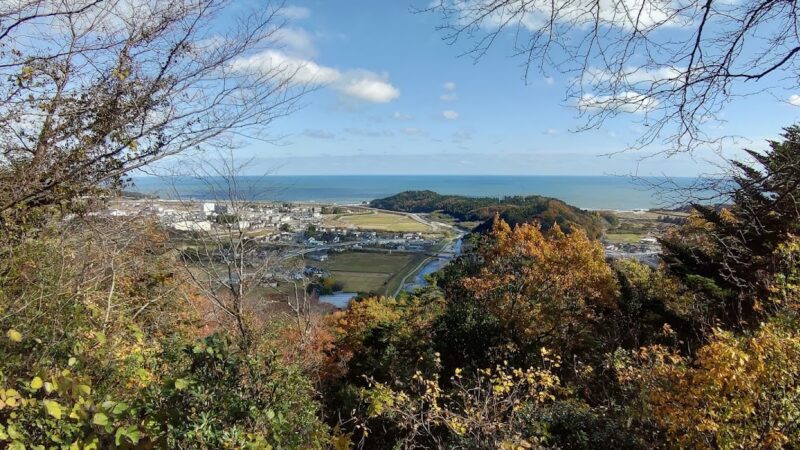
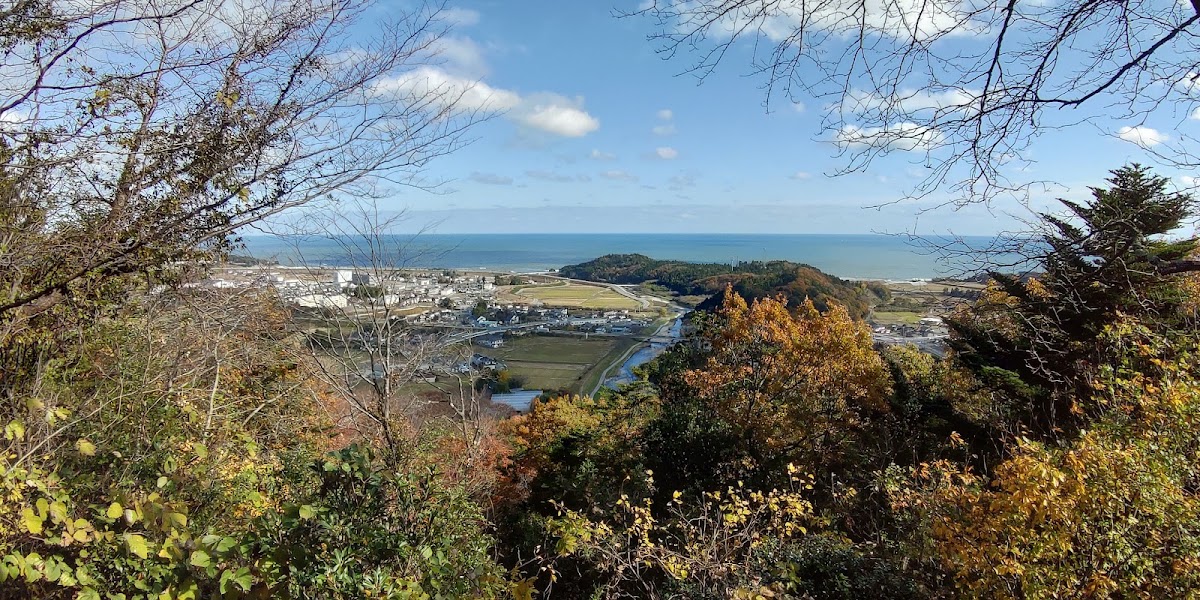
From the main enclosure, one can enjoy a panoramic view of the Hirono Plain, and on clear days, even the Pacific Ocean can be seen. This excellent view speaks to the value of Takakurayama Castle as a surveillance base.
Second and Third Enclosures
The second and third enclosures are located to the south and east of the main enclosure. These enclosures are situated at a lower level than the main enclosure and are presumed to have been used as living spaces or troop garrisons.
There is a clear difference in elevation between the second and third enclosures, indicating a design intended to enhance defensive capabilities. Furthermore, small, flat areas called “koshikuruwa” (lower enclosures) are provided around the perimeter of the enclosures, forming a multi-layered defensive structure.
Moats and Vertical Ditches
A notable defensive feature of Takakurayama Castle is the multiple moats and vertical ditches located on the northern slope. These form a defensive line anticipating attacks from the Soma domain.
To the north of the main enclosure is a large moat more than 3 meters deep, completely blocking the ridgeline. A vertical moat extends from this trench down the slope, creating a structure designed to prevent flanking attacks by the enemy.
Entrance (Koguchi)
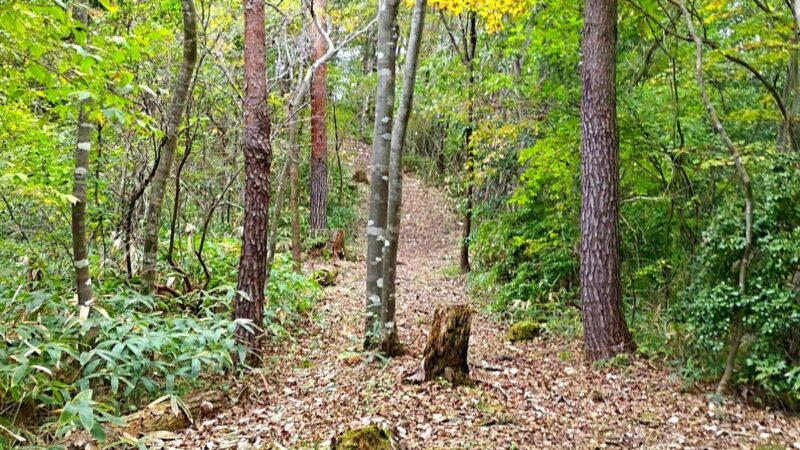
It is believed that the main entrance to the castle was located on the eastern slope. A mountain path still remains today, presumably the remains of the former approach to the castle. Traces of earthworks and stone walls can be seen around the entrance, indicating a strong defensive structure.
Highlights of Takakurayama Castle
Well-Preserved Earthworks
The biggest highlight of a visit to Takakurayama Castle is the well-preserved earthworks around the main enclosure. The northern earthworks, in particular, are over 2 meters high, allowing visitors to experience the reality of defensive structures from the Sengoku period. Walking along the top of the earthworks allows one to imagine how the castle’s soldiers monitored enemy movements.
Clear Moat
The northern moat is particularly clearly preserved among the remains of Takakurayama Castle. This large moat, over 3 meters deep, is still impressive and awe-inspiring to modern eyes. Standing on either side of the moat, you can truly appreciate how effectively this defensive structure hindered enemy advances.
Excellent Views
The view from the main enclosure is one of the major attractions of Takakurayama Castle. Not only can you see the entire plain, but on a clear day, you can even see the Pacific coastline. This view speaks to why Takakurayama Castle was considered so important as a surveillance base.
Especially on clear days from spring to autumn, the contrast between the Abukuma Highlands and the Pacific Ocean is beautiful, allowing you to enjoy the natural scenery along with exploring the castle ruins.
Quiet Forest Atmosphere
Takakurayama Castle ruins are now surrounded by a quiet forest. With relatively few visitors, it’s a hidden gem where you can quietly experience the atmosphere of the Sengoku period. Listening to the birdsong while exploring the ruins allows you to immerse yourself in historical romance.
Access Information
Access by Car
The most convenient way to access Takakurayama Castle is by car. It is located approximately 10 minutes from the Hirono Interchange on the Joban Expressway.
Route Guide:
- Exit the Hirono Interchange and head south on National Route 6.
- After passing the Hirono Town Hall, turn left approximately 2 km ahead.
- Proceed approximately 1 km along the prefectural road, and you will see a sign for the castle entrance.
Parking
There is no dedicated parking lot for the castle ruins, but there is a widened area on the roadside near the entrance where 2-3 cars can park. However, please be considerate and avoid obstructing the passage of local residents.
Access by Public Transportation
It is approximately a 40-minute walk or a 10-minute taxi ride from Hirono Station on the JR Joban Line. There is a taxi stand in front of the station, but the number of taxis is limited, so it is recommended to make a reservation in advance.
Points to Note When Visiting the Castle
- Estimated Time Required: Approximately 15-20 minutes on foot from the entrance to the main enclosure
- Difficulty Level: Intermediate (Requires physical fitness for climbing mountain paths)
- Attire: Comfortable clothing and non-slip shoes are essential
- Items to Bring: Drinking water, insect repellent (summer), flashlight (due to early sunset in winter)
- Best Season: Spring (April-May) and Autumn (October-November) are the most climatically suitable times
- Caution: The remains are valuable cultural assets. Please be careful not to damage the earthworks or enclosures.
Nearby Tourist Attractions
Historical and Cultural Facilities of Hirono Town
Hirono Town Historical Museum
Located a 5-minute walk from Hirono Station, this museum allows you to learn about the history and culture of Hirono Town. It also exhibits materials related to Takakurayama Castle, and visiting before visiting the castle ruins will deepen your understanding.
Nearby Castle Ruins
Tomioka Castle Ruins (Approx. 15 minutes by car)
This castle was once under the control of the Iwaki clan and was seized by the Soma clan. Visiting it together with Takakurayama Castle will give you a deeper understanding of the power struggle between the Iwaki and Soma clans.
Naraha Castle Ruins (Approx. 20 minutes by car)
Similar to Tomioka Castle, this castle was seized by the Soma clan and is an important spot for understanding the Sengoku period history of the Hamadori region.
Nature and Scenic Spots
Futatsunuma General Park (Approx. 10 minutes by car)
A representative park of Hirono Town, where you can enjoy nature in all four seasons. It’s perfect for a break after exploring the castle ruins.
Hirono Coast (Approx. 15 minutes by car)
A beautiful coastline facing the Pacific Ocean, especially renowned for its stunning sunset views.
Differences between Takakurayama Castle and Takakura Castle in Koriyama City
There are several castles named “Takakura Castle” in Fukushima Prefecture, which can easily lead to confusion. Therefore, we will clearly distinguish between them here.
Takakurayama Castle (Hirono Town)
- Location: Hirono Town, Futaba District
- Builder: Igari Chikugo-no-kami Takakiyo
- Lord: Igari clan, vassals of the Iwaki clan
- Historical Role: Border defense base between the Iwaki and Soma clans
- Construction Date: Around 1534 (Tenbun 3)
Takakura Castle (Koriyama City)
- Location: Takakura, Hiwada-cho, Koriyama City
- Builder: Hatakeyama Masayasu
- Lord: Takakura clan, a branch of the Nihonmatsu Hatakeyama clan
- Historical Role: Branch castle of the Nihonmatsu clan, later a base of the Date clan
- Construction Date: Mid-15th century
- Other Names: Matsumine Castle, Takakura Residence
Takakura Castle in Koriyama City has a history of being used as a military base by Date Masamune during the “Battle of Hitotoribashi” and the “Battle of Koriyama.” Its builder and historical background are completely different from Takakurayama Castle in Hirono Town.
Model Itinerary for Visiting Takakurayama Castle
Half-Day Course (Approx. 4 Hours)
- Arrive at JR Hirono Station (9:00)
- Visit Hirono Town Historical Museum (9:15-10:00)
- Climb to Takakurayama Castle Ruins (10:30-12:00)
- Arrive at the entrance to the castle (10:30)
- Arrive at the main enclosure and view the ruins (11:00-11:45)
- Depart from the castle (12:00)
- Lunch (12:30-13:30)
Full-Day Course (Approx. 8 Hours)
- Arrive at JR Hirono Station (9:00)
- Visit Hirono Town Historical Museum (9:15-10:00)
- Climb to Takakurayama Castle Ruins (10:30-12:30)
- Lunch (12:45-13:45)
- Visit Tomioka Castle Ruins (14:15-15:15)
- Visit Naraha Castle Ruins (15:45-16:45)
- Enjoy the Sunset at Hirono Beach (17:00-17:30)
This course allows you to visit several castle ruins related to the power struggle between the Iwaki and Soma clans, providing a comprehensive understanding of the Sengoku period history of the Hamadori region.
Preservation Status and Future of Takakurayama Castle
Takakurayama Castle Ruins are not currently designated as a cultural property, but their importance is recognized by local history enthusiasts and castle researchers. The remains are relatively well-preserved, with the earthworks and moats around the main enclosure clearly visible.
However, maintenance is minimal, and information boards are limited. Therefore, visitors are strongly advised to conduct thorough research beforehand.
In recent years, interest in castle ruins in Fukushima Prefecture has been growing, and there is a growing momentum for the re-evaluation of Takakurayama Castle as a valuable Sengoku period heritage site. Further efforts by local governments and historical organizations for its preservation and utilization are expected.
The Value of Takakurayama Castle in Castle Research
Takakurayama Castle is an important historical site that demonstrates the battles between regional powers in the Tohoku region, particularly the Hamadori region, during the Sengoku period. Located on the border between the two major powers, the Iwaki and Soma clans, and serving as a frontline of military tension, this castle is highly valued academically for the following reasons:
Historical Materials for Regional History Research
The construction and operation of Takakurayama Castle concretely illustrate the shifts in the power dynamics in the Hamadori region during the first half of the 16th century. Given the limited availability of documentary sources, the castle remains serve as valuable physical evidence that tells the story of the political and military situation at the time.
A Typical Example of a Medieval Mountain Castle
The layout of Takakurayama Castle exhibits typical characteristics of medieval mountain castles in the Tohoku region. Its multi-bailey arrangement, defenses using earthworks and moats, and location emphasizing views make it an excellent learning tool for studying Sengoku period castle construction techniques.
Part of a Regional Defense System
Takakurayama Castle did not exist in isolation but functioned as part of the Iwaki clan’s castle network. Studying its relationship with castles such as Tomioka Castle and Naraha Castle provides clues to understanding the territorial control systems of Sengoku daimyo.
Summary
Takakurayama Castle (Hirono Town, Fukushima Prefecture) is a valuable mountain castle site that conveys the power struggle between the Iwaki and Soma clans in the Hamadori region during the Sengoku period. Built by Igari Chikugo-no-kami Takakiyo, a senior retainer of the Iwaki clan, following the Soma clan’s invasion in 1534, this castle played a crucial role as a frontline base protecting the border between the two forces.
The earthworks surrounding the main enclosure and the moat on the north side remain remarkably well-preserved, allowing visitors to experience the reality of defensive structures from the Sengoku period. Furthermore, the view from the main enclosure is magnificent, offering a panoramic vista stretching from the Hirono Plain to the Pacific Ocean—a testament to why this castle was chosen as a strategic watchtower.
When visiting, it’s recommended to wear comfortable clothing and non-slip shoes, and choose a time with pleasant weather, such as spring or autumn. Nearby, there are other related historical sites, such as the ruins of Tomioka Castle and Naraha Castle, making a day trip exploring the Sengoku history of the Hamadori region a fascinating experience.
While Takakurayama Castle may not be widely known, it is an essential historical site for understanding the Sengoku history of Fukushima Prefecture. Why not experience the tension of the Sengoku period and the romance of history at this castle ruin nestled in a quiet mountain forest?