Complete Guide to Shimo-Ōgoe Castle (Tamura City, Fukushima Prefecture) | History, Highlights, and Access Information
What is Shimo-Ōgoe Castle?
Shimo-Ōgoe Castle was a medieval mountain castle located in Shimo-Ōgoe, Ōgoe-machi, Tamura City, Fukushima Prefecture. It is known as the first castle of Ōgoe Akimitsu, a senior retainer of Tamura Kiyoaki, lord of Miharu Castle, and one of the “Four Heavenly Kings of Tamura.”
As one of the “Forty-Eight Castles of Tamura” built by the Tamura clan within their territory, it was an important strategic castle in Tamura County. During the Sengoku period in the mid-16th century, this region became the front line of the power struggle between the Tamura and Iwaki clans, and Shimo-Ōgoe Castle was caught in the middle of this conflict.
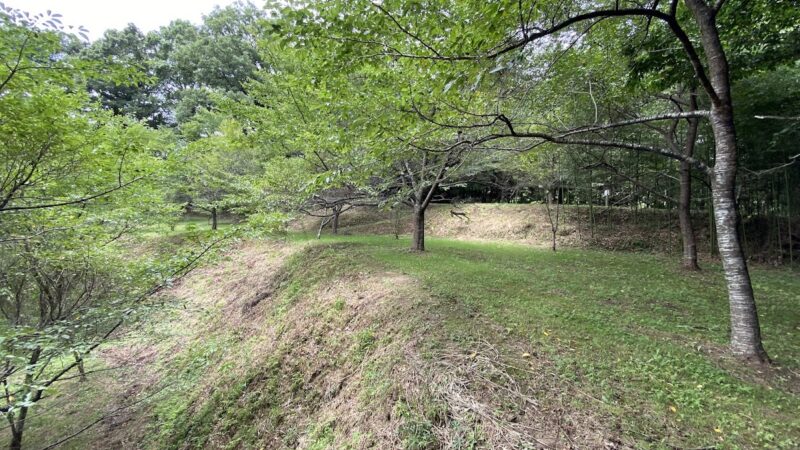
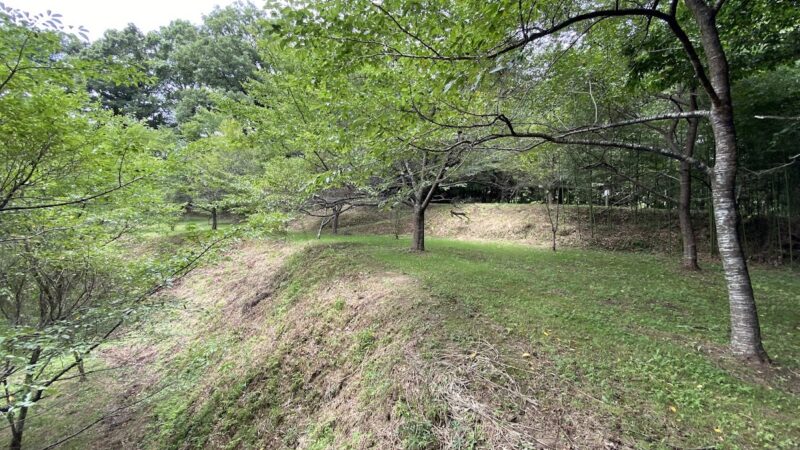
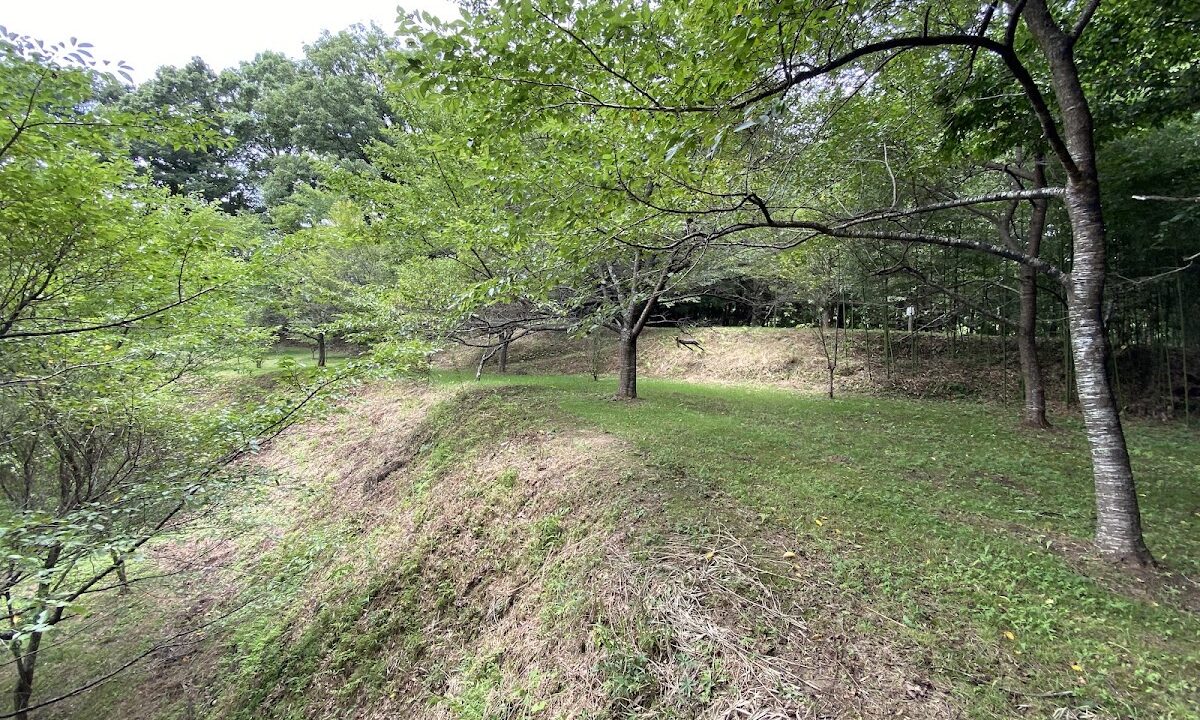
Currently, remnants such as baileys and earthworks remain at the Shimo-Ōgoe Castle site, and cherry trees have been planted around the main keep. It is carefully preserved by the locals as a historical heritage site and is a valuable historical site for understanding medieval castles in Fukushima Prefecture.
History of Shimo-Ōgoe Castle
Relationship between the Ōgoe and Tamura Clans
The Ōgoe clan is said to be a descendant of Sakanoue no Tamuramaro and served as a senior retainer of the Tamura clan, entrusted with the control of the eastern part of Tamura County. Ōgoe Akimitsu served Tamura Kiyoaki and, as one of the Four Heavenly Kings of Tamura (Ōgoe Akimitsu, Hashimoto Akimasa, Ishizawa Mitsuyoshi, and Tokiwa Mitsutaka), contributed to the expansion of the Tamura clan’s power.
The Tamura clan reached its peak in the 16th century during the time of Tamura Takaaki and Tamura Kiyoaki, controlling the entire Tamura County. At the core of this system of control was a network of branch castles known as the “Forty-Eight Castles of Tamura,” and Shimo-Ōgoe Castle played a crucial role within this network.
Conflict with the Iwaki Clan and Water Source Pollution Incident
Around the Eiroku era (1558-1570), the Tamura clan was in fierce conflict with the Iwaki clan to the east. The Iwaki army, led by Iwaki Tsunetaka, repeatedly invaded the Tamura territory, and Shimo-Ōgoe Castle also became a target.
In this battle, the Iwaki army, judging that they could not capture the castle through conventional means, is said to have employed a tactic of poisoning the castle’s water source. This rendered the castle’s water unusable, causing Shimo-Ōgoe Castle to lose its function as a residence.
This water source contamination incident is noteworthy in castle history research as an interesting example demonstrating the diverse tactics used in castle sieges during the Sengoku period.
Relocation to Ōgoe Castle
Due to the water source problem, it became difficult for Ōgoe Akimitsu to reside at Shimo-Ōgoe Castle, so he built Ōgoe Castle (also known as Narugami Castle) as his new residence. Ōgoe Castle is located in Narugami, Kami-Ōgoe, Ōgoe-machi, Tamura City, north of Shimo-Ōgoe Castle, on a more defensible terrain.
Ōgoe Castle was built as the largest castle among the 48 castles of Tamura, and was developed as a mountain castle with a relative elevation of approximately 90 meters. This relocation meant that the Ogoshi clan’s base of operations shifted from Shimo-Ogoshi to Kami-Ogoshi.
From the Late Sengoku Period to the Castle’s Abandonment
Ogoshi Akimitsu, while serving the Tamura clan, is said to have also maintained relations with the Iwaki clan amidst the complex political situation of the Sengoku period. As Date Masamune expanded his power, Ogoshi Akimitsu attempted to negotiate peace with the Date clan while remaining subservient to Iwaki Tsunetaka. However, records indicate that his secret plot was leaked, he was captured, and forced to commit seppuku (ritual suicide).
When Tamura Kiyosuke died in 1590, a succession problem arose within the Tamura clan, and they ultimately came under the control of Date Masamune. During this process, many of the 48 Tamura castles were abandoned, and it is believed that Shimo-Ogoshi Castle also ceased to serve its purpose.
Structure and Layout of Shimo-Ogoshi Castle
Location and Topography
Shimo-Ogoshi Castle is a flatland castle built on a hilly area in Shimo-Ogoshi, Ogoshi-machi, Tamura City, Fukushima Prefecture. This castle is characterized by its defensive layout that skillfully utilizes the surrounding terrain, making it a typical example of a medieval castle that maximized the use of natural features.
Although the castle is located on a relatively low hill, its defensive capabilities are enhanced by utilizing the difference in elevation with the surrounding plains. This location shows ingenuity in balancing two functions: peacetime territorial control and wartime defense.
Arrangement of Enclosures
At the center of Shimo-Ogoe Castle, multiple enclosures are arranged around the main enclosure (honmaru). The honmaru was located at the highest point of the castle and was surrounded by earthen ramparts. Even today, the flat surface of the honmaru site and a portion of the earthen ramparts can be seen.
The second and third enclosures were arranged around the honmaru, forming a tiered defensive line. Each enclosure was constructed by leveling the natural terrain, making them valuable resources for understanding castle construction techniques of the Sengoku period.
Earthen Ramparts and Moats
Several remains of earthen ramparts can be seen within the castle grounds. The earthen ramparts surrounded the enclosures, preventing enemy intrusion and also functioning as defensive strongholds within the enclosures.
While no clear remains of the moats exist, it is believed that the elevation differences and cliffs between the enclosures functioned as defensive structures. The fact that water supply issues significantly impacted the castle’s fate suggests that securing wells and water sources was a critical challenge.
Castle Area
The castle area of Shimo-Ōgoe Castle is estimated to be approximately 200 meters east-west and 150 meters north-south, centered around the main enclosure. It is classified as a medium-sized castle among the 48 castles of Tamura, and was of sufficient size for the Ōgoe clan’s first residence.
Since Ōgoe Castle, built later, is considered the largest of the 48 castles of Tamura, it is clear that Ōgoe Castle was designed as a larger, more defensible castle based on the experience gained at Shimo-Ōgoe Castle.
Highlights of Shimo-Ōgoe Castle
Main Enclosure Ruins and Cherry Blossom View
The greatest highlight of Shimo-Ōgoe Castle is the flat area at the site of the main enclosure. Currently, cherry trees are planted around the site of the main keep, and in spring, beautiful cherry blossoms bloom. It’s a place well worth visiting, where historical remains and natural beauty harmonize.
During cherry blossom season, it’s a popular spot for locals to relax and enjoy flower viewing. The view of Tamura City from the castle ruins is also magnificent, allowing you to imagine the scenery seen by the former castle lords.
Remains of Earthworks
The earthworks remaining within the castle grounds are valuable relics that allow you to directly observe the castle construction techniques of the Sengoku period. Although there is weathering and collapse, many parts retain their original shape, making them a must-see for castle enthusiasts.
By observing the height and width of the earthworks and their relationship to the baileys, you can understand the defensive system of a medieval castle. When you visit the site, be sure to pay attention to the arrangement of the earthworks.
Terraces and Cut Embankments of the Baileys
The terraces and cut embankments between each bailey are also points of interest. The steep slopes carved from the natural terrain were crucial defensive structures that made enemy incursions difficult.
Even today, clear elevation differences between the baileys can be observed, allowing visitors to appreciate the castle’s three-dimensional structure. The changes in terrain from the main bailey to the second and third baileys are particularly important for understanding the castle’s defensive strategy.
Surrounding Historical Landscape
The area surrounding Shimo-Ōgoe Castle retains traces of its former castle town. Visiting the historic streets of Ōgoe town and historical sites associated with the Ōgoe clan will provide a deeper understanding of Tamura County during the Sengoku period.
In particular, observing the positional relationship between this castle and the later-built Ōgoe Castle, and the appearance of the roads connecting the two castles, reveals the reality of the Ōgoe clan’s territorial control.
Access Information
Access by Public Transportation
When visiting Shimo-Ōgoe Castle by public transportation, the nearest station is Funahiki Station on the JR Ban’etsu East Line. The distance from Funahiki Station to the Shimo-Ōgoe Castle ruins is approximately 8 kilometers.
From Funahiki Station, it’s convenient to take a taxi or rent a car. While there are bus routes, the number of services is limited, so it’s recommended to check the timetable in advance.
Access by Car
Access by car is the most convenient. It takes approximately 15 minutes from the Funahiki-Miharu IC on the Ban-etsu Expressway, or about 20 minutes from the Ono IC.
From Fukushima City, take National Route 288; from Koriyama City, take National Route 288 or a prefectural road. Setting “Shimo-Ogoe, Ogoe-machi, Tamura City” as your destination on your car navigation system is recommended.
Parking and Visiting Precautions
There is no dedicated parking lot around the castle ruins, but there are roads that allow you to approach the vicinity of the main keep by car. However, some sections of the road are narrow, so please drive carefully.
Visiting is generally free, but please be mindful of private property, as some areas are privately owned. During the spring cherry blossom season, locals also visit, so please be considerate of parking spaces.
Nearby Tourist Attractions
Ogoshi Castle Ruins
If you visit Shimo-Ogoshi Castle, you should definitely also visit the Ogoshi Castle Ruins. Located on a small hill south of Ogoshi Junior High School, it was built as the new residence of Ogoshi Akimitsu, who relocated from Shimo-Ogoshi Castle.
Also known as “Narugami Castle,” Ogoshi Castle boasts the largest scale among the 48 castles of Tamura, and its remains are those of a more authentic mountain castle. Comparing the two castles allows you to understand the development of the Ogoshi clan’s castle-building techniques.
Miharu Castle Ruins
The Miharu Castle Ruins, the main castle of the Tamura clan, are also a must-see. Located in Miharu Town, next to Tamura City, Miharu Castle was an important castle that flourished as the residence of the Tamura clan.
Currently, it is maintained as “Maizuru Castle Park,” and the remains of the stone walls and baileys are well preserved. In spring, the “Miharu Takizakura,” one of Japan’s three great cherry trees, is nearby, making it a tourist destination where you can enjoy history and nature at the same time.
Tamura City Historical and Folk Museum
If you want to learn about the history of Tamura City, a visit to the Tamura City Historical and Folk Museum is highly recommended. You can learn in detail about the medieval history of this region through materials related to the Tamura and Ogoe clans, and explanations of the Tamura Forty-Eight Castles.
There are also exhibits on Shimo-Ogoe Castle and Ogoe Castle, and visiting before or after your site visit will give you a deeper understanding.
Abukuma Cave
Abukuma Cave, a representative tourist spot in Tamura City, is also nearby. This limestone cave, approximately 600 meters long, allows you to explore a fantastical underground world.
It’s a classic Tamura City tourist spot where you can enjoy the natural beauty of the formations along with visiting the castle ruins.
The Positioning of the Tamura Forty-Eight Castles and Shimo-Ogoe Castle
What are the Tamura Forty-Eight Castles?
The Tamura Forty-Eight Castles is a collective term for the group of branch castles built by the Tamura clan within their territory during the Sengoku period (Warring States period). The actual number is not limited to 48 castles, but refers to the numerous castles and residences built within the sphere of influence of the Tamura clan.
These castles and residences served as residences for the Tamura clan’s vassals and functioned as bases for governing their territories. In peacetime, they played a crucial role as the administrative and economic center of the region, and in wartime, as defensive strongholds.
The Role of the Ogoshi Clan
The Ogoshi clan, as one of the Four Heavenly Kings of Tamura, were entrusted with the control of the eastern part of Tamura County. Based at Shimo-Ogoshi Castle and later Ogoshi Castle, they played a vital role in defending the front line against the Iwaki clan.
Ogoshi Akimitsu was known as a highly skilled warrior and greatly contributed to the expansion of the Tamura clan’s power. However, amidst the complex Sengoku period, he found himself in a difficult position between the Tamura, Iwaki, and Date clans.
Relationship with Other Forty-Eight Tamura Residences
The Forty-Eight Tamura Residences included the residences of each of the Four Heavenly Kings of Tamura, such as Hashimoto Castle of the Hashimoto clan, Ishizawa Castle of the Ishizawa clan, and Tokiwa Castle of the Tokiwa clan. These castles worked in conjunction with each other, supporting the Tamura clan’s rule.
Shimo-Ōgoe Castle, located at a strategic point in the eastern part of Tamura County, held particularly important strategic value as a frontline castle protecting the border with the Iwaki clan.
Shimo-Ōgoe Castle in the Medieval Castles of Fukushima Prefecture
Castle Culture of Fukushima Prefecture
During the Sengoku period, Fukushima Prefecture was a region where many warlords held sway, including the Ashina clan of Aizu, the Tamura and Nihonmatsu clans of Nakadōri, and the Iwaki and Sōma clans of Hamadōri. Therefore, numerous medieval castles remain within the prefecture.
Shimo-Ōgoe Castle, as a typical branch castle within the Tamura clan’s territory, occupies an important position in understanding the history of medieval castles in Fukushima Prefecture.
Characteristics of Mountain Castles in the Tohoku Region
Medieval castles in the Tohoku region are mainly earthen castles, primarily consisting of earthworks and moats. Unlike early modern castles that used stone walls, they are characterized by defensive systems that skillfully utilize the natural terrain.
Shimo-Ōgoe Castle also possesses the characteristics of mountain castles in the Tohoku region, with its layout of baileys that utilizes the terrain and its defenses built on earthworks.
Water Source Issues and Castle History
The abandonment of Shimo-Ōgoe Castle due to water source pollution is a valuable example demonstrating the importance of water in castles. In medieval castles, securing wells and water sources was a matter of life and death, and water sources were targeted in many castle sieges.
Based on this experience, it is thought that Ōgoe Castle, built later, was designed with greater consideration for securing water sources, and it is noteworthy as an example of the development of castle construction technology.
Points to Note When Visiting Shimo-Ōgoe Castle
Best Season for Visiting
The best time to visit Shimo-Ōgoe Castle is during the cherry blossom season in spring. From early to mid-April, when the cherry trees planted around the main keep are in full bloom, you can enjoy both historical heritage and natural beauty at the same time.
The autumn foliage season is also beautiful, the summer brings lush greenery, and in winter you can see the castle ruins amidst a snowy landscape. However, be careful of your footing during winter due to snow cover.
Clothing and Equipment
Comfortable walking shoes are essential for visiting the castle ruins. Since you will be walking on somewhat uneven terrain when viewing the remains, sneakers or trekking shoes are recommended.
In summer, bring insect repellent, a hat, and drinking water. In spring and autumn, wear clothing that can adapt to temperature changes, and in winter, take proper precautions against the cold.
Photography Tips
The view from the main keep is an excellent photo opportunity. You can capture historical photos with the cityscape of Tamura and the surrounding mountains in the background.
When documenting the details of the remains, such as earthworks and the elevation changes of the baileys, morning light is ideal. During cherry blossom season, a composition combining the full-blooming cherry blossoms with the castle ruins is recommended.
Consideration for Local Residents
The area around the castle ruins is also a living area for local residents. When visiting, please observe proper etiquette, such as avoiding trespassing on private property and being considerate of noise levels.
If you have the opportunity to interact with local residents, you may be able to hear about the castle’s history and local legends.
Summary
Shimo-Ogoe Castle is a valuable historical site that conveys the history of the Tamura and Ogoe clans during the Sengoku period. Its abandonment due to the unique reason of water source pollution is known as an interesting case in castle history.
The remaining baileys and earthworks, the beauty of the cherry blossoms in spring, and the surrounding historical landscape allow visitors to feel the spirit of the Sengoku period. For those interested in medieval history in Fukushima Prefecture, castle enthusiasts, and history lovers, this castle site is well worth a visit.
By visiting related historical sites in the surrounding area, such as Ogoe Castle Ruins and Miharu Castle Ruins, you can gain a deeper understanding of the Tamura clan’s rule and the state of Tamura County during the Sengoku period. Please consider visiting Shimo-Ogoe Castle as part of your historical exploration of Tamura City, Fukushima Prefecture.