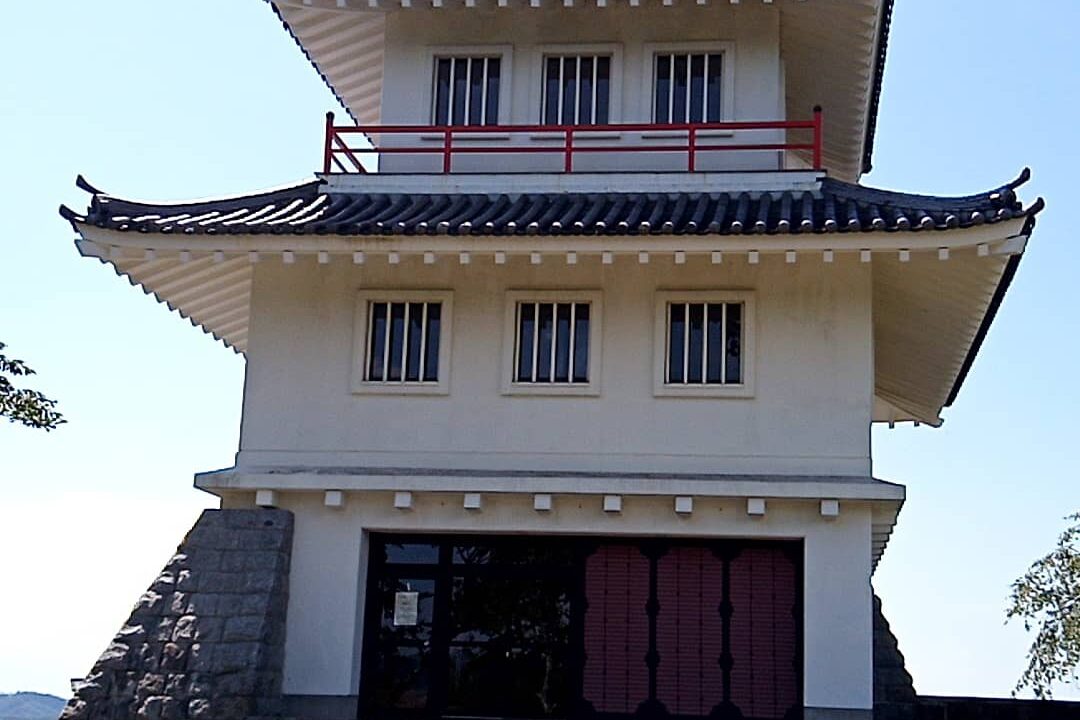
Funahiki Castle (Tamura City, Fukushima Prefecture): History and Highlights | A Mountain Castle Ruins Telling the Story of the Conflict Between the Tamura and Soma Clans
Located in Funahiki-cho, Tamura City, Fukushima Prefecture, Funahiki Castle is a valuable mountain castle that tells the story of the complex political conflict between the Tamura and Soma clans during the Sengoku period. Currently maintained as Tateyama Park, it is a historical spot where visitors can observe remains such as baileys and earthworks. This article comprehensively covers the detailed history, structure, highlights, and access methods of Funahiki Castle, providing useful information for castle enthusiasts and history buffs.
Basic Information on Funahiki Castle
Funehiki Castle is a medieval mountain castle located in Funahiki-cho, Tamura City, Fukushima Prefecture. Built on a hill approximately 440 meters above sea level, its relative height is about 30 meters. It has no alternative name, using the place name as its castle name.
The current castle site is maintained as “Tateyama Park,” serving not only as a place of relaxation for local residents but also as a valuable historical site where castle remains can be observed. Located in the naturally rich environment of the Abukuma Highlands, it overlooks Funahiki-cho, the central part of Tamura City.
History of Funahiki Castle
The Complex Relationship Between the Tamura and Soma Clans
Understanding the history of Funahiki Castle is crucial, particularly the political relationship between the Tamura and Soma clans. The Tamura clan was a powerful Sengoku-period daimyo (feudal lord) centered in the Abukuma Highlands, with their base at Tokiwa Castle (Asahi Castle) in Tokiwa-cho. The Soma clan, on the other hand, was a powerful daimyo controlling the Hamadori region.
The two families were connected by marriage; Okita, the daughter of Soma Akimune, became the principal wife of Tamura Kiyoaki, the head of the Tamura clan. This marriage symbolized the alliance between the two families, but later became the spark for conflict that divided the Tamura family.
The Tamura Family’s Crisis in 1586
Funabiki Castle first appears on the historical stage in 1586. In that year, Tamura Kiyosuke, the head of the Tamura clan, died without leaving an heir. This situation caused a serious succession problem for the Tamura family.
Kiyosuke had two daughters, one of whom became Megohime, the principal wife of Date Masamune. After Kiyosuke’s death, the Tamura family split into the Soma faction, centered around Okita, and the Date faction, which sought to come under the influence of the Date clan through Megohime.
Okita’s Imprisonment
Funabiki Castle is best known as the castle where Okita, the daughter of Soma Akimune and the principal wife of Tamura Kiyosuke, was imprisoned. In the power struggles within the Tamura family, Okita became a central figure in the Soma faction, but ultimately the Date faction prevailed, and Okita was imprisoned in Funabiki Castle.
This imprisonment was not merely house arrest, but a result of political conflict over the succession of the Tamura family headship and the control of the territory. Okita’s imprisonment significantly diminished the Soma clan’s influence over the Tamura territory.
The Subsequent History of Funabiki Castle
The Tamura clan eventually came under the influence of the Date clan, and through their connection to Aihime, they received support from Date Masamune. However, due to Toyotomi Hideyoshi’s pacification of Oshu, the Tamura clan was dispossessed of their lands, and their territory was confiscated.
In the Edo period, this region temporarily became the territory of the Kato clan, then the Gamo clan, and finally the Aizu Matsudaira clan. Funabiki Castle itself is believed to have been abandoned by the end of the Sengoku period and was not used throughout the Edo period.
Structure and Layout of Funabiki Castle
Location and Utilization of Topography
Funabiki Castle is built on a hill approximately 440 meters above sea level, with a relative height of about 30 meters from the surrounding plains. It is a mountain castle that skillfully utilizes the undulating terrain of the Abukuma Highlands, with a defensive structure that maximizes the use of the natural landscape.
The castle is built on the top of a long, narrow hill running north-south, with steep east-west slopes forming a natural defensive line. This topographical feature fulfills the typical location conditions for a mountain castle that can be effectively defended even with a small force.
Arrangement of Enclosures
Multiple enclosures (kuruma) can be identified as the main remains of Funabiki Castle. A group of enclosures, arranged in stages from the mountaintop down the slopes, centered around the main enclosure.
The main enclosure is located at the highest point of the castle, providing a relatively flat space. The second and third enclosures are arranged surrounding this main enclosure, forming a multi-layered defensive structure. There are clear elevation changes between each enclosure, demonstrating a design intended to enhance defensive effectiveness.
Remains of Earthworks and Moats
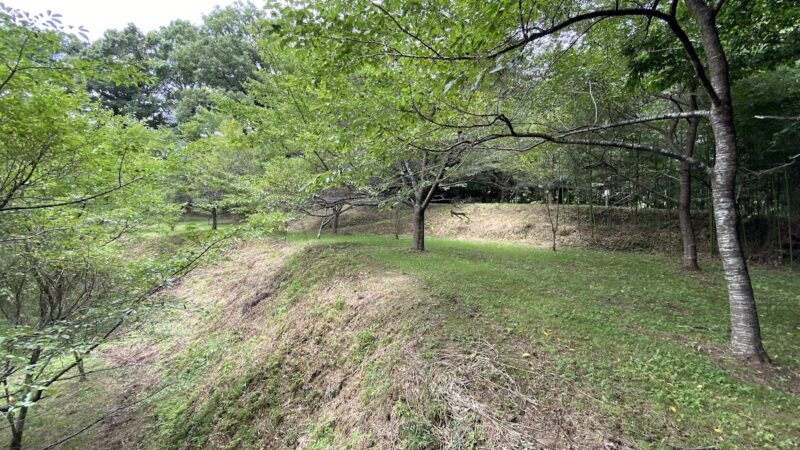
Earthworks and moats are important remains that can still be seen today. The earthworks were built along the edges of the enclosures, and in some places, they can be observed as distinct elevations. These earthworks served to prevent enemy intrusion and protect the interior of the enclosures.
The moats were constructed to separate the enclosures, and traces of trenches can be seen in some areas. However, due to years of weathering and park development, some parts have changed from their original appearance.
Entrance Gates and Passageways
Remains of entrance gates (koguchi) can also be seen in some areas. Since entrance gates are a weak point in defense, measures were taken to create curves or surround them with earthworks. At Funabiki Castle, too, a defensive structure can be seen, rather than a simple straight passageway.
Highlights of Funabiki Castle
Development as Tateyama Park
Currently, the Funabiki Castle site has been developed as “Tateyama Park,” serving as a place of relaxation for citizens. Walking paths have been established within the park, allowing visitors to enjoy strolling while observing the castle ruins.
While the park’s development has diminished the ruggedness of the former mountain castle, it has created a safe environment for viewing the ruins. Especially in spring, when cherry blossoms bloom, it becomes a spot where history and nature can be enjoyed simultaneously.
Observing the Bailey Remains
Walking through Tateyama Park, you’ll notice the terrain alternating between flat spaces and terraces. These are the remains of baileys, valuable remnants that convey the structure of a castle from the Sengoku period.
The main bailey area, in particular, is a relatively large, flat area, giving a real sense of its central location. Looking around, you can see the town of Tamura and the surrounding mountains, helping to understand the strategic location of this castle.
Traces of Earthworks
In some parts of the park, traces of earthworks remain in relatively good condition. These earthworks, which can be observed as gentle rises, are remnants of the defensive structures of the time.
Walking on top of the earthworks allows you to experience how a castle from the Sengoku period was defended. However, some parts have changed from their original appearance due to weathering and vegetation, so it is necessary to observe them while using your imagination.
Views and Strategic Location
From Tateyama Park, you can enjoy a panoramic view of the town of Funahiki in Tamura City. This view is one of the reasons why Funahiki Castle was built on this site. The location, which allowed for monitoring surrounding roads and settlements and detecting enemy movements early, was an important condition for a mountain castle.
Especially on a clear day, you can see the mountains of the Abukuma Highlands and the distant scenery, allowing you to truly appreciate the strategic value of this castle.
Historical Information Board
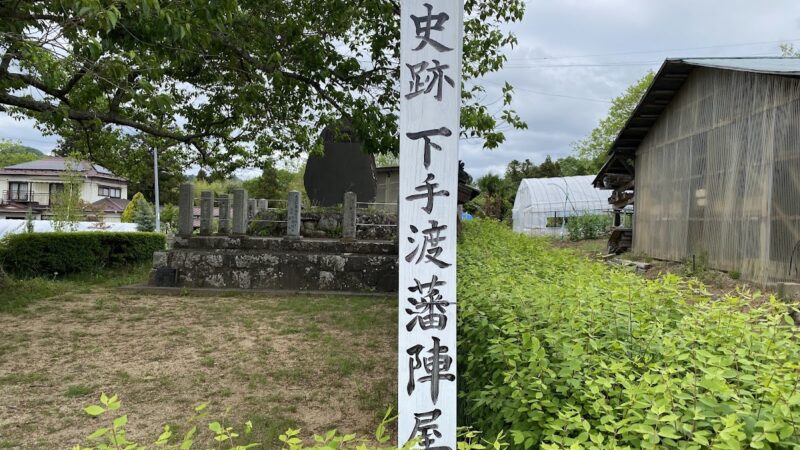
An information board explaining the history of Funahiki Castle is installed in the park. You can learn about Okita’s confinement and the history of the Tamura clan, making it more than just a park stroll; it’s a place for historical learning.
Reading these explanatory panels allows you to gain a deeper understanding of the historical significance of the ruins before you.
Related Historical Sites in the Surrounding Area
Tokiwa Castle (Asahi Castle)
Located about 8 kilometers from Funabiki Castle in Tokiwa-cho, Tamura City, is Tokiwa Castle, the base of the Tamura clan. Also known as Asahi Castle, it played an important role as the Tamura clan’s residence.
Tokiwa Castle was a larger fortress than Funabiki Castle and was the political and military center of the Tamura clan. When visiting Funabiki Castle, visiting Tokiwa Castle as well will give you a deeper understanding of the Tamura clan’s castle network.
Miharu Castle
Located in Miharu-cho, south of Tamura City, is Miharu Castle. Miharu Castle was an important fortress where the Gamo and Matsushita clans served as lords after the Tamura clan, and its remains, such as stone walls, are well-preserved.
Miharu Castle is a modern castle used throughout the Edo period, and it has different characteristics from medieval mountain castles like Funahiki Castle. Comparing the two allows us to learn about the development process of castles.
Tamura City Historical and Folk Museum
In Funahiki-cho, Tamura City, there is a historical and folk museum where you can learn about the history of the Tamura clan and local cultural assets. Materials related to Funahiki Castle and the Tamura clan are also on display, and visiting before or after visiting the castle ruins will provide a deeper understanding.
Access Information
Access by Public Transportation
The nearest station to Funahiki Castle (Tateyama Park) is Funahiki Station on the JR Ban’etsu East Line. It’s about a 20 to 25-minute walk from Funahiki Station to the castle ruins.
From the station, head northwest, pass through the town, and enter the hilly area to reach the entrance to Tateyama Park. There are signs along the way, making it a relatively easy route to follow.
Access by Car
By car, it’s approximately a 10-minute drive from the Funahiki-Miharu Interchange on the Ban-etsu Expressway. Take National Route 288 towards the town of Funahiki.
Tateyama Park has a parking lot, which is free to use. However, parking space is limited, and it can get crowded, especially during cherry blossom season.
Address and Location Information
- Address: Tateyama Park, Funahiki-cho, Tamura City, Fukushima Prefecture
- Elevation: Approximately 440 meters
- Relative Height: Approximately 30 meters
When using a car navigation system, it’s recommended to search for “Tateyama Park” or “Tateyama, Funahiki-cho, Tamura City.”
Notes and Recommended Time to Visit
Clothing and Equipment
Tateyama Park is well-maintained, but some walking paths are unpaved. We recommend wearing comfortable shoes. Particular caution is needed after rain, as the ground can become slippery.
If you want to carefully observe the castle ruins, comfortable clothing is recommended. Also, bringing insect repellent during the summer months will make your visit more enjoyable.
Recommended Time to Visit
Funabiki Castle (Tateyama Park) can be visited throughout the year, but the following times are particularly recommended:
Spring (Early to Mid-April): The castle ruins are adorned with cherry blossoms. It’s the perfect season to enjoy both history and natural beauty.
Autumn (October to November): The autumn foliage is beautiful, allowing you to fully enjoy the nature of the Abukuma Highlands. The temperature is moderate, making it ideal for a stroll.
Winter: While caution is needed if there is snow, the castle ruins amidst a snowy landscape also have a unique charm.
Estimated Time Required
Allow 30 minutes to an hour for a stroll through Tateyama Park and observing the ruins. If you plan to take photos and carefully observe the ruins, about an hour and a half will allow you to enjoy the experience at your leisure.
Historical Significance of Funabiki Castle
A Castle Telling the Story of Political Conflicts in the Sengoku Period
The most important historical significance of Funabiki Castle lies in its status as a site that conveys the complex political conflicts of the Sengoku period. The imprisonment of Okita was not merely an individual tragedy, but symbolizes the political maneuvering of the three major powers: the Tamura, Soma, and Date clans.
Through the history of this castle, we can learn how important marriage policies were in the Sengoku period and how serious political turmoil a succession problem caused.
Position in Regional History
Funabiki Castle is an indispensable historical site for understanding the medieval history of the Tamura region. The Tamura clan was a regional power that built its own sphere of influence centered on the Abukuma Highlands, and the ruins that convey their history are invaluable.
In particular, by comparing it with Tokiwa Castle, the Tamura clan’s main base, we can understand the Tamura clan’s castle network and the reality of their territorial rule. Funabiki Castle, while serving as a subsidiary castle, is a unique castle that played a politically important role.
The History of Women and Castles
The history of Okita’s imprisonment is an interesting case study for understanding the political position of women during the Sengoku period. Women in the Sengoku period were not merely tools for political marriage; they sometimes became the center of political power and participants in power struggles.
The history of Funabiki Castle unfolds around two women, Aihime and Okita, making it a valuable case study for understanding the history of women in the Sengoku period.
The History and Culture of Tamura City
Regional Characteristics of the Abukuma Highlands
Tamura City is located on the Abukuma Highlands in the Nakadori region of Fukushima Prefecture, characterized by its undulating terrain. This terrain has long been a strategically important transportation hub and, at the same time, a suitable location for defense, leading to the construction of many castles.
The Abukuma Highlands are an important region connecting the Hamadori and Nakadori regions, and the Tamura clan expanded their power by utilizing this geographical advantage. Funabiki Castle also needs to be understood within the context of these regional characteristics.
Establishment of Tamura City
The current city of Tamura was formed in 2005 through the merger of five towns and villages: Takine-machi, Ogoe-machi, Tsuji-mura, Tokiwa-machi, and Funahiki-machi. Funahiki-machi was the center of Tamura County even before the merger, and the city hall is still located there.
There are various theories about the origin of the place name Funahiki, but it is certain that it was a central settlement in this region since ancient times. Funahiki Castle remains a historical site symbolizing the history of this region and is still cherished by local residents.
Photography Tips
Photographing the Ruins
When photographing the ruins of Funahiki Castle, it is best to choose an angle that shows the elevation changes of the baileys and the rises of the earthworks. Especially in the early morning or evening when the light shines from an angle, the topography is emphasized by the shadows, making it easier to photograph the ruins.
Photographing the View
The view from Tateyama Park is an excellent photography spot offering a panoramic view of Tamura City. Especially during cherry blossom season and autumn foliage season, including flowers or leaves in the foreground will result in more attractive photographs.
Seasonal Charms
Funabiki Castle Ruins, which shows different expressions in each of the four seasons—cherry blossoms in spring, fresh greenery in summer, autumn leaves, and snowscapes in winter—is worth visiting at different times of the year. Even the same location can produce completely different photographs depending on the season.
From the Perspective of Castle Research
A Typical Example of a Medieval Mountain Castle
Funabiki Castle possesses typical characteristics of a medieval mountain castle. Its location utilizing natural terrain, defensive structure consisting of baileys and earthworks, and relatively small scale represent a standard form for a castle of a local lord during the Sengoku period.
From the perspective of castle research, as an earthen castle without stone walls, it is a valuable example for learning the basic structure of medieval castles.
Part of the Tamura Clan’s Castle Network
Funabiki Castle should be understood as part of the Tamura clan’s castle network. Understanding the role of Funahiki Castle within the Tamura clan’s territorial control system, which centered around their main base, Tokiwa Castle and surrounded by multiple branch castles, is crucial for understanding regional governance during the Sengoku period.
Summary
Funahiki Castle in Tamura City, Fukushima Prefecture, is a valuable historical site that conveys the political conflicts of the Sengoku period. This castle, the stage for the historical event of Okita’s imprisonment, tells the story of the complex relationships between the powerful daimyo of Tohoku: the Tamura, Soma, and Date clans.
Currently, it is maintained as Tateyama Park, where visitors can observe the remains such as baileys and earthworks, and reflect on history. When visiting Tamura City, be sure to visit the Funahiki Castle ruins and feel the spirit of the Sengoku period. Visiting it along with other nearby castles such as Tokiwa Castle and Miharu Castle will allow you to gain a deeper understanding of the rich history of this region.