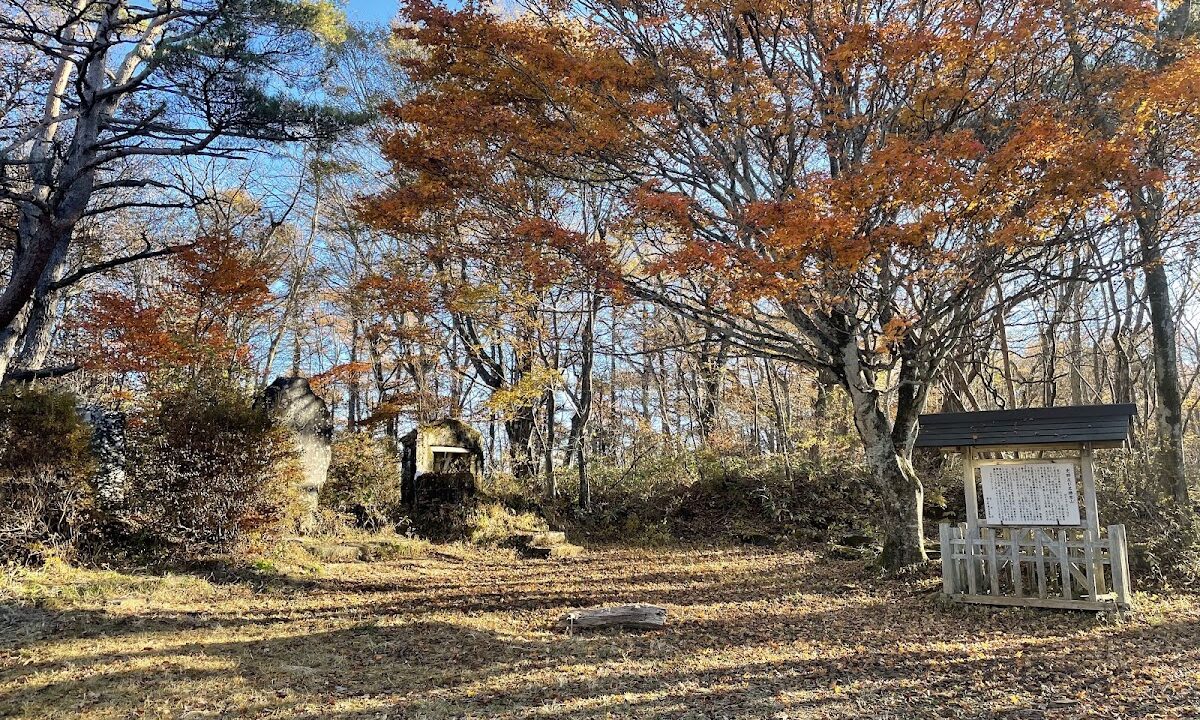
Ryōzen Castle (Fukushima Prefecture) Complete Guide | The Charm of the Southern Court Fortress and its Remains Built by Kitabatake Akiie
Located near the summit of Mt. Ryōzen in Date City, Fukushima Prefecture, Ryōzen Castle is a mountain castle that functioned as an important base for the Southern Court during the turbulent Nanboku-chō period. Built by Kitabatake Akiie to serve Prince Yoshiyoshi (later Emperor Go-Murakami), the castle’s remains are still well-preserved and it is designated as a national historic site and place of scenic beauty. This article comprehensively covers the history of Ryōzen Castle, details of its remains, highlights, and access information, providing useful information for castle enthusiasts and history buffs.
Basic Information on Reizan Castle
Location and Geographical Characteristics
Location: Reizan, Ishida, Reizan-machi, Date City, Fukushima Prefecture
Former Province: Date District, Mutsu Province
Elevation: Approximately 805 meters (Reizan summit is 825 meters)
Reizan Castle is a mountain castle built on Mt. Reizan, the highest peak in the Abukuma Mountains. Located on the eastern edge of Date City, Fukushima Prefecture, it is a natural stronghold that skillfully utilizes the steep, rocky terrain. Even today, the mountain is maintained as a hiking trail, and from near the summit, a spectacular panoramic view of the Fukushima Basin unfolds.
Basic Data of the Castle
Common Name/Alternate Name: Reizan Kokushi Castle
Classification/Structure: Mountain Castle
Builder: Kitabatake Akiie
Year of Construction: En’en 2 / Kenmu 4 (1337)
Year of Abandonment: Oei Era (circa 1394-1428)
Major Remains: Enclosures, earthworks, vertical moats, building foundations, part of stone walls
Designated Cultural Property: National Historic Site and Place of Scenic Beauty (designated as Reizan)
Reizan Castle is characterized by being a temple castle built using the existing Reizanji Temple, a Tendai sect temple that existed since the Heian period. The repurposing of existing mountain temple facilities as a military base is a major feature of this castle.
History of Reizan Castle
From Reizan-ji Temple in the Heian Period to a Castle
The history of Reizan is ancient. It is believed that Reizan-ji Temple was founded by Ennin (Jikaku Daishi) during the Jōgan era (859-877) in the early Heian period. It flourished as a place of mountain Buddhism and asceticism, and it is said that at its peak there were over 300 monks’ quarters. This religious foundation would play a crucial role in its later transformation into a castle.
The Kenmu Restoration and Kitabatake Akiie’s Eastward Journey
In 1333, when the Kamakura Shogunate fell and Emperor Go-Daigo began the Kenmu Restoration, Kitabatake Akiie (1318-1338), the eldest son of Kitabatake Chikafusa, was appointed Governor of Mutsu Province at the young age of 16. Akiie accompanied Prince Yoshiyoshi (later Emperor Go-Murakami) to Tagajo (present-day Tagajo City, Miyagi Prefecture) and established the Mutsu Provincial Office.
As Chinju-fu Shogun (Commander of the Northern Defense Headquarters), Akiie was in charge of managing the Tohoku region and became a key figure in the Kenmu Restoration’s control of eastern Japan. However, when Ashikaga Takauji rebelled in 1335, maintaining the Southern Court’s influence in Tohoku became a crucial issue.
Construction of Reizan Castle and Relocation of the Mutsu Provincial Office
On February 9, 1337 (Engen 2 / Kenmu 4), Kitabatake Akiie, after consultation with Hirohashi Tsuneyasu and others, moved Prince Yoshiyoshi from Tagajo to Reizan. This is thought to have been due to pressure from the Ashikaga-aligned Northern Court forces. As a new Mutsu Provincial Office to replace Tagajo, the “Kokushi-kan” (Provincial Governor’s Residence) was established near the summit of Reizan, and the functions of the provincial government were moved there.
There are several reasons why Reizan was chosen. Firstly, the existing facilities of Ryōzen-ji Temple could be utilized. Secondly, the rugged mountainous terrain provided natural defenses. Thirdly, its strategic location overlooking the Fukushima Basin. With all these conditions met, Ryōzen became the most important base for the Southern Court in the Tohoku region.
Kitabatake Akiie’s Westward Advance and Death
Kitabatake Akiie, based at Ryōzen Castle, began his westward advance in October 1337, accompanying Prince Yoshinaga at the request of Emperor Go-Daigo. Akiie’s Ōshū army advanced westward along the Tōkaidō road through Kamakura, reaching the vicinity of Kyoto.
However, on May 22, 1338 (Engen 3/Ryakuō 1), he clashed with the forces of the Ashikaga brothers Kō no Moronao and Moroyasu at Ishizu in Izumi Province (present-day Sakai City, Osaka Prefecture) and was killed in battle at the young age of 21. Akiie’s death was a major blow to the Southern Court.
The Era of Kitabatake Akinobu and the Fall of Reizan Castle
After Akiie’s death in battle, his younger brother, Kitabatake Akinobu, was appointed Mutsu-no-suke and Chinju-fu Shogun and descended to Reizan Castle, attempting to continue the Southern Court’s control over Tohoku. However, the Northern Court’s offensive gradually intensified.
In 1347 (Jōwa 3/Shōhei 2), the forces of Ashikaga allies, including Shiba Iekane and Hatakeyama Kuniaki, besieged Reizan Castle. After fierce fighting, Reizan Castle fell in October of the same year. Akinobu managed to escape, but this resulted in the loss of the Southern Court’s base in Tohoku.
Reizan After the Fall of the Castle
After the fall of Reizan Castle, the castle was abandoned, and Reizan-ji Temple also declined. It is believed that the castle was completely abandoned during the Ōei era (1394-1428). Afterward, Mount Ryōzen continued to attract a small number of worshippers as a mountain for Shugendō (mountain asceticism), but it never regained its former prosperity.
During the Edo period, it came under the control of the Date clan, and from the Meiji era onward, it became a popular destination for mountain climbing.
Remains and Highlights of Ryōzen Castle
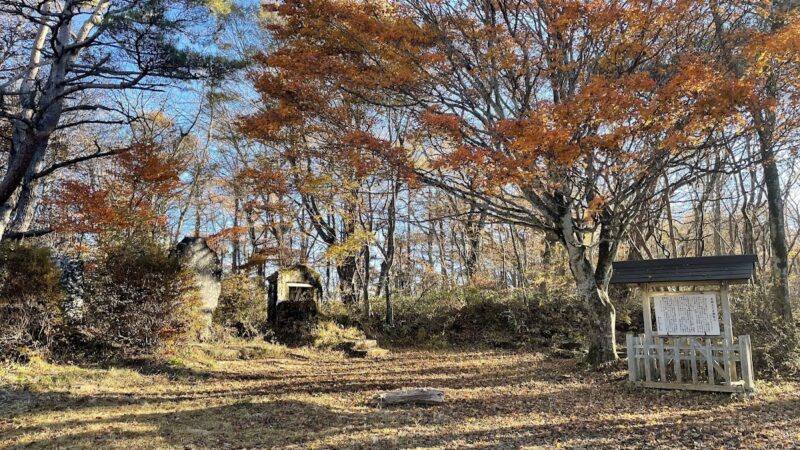
Site of the Provincial Governor’s Residence (Summit)
The site of the Provincial Governor’s Residence, the central part of Ryōzen Castle, is located at the summit, approximately 805 meters above sea level. This is where Kitabatake Akiie conducted government affairs while serving Prince Yoshiyoshi, and it is the most important section of Ryōzen Castle.
Major Remains:
- Flat Enclosure: The remains of the main enclosure, approximately 30m x 20m in size.
- Building Foundation Stones: Foundation stones indicating the remains of multiple buildings remain.
- Earthwork: Traces of an earthwork surrounding the enclosure.
- Stone Wall: Traces of stone wall construction can be seen in some areas.
From the site of the provincial governor’s residence, you can enjoy a panoramic view of the Fukushima Basin and the Abukuma River basin. On a clear day, you can even see the distant Azuma mountain range and Mount Adatara, giving you a real sense of the strategic importance of this location.
Remains of Reizanji Temple Site
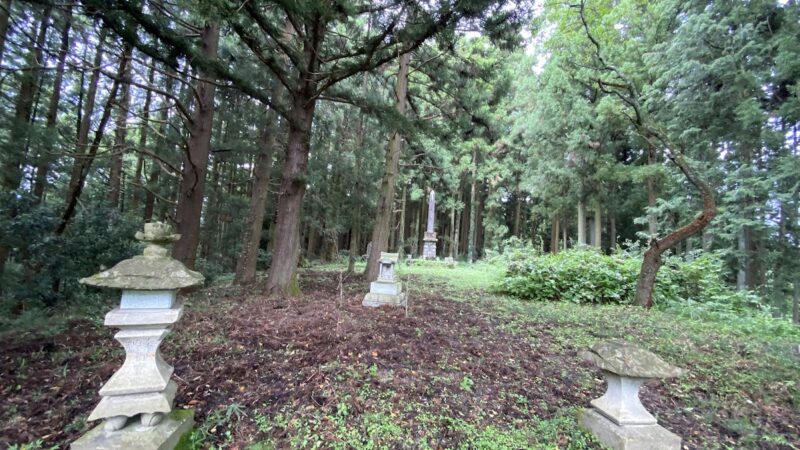
Since Reizan Castle was built utilizing the existing Reizanji Temple, many temple-related remains also remain.
Major Temple Remains:
- Goma Altar Site: The site where Shugendo rituals were performed.
- Monk’s Quarters Site: Foundation stones of monks’ quarters scattered across multiple flat areas.
- Pilgrimage Path Site: Traces of the former pilgrimage path.
- Stone Buddha Group: Stone Buddhas from the Heian to Kamakura periods.
These remains, which demonstrate the characteristics of a temple fortress, illustrate the unique nature of Reizan Castle. It is a valuable historical site that conveys the appearance of a medieval mountain castle where religious and military facilities were integrated.
Enclosures and Defensive Facilities
Reizan Castle has multiple enclosures arranged from the mountaintop to the mountainside.
Main Enclosures:
- Main Enclosure (Kokushi Residence): The central enclosure at the highest point.
- Second Enclosure: A secondary enclosure located below the main enclosure.
- Third Enclosure and Below: A group of enclosures arranged in tiers further down.
Defensive Structures:
- Vertical Moat: A moat dug vertically into the slope to prevent lateral movement of the enemy.
- Cut-off Moat: A moat constructed to cut across the ridge.
- Earthwork: An earthen wall surrounding the enclosure.
- Stone Wall: Traces of stone walls remain in some areas.
These defensive structures represent a typical structure of a mountain castle from the Nanboku-cho period and are important resources for understanding the castle construction techniques of that time.
Hiking Trails and Observation Points
Currently, the Reizan Castle ruins can be accessed via well-maintained hiking trails. There are several main hiking routes, each with its own points of interest.
Main Hiking Routes:
- Reizan Children’s Village Route: The most common and well-maintained route (approx. 90 minutes)
- Ishida Route: A slightly steeper but shortest route (approx. 60 minutes)
- Kaketa Route: A route for intermediate hikers (approx. 75 minutes)
Main Observation Points:
- Kokushi-kan Ruins: Offers the best views
- Tengu Sumo Ring: A scenic spot with a series of strangely shaped rocks
- Oyashirazu-Koshirazu: A difficult section with sheer cliffs
- Higurashi-iwa: A view from a massive rock formation
Information boards are installed along the hiking trails, allowing you to learn about the ruins and historical background as you climb.
Information on Spots Around Reizan Castle
Reizan Children’s Village
This facility serves as a base for climbing Reizan Castle. The facility is equipped with a parking lot (accommodating approximately 100 cars), restrooms, and rest areas, making it ideal for preparing before a climb or resting after descending. The facility also features exhibits on the nature and history of Mt. Reizan.
Facility Information:
- Opening Hours: 9:00 AM – 4:30 PM (may vary seasonally)
- Closed: Mondays (or the following day if Monday is a public holiday), New Year’s holidays
- Admission Fee: Free (parking is also free)
Yanagawa Castle Ruins
Located about 30 minutes by car from Reizan Castle, Yanagawa Castle is known as the early base of the Date clan. Although from a different era than Reizan Castle, it is worth visiting together as both are castles in the Date region.
Kuwori Nishiyama Castle Ruins
This castle was built by Date Tanemune, the 16th head of the Date clan, and is located about 25 minutes by car from Reizan Castle. It is an important historical site for understanding the Tohoku region during the Sengoku period.
Hobara Historical and Cultural Museum
Located in Hobara-cho, Date City, this museum exhibits historical materials related to the Date region, including Ryōzen Castle. Visiting before a visit to Ryōzen Castle will provide a deeper understanding.
Access and Visiting Information
Access by Public Transportation
From JR Fukushima Station:
- Take the Fukushima Kotsu bus bound for “Ryōzen Kodomo no Mura” (approximately 70 minutes)
- Get off at “Ryōzen Kodomo no Mura” and walk approximately 90 minutes to the site of the Kokushi-kan (provincial governor’s residence).
Note: Bus services are limited, so it is necessary to check the timetable in advance. Buses may be suspended, especially during winter.
Access by Car
From Tohoku Expressway:
- Approximately 50 minutes from Fukushima Nishi IC or Fukushima Iizaka IC
- Via National Route 115 and Prefectural Road to Ryozen Children’s Village
Parking: Free parking available for approximately 100 cars at Ryozen Children’s Village
Car Navigation Setting: Search for “Ryozen Children’s Village” or “9-1, Ishida, Ryozen-machi, Date City, Fukushima Prefecture”
Precautions for Hiking
Clothing and Equipment:
- Trekking shoes or hiking boots (there are slippery rocky areas)
- Comfortable clothing
- Drinking water (500ml or more recommended)
- Rain gear (in case of weather changes)
- Hat, sunscreen
- Map or guidebook
Estimated Time:
- Approximately 3-4 hours round trip (including breaks)
- It is important to plan with ample time
Best Time for Hiking:
- Spring (late April to June): Beautiful fresh greenery
- Autumn (October to early November): Stunning autumn foliage
- Summer (July to September): Heat protection is essential
- Winter (December to March): Due to snow and ice, this is for advanced hikers only and not recommended for the general public.
Safety Precautions:
- Avoid solo hiking; hiking in groups is recommended.
- If weather deteriorates, do not push yourself and turn back.
- Note that there are areas with no cell phone reception.
- Submitting a hiking plan is recommended.
Toilets and Rest Facilities
Toilets:
- Reizan Children’s Village: Clean toilets available
- Along the hiking trail: No toilets (be sure to use the toilet before hiking)
- Near the summit: No toilets
Rest Facilities:
- Reizan Children’s Village: Indoor rest area available
- Along the hiking trail: Benches available in several places
- Kokushi-kan Ruins: Rest area available (no roof)
The Cultural Value of Ryōzen Castle
National Historic Site and Place of Scenic Beauty
The entire mountain area of Ryōzen, including the Ryōzen Castle ruins, is designated as a national historic site and place of scenic beauty. This dual designation is proof that both its historical and scenic value have been recognized.
Historical Site Value:
- A typical example of a mountain castle from the Nanboku-chō period
- A unique form as a temple castle
- Well-preserved group of remains
- Connection to the important figure Kitabatake Akiie
Scenic Beauty Value:
- A unique landscape created by strangely shaped rocks and boulders
- Magnificent views from the mountaintop
- Natural beauty throughout the seasons
Academic Importance
Ryōzen Castle occupies an important position in the study of medieval Japanese history.
Research Themes:
- Government of Tohoku during the Nanboku-cho Period: The Reality of the Southern Court’s Administration of Tohoku
- Structure of Mountain Castles: Castle Construction Techniques of the Nanboku-cho Period
- Temple Castles: The Fusion of Religious and Military Facilities
- Activities of the Kitabatake Clan: The Achievements of the Kitabatake Brothers, Akiie and Akinobu
Archaeological investigations are ongoing, and new discoveries are expected.
How to Enjoy Visiting Reizan Castle
Feeling the Romance of History
Standing at the Reizan Castle ruins, you can reflect on the turmoil of the Nanboku-cho period approximately 700 years ago. Walking while imagining the historical drama of the young 21-year-old Kitabatake Akiie, who governed this area with Prince Yoshiyoshi and eventually marched west towards Kyoto, makes the ruins feel even more vibrant.
A Sense of Oneness with Nature
The nature of Reizan is beautiful throughout the four seasons, and the climb itself is enjoyable. The mountain displays different scenery with each season: the fresh green of spring, the deep green of summer, the vibrant autumn foliage, and the snowy winter landscape (for advanced hikers). The autumn foliage season, in particular, is bustling with many hikers.
Photography Tips
Recommended Photo Spots:
- View from the Kokushi-kan Ruins: A vast panorama of the Fukushima Basin
- Tengu Sumo Ring: The contrast between the strangely shaped rocks and the blue sky
- Oyashirazu-Koshirazu: A thrilling cliff landscape
- Foundation Stone Remains: The arrangement of stones evokes a sense of history
- Autumn Leaves and Remains: A spectacular view only available in autumn
The light in the early morning and evening is beautiful, and the sacred mountain, especially when shrouded in morning mist, is truly magical.
Combining with Surrounding Sightseeing
A one-day course centered around a visit to Ryōzen Castle, and including sightseeing spots in Date City and Fukushima City, is recommended.
Sample Itinerary:
- Morning: Preparation at Hobara Historical and Cultural Museum
- Lunch: Climb to Reizan Castle (bringing your own lunch is recommended)
- Afternoon: Visit Yanagawa Castle Ruins or Kuwori Nishiyama Castle Ruins
- Evening: Relax at a hot spring in Fukushima City
Preservation and Utilization of Reizan Castle
Preservation Activities
The Date City Board of Education is leading preservation activities for the Reizan Castle ruins. Regular grass cutting, trail maintenance, and the installation of information boards are carried out to ensure visitors can safely enjoy the historical site.
Events and Activities
Regular Events:
- Reizan Mountain Climbing Marathon (once a year, autumn)
- Guided Historical Tours (irregular, advance confirmation required)
- Historical Learning Climbing for Local Elementary School Students
Volunteer Activities
Volunteer groups comprised of local history and mountain climbing enthusiasts are engaged in environmental conservation of Reizan and guiding visitors. Those interested should inquire at the Date City Tourism Division.
Summary
Ryōzen Castle (Date City, Fukushima Prefecture) is a valuable mountain castle ruin that conveys the history of the Nanboku-chō period (Northern and Southern Courts period). It holds high historical and academic value as the site where the young hero Kitabatake Akiie established the Mutsu Provincial Government with Prince Yoshiyoshi, and as a castle with a unique form as a temple-castle.
The remains of the provincial governor’s residence, building foundations, and baileys near the 805-meter-high summit are remarkably well-preserved, allowing visitors to feel the spirit of the Middle Ages. Furthermore, the magnificent view from the summit makes visitors realize the strategic importance of this location and leaves them with an unforgettable impression.
The hiking trails are well-maintained, and with appropriate equipment and planning, it is accessible to the general public. Visitors can also enjoy the natural beauty of the four seasons, such as the fresh greenery of spring and the autumn foliage. It is a recommended spot not only for history buffs but also for hiking enthusiasts and photography lovers.
When you visit Fukushima Prefecture, be sure to stop by the Ryozen Castle ruins and experience the allure of history and nature while reflecting on the turmoil of the Nanboku-cho period. It will be a precious opportunity to share the same view that Kitabatake Akiie and Prince Yoshiyoshi saw 700 years ago.