Hachichome Castle (Fukushima Prefecture) Complete Guide: History and Remains of a Mountain Castle Associated with the Date Clan
What is Hachichome Castle?
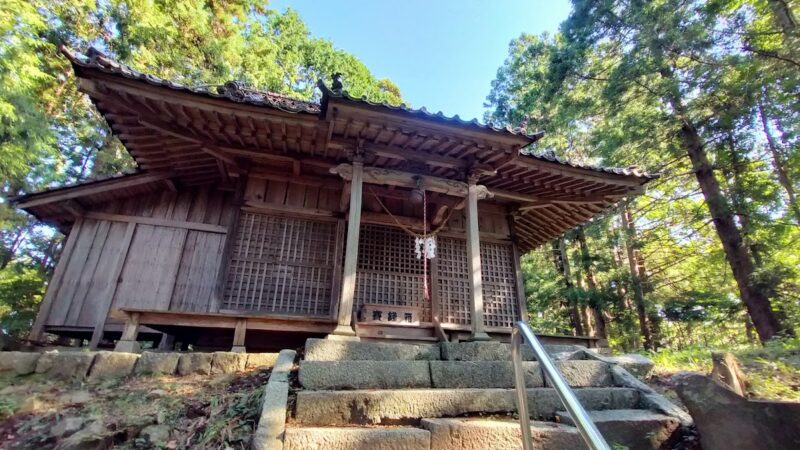
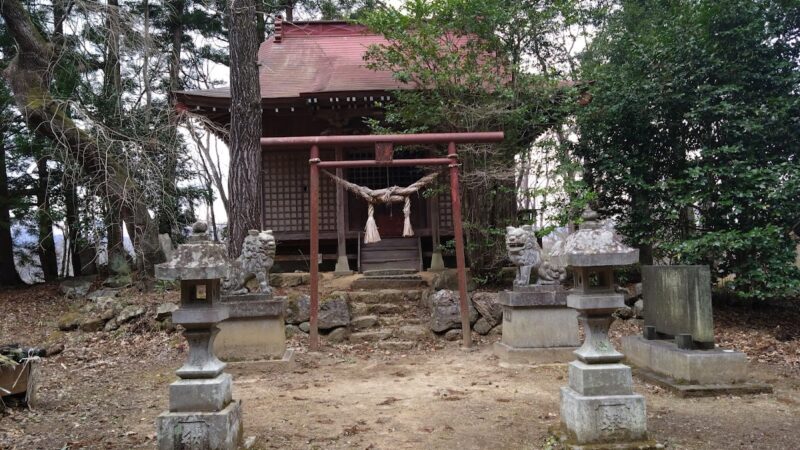
Hachichome Castle (Hatchome-jo) was a mountain castle from the Sengoku period located in Matsukawa-cho, Fukushima City, Fukushima Prefecture. Currently, Atago Shrine and Hachiman Shrine are enshrined on the mountaintop, and it is cherished as a local historical heritage site. The unique name “Hachichome” originates from its location, eight cho (approximately 800 meters) from the border between Adachi and Shinobu districts (Sakaigawa River).
During the Sengoku period in the Tohoku region, it played a crucial role in the expansion of the Date clan’s power and is also known as the retirement castle of Date Sanemoto, the father of Date Shigezane. It was also known by various other names such as Matsukawa Castle, Nishikan, and Atagokan, and was affectionately called by different names depending on the region.
Basic Information on Hachichome Castle
Location and Former Province Name
Location: Atagoyama, Matsukawa-cho, Fukushima City, Fukushima Prefecture (Suwayama 2)
Former Province Name: Iwashiro Province
Access: Accessible from beside Matsukawa Nishi Kindergarten in Fukushima City. Located on a plateau approximately 30-60 meters above sea level, access is generally from the Inari area of Matsukawa-cho. Currently located west of the Jōkōin temple, it is affectionately known as Atagoyama by locals.
Common Names and Alternative Names
Hachichome Castle has several alternative names:
- Matsukawa Castle: Due to its location in Matsukawa-cho
- Nishikan: Due to its geographical location
- Atagokan: Derived from the Atago Shrine at the mountaintop
These alternative names reflect the castle’s location, historical changes, and regional differences in naming. While the names used may vary depending on the document, they all refer to the same castle.
Classification and Structure
Castle Structure: Mountain Castle
Elevation: Approximately 251 meters
Relative Height: Approximately 30-60 meters
Keep Structure: No keep exists (due to being a mountain castle from the Sengoku period)
Structure and Remains
Layout and Enclosure Arrangement
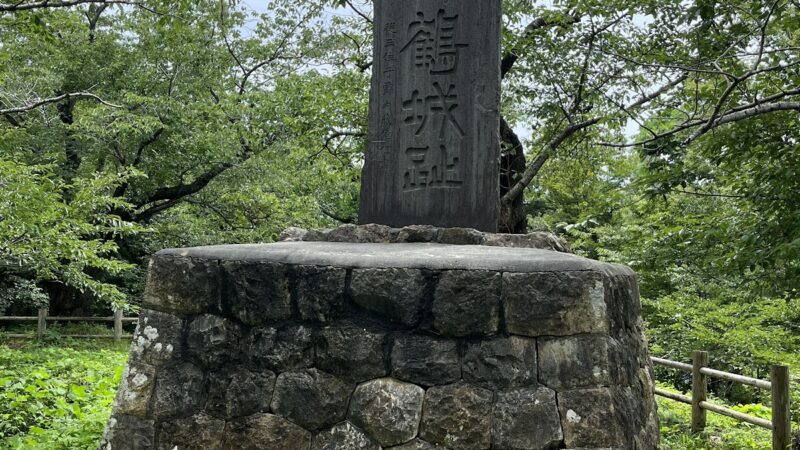
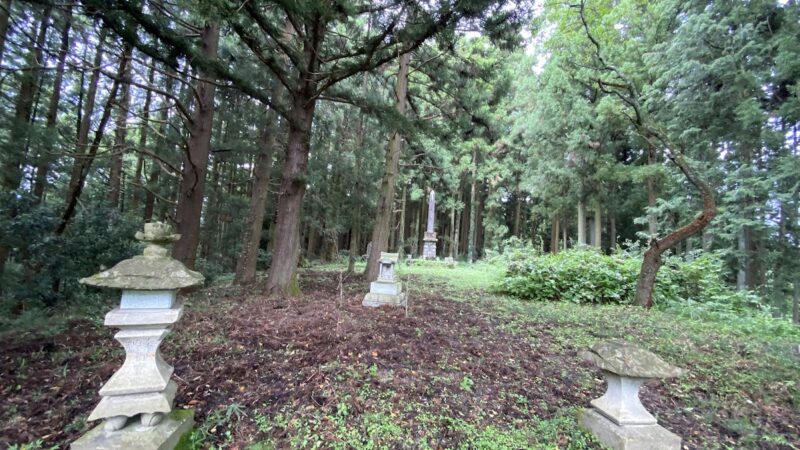
The layout of Hachichome Castle is a typical Sengoku period mountain castle structure, with multiple enclosures arranged around the mountaintop. Climbing from beside Matsukawa Nishi Municipal Kindergarten, you can first see two enclosures, and beyond that, reach the main enclosure where a monument to the war dead stands.
The layout of the enclosures, centered around the main enclosure, is designed to balance defense and living space, and is a valuable remains that conveys the castle-building techniques of the Sengoku period to the present day. Each enclosure is skillfully arranged, making maximum use of the limited flat land.
Existing Remains
The following remains still exist at Hachichome Castle:
Kuruwa (Enclosures): Multiple flat areas can be identified, clearly distinguishing between the main enclosure and secondary enclosures. A monument to the war dead stands in the main enclosure, indicating its former central location.
Earthworks: Traces of earthworks remain around the enclosures, demonstrating their function as defensive structures. While some parts are weathered, others remain clearly visible.
Dry Moats: Dry moats separating the enclosures remain, functioning as defensive lines.
Moats: Moats cutting across the ridges can be seen, demonstrating a defensive strategy to prevent enemy intrusion.
These remains well preserve the characteristics of a mountain castle from the Sengoku period and are valuable resources for castle research. Even today, the shapes of the earthworks and dry moats can be observed, showcasing the advanced castle-building techniques of the time.
These remains clearly preserve the features of a Sengoku period mountain castle and are invaluable resources for castle research. Even today, the shapes of the earthworks and dry moats can be seen, demonstrating the high level of castle construction technology at the time. ### Shrines and Current Status
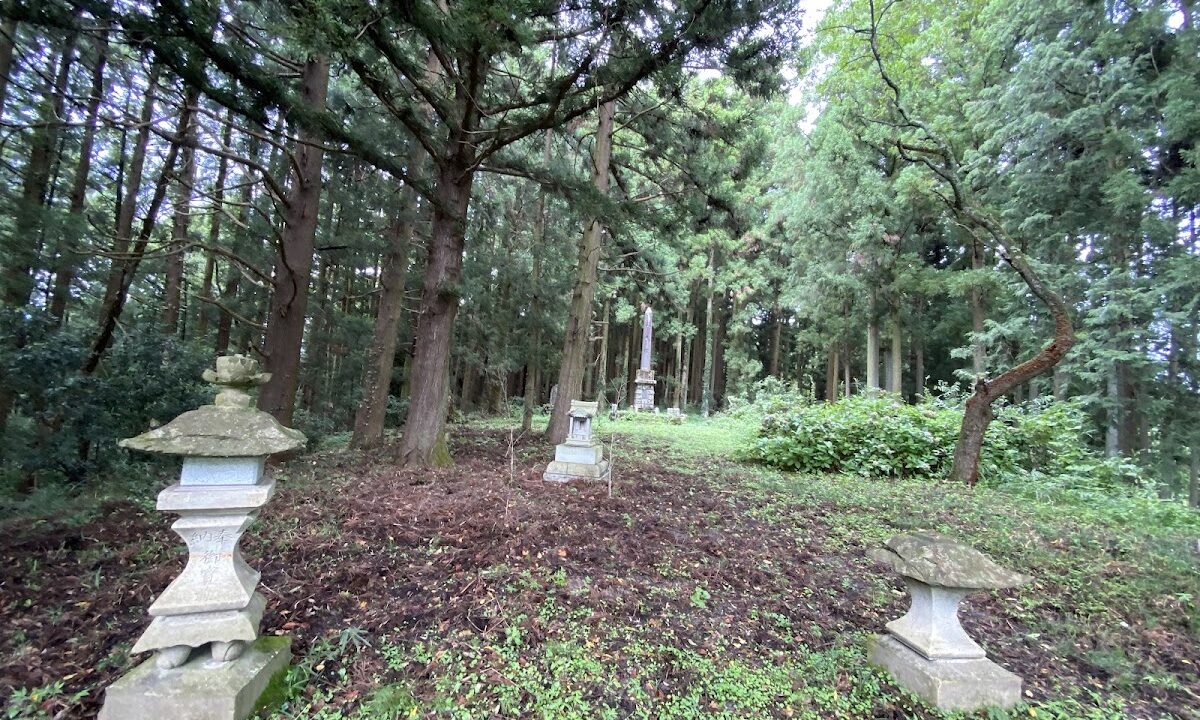
At the summit, Atago Shrine and Hachiman Shrine are enshrined, and the castle ruins also function as a place of worship for the local community. These shrines were built by local residents after the castle was abandoned and also play a role in preserving the castle ruins.
The current castle ruins are relatively easy to climb, with some parts maintained as shrine approaches. However, in order to maintain the preservation of the remains, care must be taken not to damage the ruins when visiting.
History and Background
Construction History
There are various theories regarding the construction period and builder of Hachichome Castle, but it is generally believed to have been built in the early 16th century by Date Tanemune. Date Tanemune developed Hachichome Castle as a branch castle of Kuwori Nishiyama Castle (later Omori Castle), solidifying the Date clan’s power base in Shinobu County.
According to one theory, the first lord of the castle was Horikoshi Kogyo (Horikoshi Noto-no-kami), who is said to have defended the castle under the orders of Date Tanemune. The Horikoshi clan was known as a senior retainer of the Date clan and was entrusted with governing this region.
The Tenbun Rebellion and Changes in Castle Lords
During the Tenbun Rebellion (1542-1548), Hachichome Castle was the residence of Horikoshi Kogyo (also known as Horikoshi Munenori). This civil war was a dispute over the succession of the Date clan and became a large-scale conflict that engulfed the entire Tohoku region.
Later, the Kiyono clan became the castle lords for a period, and the names of Kiyono Bizen-no-kami and Kiyono Totomi-no-kami are recorded. The Kiyono clan, as vassals of the Date clan, were also responsible for the defense of this region.
Around 1570 (Genki 1), there are said to have been changes in the castle lords and shifts in power, illustrating the importance of castles during the turbulent Sengoku period.
As Date Sanemoto’s Retirement Castle
The most important period in the history of Hachichome Castle is the time when Date Sanemoto used it as his retirement castle. Date Sanemoto was the father of Date Shigezane, who later served as a senior retainer of Date Masamune, and was a key figure in the Date clan.
While holding the position of lord of Omori Castle, Sanemoto chose Hachichome Castle as his retirement home. This indicates that Hachichome Castle, while strategically important, also possessed an environment suitable for retirement.
The lineage from Date Sanemoto to Date Shigezane positioned Hachichome Castle as an important base for the Date clan, establishing regional control through cooperation with Omori Castle. Katakura Kagetsuna (Katakura Kojuro) was also involved as the lord of Omori Castle, and Hachichome Castle continued to play its role as a subsidiary castle.
Abandonment and Aftermath
Hachichome Castle is believed to have been abandoned around 1590 (Tensho 18). This period coincides with Toyotomi Hideyoshi’s pacification of Oshu and the relocation of Date Masamune from Yonezawa to Iwadeyama.
After the castle was abandoned, the site was developed as a place of local worship, and Atago Shrine and Hachiman Shrine were built. Throughout the Edo period, the castle site was managed as shrine grounds and has been preserved as a historical heritage site to this day.
Since the Meiji era, a monument to the war dead has been erected on the site of the main keep, making it a place of remembrance for those who died in battle. As a result, the castle site has become deeply rooted in the local community as a place with both historical value and religious/memorial significance.
Details of Major Castle Lords
Horikoshi Clan Era
Horikoshi Kogyo (Horikoshi Notonokami, Horikoshi Munenori) was a samurai who served Date Tanemune and is considered to be the initial lord of Hachichome Castle. The Horikoshi clan served as important retainers of the Date clan, governing Shinobu County and playing a part in the defense network centered around Omori Castle.
During the Tenbun Rebellion, historical sources differ on which side the Horikoshi clan sided with, but the prevailing theory is that they ultimately sided with Date Harumune.
Seino Clan Era
There was a period when members of the Seino clan, such as Seino Bizen-no-kami and Seino Tōtōmi-no-kami, served as castle lords. The Seino clan also belonged to the Date clan’s vassal group and supported the Date clan’s rule in Shinobu County.
During the Seino clan’s era, it is believed that efforts were made not only to govern the surrounding area but also to strengthen the defense system through cooperation with Ōmori Castle.
Date Clan Era
After renovations by Date Tanemune, the period when Date Sanemoto used it as his retirement castle can be considered the golden age of Hachichōme Castle. Date Sanemoto was an important figure in the Date clan, and his son, Date Shigezane, later became a renowned general and one of the “Three Great Generals of Date,” serving as a senior retainer of Date Masamune.
Upon coming under the direct control of the Date clan, Hachichome Castle transformed from a mere subsidiary castle into a crucial strategic point in the Date clan’s control of Shinobu County. Its integrated operation with Omori Castle ensured stable control of the region.
Relationship between Hachichome Castle and Omori Castle
Hachichome Castle was built as a subsidiary castle of Omori Castle (Kuwori Nishiyama Castle), and the two castles were closely related. Omori Castle was the Date clan’s main base in Shinobu County, and Hachichome Castle played a complementary role in its defense.
Given their proximity, it is believed they formed a defensive network through mutual communication. During the rule of Omori Castle by Date Sanemoto, Date Shigezane, and Katakura Kagetuna, Hachichome Castle continued to function as an important subsidiary castle.
This two-castle system played a vital role in stabilizing the Date clan’s control of Shinobu County and formed the core of a defensive network that included surrounding smaller castles and fortifications.
Surrounding Castles and Historical Background
Castles of Shinobu District
Several castles and fortifications existed around Hachichome Castle, including Doai-kan, Kurigasaku-kan, Toriido-kan, and Onami Castle. These formed a castle network supporting the Date clan’s rule over Shinobu District, and Hachichome Castle occupied an important part of it.
Connections to Major Castles in Fukushima Prefecture
Fukushima Prefecture has numerous famous castles, such as Nihonmatsu Castle, Shirakawa-Komine Castle, and Wakamatsu Castle (Aizu-Wakamatsu Castle). While Hachichome Castle is smaller compared to these large castles, it is important for its practical role in regional governance during the Sengoku period.
In particular, its geographical proximity to Nihonmatsu Castle suggests that Hachichome Castle may have functioned as a frontline base during the power struggle between the Date clan and the Nihonmatsu clan (Hatakeyama clan).
Highlights of Hachichome Castle
Observation Points of the Ruins
The following are highlights to see when visiting Hachichome Castle:
Layout of Enclosures: The layout of the enclosures on the mountaintop exhibits a typical structure of a Sengoku period mountain castle, allowing observation of ingenuity in defense and living space.
Earthworks and Dry Moats: The existing earthworks and dry moats are valuable remains that convey the actual state of the defensive facilities at the time. The moats, in particular, show technical ingenuity in cutting across the ridge.
Monument to the War Dead in the Main Enclosure: As a monument demonstrating the layered nature of history, it tells the story of the historical changes at the castle site.
Atago Shrine and Hachiman Shrine: As an example of the use of the castle site after its abandonment, it shows the relationship between local faith and historical heritage.
Precautions for Visiting the Castle
When visiting the Hachichome Castle ruins, please note the following:
- As it is a mountain castle, please wear appropriate clothing and shoes.
- Please walk on the designated paths to avoid damaging the remains.
- Please respect that this is the grounds of a shrine.
- Please avoid visiting the castle in bad weather.
- Please be considerate of the living space of the local residents.
Historical Significance of Hachichome Castle
Hachichome Castle is an important historical site that conveys the reality of regional governance in the Tohoku region during the Sengoku period. While it is not a castle with a large keep or stone walls, it possesses high historical value as a practical castle that supported the actual governing system of a Sengoku daimyo.
It is a good example of how important the network of branch castles was in the process of the Date clan’s expansion, and its connection to famous warlords such as Date Sanemoto and Date Shigezane further enhances the castle’s historical importance.
Furthermore, the fact that it has continued to be protected by the community as a shrine even after its abandonment is an interesting case study for considering the relationship between the preservation of castle ruins and the local community.
Summary
Hachichome Castle (Matsukawa-cho, Fukushima City, Fukushima Prefecture) is a Sengoku period mountain castle built by Date Tanemune and known as the retirement castle of Date Sanemoto. Also known as Matsukawa Castle, Nishikan, and Atagokan, it served as a branch castle of Omori Castle, supporting the Date clan’s rule in Shinobu District.
Remains such as baileys, earthworks, dry moats, and trenches still exist today, and Atago Shrine and Hachiman Shrine are enshrined at the summit. The castle changed hands several times, from the Horikoshi clan to the Kiyono clan and then the Date clan, before being abandoned around 1590.
Accessible from beside Fukushima City Matsukawa Nishi Kindergarten, it is a valuable historical site where visitors can experience the structure of a Sengoku period mountain castle firsthand, making it popular with castle enthusiasts and history buffs. It can be considered an important historical heritage site for learning about the history of the Date clan and understanding the realities of regional rule during the Sengoku period.