Fujishima Castle, Fukui City (Fukui Prefecture) – One of the Seven Castles of Ashiwa during the Nanboku-cho Period, the Site of Nitta Yoshisada’s Demise
About Fujishima Castle
Fujishima Castle is the site of a flatland castle from the Nanboku-cho period, located in Fujishima-cho, Fukui City, Fukui Prefecture. Built on the alluvial plain on the left bank of the Kuzuryu River, this castle is one of the Seven Castles of Ashiwa and functioned as an important military base during the turbulent Nanboku-cho period. Currently, it is the grounds of Seichoshoji Temple, and some of the original earthworks still remain.
The main reason Fujishima Castle is so significant in history is the dramatic episode of Nitta Yoshisada, a renowned general of the Southern Court, being killed in battle on his way to this castle. This event, detailed in Volume 20 of the *Taiheiki*, is recounted to this day as a tragedy symbolizing the Nanboku-cho period.
History of Fujishima Castle
Construction and Role during the Nanboku-cho Period
Fujishima Castle is believed to have been built by Shiba Takatsune, a general of the Northern Court. During the Nanboku-cho period, Echizen Province (present-day Fukui Prefecture) was the stage for fierce battles between the two sides, and Fujishima Castle was a crucial stronghold located on the front lines.
The Asuwa Seven Castles is a collective term for seven castles built in the Asuwa River basin, and Fujishima Castle played a central role among them. Together with the other six castles, it formed a defensive network for the Northern Court forces in Echizen. Its characteristic as a flatland castle built in the plains of this region reflects the tactics and geographical conditions of the time.
The Death of Nitta Yoshisada and Fujishima Castle
On July 2nd, 1338 (Engen 3/Ryakuō 1), Nitta Yoshisada, fighting in Echizen as the commander-in-chief of the Southern Court, set out to capture Fujishima Castle. According to the *Taiheiki*, Yoshisada, leading a small force on his way to Fujishima Castle, encountered Shiba forces at a place called Tōmyōji-nawate.
In this sudden battle, Nitta Yoshisada was fatally wounded by an arrow to the forehead, ending his 38-year life. Yoshisada, a central figure in the Southern Court who supported the Kenmu Restoration and opposed Ashikaga Takauji, suffered a major blow to the Southern Court forces.
This dramatic end elevated Fujishima Castle to a place of historical significance beyond mere military importance. The name Fujishima became deeply etched in Japanese history as the site of Nitta Yoshisada’s death.
The Castle’s End and Aftermath
As the turmoil of the Northern and Southern Courts subsided, the military importance of Fujishima Castle gradually declined. While the exact date of its abandonment is unclear, it is believed to have lost its function as a castle after the unification of the Northern and Southern Courts.
Later, Nishichōshōji Temple was built on the castle site. While much of the castle’s remains were lost during the development of the temple grounds, some earthworks have been preserved to this day.
Highlights of Nishichōshōji Temple (Fujishima Castle Site)
Existing Remains
Currently, the only identifiable remains of Fujishima Castle are the earthworks remaining within the grounds of Nishichōshōji Temple. Located behind the main hall, these earthworks are remnants of the earthen structures that once defended the castle, and are a valuable historical site that conveys the castle-building techniques of the Nanboku-chō period.
Although the height and scale of the earthworks have decreased compared to their original size, they are important clues to imagining the appearance of Fujishima Castle as a flatland castle. For castle experts and history enthusiasts, these earthworks are valuable resources for understanding the castle structure of the time.
Castle Site Monument and Information Board
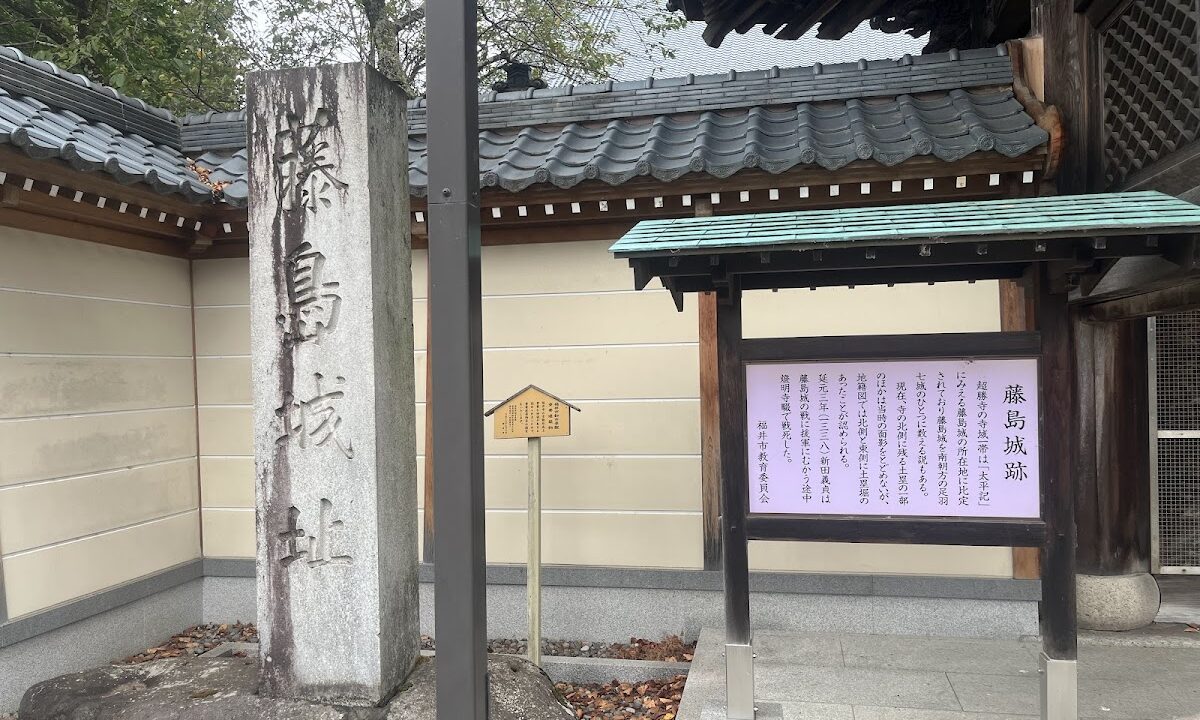
Next to the main gate of Nishichōshōji Temple, there is a stone monument marking the Fujishima Castle site and a detailed information board. These elements clearly convey the historical significance of this site to visitors.
The explanatory signs describe the overview of Fujishima Castle, its relationship with Nitta Yoshisada, and its position among the seven castles of Asuwa, making it easy to understand the history of the castle ruins even without prior knowledge. Many history enthusiasts can be seen taking commemorative photos in front of the castle ruins monument.
Grounds of Nishichōshōji Temple
Nishichōshōji Temple itself is a magnificent temple, with impressive buildings such as the main gate and main hall remaining. It is valuable not only as a castle site but also as a place to appreciate temple architecture.
The temple grounds are enveloped in a tranquil atmosphere, making it a suitable environment for strolling while reflecting on the turmoil of the Nanboku-chō period. Cherry blossoms in spring and autumn leaves color the grounds, allowing visitors to enjoy the beauty of each season.
Nitta Yoshisada and Fujishima Shrine
Origin of Fujishima Shrine
Fujishima, the site of Nitta Yoshisada’s death in battle, is home to Fujishima Shrine, which enshrines him as its principal deity. This shrine is one of the fifteen shrines of the Kenmu Restoration and holds a high status as a former special government-supported shrine.
In the Meiji era, the Meiji government adopted a historical perspective that emphasized the Kenmu Restoration, leading to the recognition of Nitta Yoshisada, who was loyal to Emperor Go-Daigo, as a “meritorious retainer of the Kenmu Restoration.” As a result, Fujishima Shrine was founded in 1876 (Meiji 9).
Highlights of Fujishima Shrine
Fujishima Shrine displays materials and artifacts related to Nitta Yoshisada, allowing visitors to learn about his life and achievements in detail. A bronze statue of Yoshisada stands on the shrine grounds, preserving his heroic image.
Every year on the anniversary of Yoshisada’s death, a memorial service is held, attended by locals and history enthusiasts. In Fukui City, Nitta Yoshisada is recognized as an important figure symbolizing local history.
Fujishima Castle Ruins (Nishichoshoji Temple) and Fujishima Shrine are within walking distance of each other, and visiting both will provide a deeper understanding of the history of Nitta Yoshisada and Fujishima Castle.
The Position of Fujishima Castle Among the Seven Castles of Asuwa
What are the Seven Castles of Asuwa?
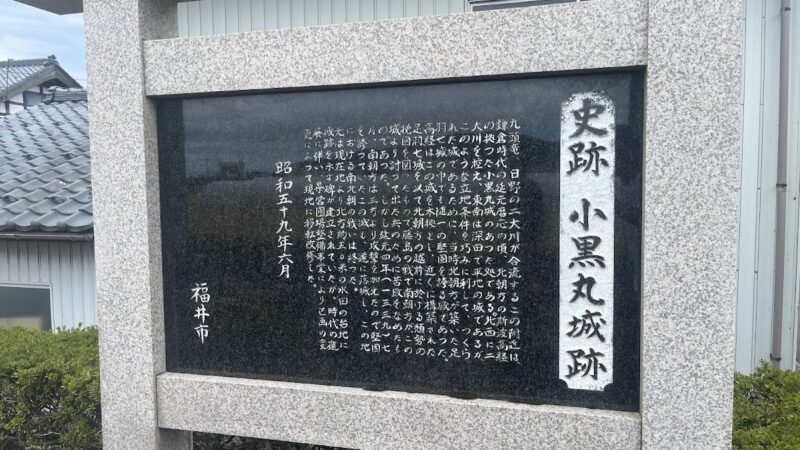
The Seven Castles of Asuwa are a collective term for seven castles built in the Asuwa River basin. During the Nanboku-cho period, they functioned as defensive strongholds for the Northern Court forces in Echizen Province. Besides Fujishima Castle, other well-known castles include Oguromaru Castle.
These castles cooperated with each other, forming a defensive network to prepare for invasions by the Southern Court forces. Many of them were flatland castles built in plains, reflecting their strategic importance in Echizen at the time.
Strategic Importance of Fujishima Castle
Due to its geographical location on the left bank of the Kuzuryu River, Fujishima Castle was a strategically important point protecting the northern part of the Echizen Plain. The fact that Nitta Yoshisada aimed to capture this castle demonstrates its high military value.
Among the seven castles of Asuwa, Fujishima Castle gained a special status due to the historical event of Nitta Yoshisada’s death in battle. While the other six castles have faded into history, Fujishima Castle remains widely known to this day.
Access and Visiting Information
Access by Train
The nearest station to Fujishima Castle Ruins (Nishichoshoji Temple) is Higashi-Fujishima Station on the Echizen Railway Katsuyama-Eiheiji Line. It’s about a 10-minute walk from the station. It’s about a 15-minute train ride from Fukui Station, making it suitable for a day trip.
Higashi-Fujishima Station is an unmanned station, but there are signs around the station, so even first-time visitors can easily reach Nishichoshoji Temple.
Access by Car
If traveling by car, it’s approximately 20 minutes from the Fukui Interchange on the Hokuriku Expressway. While there is a parking lot for visitors at Nishichōshōji Temple, space is limited, so caution is advised during major holidays.
Entering “Nishichōshōji Temple” or “Fujishima-cho, Fukui City, Fukui Prefecture” into your car navigation system will guide you to your destination.
Points to Note During Your Visit
Since Nishichōshōji Temple is an active temple, it’s important to observe proper visiting etiquette. Because the remains, such as earthworks, are located within the temple grounds, it’s considered polite to visit the main hall before viewing them.
The castle ruins monument and explanatory signs are located next to the temple gate and can be viewed freely. Photography is permitted, but please be considerate of other visitors.
Nearby Tourist Attractions
Fujishima Shrine
As mentioned above, Fujishima Shrine, dedicated to Nitta Yoshisada, is within walking distance of the Fujishima Castle ruins. Visiting both the castle ruins and the shrine will allow for a deeper understanding of the history of Nitta Yoshisada and Fujishima. ### Asuwayama Mountain and Asuwa Shrine
Asuwayama Mountain, towering over the city of Fukui, is home to Asuwa Shrine, associated with Emperor Keitai. From the summit, you can enjoy a panoramic view of the Fukui Plain and gain an overview of the geographical environment where Fujishima Castle once stood.
Asuwayama Mountain is also known as a famous cherry blossom viewing spot, attracting many visitors in spring. It’s a place where you can enjoy both historical walks and nature appreciation.
Fukui Castle Ruins
In the heart of Fukui City, the remains of Fukui Castle from the Edo period still exist. While the site is now occupied by the prefectural office and police headquarters, the moats and stone walls are preserved, making it a must-see spot for castle enthusiasts.
Although from a different era than Fujishima Castle, it would be interesting to compare them as castles built in the same Fukui region.
Ichijodani Asakura Clan Ruins
In the southeastern part of Fukui City lies the Ichijodani Asakura Clan Ruins, the site of a castle town from the Sengoku period. This site, designated a National Special Historic Site, flourished as the base of the Asakura clan, a powerful daimyo family during the Sengoku period.
Located about 30 minutes by car from Fujishima Castle, it’s well worth visiting as part of a tour of Fukui’s medieval history. The reconstructed townscape is a valuable historical site where you can experience life at that time.
Significance of Visiting Fujishima Castle
Attraction for History Enthusiasts
Fujishima Castle is a place where the complex historical background of the Nanboku-cho period intersects with the final moments of the heroic figure Nitta Yoshisada. Visiting the actual setting of the dramatic scenes depicted in the *Taiheiki* deepens your understanding of history.
While only earthworks remain as castle ruins, their simplicity conveys the true nature of a castle from the Nanboku-cho period. It’s a valuable opportunity to experience the simple appearance of a medieval castle, distinct from the ornate castles of the early modern period.
As a Place to Learn Local History
Fujishima Castle is indispensable for understanding the history of Fukui Prefecture, especially Fukui City. The death of Nitta Yoshisada in battle has become an integral part of Fukui’s regional identity and is cherished by the local people.
Visiting Nishichōshōji Temple and Fujishima Shrine allows you to learn how the local people have preserved and honored this history.
A Quiet Place for Historical Walks
Fujishima Castle Ruins is a quiet historical site, far removed from the crowds of popular tourist destinations. You can take your time to reflect on the turmoil of the Nanboku-chō period.
The grounds of Nishichōshōji Temple are well-maintained, providing an environment where you can enjoy the changing seasons while strolling through history. It’s an ideal place for those who want to escape the hustle and bustle and confront history.
Preservation and Future of Fujishima Castle
Value as a Historical Site
Fujishima Castle Ruins are a valuable historical site as a castle ruin from the Nanboku-chō period. Three elements—its flatland castle form, the remains of earthworks, and its historical connection to Nitta Yoshisada—enhance the value of this historical site.
Fukui City recognizes this historical site as a regional historical asset and is making efforts to disseminate information, such as by installing explanatory signs. Appropriate preservation and utilization are expected in the future.
Management by Nishichōshōji Temple
The fact that the castle ruins are managed as temple grounds is fortunate from the perspective of preserving the remains. Maintaining it as a religious facility has protected it from development.
Nishichōshōji Temple manages the grounds with an understanding of its historical value and shows great consideration for visitors. It can be said to be a good example of the coexistence of a temple and a historical site.
Potential as a Tourism Resource
Fujishima Castle ruins are an important pilgrimage site for fans of Nitta Yoshisada and those interested in the Nanboku-chō period. Visiting it in conjunction with Fujishima Shrine and the battle site of Tōmyōji-nawate makes it possible to conduct a historical tour tracing Yoshisada’s final moments.
Further utilization of Fujishima Castle ruins is expected as part of Fukui City’s efforts in historical tourism. Improved guidance and collaboration with surrounding historical sites are desirable to create an environment that will attract more visitors.
Summary
Fujishima Castle is the site of a flatland castle from the Nanboku-cho period, located in Fujishima-cho, Fukui City, Fukui Prefecture. Built by Shiba Takatsune of the Northern Court, it served as one of the seven castles of Asuwa, playing a crucial role in the defense of Echizen Province. However, the greatest reason this castle has etched its name in history is the dramatic event of Nitta Yoshisada, a renowned general of the Southern Court, being killed in battle on his way to this castle.
Currently, the site is part of the grounds of Seichoshoji Temple, and a portion of the earthworks still conveys the atmosphere of that time. The castle site monument and explanatory sign beside the temple gate, and the earthworks behind the main hall, invite visitors into the turmoil of the Nanboku-cho period.
Visiting the Fujishima Castle ruins is not simply about viewing a historical site, but about experiencing a place that witnessed a crucial turning point in Japanese history. This place, where the final moments of the hero Nitta Yoshisada, the Nanboku-cho period conflict, and the local history of Fukui intersect, holds special significance for history enthusiasts.
Its convenient accessibility, being within walking distance from Higashi-Fujishima Station on the Echizen Railway Katsuyama-Eiheiji Line, is also a major draw. When visiting Fukui City, be sure to stop by Fujishima Castle Ruins and reflect on the history of the Nanboku-cho period.