Kenshin Ichiyajo Castle (Sakura City, Chiba Prefecture) Complete Guide | Uesugi Kenshin’s Attack on Usui Castle and the Truth of History
What is Kenshin Ichiyajo Castle?
Kenshin Ichiyajo Castle is a Sengoku period encampment site located in Ojidai 3-chome, Sakura City, Chiba Prefecture. It is also known as Ojidai Fort or simply Ichiyajo Castle.
This castle is the site of the main camp built by Uesugi Kenshin, a renowned general of Echigo Province, in 1566 (Eiroku 9) to conquer Usui Castle in Shimosa Province. It is known as a historical site symbolizing the power struggle between the Uesugi and Hojo clans in the Kanto region. Currently, it is maintained as “Ichiyajo Park” and serves as a place of relaxation for local residents, but it remains an important historical site that conveys the memory of fierce battles during the Sengoku period.
Basic Information about the Castle
- Location: 3-chome, Ojidai, Sakura City, Chiba Prefecture
- Former Province: Shimosa Province
- Classification/Structure: Flatland Castle, Encampment Castle
- Builder: Uesugi Kenshin
- Year of Construction: Eiroku 9 (1566)
- Main Lord: Uesugi Kenshin (Temporary Use)
- Remains: Almost completely gone (Currently maintained as Ichiyajo Park)
- Designated Cultural Property: None
Historical Background of Kenshin’s Ichiyajo Castle
Military Actions of Uesugi Kenshin in the Kanto Region
During the Eiroku era, the power of the Later Hojo clan, centered around Hojo Ujiyasu, was growing immense in the Kanto region. To counter this, Uesugi Kenshin (then Nagao Kagetora), who inherited the position of Kanto Kanrei (Governor of Kanto), repeatedly dispatched troops from Echigo to Kanto in response to requests for reinforcements from various daimyo in the Kanto region.
In the spring of 1566 (Eiroku 9), Uesugi Kenshin again entered Kōzuke Province (present-day Kozuke Province) from Echigo Province, passing through Kogane in Shimōsa Province, and arriving at Usui Castle town in March of the same year. The main objective of this expedition was to capture Usui Castle, which was supported by the Hōjō clan, and thereby reduce the Hōjō clan’s influence in Shimōsa Province.
The Circumstances of the Attack on Usui Castle
Usui Castle was ruled by Hara Shikibu-no-taifu Tanetsada (some sources say Chiba Tanetomi), and was strongly fortified with the support of Hōjō Ujiyasu. Uesugi Kenshin established his main camp approximately 300 meters southwest of Usui Castle, which later became known as Kenshin’s One-Night Castle.
The name “One-Night Castle” originates from the legend that Kenshin built the castle in a single night. While it wasn’t actually completed in one night, the story is recounted as an anecdote illustrating the rapid construction of his encampment. Such fortified camps are also called “tsukejiro” (attached castles) and functioned as forward bases for besieging and capturing enemy castles.
The Outcome of the Battle of Usui Castle
Uesugi Kenshin attacked Usui Castle with a powerful army, but the castle lord, Hara Tanetsada, repelled Kenshin’s fierce attack with skillful defensive tactics and support from the Hojo clan. This battle is considered one of the few defeats for Uesugi Kenshin, and he was forced to abandon his attempt to capture Usui Castle and retreat.
After the retreat, Uesugi Kenshin changed his route towards Kyoto and returned to Echigo. The Battle of Usui Castle was a turning point that significantly set back Uesugi Kenshin’s ambition to conquer the Kanto region and influenced the subsequent situation in Kanto.
Structure and Characteristics of Kenshin’s One-Night Castle
Character as a Fortified Camp
Kenshin’s One-Night Castle was not a permanent residence, but was built as a temporary fortified camp (attached castle) for the purpose of capturing Usui Castle. Therefore, it is believed that there were no full-fledged stone walls or castle towers, and that the defensive structures mainly consisted of simple earthworks, moats, and fences.
The main functions of the encampment were as follows:
- Army garrison: A campsite for accommodating a large army
- Command and control base: The main camp where Kenshin planned his strategies and issued orders
- Supply base: A storage area for provisions and weapons
- Defensive position: A defensive structure prepared for enemy counterattacks
Strategic significance of the location
The location where Kenshin’s One-Night Castle was built is very close to Usui Castle, approximately 300 meters southwest. This location held the following strategic significance:
- Monitoring Usui Castle: A distance that allowed for constant monitoring of the castle’s movements.
- Forward Base for Attack: Functioning as a launching point for siege warfare.
- Securing Supply Lines: A location conducive to maintaining supply lines from the rear.
- Control of Surrounding Areas: Military control of the area surrounding Usui Castle.
Current Status of Remains
Unfortunately, the remains of Kenshin’s One-Night Castle have almost completely disappeared. The current One-Night Castle Park no longer retains any traces of the castle’s structure from the Sengoku period, such as earthworks or moats. The park is now a typical neighborhood park with playground equipment and benches.
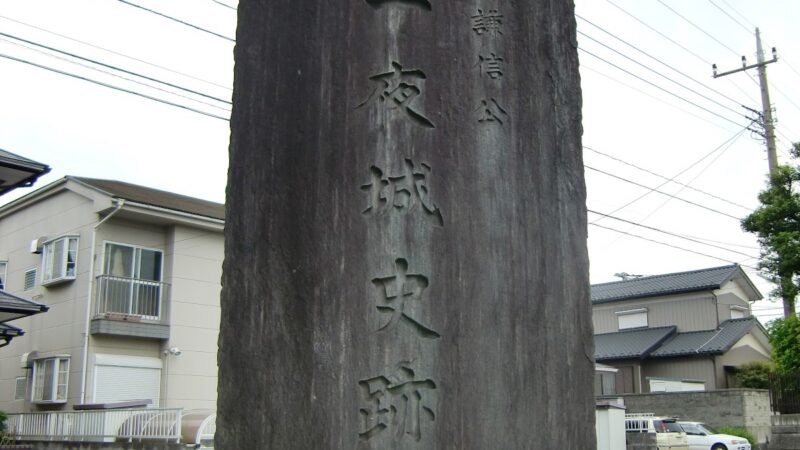
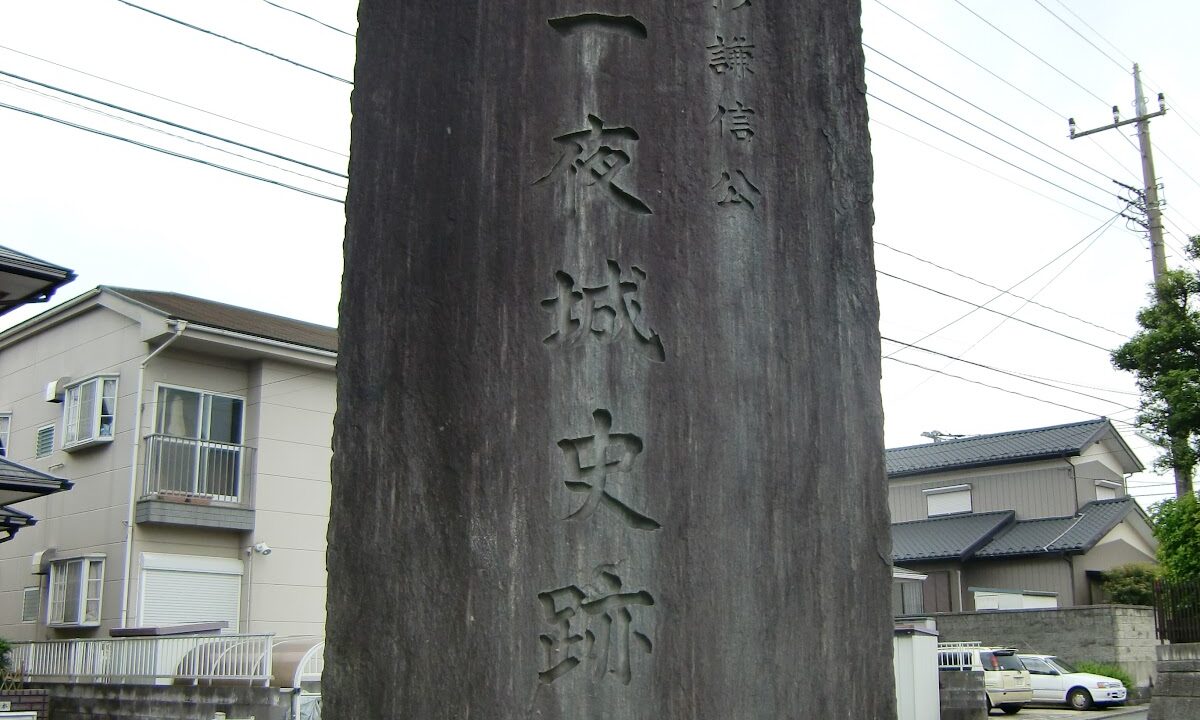
However, a large stone monument (castle site monument) inscribed with “Kenshin’s One-Night Castle Site” stands within the park, providing the only physical evidence that this was once Uesugi Kenshin’s headquarters. This monument plays an important role in passing on the region’s history to future generations.
Access Information
Access by Train
The most convenient way to reach Kenshin Ichiyajo Castle Ruins (Ichiyajo Park) is by using the Keisei Electric Railway.
Nearest Station: Keisei Main Line “Keisei Usui Station”
- From Keisei Usui Station South Exit: Approximately 5 minutes on foot (approximately 300 meters)
- After exiting the station, walk straight south, and you will see the park in a residential area.
Access by Car
- From Higashi-Kanto Expressway “Sakura IC”: Approximately 15 minutes
- Via National Route 296: Approximately 10 minutes from Sakura city center
Parking: There is no dedicated parking lot. We recommend using nearby coin-operated parking lots or public transportation.
Address and Map Information
- Address: 3-chome, Ojidai, Sakura City, Chiba Prefecture 285-0837
- Coordinates: Approximately 35.7 degrees North latitude, approximately 140.2 degrees East longitude
The park is a small park located in a residential area. Searching for “Ichiyajo Park” or “Kenshin Ichiyajo” on a car navigation system or smartphone map app will display the accurate location.
Highlights and Visitor Guide
Current Status of Ichiyajo Park
Ichiyajo Park is a neighborhood park maintained for local children, equipped with playground equipment such as jungle gyms and swings. The park is small, and you can see the entire park in just a few minutes.
Castle Site Monument (Stone Monument)
The most important highlight in the park is the stone monument inscribed with “Kenshin Ichiyajo Site.” This monument is relatively large and sturdily built, making it a popular spot for castle enthusiasts to take photographs.
The stone monument clearly states that this site is the former encampment of Uesugi Kenshin, making it a valuable historical marker that evokes the historical romance of the Sengoku period.
Points to Note When Visiting
- No Remains Remain: Since no castle remains such as earthworks or moats can be seen, please do not have overly high expectations.
- Located in a Residential Area: The surrounding area is a quiet residential area, so please be considerate of noise.
- Small Park: Please plan your stay to be around 10-15 minutes.
- Photography: We recommend taking photos of the stone monument and the park as a record.
Best Time to Visit
Ichiyajo Park is open year-round and can be visited at any time. The surrounding natural scenery is particularly beautiful during cherry blossom season and the fresh green season, making it ideal for a stroll.
Related Historical Sites and Tourist Spots in the Area
Usui Castle Ruins
If you visit Kenshin Ichiyajo, you should definitely visit Usui Castle Ruins. Located about a 10-minute walk northeast from Keisei Usui Station, this medieval castle ruin stands on a plateau overlooking Lake Inba.
- Location: Usui-da, Sakura City, Chiba Prefecture
- Highlights: The remains of earthworks, dry moats, and baileys are relatively well-preserved.
- Historical Significance: Known as a famous castle that repelled Uesugi Kenshin.
Usui Castle was a target of Kenshin’s “One-Night Castle” attack, and visiting both allows for a comprehensive understanding of the Battle of Usui Castle.
Sakura Castle Ruins (Sakura Castle Park)
Sakura Castle Ruins, one of Chiba Prefecture’s representative castle ruins, is also located within Sakura City.
- Location: Government-owned, unnumbered address, Jonai-machi, Sakura City, Chiba Prefecture
- Access: Approximately 20 minutes on foot from Keisei Sakura Station, or by bus from JR Sakura Station
- Highlights: Edo period castle remains including large earthworks, dry moats, and barbicans
- Facilities: National Museum of Japanese History is adjacent
Sakura Castle is a modern castle built during the Edo period. While it’s from a different era than Kenshin’s “One-Night Castle,” it’s an important historical site for learning about the history of castles in Chiba Prefecture.
National Museum of Japanese History
Located within Sakura Castle Ruins Park, the National Museum of Japanese History is one of Japan’s leading museums, comprehensively exhibiting Japanese history and culture.
- Exhibition Contents: Covers Japanese history from prehistoric and ancient times to the present day.
- Sengoku Period Exhibits: Includes materials related to Uesugi Kenshin and Sengoku daimyo.
- Opening Hours: 9:30 AM – 5:00 PM (until 4:30 PM from October to February)
- Closed Days: Mondays (or the following day if Monday is a public holiday)
Lake Inbanuma
Lake Inbanuma, which spreads out below Usui Castle, is a representative lake of northern Chiba Prefecture. During the Sengoku period, it played an important role in the defense of Usui Castle as a natural stronghold.
- Tourism Attractions: Cycling, birdwatching, fishing
- Scenery: Known for its beautiful sunsets
Castle Stamps and Collection Culture
Castle Stamp of Kenshin’s One-Night Castle
In recent years, collecting “castle stamps” (Gojoin) from castle ruins throughout Japan has become a trend. A “Gojo-in” (castle stamp) is a printed item that can be purchased as a memento of a visit to a castle ruin, serving a similar purpose to a Goshuin (shrine stamp).
The Gojo-in for Kenshin Ichiyajo Castle is issued by the Chiba Castle Preservation and Utilization Association and is available at designated castle ruins within Chiba Prefecture. The Gojo-in features the castle name, family crest, and historical design, making it a valuable collector’s item for castle enthusiasts.
How to Obtain a Gojo-in
- Issuing Organization: Chiba Castle Preservation and Utilization Association
- Where to Obtain: Tourist information centers in Sakura City, or designated sales locations
- Price: Usually around 300 yen (may vary depending on design and type)
For detailed information on how to obtain and purchase Gojo-in, we recommend checking the latest information on the Chiba Castle Preservation and Utilization Association’s official website or the Chiba Prefecture official tourism website, “Chiba Kanko Navi.”
Significance of Visiting Kenshin’s One-Night Castle
Value for Historical Learning
Although very few remains of Kenshin’s One-Night Castle exist, it is the actual site where Uesugi Kenshin, one of Japan’s greatest generals, set up camp and planned his strategies. Standing on the site allows for a deeper understanding of the following historical aspects:
- Sengoku Period Tactics: Understanding the tactical concept of a fortified camp (outpost)
- Uesugi Kenshin’s Military Actions: The reality of his expedition from Echigo to Kanto
- Sengoku History of Kanto: The reality of the power struggle between the Uesugi and Hojo clans
- Resistance of Local Lords: The significance of the fact that the small Usui Castle repelled a large army
As Part of a Castle Tour
Kenshin’s One-Night Castle is worth visiting as part of a castle tour in Chiba Prefecture or a trip to places associated with Uesugi Kenshin. Visiting it in conjunction with Usui Castle, in particular, allows for an understanding of the battle from both the attacking and defending perspectives.
Furthermore, it is an interesting case study for comparative research with other castle ruins across Japan known as “one-night castles” (such as Toyotomi Hideyoshi’s Sunomata One-Night Castle).
As a Regional Historical Heritage Site
Sakura City is a region with a history as a “castle town,” possessing many important castle ruins, including Usui Castle, Sakura Castle, and Hon-Sakura Castle. Kenshin’s One-Night Castle, in particular, is a historical site symbolizing the turbulent Sengoku period and is an important element in forming the region’s historical identity.
While it is an everyday park for local residents, for visitors it is a valuable historical space where they can feel the spirit of the Sengoku period.
Uesugi Kenshin and the Kanto Expedition
The Figure of Kenshin
Uesugi Kenshin (1530-1578) was a Sengoku daimyo of Echigo Province (present-day Niigata Prefecture) and a renowned general feared as the “Dragon of Echigo” and the “God of War.” His real name was Nagao Kagetora, later changed to Uesugi Masatora and Uesugi Terutora, and finally adopted the name Kenshin.
Characteristics of Kenshin:
- Exceptional Military Talent: He made a name for himself in numerous battles, including the Battle of Kawanakajima against Takeda Shingen.
- A Character that Values Righteousness: He prioritized “righteousness” above all else and believed in not fighting for personal gain or selfish reasons.
- Faith in Bishamonten: He believed himself to be an incarnation of Bishamonten and used the character “毘” (Bi) as his banner.
- Lifelong Abstinence: He never married and had no children (he did have adopted children).
Mission as Kanto Kanrei
In 1561, Kenshin inherited the Uesugi surname and the position of Kanto Kanrei from Uesugi Norimasa. This gave Kenshin the legitimacy to lead the various daimyo of the Kanto region and oppose the Hojo clan.
The siege of Usui Castle was part of his military actions to fulfill his responsibilities as Kanto Kanrei. However, the expedition from Echigo to Kanto placed a significant burden on logistics, making long-term control of Kanto difficult.
The Significance of the Battle of Usui Castle
The defeat at the Battle of Usui Castle had the following implications for Kenshin:
- Reveal of Military Limitations: The difficulty of long-term warfare in distant territories
- Failure to Control Kanto: The decline of the Uesugi clan’s influence in Kanto
- Establishment of the Hojo Clan’s Dominance: The subsequent dominance of the Hojo clan in the Kanto region
- Shift in Strategy: From then on, Kenshin focused more on Etchu and Noto than Kanto
Thus, Kenshin’s One-Night Castle is a historical site that marks an important turning point in the life of Uesugi Kenshin.
Chiba Prefecture and Shimosa Province in the Sengoku Period
Sengoku History of Shimosa Province
Shimosa Province (present-day northern Chiba Prefecture to southwestern Ibaraki Prefecture) was divided among local powerful families, primarily the Chiba clan, during the Sengoku period. However, from the mid-16th century, the Hojo clan’s influence spread, and many local lords came under their control.
The Hara clan of Usui Castle was a typical example of a local lord during the Sengoku period, maintaining their own power while receiving support from Hojo Ujiyasu.
Major Sengoku Castles in Chiba Prefecture
Numerous castle ruins from the Sengoku period remain in Chiba Prefecture:
- Hon-Sakura Castle (Shisui Town): The base of the Chiba clan, designated a National Historic Site
- Usui Castle (Sakura City): A famous castle that repelled Uesugi Kenshin
- Sakura Castle (Sakura City): A modern castle built in the early Edo period
- Sekiyado Castle (Noda City): A strategic point located at the confluence of the Tone River and Edo River
- Omigawa Castle (Katori City): An important base in northern Shimosa Province
Visiting these castles will allow you to gain a deeper understanding of Chiba Prefecture’s Sengoku history.
Summary: The Historical Value of Kenshin’s One-Night Castle
Kenshin’s One-Night Castle (Sakura City, Chiba Prefecture) is now a small park, with very few remains from its original state. However, this is a historical site where Uesugi Kenshin, a renowned general of the Sengoku period, actually established his headquarters and commanded the crucial military operation of capturing Usui Castle.
Although it is a modest historical site marked only by a single stone monument, it holds a grand historical drama behind it: Uesugi Kenshin’s ambition to conquer the Kanto region, the spirit of the local powerful families who defended Usui Castle, and the complex power struggles in Kanto during the Sengoku period.
Its convenient location, just a 5-minute walk from Keisei Usui Station, makes it ideal for a visit along with Usui Castle Ruins and Sakura Castle Ruins, allowing for a systematic study of the history of Shimosa Province from the Sengoku period to the Edo period.
For castle enthusiasts, history buffs, and fans of Uesugi Kenshin, Kenshin’s One-Night Castle can be considered a “must-visit sacred site.” Standing on the site and reflecting on the battle that took place over 450 years ago, history becomes much more tangible and vibrant.
When you visit Chiba Prefecture, be sure to stop by Kenshin Ichiyajo Castle and experience the spirit of the Sengoku period.