Kanabori Castle (Chiba Prefecture) Complete Guide: A Thorough Explanation of the Sengoku Period Remains and History
Overview
Kanabori Castle is a medieval castle located in Tonoyama, Kanabori-cho, Funabashi City, Chiba Prefecture. Situated on the edge of a plateau between the Kuwana River (Kuwana River), which flows into Lake Inba, and the Kanabori River, it was built as a multi-enclosure flatland castle during the Sengoku period.
Even today, remains such as dry moats and earthworks are well-preserved, making it a valuable historical site that conveys the typical structure of medieval castles in northwestern Chiba Prefecture. Although the castle site is located within a residential and agricultural area, traces of major defensive structures can still be seen.
While there is little historical information regarding the detailed construction date and builder of Kanabori Castle, it is suggested to be connected to a powerful local clan that held sway in the surrounding area. It is believed to have been one of the branch castles of the Takagi clan (also written as Takagi), whose base was Kogane Castle, and is highly likely to have functioned as a defensive base in the northwestern part of Shimosa Province.
Basic Information on Kanebori Castle
- Location: Tonoyama, Kanebori-cho, Funabashi City, Chiba Prefecture
- Former Province: Shimosa Province
- Castle Structure: Double-enclosure flatland castle
- Builder: Unknown
- Year of Construction: Sengoku period (estimated)
- Main Lord: Takagi clan
- Year of Abandonment: Unknown
- Major Remains: Dry moat, earthworks, moat bottom road
- Designated Cultural Property: None
History of Kanebori Castle
Background of Construction and the Situation of the Sengoku Period
During the Sengoku period, when Kanebori Castle was built, Shimosa Province was in a complex political situation with various forces, centered around the Chiba clan, vying for power. The northwestern part of Chiba Prefecture was a strategic point controlling water transport around Lake Inba, and various powerful clans competed to build castles and solidify their control over their territories.
Around Kanahori Castle, powerful local lords such as the Usui and Takagi clans held sway, each establishing a network of main castles and branch castles. Kanahori Castle is thought to have functioned as one of these branch castles, serving as a base for territorial control and defense.
Relationship with the Takagi Clan
The prevailing theory is that Kanahori Castle was a branch castle of the Takagi clan (Takagi family), whose main base was Kogane Castle (present-day Matsudo City, Chiba Prefecture). The Takagi clan was a local lord with power in the northern part of Shimosa Province, controlling their territory by deploying multiple branch castles.
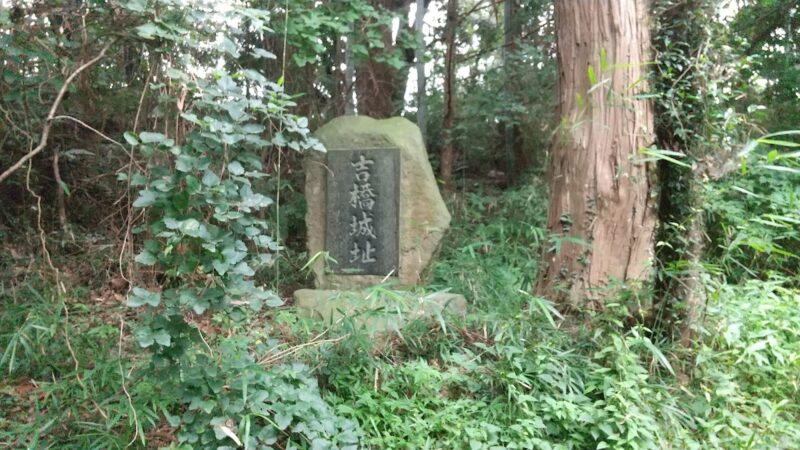
Furthermore, there is a legend that it was under the control of Takagi Ise-no-kami Tanetsada, the lord of Yoshihashi Castle. Yoshihashi Castle was located in present-day Inzai City, and given its distance from Kanahori Castle, a relationship of control is quite possible. ### Theories of Connection to the Usui Clan
On the other hand, there is also the view that the castle was based in the area of the Usui clan, who held power in the surrounding region. The Usui clan was a powerful local lord whose base was Usui Castle (present-day Sakura City) on the southern shore of Lake Inba, and their sphere of influence extended over a wide area.
Given the location of Kanahori Castle along the Kuwana River, part of the Lake Inba water system, the possibility that it was under the influence of the Usui clan cannot be ruled out. However, due to the scarcity of reliable historical materials, this remains speculation at this point.
Abandonment and Aftermath
There are no clear records regarding the time of the abandonment of Kanahori Castle. Generally, it is believed that many small and medium-sized castles in Shimosa Province were abandoned after Toyotomi Hideyoshi’s siege of Odawara in 1590, during the process of territorial reorganization following Tokugawa Ieyasu’s entry into the Kanto region.
Kanahori Castle, like many others, was abandoned from the late Sengoku period to the early modern period. Although the land was subsequently used for farming, its main remains have survived to the present day.
Structure
Overall Layout
Kanahori Castle is a multi-enclosure flatland castle built on the edge of a plateau between two rivers, the Kuwana River and the Kanahori River. It cleverly utilizes the plateau’s topography, employing natural elevation differences for defensive purposes.
The castle grounds are basically composed of two enclosures: the main enclosure and the western enclosure. Place names indicating the outer enclosure and the remains of a horse training ground remain in the surrounding area. The castle’s size is standard for a medieval local lord’s residence, suggesting it served as both a residence in peacetime and a defensive base in times of conflict, rather than a permanent military base.
Structure of the Main Enclosure
The main enclosure has a nearly square shape and forms the core of the castle. Earthen ramparts surround it on all four sides, enhancing its defensive capabilities. Although detailed survey data for the main enclosure is not publicly available, it is estimated to be approximately 50 meters on each side based on the local topography.
The interior of the main enclosure is currently used as farmland and residential land, and clues to the original building layout have been lost. However, a portion of the earthworks remains in good condition, making it a valuable example of a medieval castle’s defensive structure.
Western Enclosure
A rectangular enclosure is located to the west of the main enclosure. This enclosure is the second most important section after the main enclosure, and it is possible that it contained living spaces, warehouses, or residences for retainers.
The connection between the main enclosure and the western enclosure is currently unclear. It is presumed that there were facilities such as a gate (koguchi) and an earthen bridge, but their original forms may have been lost due to later alterations.
Layout and Characteristics of the Dry Moat
One of the greatest highlights of Kanebori Castle is its well-preserved dry moat. Dry moats were constructed on three sides (north, east, and west), excluding the south side, and served as a crucial defensive feature of the castle.
The northern dry moat is particularly large, notably deep and wide. It was dug into the slope of the plateau and functioned as a strong barrier against enemy intrusion.
The eastern dry moat is also well-preserved, protecting the eastern side of the main enclosure. This dry moat was dug along the edge of the plateau, combining natural terrain with artificial excavation.
The western dry moat served to protect the main enclosure and the western enclosure from external threats. Even today, it can be clearly seen as a depression, allowing us to appreciate the scale of the defensive facilities at the time.
The reason there is no dry moat on the south side is likely due to topographical constraints or the possibility that the need for defense was low because the south was within the sphere of influence of allied forces.
Highlights of the Moat Bottom Path
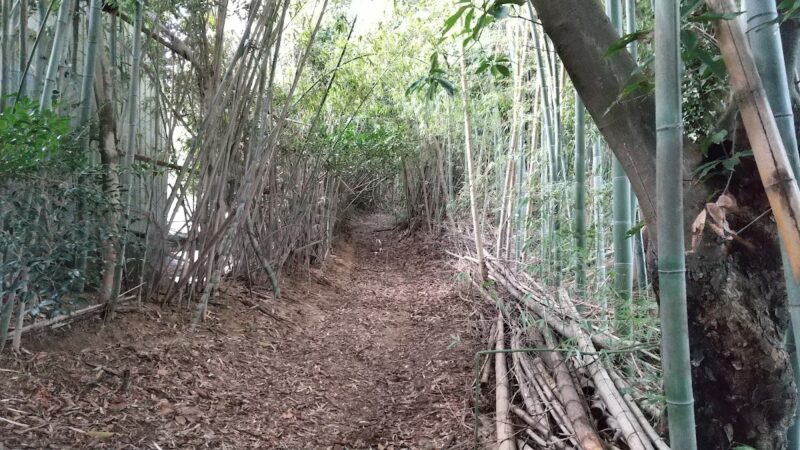
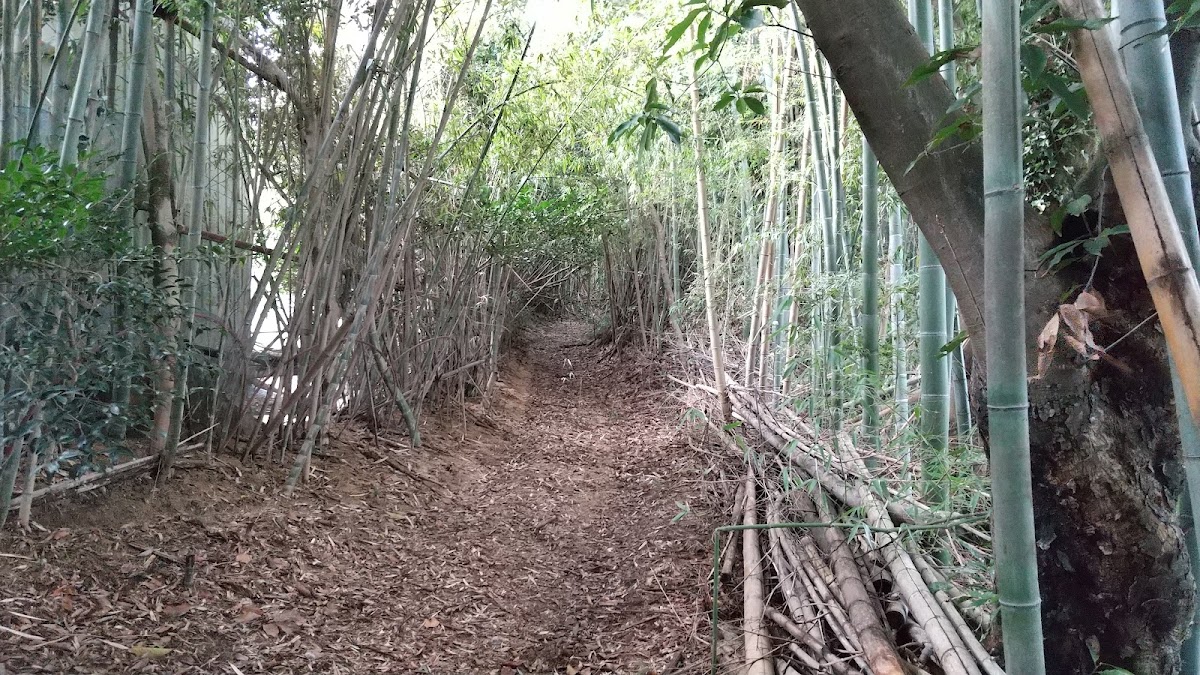
A particularly noteworthy feature of Kanebori Castle is the magnificent moat bottom path. A moat-bottom path is a passageway utilizing the bottom of a dry moat, used for movement within the castle and for transporting supplies.
The moat-bottom path at Kanahori Castle is well-preserved, allowing visitors to actually walk through the excavated space. The clearly visible cliffs (moat walls) on both sides make it a valuable historical site that demonstrates the advanced civil engineering techniques of the medieval period.
Walking along the moat-bottom path allows you to experience the depth and width of the dry moat, understanding how strong the defensive structures were at the time. This is a must-see for castle enthusiasts.
Earthworks Arrangement
Earthworks surround the main enclosure on all four sides. These earthworks protected the castle from enemy arrows and firearms, while also serving to showcase the castle’s imposing presence.
While the height of the earthworks at Kanahori Castle is standard for medieval castles, sections remain remarkably well-preserved, providing important clues to understanding the original structure. It is presumed that fences or walls were built on top of the earthworks, further enhancing their defensive capabilities. A dry moat is positioned outside the earthen rampart, indicating that a multi-layered defensive structure combining the earthen rampart and dry moat was employed.
Outer Enclosure and Related Facilities
Areas presumed to be the outer enclosure extend around the main enclosure and the western enclosure. The outer enclosure was a space where the lord’s retainers and soldiers lived, as well as warehouses and stables, and was an important section supporting the castle’s functions during peacetime.
The place name “Baba” (horse training ground) remains in the surrounding area, suggesting the possibility of facilities related to horsemanship training and horse breeding. Horsemanship was an important military skill for samurai in the medieval period, and it was not uncommon for castles to have horse training grounds.
Furthermore, it is possible that residences of retainers, temples and shrines, and towns were formed around the castle, but no clear traces have been confirmed today.
Remains
Existing Major Remains
The following remains exist at the Kanebori Castle site:
Dry Moat: Well-preserved on the north, east, and west sides. The northern dry moat, in particular, is large in scale, notably deep and wide. Sections of it are passable as a path at the bottom of the moat, making it highly valuable as a castle ruin.
Earthworks: Parts of the earthworks surrounding the main enclosure remain. While the height varies depending on the location, some sections are clearly visible.
Moat Path: A passage utilizing the bottom of the dry moat. It is well-preserved, with clearly defined cliffs on both sides. A valuable relic that allows one to experience the structure of a medieval castle.
Enclosure Topography: The basic shapes of the main enclosure and the western enclosure remain as topographical features, allowing for an understanding of the castle’s boundaries.
Lost Remains
The following remains have either been lost due to later land use or are in a state where they cannot be clearly confirmed:
- Detailed structure of the castle gate
- Foundation stones and post holes of buildings
- Well remains
- Earthen bridge
- Watchtower base
- Southern defensive structures (if any)
Preservation Status of Remains
The remains of Kanahori Castle are relatively well-preserved compared to other medieval castles in Chiba Prefecture. In particular, the dry moats and moat-bottom paths are clearly visible, making it easy to imagine their appearance in the past.
However, most of the castle site is privately owned and used as farmland and residential land. Therefore, some remains have been altered, and consideration for the landowner is necessary when visiting.
Currently, Kanahori Castle is not designated as a cultural property, but its importance as a regional historical heritage is being recognized.
Visitor Guide
Access Methods
Using Public Transportation:
- Approximately 20-30 minutes on foot from Kita-Narashino Station or Narashino Station on the Shin-Keisei Line
- Approximately 20-30 minutes on foot from Kita-Narashino Station on the Toyo Rapid Railway
- Approximately 25 minutes on foot from Takanekido Station on the Shin-Keisei Line
Bus services do not run directly to the castle ruins, so access is by walking from the nearest station.
Using a Car:
- Approximately 10 minutes from Hanawa IC on the Keiyo Expressway
- Approximately 15 minutes from Chiba-Kita IC on the Higashi-Kanto Expressway
There is no parking available, so it is recommended to use nearby paid parking lots or public transportation.
Notes for Visitors
- Consideration for Private Property: The majority of the castle ruins are on private property. When entering, please obtain permission from the landowner or view from the public road.
- Safety Precautions: When visiting the dry moats and moat bottom paths, please be very careful of your footing. They become slippery during and after rain.
- Clothing: Comfortable walking shoes and clothing are recommended. Insect repellent is also effective during the summer.
- Photography Etiquette: Since there are houses and farmland nearby, please be considerate of privacy when taking photographs.
- Take Your Trash Home: There are no trash cans around the castle ruins. Please be sure to take your trash home with you.
Estimated Visiting Time
To see all the main remains, 30 minutes to 1 hour is a good estimate. If you want to observe carefully or take photographs, allow 1.5 to 2 hours.
Surrounding Castles
When visiting Kanebori Castle, visiting the surrounding castles will deepen your understanding of the medieval castles of Shimosa Province:
Kogane Castle (Matsudo City): The main castle of the Takagi clan. It is thought to be the main castle of Kanahori Castle, and larger-scale remains are preserved there.
Yoshihashi Castle (Inzai City): A castle said to be the residence of Takagi Ise-no-kami Tanetsada. A connection to Kanahori Castle has been suggested.
Usui Castle (Sakura City): The main castle of the Usui clan. A large-scale castle built on a plateau overlooking Lake Inba, it is a nationally designated historic site.
Funabashi Palace (Funabashi City): The site of the Tokugawa Shogunate’s palace. Although not a medieval castle, it is an important historical site for understanding the history of Funabashi City.
Archaeological Materials
Status of Excavation Surveys
No full-scale academic excavation surveys have been conducted at Kanahori Castle to date. Therefore, detailed dating estimates based on excavated artifacts and archaeological verification of the castle’s functions have not been carried out.
In the future, if preliminary surveys or academic surveys are conducted in conjunction with development projects, new insights into the castle’s construction date, lord, and functions may be obtained.
Historical Documents
Currently, no contemporary historical documents concerning Kanahori Castle have been confirmed. Information regarding the castle’s existence and history relies primarily on the following sources:
- Descriptions in Edo period geographical records
- Local traditions
- Analysis of place names
- Estimation based on relationships with surrounding castles
- Morphological analysis of remains
Current Status and Challenges of Research
Research on Kanahori Castle is being conducted by castle researchers and local historians as part of the study of medieval castles in Chiba Prefecture. However, due to a lack of historical materials, the following points remain as major research challenges:
- Determining the exact construction date
- Identifying the builder
- Genealogy and changes in castle lords
- Circumstances and timing of the castle’s abandonment
- The castle’s military and political role
- Specific relationships with surrounding castles
To clarify these issues, the discovery of new historical materials and the implementation of archaeological investigations are expected.
Cultural Value of Kanahori Castle
Significance in Local History
Kanahori Castle is a valuable historical site that tells the story of medieval history in the Funabashi City area. While present-day Funabashi City is strongly associated with its development as a commuter town for Tokyo, it was a region where multiple castles were built during the medieval period.
The existence of Kanahori Castle indicates that this area held a militaryly and politically important position during the Sengoku period (Warring States period). Kanahori Castle can serve as important teaching material for local history education and understanding of the region.
Value in Castle Research
Kanahori Castle is also valuable from the perspective of castle research as a typical example of a small to medium-sized hilltop castle in Shimosa Province. It has particular academic significance in the following respects:
- Structure of a Multi-Enclosure Hilltop Castle: The multi-enclosure structure with a main enclosure and a secondary enclosure is clearly preserved, making it an excellent example of the basic form of a medieval castle.
- Dry Moats and Moat Bottom Roads: The well-preserved dry moats and moat bottom roads are invaluable for understanding medieval civil engineering techniques and the realities of castle defense.
- Castles of Local Powerful Clanes: Rather than large-scale castles of daimyo (feudal lords), these castles, belonging to local lords, reflect the realities of regional rule during the Sengoku period (Warring States period).
Prospects for Preservation and Utilization
Although Kanahori Castle is not currently designated as a cultural property, its historical and academic value makes future preservation and utilization desirable.
Preservation Challenges:
- Much of the site is privately owned, making preservation and management difficult.
- Urbanization poses a risk of alteration or disappearance of the remains.
- Low awareness makes it difficult to build momentum for preservation.
Potential for Use:
- Utilization as a site for local history learning.
- Development as a destination for castle enthusiasts and history buffs.
- Providing information through the installation of explanatory signs.
- Positioning it as a local tourist resource.
It is hoped that citizens, researchers, and the government will cooperate to re-recognize the value of Kanebori Castle and consider strategies for its preservation and utilization.
References
For more detailed information about Kanahori Castle, please refer to the following literature and sources:
Books and Articles
- *Medieval Castles of Chiba Prefecture* (Various castle-related books)
- *Comprehensive Survey of Japanese Castles*, Volume 6: Chiba and Kanagawa (Shin Jinbutsu Oraisha)
- *History of Funabashi City*, edited by the Funabashi City History Compilation Committee
- *Detailed Distribution Survey Report of Medieval and Early Modern Castle Sites in Chiba Prefecture*, Chiba Prefectural Board of Education
Websites
- Kojodan: Kanahori Castle page (Extensive photos and visit records)
- Nippon Castle Tour: Detailed information on Kanahori Castle
- Various castle research websites
Local Materials
- Funabashi City Local History Museum (Exhibits and materials related to the history of Funabashi City)
- Funabashi City Library (Access to local historical materials)
Summary
Kanabori Castle is a hilltop castle from the Sengoku period (Warring States period) located in Funabashi City, Chiba Prefecture. Its remains, including dry moats, earthworks, and moat-bottomed paths, are remarkably well-preserved. While many details about the castle’s builder and lord remain unknown, it is believed to have served as a branch castle of the Takagi clan, playing a key defensive role in the northwestern part of Shimosa Province.
With its multi-enclosure structure, dry moats surrounding three sides, and magnificent moat-bottomed paths, Kanabori Castle possesses characteristics of a medieval castle and is a valuable legacy that conveys the region’s history. Although not designated as a cultural property, it is a historical site worth visiting for castle enthusiasts and history researchers.
When visiting Funabashi City, why not take a look at this little-known medieval castle site and experience the spirit of the Sengoku period? However, it is important to remember to be considerate of private property and observe proper etiquette during your visit.
We hope that the preservation and utilization of Kanabori Castle will progress, increasing opportunities for more people to experience this historical heritage.