Iwato Castle (Inzai City, Chiba Prefecture) Complete Guide: History and Highlights of the Usui Clan’s Three Major Branch Castles
Located in Inzai City, Chiba Prefecture, Iwato Castle is a medieval castle that played an important role in Shimosa Province from the late Kamakura period to the Sengoku period. As one of the Usui clan’s three major branch castles, it served as a defensive stronghold in the region, along with Moroto Castle and Shizu Castle. Although the area is now largely residential, valuable castle remains still exist around Saifuku-ji Temple, conveying the history of the medieval period.
History and Construction Background of Iwato Castle
Construction in the Late Kamakura Period
Iwato Castle is believed to have been built in the late Kamakura period by Iwato Goro Taneyasu, who served the Usui clan, a powerful vassal family of the Chiba clan. Located in Iwato, Ichiba, Inzai City, in northern Chiba Prefecture, this castle was an important base protecting the northwestern part of the Chiba clan’s sphere of influence in Shimosa Province.
The Usui clan, as a branch of the Chiba clan, established their own independent power base, employing a strategy of establishing multiple branch castles around Usui Castle. Iwato Castle played a central role in this network of branch castles, functioning as one of the “Three Great Branch Castles of the Usui Clan,” along with Moroto Castle and Shizu Castle.
Role in the Sengoku Period
With the arrival of the Sengoku period, Shimosa Province became a fierce battleground where the forces of the Hojo, Satomi, and Kanto Kanrei Uesugi clans intersected. The Usui clan’s sphere of influence, centered around Usui Castle, was also caught up in these conflicts between Sengoku daimyo.
In particular, during the Eiroku era (1558-1570), Uesugi Kenshin of Echigo invaded Kanto and attacked Usui Castle. It is believed that the group of branch castles, including Iwato Castle, played a role in supporting Usui Castle during this attack. The Battle of Usui Castle is known for the Usui clan’s repelling of the Uesugi army, suggesting that Iwato Castle played a vital role in the region’s defense.
About Lord Iwato Goro Taneyasu
Iwato Goro Taneyasu, said to be the lord of Iwato Castle, was a samurai who served the Usui clan. His name, “Taneyasu,” shows that he inherited the character “Tane,” a common character used by the Chiba clan, indicating a strong connection to the Usui clan.
The Iwato clan were local lords who adopted the place name as their surname, and it is believed they ruled the area around Iwato as local powerful families. Medieval samurai groups were responsible not only for regional defense but also for agricultural production management and flood control projects, and the Iwato clan likely played an important role in the local community.
Structure and Layout of Iwato Castle
Location as a Hilltop Castle
Iwato Castle is classified as a hilltop castle. A hilltop castle is a castle built on a small hill or plateau in a plain, possessing characteristics intermediate between a flatland castle and a mountain castle. The Iwato district of Inzai City is located on a plateau near Lake Inba, offering a geographical advantage overlooking the surrounding lowlands.
This location was important not only for defense but also for controlling a key transportation hub. Water transport was well-developed around Lake Inba, functioning as a route for the flow of goods, so it is believed that Iwato Castle also played a role in defending this economic center.
Main Enclosure Site and Saifuku-ji Temple
Currently, Saifuku-ji Temple stands on the site of the former main enclosure of Iwato Castle. Saifuku-ji is a Shingon Buddhist temple, and the construction of temples on castle sites is a common pattern for medieval castles. It is believed that the construction of temples and shrines on the site after a castle was abandoned served to appease the spirits of the land and pray for peace.
Within the grounds of Saifuku-ji Temple, the topography that evokes the former main enclosure remains, making it a valuable historical site for castle researchers and enthusiasts. The Honmaru (main enclosure) was the central part of the castle, where the lord’s residence and important defensive structures were located.
Remains of Earthworks and Moats
At the Iwato Castle site, earthworks and moat remains can still be seen today. Earthworks are embankment-like structures built by piling up earth as defensive structures for castles to prevent enemy intrusion. In medieval castles, earthworks were more common than stone walls, and Iwato Castle was also constructed using this traditional castle-building technique.
The moat remains include sections that are dry moats, indicating that they functioned as dry moats without water. Dry moats are a common feature of medieval castles in the Kanto region, and were an efficient defensive structure that utilized the terrain.
Even today, with the progress of residential development, careful observation can reveal unnatural differences in elevation and depressions in the surrounding area, which are presumed to be remnants of the castle’s structures from that time.
Arrangement of Enclosures (Kuruwa)
As a basic structure of medieval castles, it is thought that multiple enclosures (kuruwa) were arranged around the Honmaru. A kuruwa is a flat area within a castle, each assigned a specific defensive or residential function.
While a detailed layout map of Iwato Castle does not exist, it is highly likely that it had a similar structure to other branch castles of the Usui clan, such as Moroto Castle and Shizu Castle. It is presumed that a “renkaku-shiki” (連角式) layout was employed, where multiple kuruwa were separated by earthworks and moats, creating a tiered defensive line.
Iwato Castle Highlights and Visiting Guide
The Site of the Main Enclosure within the Nishifuku-ji Temple Grounds
The biggest highlight when visiting Iwato Castle is the site of the main enclosure remaining within the grounds of Nishifuku-ji Temple. Due to its location within a temple, it offers a quiet atmosphere where one can reflect on the castle’s former glory.
When walking around the temple grounds, pay attention to the subtle undulations of the terrain. Slight differences in elevation and the extent of flat areas suggest the former layout of the kuruwa. Furthermore, in some places around the periphery of the temple grounds, earthen mounds remnants of earthworks can be seen.
Observation Points for Earthwork Remains
Around Seifuku-ji Temple, there are areas where earthworks remain in relatively good condition. The height of the earthworks varies depending on the location, but they can be observed as elevations of approximately 1-2 meters.
When observing the earthworks, the key points are their cross-sectional shape and direction of extension. Earthworks are not simply mounds of earth; they are built with calculated slopes and widths, and their structure reveals the level of castle-building technology.
Traces of Moats
Although many parts have been filled in due to residential development, careful walking around the area can reveal traces of moats. Unnatural depressions or elevation changes at road or property boundaries may be remnants of the former moats.
Especially around Seifuku-ji Temple, walking while referring to a topographic map can help infer the former moat lines.
Castle Area and Surrounding Environment
The castle area of Iwato Castle is thought to be the area centered around Seifuku-ji Temple, but the exact boundaries are unclear. Research has revealed that many medieval castles had defensive structures spread over a much wider area than we might imagine today.
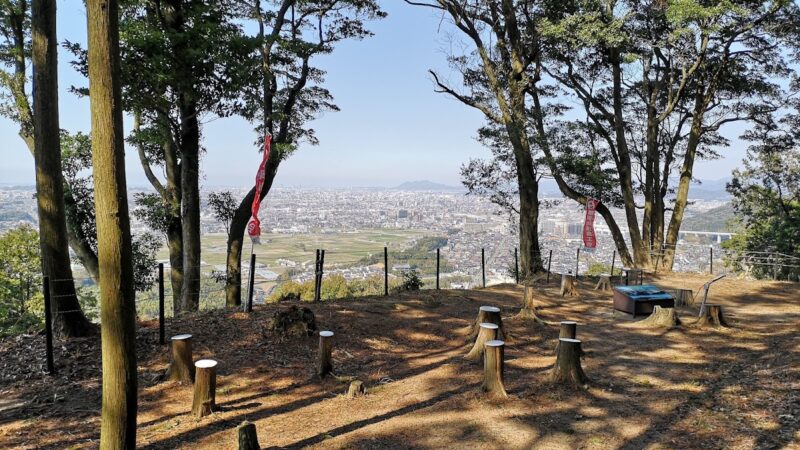
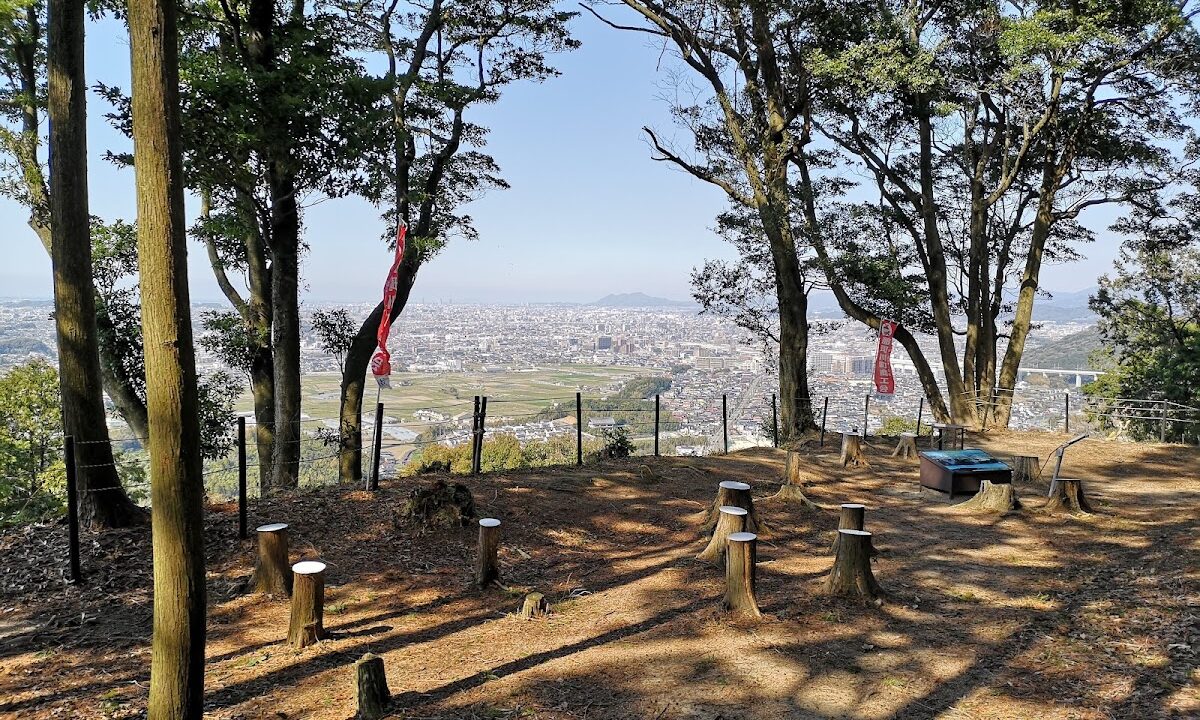
Looking out from Saifuku-ji Temple overlooking the surrounding settlements, one can appreciate the skillful use of the plateau terrain. The excellent view towards Lake Inba suggests its function in monitoring transportation routes.
Access and Visiting Information
Location
Address: Ichiba, Iwato, Inzai City, Chiba Prefecture
Iwato Castle Ruins (Saifuku-ji Temple) are located in the Iwato district of Inzai City. It’s on the southwest side of Lake Inba, along the Narita Line.
Access by Public Transportation
The nearest station is JR Narita Line’s “Kobayashi Station.” It’s approximately a 30-40 minute walk from Kobayashi Station to Iwato Castle Ruins. From the station, head northwest towards Lake Inba.
Bus services are limited, so if you plan to use public transportation, you should plan accordingly, including walking.
Access by Car
Access by car is the most convenient. It’s about 30 minutes from the Yotsukaido IC or Narita IC on the Higashi-Kanto Expressway.
Regarding parking, there may be parking spaces for visitors at Saifuku-ji Temple, but it is recommended to check in advance. Since the surrounding area is residential, please avoid street parking and be mindful of proper etiquette during your visit.
Precautions During Your Visit
Iwato Castle Ruins are located within the grounds of Saifuku-ji Temple, so it is important to visit with respect for the temple. Please note the following:
- Refrain from loud noises or disturbances within the temple grounds
- Do not trespass on private property
- Always take your trash with you
- Do not damage the ruins or climb on the earthworks
- When taking photographs, be considerate of your surroundings
Best Time and Time to Visit
Iwato Castle Ruins are an outdoor historical site, so it is best to visit on a day with good weather. Spring and autumn offer mild weather, making them ideal seasons for exploring castle ruins.
A visit to the Saifuku-ji Temple grounds and surrounding remains takes approximately 30 minutes to 1 hour if you plan to carefully observe them. Combining this with visits to other nearby castle ruins will make for a more fulfilling castle tour.
Related Castles in the Area
Usui Castle (Sakura City)
Usui Castle, the main castle of Iwato Castle, is located in Usuida, Sakura City. Known as the stronghold of the Usui clan, it repelled attacks by Uesugi Kenshin. The Usui Castle site is now a park, with well-preserved remains such as earthworks and dry moats.
When visiting Iwato Castle, we highly recommend also visiting Usui Castle. Comparing the two castles will help you understand the relationship between the main castle and its subsidiary castles, and the overall picture of the Usui clan’s castle network.
Moroto Castle (Inzai City)
Moroto Castle, like Iwato Castle, was one of the three major branch castles of the Usui clan and is located in Moroto, Inzai City. Situated facing Lake Inba, it also functioned as a base for transporting goods using water transport.
Although the site of Moroto Castle is undergoing residential development, some earthworks and moat remains remain, allowing us to understand the characteristics of a medieval castle, similar to Iwato Castle.
Shizu Castle (Sakura City)
Shizu Castle, located in Shizu, Sakura City, is the last of the three major branch castles of the Usui clan. While the current Shizu area has developed into a residential area, part of the castle site is preserved as a park.
By visiting these three major branch castles, you can gain a real understanding of how the Usui clan defended their territory and their strategic placement.
Hon-Sakura Castle (Shisui Town/Sakura City)
Hon-Sakura Castle, which functioned as the base of the Chiba clan, is an important castle preserved as a nationally designated historical site. Visiting the castle of the Chiba clan, who were lords of the Usui clan who controlled Iwato Castle, provides insight into the power structure of medieval Shimosa Province.
Hon-Sakura Castle boasts exceptionally well-preserved remains, with earthworks, dry moats, and gates clearly visible, making it an ideal historical site for learning about the structure of medieval castles.
Sakura Castle (Sakura City)
Built during the Edo period, Sakura Castle represents a different era of castle architecture compared to Iwato Castle. Developed as Sakura Castle Ruins Park, it retains magnificent remains such as the keep base and the dry moat.
Comparing the medieval Iwato Castle with the early modern Sakura Castle provides a good opportunity to understand how Japanese castles developed.
Iwato Castle and the Medieval History of Chiba Prefecture
The Chiba Clan and Shimosa Province
The Chiba clan was a powerful samurai group that held sway primarily in Shimosa Province from the late Heian period to the Sengoku period. The foundation of the Chiba clan was established when Taira no Tsunetane, serving under Minamoto no Yoritomo in the late Heian period, achieved great merit and became a powerful retainer of the Kamakura Shogunate.
The Chiba clan controlled a vast area of Shimosa Province, moving their base from Chiba to Inohana (present-day Chuo Ward, Chiba City), and then to Hon-Sakura. The Inzai region, where Iwato Castle was built, was also part of the Chiba clan’s sphere of influence.
The Independence of the Usui Clan
The Usui clan, while a branch of the Chiba clan, managed their own territory and grew into a semi-independent force. They established a strong defensive network, centered around Usui Castle, with subsidiary castles such as Iwato Castle, Moroto Castle, and Shizu Castle.
During the Sengoku period, as the main branch of the Chiba clan declined, the Usui clan strengthened its character as an independent Sengoku daimyo, forging alliances with the Hojo clan and other factions.
Strategic Importance of the Inbanuma Area
The area around Inbanuma Lake, where Iwato Castle is located, was a crucial transportation and logistics hub in the medieval period. As part of the Tone River system, Inbanuma Lake served as a route for transporting goods by water, making it an economically and militarily important region.
It is believed that the Usui clan positioned multiple castles, including Iwato Castle, around Inbanuma Lake because they recognized the strategic value of this region.
Research and Preservation of Iwato Castle
Position in Castle Research
Iwato Castle is considered an important case study in the study of medieval castles in Chiba Prefecture for understanding the Usui clan’s network of branch castles. While many of the remains are being lost due to residential development, the remaining earthworks and moat traces are valuable historical resources.
Recent castle research emphasizes the perspective of “castle networks,” where multiple castles function in coordination, rather than focusing on individual castles. Iwato Castle, along with Moroto Castle and Shizu Castle, is a prime example of this network research.
Preservation Status and Challenges of the Remains
There are challenges in preserving the remains of Iwato Castle. While the main keep site within the grounds of Saifuku-ji Temple is relatively well-preserved, the surrounding remains are gradually being lost due to residential development.
To pass on Iwato Castle as a regional historical heritage to future generations, detailed surveying and documentation of the existing remains are urgently needed. Furthermore, raising awareness of the need for preservation of the remains through historical education for local residents and visitors is also crucial.
Archaeological Excavation and the Possibility of New Discoveries
No full-scale archaeological excavations have been conducted at Iwato Castle to date. If excavations are conducted in the future, it is possible that more detailed history will be revealed through the castle’s structure, age, and unearthed artifacts.
In particular, the discovery of artifacts related to Iwato Goro Taneyasu and the Usui clan would provide clues to the life and culture of the time that cannot be understood from written historical records alone.
Significance of Visiting Iwato Castle
Experiencing Local History
Visiting the Iwato Castle ruins is a valuable opportunity to experience the medieval history of Inzai City, Chiba Prefecture. The fact that this area, now a quiet residential area, was once a fortified castle fortified by samurai evokes a sense of historical romance.
Learning About the Structure of Medieval Castles
The earthworks and moat remains at Iwato Castle are excellent teaching materials for learning the basic structure of medieval castles. While they lack the flashy elements of stone walls and keeps, they showcase the pinnacle of castle-building techniques that skillfully utilized earth and terrain.
Understanding the Castle Network
When visiting Iwato Castle, visiting related castles such as Usui Castle, Moroto Castle, and Shizu Castle allows for a practical understanding of the concept of a medieval castle network. Understanding the system of multiple castles working together to defend a territory is crucial for a deep understanding of Japanese castle history.
Summary: The Historical Value of Iwato Castle
Iwato Castle (Inzai City, Chiba Prefecture) is a medieval castle that functioned as an important branch castle of the Usui clan from the late Kamakura period to the Sengoku period. With Iwato Goro Taneyasu as its lord, it was one of the three major branch castles of the Usui clan, along with Moroto Castle and Shizu Castle, and played a vital role in the defense of northwestern Shimosa Province.
Currently, the area has been developed into residential land, and only the remains of the main keep remain within the grounds of Saifuku-ji Temple. However, remnants such as earthworks and moat traces still convey its former appearance. It is a valuable historical site for understanding the medieval history of Chiba Prefecture, and visiting it along with surrounding castles such as Usui Castle and Hon-Sakura Castle will provide a deeper understanding of its history.
For castle enthusiasts and anyone interested in local history, the Iwato Castle ruins are a place worth visiting. Why not experience the atmosphere of medieval samurai in the tranquil grounds of a temple?