Tsube Castle (Sammu City, Chiba Prefecture): Complete Guide to History, Remains, and Access
Tsube Castle, located in Tsube, Sammu City, Chiba Prefecture, is a flatland castle believed to have been built at the end of the Sengoku period (Warring States period). While the builder is unknown, records indicate that during the Tensho era (1573-1592), Shiramasu Izumi-no-kami, a senior retainer of the Ida clan (lords of Sakata Castle), served as the castle lord. This article comprehensively explains information about Tsube Castle, including its historical background, details of existing remains, and access methods for actual visits.
Basic Information on Tsube Castle
Tsube Castle is a flatland castle built on a hill approximately 30 meters high in Tsube, Sammu City, Chiba Prefecture. Located at the tip of a plateau, it was built in a strategically advantageous location, taking advantage of the surrounding river. Even today, remains such as dry moats and earthworks remain in good condition, mainly around the main enclosure, making it a valuable historical site that conveys the castle structure of the late Sengoku period.
Location: Tsube, Sanmu City, Chiba Prefecture
Castle Classification: Hilltop Castle
Construction Period: Late Sengoku Period (Estimated)
Builder: Unknown
Main Lord: Shiramasu Izumi-no-kami (Tensho Era)
Major Remains: Enclosures, dry moats, earthworks, gate, earthen bridge
History of Tsube Castle
Background of Construction and the Tsube Region in the Sengoku Period
Unfortunately, there are no clear historical records regarding the detailed construction period or builder of Tsube Castle, and many aspects remain unknown. However, based on the structure of the castle and the characteristics of the remains, it is estimated to have been built in the late Sengoku period.
The Tsube area during the Sengoku period was located in the inland part of the Kujukuri Plain and was a strategically important point near the border between Kazusa Province and Shimosa Province. This region was within the sphere of influence of the Ida clan, whose base was Sakata Castle, and Tsube Castle is thought to have been part of the Ida clan’s network of branch castles.
The Tensho Era and Shiramasu Izumi-no-kami
The only clearly documented history of Tsube Castle is that Shiramasu Izumi-no-kami served as its lord during the Tensho era (1573-1593). Shiramasu Izumi-no-kami was a senior retainer of the Ida clan, the lords of Sakata Castle, suggesting that Tsube Castle played an important role within the Ida clan’s system of rule.
The Tensho era was a turbulent period of national unification, from Oda Nobunaga to Toyotomi Hideyoshi, and the Hojo clan was expanding its power in the Kanto region. The Ida clan initially had close ties with the Satomi clan, but it is believed that they gradually came under the influence of the Hojo clan.
Abandonment and its Aftermath
There are no clear records of when Tsube Castle was abandoned. However, after Toyotomi Hideyoshi’s siege of Odawara in 1590, the Hojo clan was destroyed, and Tokugawa Ieyasu entered the Kanto region, drastically changing the system of governance in this area. Like many medieval castles that ceased to exist during this period, it is presumed that Tsube Castle was abandoned with the end of the Sengoku period.
After its abandonment, the castle site was left neglected for a long time, but the memory of the castle was preserved by the local people, and the remains have been preserved in relatively good condition to this day.
Structure
Layout and Overall Composition
Tsube Castle is a flatland castle that skillfully utilizes the topography of the plateau, built on a hill approximately 30 meters high. The castle was protected by natural valleys and rivers, functioning as a natural stronghold.
The castle complex consists of multiple baileys centered around the main citadel, exhibiting a typical layout from the late Sengoku period. A defensive line is established in stages from the main enclosure to the outer enclosure, creating a structure that would intercept intruders in stages.
Features of the Main Enclosure
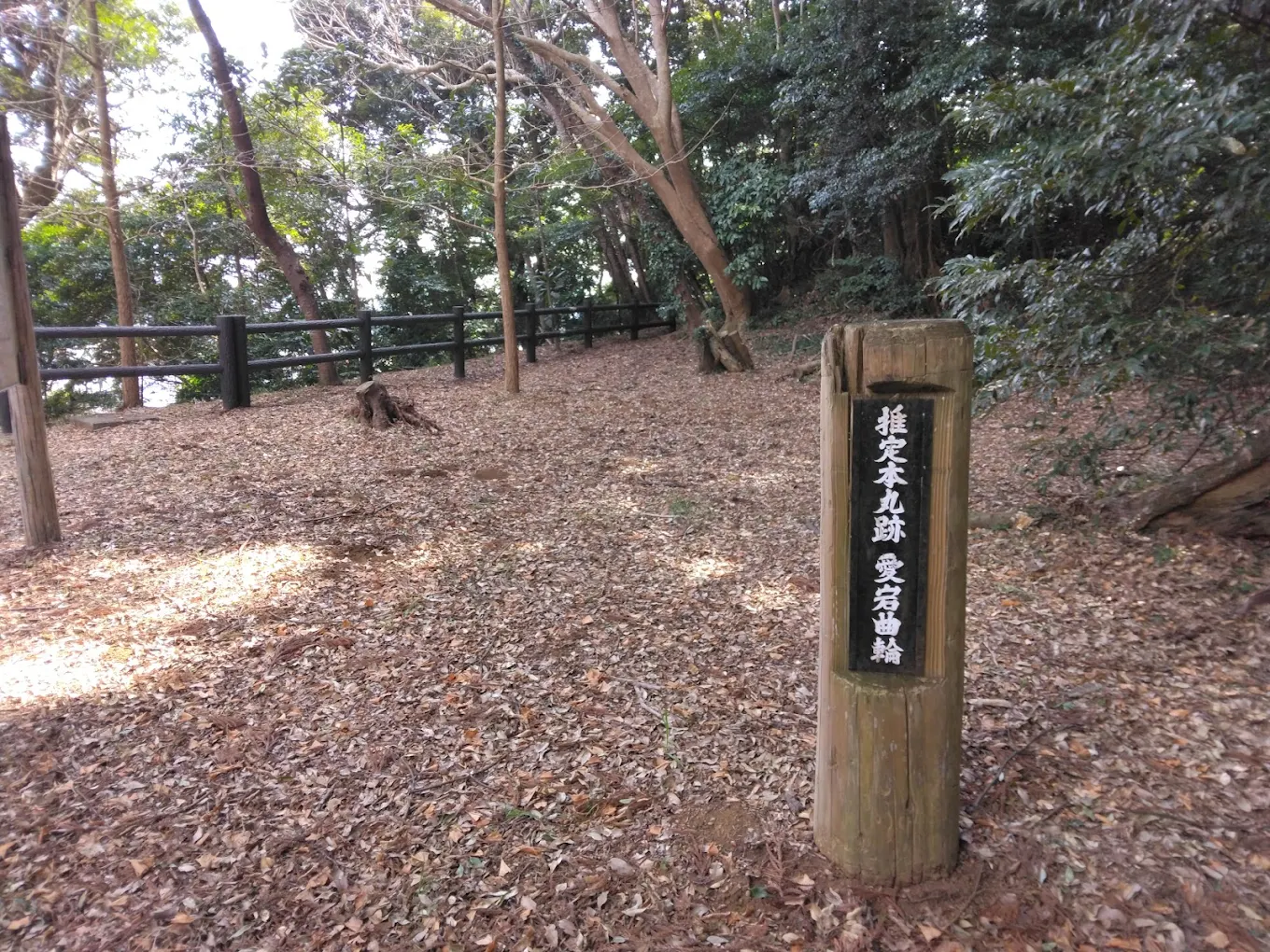
The main enclosure, the heart of Tsube Castle, is built on the highest point of the castle ruins, and is thought to have been the location of the lord’s residence and command post. The main enclosure has a relatively large, flat surface and is heavily defended by earthworks and dry moats.
Some parts of the earthworks of the main enclosure remain well-preserved today, allowing us to estimate their height and shape to some extent. The structure of the earthworks provides valuable insights into the level of castle construction technology at the end of the Sengoku period.
Structure of the Dry Moat
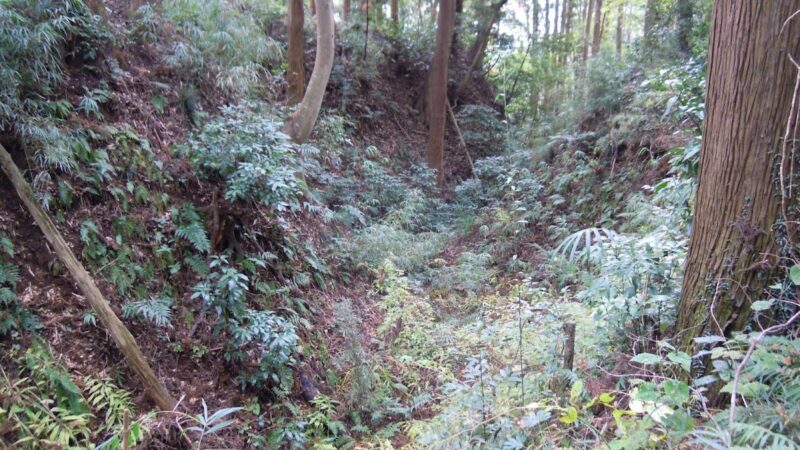
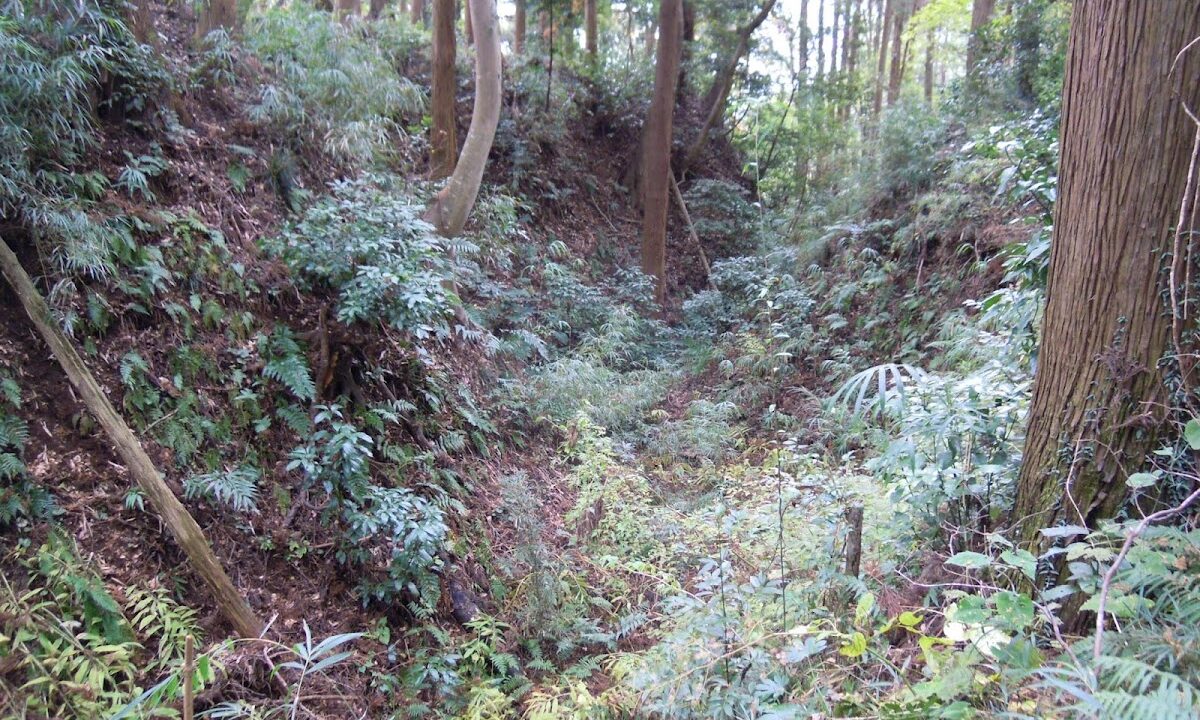
The greatest highlight of Tsube Castle is the dry moat surrounding the main enclosure. This dry moat still retains much of its original form, and its depth and width allow us to appreciate the high level of defense it offered at the time.
The dry moat was an important defensive structure separating the main enclosure from the outer enclosure, physically preventing enemy intrusion and giving an advantage to counterattacks from within the castle. The dry moat of Tsube Castle, while relatively simple in structure, is a good example of the basics of castle defense during the Sengoku period.
The bottom of the moat is still clearly visible today, and it is possible to infer the excavation techniques and construction methods from the cross-sectional shape of the moat. A dirt bridge spans part of the dry moat, indicating that it functioned as a communication route between the baileys.
Earthworks
Earthworks were placed around the main bailey, and a small portion of them can still be seen today. The earthworks, together with the dry moat, formed a defensive line, ensuring visibility from within the castle while protecting the castle’s defenders from enemy arrows and firearms.
The earthworks of Tsube Castle are not large in scale, but they represent a standard structure for small to medium-sized castles of the late Sengoku period. The height, width, and slope angle of the earthworks provide insight into the actual castle construction techniques of the time.
Entrance Gate and Dirt Bridge
The entrance gate to the castle, the “koguchi,” was also an important defensive structure. At Tsube Castle, an earthen bridge crossing the dry moat connected to the castle’s entrance, and this narrow passage served as the last line of defense protecting the castle’s weak point, the entrance.
The area around the entrance was particularly heavily fortified, suggesting a structure designed to concentrate attacks on invading enemies. Even today, the location of the entrance and traces of the earthen bridge can be seen, aiding in understanding the castle’s structure.
Outer Enclosure Structure
Outside the main enclosure was an outer enclosure, consisting of multiple baileys arranged in stages. The outer enclosure was the first line of defense protecting the main enclosure, playing a role in gradually weakening enemy attacks.
While the baileys of the outer enclosure are not as clearly defined as those of the main enclosure, multiple flat areas can be identified from the topography. It is presumed that these baileys housed soldiers’ quarters and storage facilities for supplies.
Existing Remains and Highlights
Well-Preserved Dry Moat
The biggest highlight when visiting Tsube Castle is the well-preserved dry moat. The dry moat surrounding the main enclosure is relatively well-preserved, with little burial or collapse, and retains its appearance from the Sengoku period. Standing at the bottom of the moat and looking up, the height of the earthworks, combined with the moat’s depth, allows you to experience the high level of its defenses at the time.
The walls of the dry moat are covered with natural vegetation due to years of wind and rain, but the basic shape remains, allowing you to observe the moat’s depth, width, and slope.
Flat Area of the Main Enclosure
The flat area of the main enclosure is also a highlight. Although currently covered with trees, a large, flat area remains, suggesting that the lord’s residence and important facilities were built here.
From the flat area, you can overlook the surrounding terrain, appreciating the geographical advantage of the plateau where the castle is located. On a clear day, you can see a wide expanse of the surrounding plains, allowing you to relive how the castle lords of the Sengoku period viewed this land.
Traces of Earthworks
The traces of earthworks remaining around the main enclosure are also an important point of interest. Although not preserved in its complete form, the raised earthworks can be partially observed. Observing the structure of the earthworks provides clues to understanding the castle-building techniques and defensive philosophies of the time.
Structure of the Gate and Earthen Bridge
The structure of the gate and earthen bridge is also noteworthy. The topography allows us to infer how the earthen bridge for crossing the dry moat was positioned and what shape the gate was. These structures provide important information for castle research.
Surrounding Topography
Let’s observe not only the castle ruins themselves, but also the surrounding topography. Looking down into the valley from the edge of the plateau, it becomes clear that this castle was built on a natural stronghold. You can see how the rivers and valleys functioned as natural moats, enhancing the castle’s defensive capabilities.
Entrance to the Castle and Hiyoshi Shrine
The entrance to Tsube Castle is located east of Hiyoshi Shrine. Hiyoshi Shrine is at the foot of the castle ruins and serves as a landmark when visiting the site.
Hiyoshi Shrine itself is a historical shrine and has long been cherished as a center of local faith. A path leads from the shrine grounds to the castle ruins, making access relatively easy.
While the path isn’t perfectly maintained, the trail is clearly marked, allowing you to reach the main enclosure without getting lost. However, be careful as the ground can become slippery during or after rain.
Access
Access by Public Transportation
Nearest Station: JR Sobu Main Line, Naruto Station
It’s possible to access the Tsube Castle ruins on foot from Naruto Station. The distance is approximately 3 kilometers, a walk of about 40 minutes.
Leaving Naruto Station, head north and take the prefectural road towards the Tsube area. Heading towards Hiyoshi Shrine will lead you to the entrance to the castle ruins. The route passes through residential areas and rural landscapes, allowing you to enjoy a peaceful walk.
Bus services are limited, so it’s recommended to plan your trip with plenty of time to spare.
Access by Car
The following route is convenient for access by car.
If using the Higashi-Kanto Expressway, the nearest interchange is Sanbu-Naruto IC. It takes approximately 10 minutes from the interchange to reach the Tsube area.
If using a car navigation system, it is recommended to set “Hiyoshi Shrine (Tsube, Sanbu City)” as your destination. There is some parking space around the shrine, but please be considerate of other visitors.
Points to Note When Visiting
Tsube Castle Ruins are not a developed tourist site; they are preserved in their natural state. Please note the following points when visiting:
- Clothing: Wear appropriate clothing and shoes for hiking in the mountains. Sneakers or trekking shoes are especially recommended.
- Season: In summer, vegetation can be overgrown, making observation of the ruins difficult. Late autumn to early spring is the best time to visit.
- Insect Repellent: Especially from spring to autumn, it is recommended to bring insect repellent spray. – Drinking Water: There are no vending machines or other facilities around the castle ruins, so please bring your own drinking water.
- Solo Visit: Visiting in groups is safer if possible.
- Protection of Remains: Please be careful not to damage the remains or collapse the earthworks.
Visiting Other Surrounding Castles
When visiting Tsube Castle, visiting other surrounding castles will give you a deeper understanding of the Sengoku period history of this region.
Sakata Castle
Sakata Castle, considered to be the main castle of Tsube Castle, is a large mountain castle located in Sanmu City. It flourished as the base of the Ida clan and boasts one of the largest scales and best-preserved remains in Chiba Prefecture. It is about a 15-minute drive from Tsube Castle, and visiting both together is recommended.
Naruto Castle
Naruto Castle is also a castle located in Sanmu City, relatively close to Naruto Station. It is a castle with a different structure from Tsube Castle, and comparing them will be interesting. ### Tomita Castle
Tomita Castle is a castle located near Tsube Castle and is also believed to have been under the control of the Ida clan. Although small in scale, it possesses distinctive remains.
Historical Significance of Tsube Castle
Tsube Castle, while not a large-scale castle, is an important historical site for understanding the regional governance system at the end of the Sengoku period.
As one of the Ida clan’s branch castles centered around Sakata Castle, it played a military and administrative role in this region. The fact that the name of the specific castle lord, Shiramasu Izumi-no-kami, is preserved further enhances the castle’s historical value.
Furthermore, the relatively good state of preservation of the remains makes it a valuable resource for studying the structure of small to medium-sized castles at the end of the Sengoku period. In particular, the structure of the dry moats and earthworks provides important evidence of the castle-building techniques of that time.
Summary
Tsube Castle is a hilltop castle from the late Sengoku period located in Tsube, Sanmu City, Chiba Prefecture. While the builder is unknown, records indicate that Shiramasu Izumi-no-kami served as its lord during the Tensho era. Even today, the remains, such as dry moats and earthworks, are well-preserved, particularly around the main enclosure, making it a valuable historical site for learning about Sengoku period castle structures.
It is accessible on foot from Naruto Station on the JR Sobu Main Line, with the entrance to the castle located east of Hiyoshi Shrine. While not a well-maintained tourist spot, it retains a strong Sengoku period atmosphere, making it an attractive destination for castle enthusiasts.
Other castles, including Sakata Castle, are scattered throughout the surrounding area, and visiting them together will provide a deeper understanding of the Sengoku period history of this region. If you are interested in the Sengoku history of Chiba Prefecture or enjoy visiting castles, please consider visiting Tsube Castle.