Ibitsu Castle (Shibayama Town, Chiba Prefecture) Complete Guide: A Thorough Explanation of the Sengoku Period Fortress Ruins Built by Yamamuro Tsunetaka
Located in Shibayama Town, Sanbu District, Chiba Prefecture, Ibitsu Castle is one of the important mountain castles on the Boso Peninsula during the Sengoku period. Built in 1532 by Yamamuro Tsunetaka, the castle ruins still retain well-preserved remains such as baileys, dry moats, and earthworks, making it a valuable historical site for studying Sengoku period castle architecture.
This article thoroughly explains the appeal of Ibitsu Castle, from its historical background to its structure and access methods.
History and Construction Background of Ibitsu Castle
Construction by Yamamuro Tsunetaka
The construction date and lord of Ibitsu Castle are described in detail in the historical document “Yamamuro Fudenki.” This historical document is a valuable record focusing on the Yamamuro clan, detailing the activities of the lords around Shibayama during the Sengoku period, as well as the origins of temples, shrines, and place names.
According to the document, Iibitsu Castle was built in Tenbun 1 (1532) by Yamamuro Tsunetaka. This period was the height of the Sengoku period, a time when various lords on the Boso Peninsula were vying for power.
The Yamamuro Clan and the Sengoku Period in Boso
The Yamamuro clan were local lords based around Shibayama, and Iibitsu Castle served as their base. During the Sengoku period, the Boso Peninsula was a complex power map, with major forces such as the Chiba and Satomi clans vying for control. Smaller lords like the Yamamuro clan sometimes formed alliances and sometimes clashed to survive.
North of the castle, the place name “Negoya” remains, and it is believed that the lord’s residence was located there. In medieval castles, “Negoya” refers to a living space established at the foot of a mountain castle during peacetime, and it is clear that Iibitsu Castle also possessed the typical structure of a medieval mountain castle.
The Tensho Era and the Hojo Clan’s Rule
During the late Sengoku period, particularly during the Tensho era (1573-1592), the Boso Peninsula came under the control of the Hojo clan, based in Odawara. Iibitsu Castle was also incorporated into the Hojo clan’s sphere of influence and is thought to have played a part in the Hojo clan’s defense network, along with other castles in Kazusa and Shimosa.
The Toyotomi Army’s Attack and the Castle’s Downfall
In 1590, when Toyotomi Hideyoshi launched his siege of Odawara, Iibitsu Castle, which was under Hojo control, was caught in the fighting. The “Yamamuro Fudenki” (a historical record) describes how the retainers of the Hoshina clan, lords of Takato Castle in Shinano Province, defended the castle against the Toyotomi army’s attack, and how they were defeated after a fierce battle.
This battle resulted in the fall of Iihitsu Castle, ending its role as a medieval fortress. It was never used as a castle during the Edo period and has been preserved as a castle ruin to this day.
Structure and Remains of Iihitsu Castle Ruins
Location and Topographical Characteristics
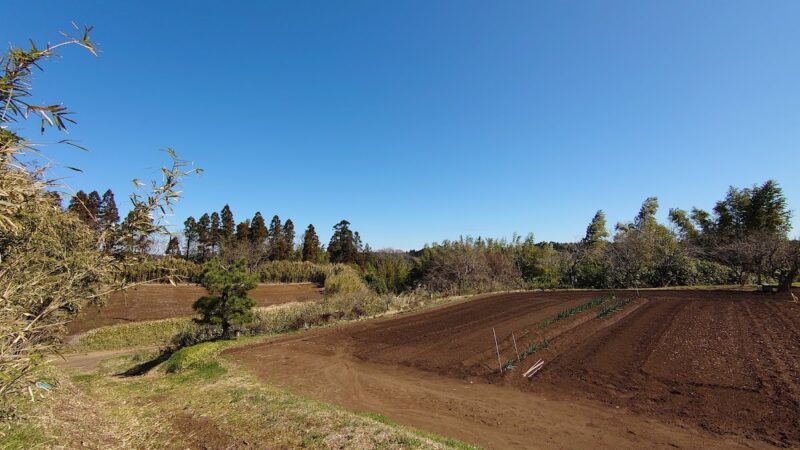
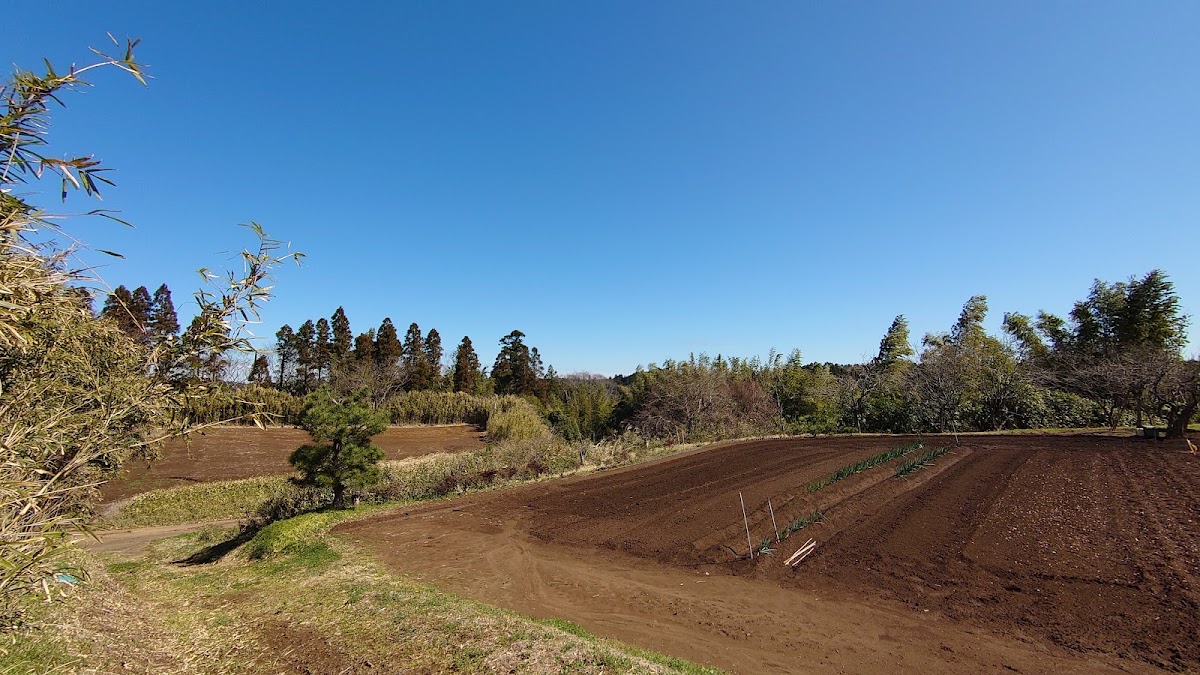
Iihitsu Castle Ruins are built on a peninsula-shaped plateau at an elevation of approximately 40 meters on the west bank of the Takaya River. This location is a typical choice for a medieval mountain castle, a natural stronghold surrounded on three sides by rivers and valleys.
The peninsula-shaped plateau limits the approach of attackers, making it advantageous for defenders. The Takaya River served as a natural moat, forming an important defensive line protecting the eastern side of the castle.
Arrangement of Enclosures
Three enclosures have been identified at Iihitsu Castle. Enclosures are flat areas within the castle grounds, used as garrisons for soldiers and storage for supplies.
The castle grounds, centered around the main enclosure (honmaru), featured a multi-layered defensive structure designed to gradually halt enemy advances. Elevation differences between the enclosures allowed for overlooking the lower ones from the upper ones.
Dry Moats and Earthworks
The castle ruins retain well-preserved dry moats and earthworks. Dry moats, which do not hold water, physically prevented enemy intrusion, and the excavated soil was piled up to form earthworks.
In particular, the area known as “Ōhorikiri” (大堀切) is believed to have had a large-scale moat (a moat that cut across a ridge). Moats are a defensive feature unique to mountain castles, effectively preventing enemy attacks along the ridge.
Earthworks served as castle walls, and the addition of fences on top further enhanced defensive capabilities. The earthworks of Iibitsu Castle still remain today, approximately 1-2 meters high, allowing us to imagine their original scale.
Place Names Related to the Castle
Numerous place names indicating the presence of the castle remain around the Iibitsu Castle ruins:
- Jōnouchi: A place name indicating the central part of the castle
- Ōhorikiri: The location of a large moat
- Negoya: The location of the lord’s residence
- Sotoyado: A post town or settlement below the castle
- Yado: A place where people stayed
These place names indicate that the castle was not merely a military facility, but a comprehensive base with surrounding residential areas and economic activity spaces.
Cultural Value of the Iibitsu Castle Ruins
Importance in the Study of Sengoku Period Castles
The Iibitsu Castle ruins are a valuable historical site for understanding the castle structure of small and medium-sized lords on the Bōsō Peninsula during the Sengoku period. Unlike large-scale early modern castles, it focuses on practical defensive facilities designed for actual combat, demonstrating the reality of castle architecture during the Sengoku period.
In particular, the well-preserved basic castle elements such as baileys, dry moats, and earthworks make it an important learning resource for castle researchers and history enthusiasts.
Significance in Local History
Iibitsu Castle is an indispensable part of the history of Shibayama Town. It was the base of operations for the local lord, the Yamamuro clan, and the center of the region’s politics, economy, and culture.
The existence of the historical document “Yamamuro Fudenki” (Yamamuro Genealogy) demonstrates the high level of historical awareness in the region. This document not only records the history of the castle but also the origins of surrounding temples, shrines, and place names, making it a valuable comprehensive historical resource for the region.
Access and Visiting Information for Iihitsu Castle Ruins
Location
Postal Code: 289-1604
Address: 291 Iihitsu, Shibayama-machi, Sanbu-gun, Chiba Prefecture (Iihitsu, Jōnouchi)
Access Method
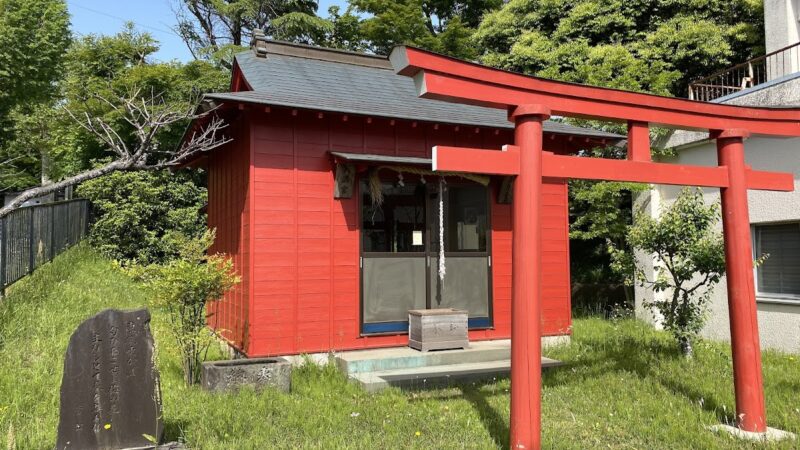
The Iihitsu Castle Ruins are located within the Iihitsu settlement. A stone monument stands near the entrance to the approach to Takano Shrine, south of Renfuku-ji Temple.
Access by Car:
- Approximately 20 minutes from Narita IC on the Higashi-Kanto Expressway
- Approximately 5 minutes from Shibayama Town Hall
- Parking is limited, so please be careful not to disturb the neighbors.
Access by Public Transportation:
- Take a taxi from Matsuo Station or Shibayama-Chiyoda Station on the JR Narita Line.
- Bus services are limited, so we recommend checking in advance.
Points to Note When Visiting
You can freely visit the Iihitsu Castle Ruins, but please note the following:
- Protection of Remains: Please be careful not to damage the remains such as earthworks and moats.
- Consideration for Private Property: There are private houses and farmland around the castle ruins. Please do not trespass on private property.
- Safety Measures: Some areas of the castle ruins on the plateau have unstable footing. Please wear comfortable shoes when visiting.
- Season: The ruins tend to be easier to observe in winter than in summer when the vegetation is lush.
Nearby Attractions
When visiting the Iibitsu Castle Ruins, we recommend also visiting the surrounding historical sites:
- Renpuku-ji Temple: A temple located near the castle ruins
- Takano Shrine: A shrine with a stone monument marking the castle ruins
- Shibayama Town Shibayama Kofun & Haniwa Museum: A facility where you can learn about the history of Shibayama Town
- Shibayama Nio-son Kannon-kyo Temple: A well-known temple in the town
Preservation and Utilization of the Iibitsu Castle Ruins
Current Situation and Challenges
Currently, the Iibitsu Castle Ruins are not under special protective measures, but they are carefully preserved by local residents. However, natural deterioration such as weathering of the ruins and overgrown vegetation is unavoidable.
In the future, formal designation as a cultural property and planned preservation and maintenance are desired.
Utilization as a Local Resource
The Iibitsu Castle Ruins are a valuable historical resource of Shibayama Town, and the following uses are expected:
- A Place for Historical Education: A field where local children can learn about the history of their hometown
- Tourism Resource: A tourist spot that will attract history enthusiasts and castle fans
- A Core of Local Identity: A symbol that gives townspeople pride in their region
In Shibayama Town, the Cultural Promotion Section of the Lifelong Learning Division of the Board of Education (located in the Cultural Center) serves as the point of contact for providing information and conducting preservation activities regarding cultural properties within the town, including the Iibitsu Castle Ruins.
Iibitsu Castle and the Sengoku Period History of Boso Peninsula
Sengoku Daimyo of the Boso Peninsula
The Boso Peninsula during the Sengoku period, when Iibitsu Castle existed, was a turbulent land where multiple forces vied for supremacy. The main powers included:
- Chiba clan: A powerful daimyo based in Shimosa Province
- Satomi clan: Based in Awa Province, later expanding its influence to southern Kazusa Province
- Hojo clan: Based in Odawara, controlling most of Boso Province during the Tensho era
Smaller lords like the Yamamuro clan maintained a balance between these major powers, protecting their own territories.
The Siege of Odawara and the Castles of Boso
The Siege of Odawara by Toyotomi Hideyoshi in 1590 was a decisive event that ended the Sengoku period on the Boso Peninsula. Castles in Kazusa and Shimosa Provinces, under the control of the Hojo clan, fell one after another to attacks by the Toyotomi army.
Iibitsu Castle is also believed to have fallen at this time, and the record of a vassal of the Hoshina clan, lords of Takato Castle in Shinano Province, holding out there is an interesting historical fact that demonstrates the Hojo clan’s extensive defensive system. It is unclear why Hoshina’s retainers were at Iibitsu Castle, but it suggests the possibility that the Hojo clan was receiving reinforcements from various allied forces.
Summary: The Charm of Iibitsu Castle Ruins
Iibitsu Castle is a valuable castle ruin from the Sengoku period remaining in Shibayama Town, Chiba Prefecture. Built in 1532 by Yamamuro Tsunetaka, the castle is located on a plateau approximately 40 meters above sea level on the west bank of the Takaya River, and remains such as three baileys, dry moats, and earthworks still exist today.
The history of the castle’s construction and the movements of its lords are revealed through a historical document called the “Yamamuro Fudenki,” and it functioned as a central castle in the region for about 60 years until its fall to Toyotomi forces during the Siege of Odawara in 1590.
Small place names such as “Jōnouchi,” “Ōhorikiri,” and “Negoya” remain around the castle ruins, conveying to the present day that a castle once stood here. This is a valuable historical site for understanding the castle structures of small and medium-sized feudal lords on the Boso Peninsula during the Sengoku period, and it is an important place to learn about the region’s history.
When you visit Shibayama Town, why not stop by the Iibitsu Castle ruins and feel the spirit of the Sengoku period? The view from the plateau may not have changed much from the landscape that the Yamamuro clan once saw. It is a fascinating spot where you can feel the romance of history.
Inquiries
For detailed information about the Iibitsu Castle ruins and inquiries about visiting, please contact the Cultural Promotion Section, Lifelong Learning Division, Shibayama Town Board of Education (located in the Cultural Center). Information is also available on the town’s official website.