A Thorough Explanation of the History and Remains of Tega Castle (Kashiwa City, Chiba Prefecture) – From the Hara Clan’s Residence to the Present
What is Tega Castle?
Tega Castle (Tega-jō) was a medieval flatland castle located in Tega, Kashiwa City, Chiba Prefecture (formerly Sōma District, Shimōsa Province). Built on a plateau approximately 19 meters above sea level, jutting out into the wetlands on the southern shore of Lake Teganuma, it was ruled by the Hara clan, a branch of the Chiba clan, for generations.
It was a relatively large castle complex that extended across the entire present-day Tega settlement. It was abandoned during Toyotomi Hideyoshi’s siege of Odawara in 1590. Remnants of earthworks and parts of the castle grounds still remain, and traces can be seen in the grounds of Kōfuku-in Temple and various locations within the Tega settlement.
History of Tega Castle
Construction and the Hara Clan’s Rule
While there are no clear records regarding the exact construction date of Tega Castle, it is believed to have been built during the Sengoku period by the Hara clan, a branch of the Chiba clan. The Hara clan was an important branch of the Chiba clan and played a crucial role in the Chiba clan’s expansion of power in Shimosa Province.
The only confirmed lord of the castle is Hara Chikuzen-no-kami Tanemichi, son of Chiba-no-suke Katsutane. Tanemichi is considered the ancestor of the Tega Hara clan and is believed to have developed Tega Castle as a base for governing the area. Later, records show that Hara Kuranosuke Hisatane, Tanemichi’s grandson, also served as lord of the castle.
Relationship with the Chiba Clan
As a branch of the Chiba clan, the Hara clan played an important role in maintaining the Chiba clan’s power in Shimosa Province. Tega Castle was strategically important, located on the southern shore of Lake Teganuma, a key point for water transport, and was crucial for maintaining coordination with Chiba Castle, the Chiba clan’s base, and other surrounding castles.
Lake Teganuma has long been known as a vital waterway, playing a vital role in the transportation of goods and military movements in this region. Tega Castle, situated to control this waterway, is considered an indispensable fortress for maintaining the Chiba clan’s sphere of influence.
The Siege of Odawara and the Castle’s Abandonment
In 1590, during Toyotomi Hideyoshi’s Siege of Odawara, the Chiba clan, being allied with the Hojo clan, was affected by the conflict. During this period, many castles in the Kanto region were attacked or surrendered, and Tega Castle also fell and was abandoned.
After the Siege of Odawara, when Tokugawa Ieyasu entered the Kanto region, the area came under Tokugawa control, and Tega Castle was never used as a military base again. Subsequently, the castle site was used for farmland and residential areas, and remains so to this day. ## Structure of Tega Castle
Location and Layout
Tega Castle was a flatland castle built on a plateau on the southern shore of Lake Teganuma. It utilized the terrain, with low-lying wetlands facing Lake Teganuma to the north and a plateau extending to the south. The castle grounds extended across the entire present-day Tega settlement, indicating it was a relatively large castle complex composed of multiple enclosures.
It is presumed that the main enclosure (I enclosure) was located at the tip of the plateau, with the second enclosure (II enclosure) behind it, and the third enclosure and beyond further behind. The wetlands on the Lake Teganuma side served as a natural moat, while artificial moats and earthworks are thought to have been constructed along the southern plateau.
Characteristics of the Main Enclosure (I Enclosure)
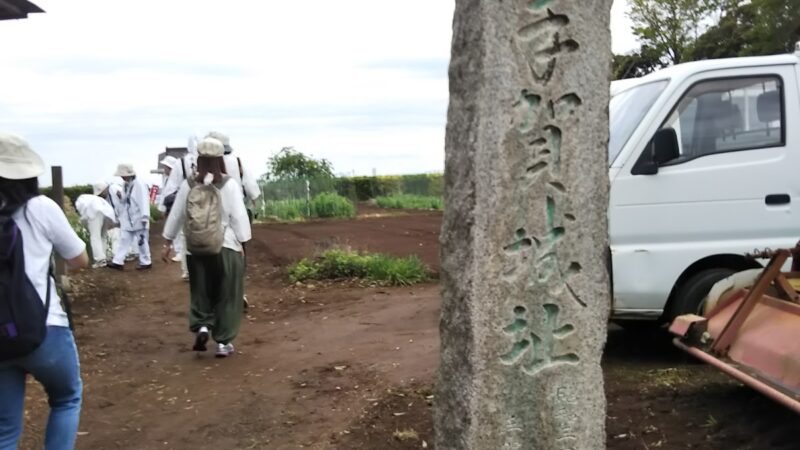
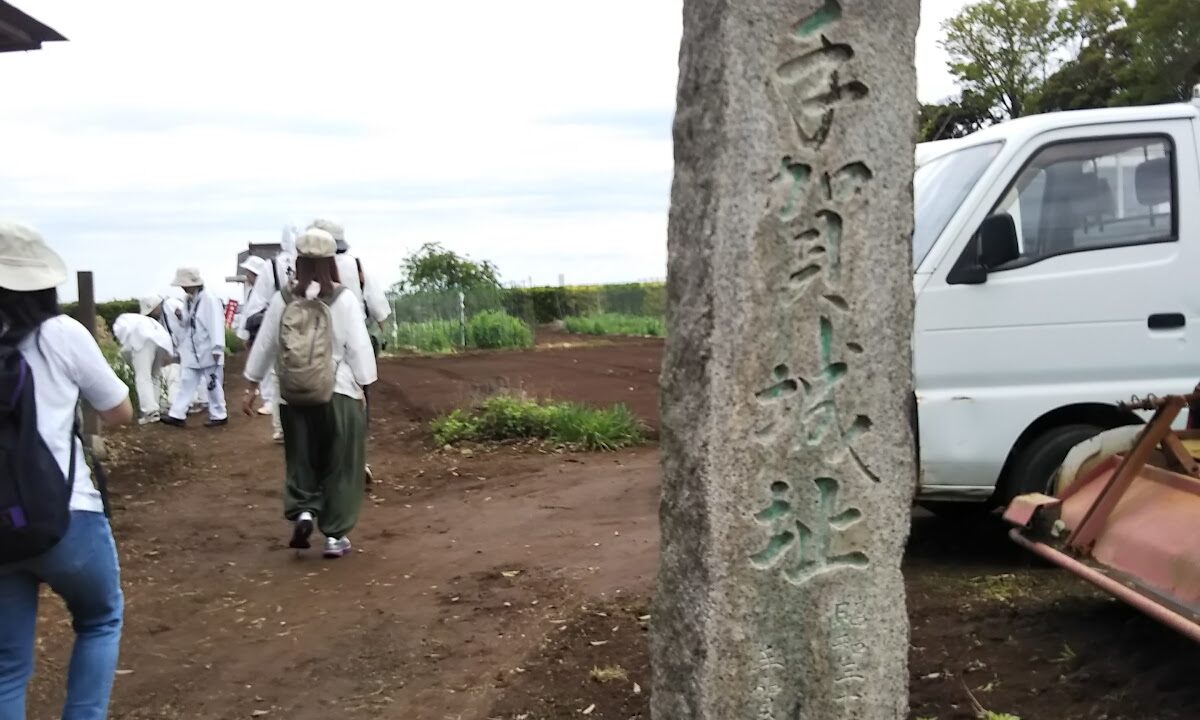
The main enclosure was built on the northernmost side of the plateau, facing Lake Teganuma. Currently, a stone monument marking the Tega Castle site stands at this location, indicating its castle ruins. Furthermore, an Inari Shrine is enshrined at the site of the main enclosure, serving as a place of local worship.
Some traces of earthworks remain around the main enclosure, confirming the existence of former defensive structures. However, due to years of development and conversion to farmland, it is difficult to fully restore the site to its original form.
Second Enclosure (II Enclosure) and Kofukuin Temple
The second enclosure is located south of the main enclosure and is currently the grounds of Kofukuin Temple. Within the grounds of Kofukuin Temple, it is possible to observe topographical differences and traces of earthworks that are thought to be remnants of the castle era.
A marker related to Tega Castle stands at Kofukuin Temple, indicating that this is the site of the castle. The layout and topography of the temple grounds allow for some estimation of the former enclosure’s shape.
Earthworks and Dry Moats
It has been confirmed that Tega Castle had earthworks and dry moats. It is thought that defensive structures to prevent enemy intrusion were particularly concentrated on the south side, which is connected to the plateau.
Even today, traces of earthworks remain in some parts of the settlement, and remnants can be seen on the boundaries of old house properties. While the dry moats have been filled in or developed into residential areas, their locations can still be estimated based on the subtle undulations of the terrain.
Scope of the Castle Area
It is believed that the castle area of Tega Castle occupied a significant portion of the current Tega settlement. Based on the arrangement of old houses scattered within the settlement and the characteristics of the terrain, it is highly likely that it was a series of interconnected enclosures.
The exact extent of the entire castle area remains unclear due to the lack of detailed archaeological excavations, but it is estimated that at least the main enclosure and up to the third enclosure existed.
Existing Remains
Status of Earthworks
The most easily identifiable remains of Tega Castle are the earthworks. Traces of earthworks remain in several locations within the settlement, and some are relatively well-preserved, particularly around the grounds of old houses.
These earthworks are approximately 1-2 meters high and are thought to be part of the defensive structures from the castle era. However, due to years of weathering and human intervention, they may differ from their original appearance. ### Topography of the Enclosures
The locations of the main enclosure and the second enclosure can still be confirmed as slightly higher terrain than the surrounding area. In particular, the grounds of Kofukuin Temple form a clearly defined flat area, indicating the site of an enclosure.
Walking through the settlement, one can notice subtle differences in elevation and the presence of flat areas; these may be remnants of the enclosures from the castle era.
Stone Monuments and Markers
A stone monument marking the site of Tega Castle stands at the site of the main enclosure, indicating its historical importance. A marker post is also installed at Kofukuin Temple, informing visitors that it is a castle site.
These stone monuments and marker posts play an important role in passing on the history of the region to future generations.
Access to Tega Castle
Access by Public Transportation
The most convenient way to reach Tega Castle is by bus from Abiko Station or Kashiwa Station on the JR Joban Line. From Abiko Station North Exit, take the Bando Bus bound for “Tega” and get off at the “Tega” bus stop. The castle ruins area is a few minutes’ walk from there.
Since bus service is limited, it is recommended to check the timetable in advance. Especially on weekends, there may be fewer buses than on weekdays, so please be aware of this.
Access by Car
By car, it takes about 20 minutes from the Kashiwa Interchange on the Joban Expressway. Take National Route 16, then a prefectural road to the Tega area.
There is no dedicated parking lot around the castle ruins, but if you are visiting Kofukuin Temple, you may be able to use the temple’s parking space. However, many roads within the settlement are narrow, so please drive carefully.
Precautions During Visits
Since the Tega Castle ruins are located within residential areas and temple grounds, please be considerate of residents’ privacy when visiting. Avoid trespassing on private property and try to view the site from public roads or designated public areas.
When visiting Kofukuin Temple, it is important to observe temple etiquette and observe quietly. Also, since the areas around the stone monuments and markers are often residential, please be mindful of noise and illegal parking.
Nearby Attractions
Lake Teganuma
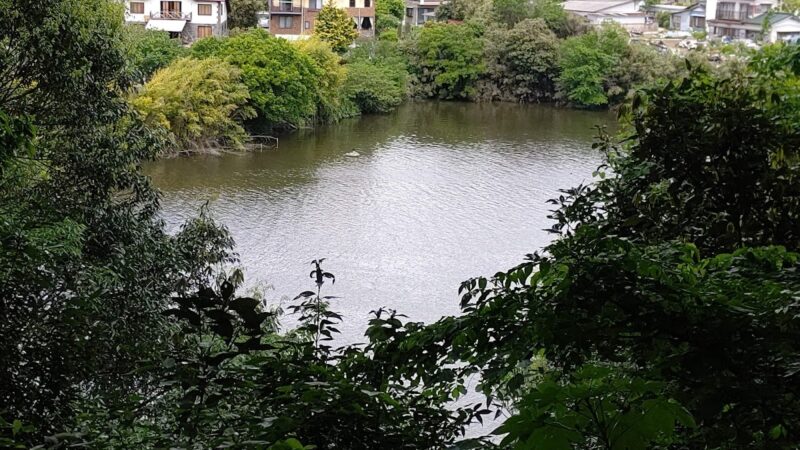
Lake Teganuma, located north of Tega Castle, is a representative lake in northwestern Chiba Prefecture. A walking path is maintained around the lake, allowing visitors to enjoy strolling and cycling. It’s a place where you can truly appreciate why Tega Castle was built at a strategic location for water transport.
Along Lake Teganuma is the “Michi-no-Eki Shonan” (roadside station), where you can enjoy local specialties and food. Visiting it in conjunction with a tour of the castle ruins is highly recommended.
Historical Landscape of Tega Village
The Tega village is dotted with old houses dating back to the Edo period, allowing visitors to experience the atmosphere of a historical townscape. Viewing these historical buildings while touring the castle ruins is one of the pleasures of the area.
Within the settlement, several milestones from the New Shikoku Pilgrimage remain, allowing visitors to observe traces of the former pilgrimage route.
Surrounding Castles
Around Tega Castle, other medieval castles, such as the ruins of Kotake Castle, are scattered. Those interested in the medieval history of northwestern Chiba Prefecture can enjoy a castle tour visiting these ruins.
Historical Significance of Tega Castle
Role in the Chiba Clan’s Territory
Tega Castle was an important base controlling a key water transport point within the Chiba clan’s territory. Located in a position to control the transport of goods and military movements via Lake Teganuma, it functioned as one of the castles supporting the Chiba clan’s rule.
The fact that the Hara clan served as lords of the castle indicates that the Chiba clan employed a strategy of placing trusted family members in important locations.
Regional History of Medieval Shimosa Province
The history of Tega Castle is an important case study for understanding the regional history of medieval Shimosa Province. While not the site of a large-scale battle, it offers clues to understanding the local system of governance and the realities of daily administration.
Its fate of being abandoned after the Siege of Odawara mirrored that of many medieval castles in the Kanto region, symbolizing the transition from the Sengoku period to the early modern period.
Preservation and Utilization in Modern Times
Even as residential development progresses, parts of the earthworks and baileys remain at the Tega Castle ruins, making it valuable as a local historical heritage site. Efforts are being made to convey its history to local residents and visitors through the installation of stone monuments and markers.
Further detailed investigations and preservation/utilization efforts may reveal even greater historical value of Tega Castle.
Points to Note When Visiting Tega Castle
Estimated Visiting Time
A visit to the Tega Castle ruins, focusing on the area around Kofukuin Temple and the stone monuments, should take approximately 15-30 minutes. If you want to leisurely walk through the settlement and search for traces of the earthworks, allow about an hour.
If you plan to combine your visit with a stroll around Lake Teganuma, allocate about half a day for a more fulfilling experience.
Photography Tips
The main photo spots are the stone monument at the Tega Castle ruins, the marker post at Kofukuin Temple, and the remaining earthworks. Landscape photos with Lake Teganuma in the background are also valuable for understanding the castle’s location.
When taking photos within the settlement, please be considerate of residents’ privacy and avoid including houses or people in your shots.
Seasonal Charms
While the Tega Castle ruins can be visited throughout the year, the scenery around Lake Teganuma is particularly beautiful in spring (cherry blossom season) and autumn (autumn foliage season), making them ideal times to visit.
Each season offers its own unique charm; summer brings lush greenery around Lake Teganuma, while winter offers clear air and expansive views.
Summary
Tega Castle is a valuable medieval castle ruin remaining in Kashiwa City, Chiba Prefecture. Built by the Hara clan, a branch of the Chiba clan, Tega Castle served as an important base controlling a key waterway on the southern shore of Lake Teganuma. Although it was abandoned during the Siege of Odawara in 1590, traces of earthworks and baileys still remain.
Even amidst the ongoing residential development, the atmosphere of the castle ruins can be felt in the grounds of Kofukuin Temple and various locations within the settlement, preserving the region’s history. Visiting it alongside the beautiful scenery of Lake Teganuma makes it a valuable opportunity to experience the environment in which a medieval castle once stood.
For those interested in medieval history and castles in Chiba Prefecture, Tega Castle is a historical site well worth visiting.