Fujishin Jinya Ruins (Kashiwa City, Chiba Prefecture) Complete Guide: History and Highlights of the Detached Jinya Built by Honda Masashige
Located in Fujishin, Kashiwa City, Chiba Prefecture, the Fujishin Jinya Ruins are a historically significant site, a detached jinya (fortified residence) of the Funato Domain built in the early Edo period. Established around 1615 by Honda Masashige, the younger brother of Honda Masanobu, this jinya is now farmland, but its history is preserved through a stone monument and information board.
What are the Fujishin Jinya Ruins?
The Fujishin Jinya Ruins were a base for governing the detached territory of the Funato Domain, located in Shimosa Province (present-day northwestern Chiba Prefecture). A jinya refers to an office and residence established by a small daimyo or hatamoto (direct retainer of the shogun) with a domain of around 10,000 koku for the purpose of governing their territory. The Fujishin Jinya was an important base established to efficiently manage the detached territory located away from the main base of the Tanaka Domain in Suruga Province (present-day Shizuoka Prefecture).
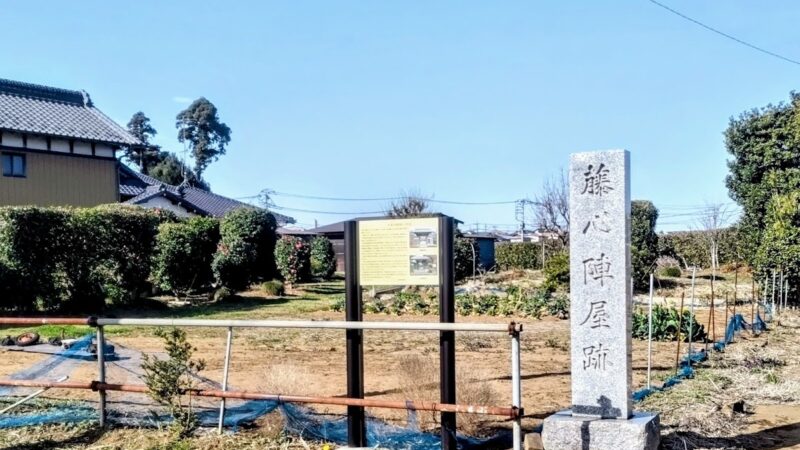
The current location is around 280 Fujishin, Kashiwa City, Chiba Prefecture (Omiyado). While the original terrain is farmland, the geographical feature of its open, north-facing location remains.
History of Fujishin Jinya
Construction History and Honda Masashige
The history of Fujishin Jinya begins with Honda Masashige, the younger brother of Honda Masanobu, a senior retainer of Tokugawa Ieyasu. Masashige received an additional 9,000 koku for his achievements in the Siege of Osaka in 1615, bringing his total to 10,000 koku, making him a daimyo. This led to the establishment of the Funato Domain, and he built a jinya (fortified residence) to govern the Fujishin region of Shimosa Province, which was an exclave.
Honda Masashige, along with his brother Masanobu, contributed to the establishment of the Tokugawa Shogunate, and his achievements were recognized, leading to his daimyo status. Some sources indicate the construction year was 1616, suggesting that he quickly established the foundation for managing his territory during the chaotic period immediately following the Siege of Osaka. ### Governance by the Honda Family
The Honda family ruled this area throughout the Edo period, using the Fujishin Jinya (fortified residence) as their base. In addition to the Fujishin Jinya, they also established a Jinya (magistrate’s office) in Funato within the Kashiwa City area, efficiently managing their territory through multiple bases.
The Fujishin Jinya functioned as a magistrate’s office, where they carried out various duties as lords, including tax collection, maintaining public order, and implementing civil administration. The fact that the Honda family’s rule continued until the end of the Edo period demonstrates the stability of governance in this region.
Changes After the Meiji Restoration
After the Meiji Restoration, the Funato Domain was abolished due to the abolition of the feudal domains and the establishment of prefectures, and the Fujishin Jinya ceased to function. Subsequently, the Jinya site was used for farmland, and the buildings and other remains were lost. However, the memory of the “Jinya site” has been preserved locally, and it is now recognized as a historical site.
Highlights of the Fujishin Jinya Site
Current Conditions and Remains
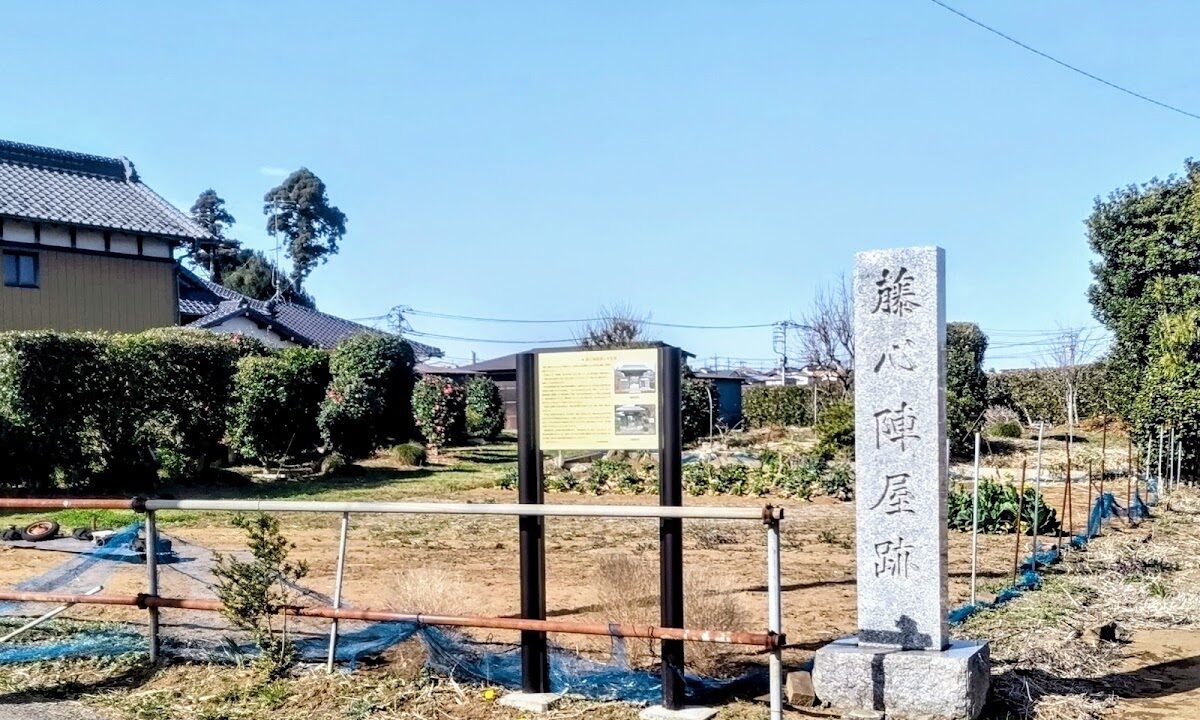
The Fujishin Jinya site is currently used as farmland, and very few visible remains such as buildings remain. However, a stone monument and detailed explanatory plaque, recently erected, allow visitors to understand the historical significance of this site.
The explanatory plaque details the history of the Jinya, the lineage of the Honda family, and the state of land management at the time, playing an important role in conveying its value as a historical site. The stone monument is inscribed with “Fujishin Jinya Site,” indicating that this is a historical place.
Topography and Location Characteristics
The most distinctive feature of the Fujishin Jinya site is its location, which opens to the north and offers excellent visibility. This topographical feature was advantageous for both defense and surveillance, and is thought to be one of the reasons why it was chosen as a site for the Jinya.
The topography of the Jinya in its heyday is largely preserved, and visiting the site allows visitors to experience the geographical conditions of the time. The surrounding area is a quiet environment with a mix of residential areas and farmland, making it a suitable place for historical walks.
Relationship with Hachiman Shrine
The Fujishin Jinya (fortified residence) site is located behind Hachiman Shrine, revealing the relationship between the shrine and the fortified residence. Edo-period fortified residences and castles often had close ties to local shrines and temples, functioning as spiritual centers.
Visiting the Hachiman Shrine before visiting the Jinya site is an effective route for gaining a comprehensive understanding of the region’s history.
Relocated Middle Gate (Horinji Kunukimon Gate)
Existing Castle Gate at Horinji Temple
As a valuable relic of the Fujishin Jinya, the middle gate was relocated to Horinji Temple in Nadogaya, Kashiwa City, and still exists today as the “Kunukimon Gate.” This is one of the few remaining physical structures of the Fujishin Jinya and an important cultural asset that conveys the architectural style of the Edo period.
The Kunukimon Gate at Horinji Temple is a dignified structure that reflects the status of the fortified residence and possesses characteristics of samurai architecture from that era. When visiting the Fujishin Jinya ruins, we highly recommend also visiting Horinji Temple to see the actual remains.
Architectural Features of the Kubukimon Gate
The relocated gate retains many characteristics of early Edo period samurai architecture. The gate’s structure, woodworking techniques, and decorative styles offer insights into the level of architectural technology at the time.
The name “Kubukimon” (meaning “removing suffering”) was given after the relocation and carries a Buddhist meaning of “removing suffering.” The fact that a samurai gate is now a temple gate adds to the fascinating history.
The Funato Domain and the Management of its Enclaves
What are Enclaves?
Enclaves are territories located far from the domain’s main base. During the Edo period, daimyo (feudal lords) did not necessarily possess continuous territories; it was common to govern territories dispersed across multiple regions.
In the case of the Funato Domain, its main base was in Tanaka, Suruga Province, but it also held territories in the Fujishin and Funato areas of Shimosa Province. The existence of such detached territories is thought to have been intentionally established as part of the shogunate’s control over daimyo (feudal lords).
Governance System by Jinya (Fortified Residences)
To efficiently govern detached territories, domains established jinya in the area. At the Fujishin Jinya, magistrates and officials dispatched from the domain were permanently stationed there and performed the following duties:
- Collection and management of land tax
- Maintenance of public order and suppression of crime
- Mediation of civil disputes
- Supervision and encouragement of agricultural production
- Reporting and communication with the main base
It is believed that the Fujishin Jinya and the Funato Jinya worked in cooperation with each other to manage the Honda family’s territory in the Kashiwa City area.
Surrounding Historical Context
History of Shimosa Province
Shimosa Province is the region stretching from the northern part of present-day Chiba Prefecture to the southwestern part of Ibaraki Prefecture. During the Edo period, it was a complex mix of shogunate-controlled territories, hatamoto (direct retainers of the shogun), and small domain territories. Thanks to the abundant water resources of the Tone River system and fertile land, it was a region where agricultural production flourished. The Fujishin region, being relatively close to Edo within Shimosa Province and having good transportation links, is presumed to have been of high importance in terms of territorial management.
Position in the History of Kashiwa City
The current Kashiwa City area was divided and ruled by multiple feudal lords during the Edo period. The Honda family’s territory was part of this, and governance was carried out through the Fujishin and Funato encampments.
After the Meiji Restoration, these areas were integrated, forming the foundation of present-day Kashiwa City. The Fujishin encampment site is positioned as one of the important historical sites that demonstrate the diverse historical background of Kashiwa City.
Visitor Guide
Access Methods
Access by Train:
- Approximately 15 minutes by Tobu Bus from Kashiwa Station on the JR Joban Line and Tobu Noda Line
- Approximately 5 minutes on foot from the Fujishin bus stop
Access by Car:
- Approximately 10 minutes from Kashiwa IC on the Joban Expressway
- Parking: There is no dedicated parking lot, but you can use the parking lots of nearby public facilities.
Points to Note During Your Visit
The Fujishin Jinya Ruins are an outdoor historical site, and visitors are free to come and see. The following points will make your visit more fulfilling:
- Stone Monument and Information Board: First, carefully read the information board to understand the history of the Jinya (fortified residence).
- Observing the Topography: Experience the open terrain to the north and consider the location conditions of the Jinya.
- Surrounding Environment: Visiting nearby historical sites such as Hachiman Shrine will deepen your understanding.
- Horinji Temple’s Kubuki Gate: If you have time, extend your visit to Horinji Temple and see the actual remains.
Visiting Time and Estimated Time
- Fujishin Jinya Site Only: Approximately 15-30 minutes
- Visiting Including Surrounding Historical Sites: Approximately 1-2 hours
- Visiting Including Horinji Temple: Approximately 2-3 hours
Precautions During Your Visit
- The Jinya site is currently used as farmland, so please be careful not to enter the fields.
- You can visit the area around the stone monument, but please be considerate of private property.
- Photography is permitted, but please be mindful of the privacy of local residents.
- During the summer, the sun is strong, so we recommend bringing a hat or parasol.
Fujishin Jinya Ruins: Ratings and Reviews
Rating on Kojodan
In the castle enthusiast community “Kojodan,” Fujishin Jinya has an average rating of ★★★☆☆ (2.50). The average visit time is 23 minutes, and the number of visitors is 84 (as of the time of data), indicating that it is recognized as a historical site with a certain level of popularity, albeit a niche one.
Visitor Feedback
The following comments have been received from people who have actually visited:
- “Although there are hardly any remains left, the explanatory signs are excellent, and I was able to learn about history.”
- “A hidden gem where you can enjoy a historical walk in a quiet environment.”
- “Visiting it together with the Kubukimon Gate of Horinji Temple makes for a highly satisfying experience.”
- “It was a good opportunity to learn about local history.”
Relationship with Other Historical Sites in Kashiwa City
Funato Jinya Ruins
The Funato Jinya Ruins, also established by the Honda family, also exist within Kashiwa City. The Fujigokoro and Funato encampments complemented each other, supporting the Honda family’s territorial management. Visiting both sites allows for a deeper understanding of the overall picture of their detached territories.
Historical Walking Route in Kashiwa City
Starting from the Fujigokoro encampment site, you can create the following historical walking route:
- Fujigokoro Encampment Site → Hachiman Shrine
- Horinji Temple (Kunukimon Gate)
- Funato Encampment Site
- Other Historical Sites in Kashiwa City
By visiting these sites, you can experience the multifaceted history of Kashiwa City.
History and Culture of the Fujigokoro Area
Origin of the Place Name
There are several theories about the origin of the place name “Fujigokoro,” but the most likely theory is that it derives from the fact that wisteria flowers bloomed beautifully in the area. The use of the character “心” (kokoro, meaning heart) in a place name is unusual, making it an interesting name that reflects the characteristics of the region.
Local Traditions and Folklore
The Fujishin area retains traditions and folktales from the time of the Jinya (fortified residence). Episode 28 of “Kashiwa City’s Hometown Folktales” features a story about the Fujishin Jinya, preserving it as a cultural memory of the region.
Such oral traditions serve as a valuable source of information, conveying a history of daily life that cannot be learned from written documents alone.
Historical Research and Materials
Major References
Research on the Fujishin Jinya is based on the following materials:
- “Kashiwa City History”
- “History of Chiba Prefecture”
- Survey reports by local history research groups
- Edo period documents and maps
In particular, detailed survey reports by local researchers, such as “On the Location of the Fujishin Jinya” (August 3, 2022, by Makoto Takahashi), are important resources for clarifying the precise location and size of the Jinya.
Future Research Topics
Many aspects of the Fujishin Jinya (fortified residence) remain unclear:
- The exact size and building layout of the residence
- The daily operational structure and personnel composition
- The specific relationship with local residents
- Comparative research with other detached fortified residences
Further research on these issues is anticipated.
Preservation and Utilization
Preservation Status of the Historic Site
Currently, the Fujishin Jinya site is not designated as a historical site with legal protection, but it is recognized as a historical heritage of the region, and its value is conveyed through a stone monument and explanatory plaque.
The fact that it is currently used as farmland means that it has been spared destruction by development, and thus, in effect, contributes to the preservation of the historical site.
Future Potential Uses
Local historical resources like the Fujishin Jinya Ruins have the potential to be utilized in the following ways:
- Use as teaching materials for history education
- Development as a local tourist resource
- Use as a place for citizens to learn about history
- Implementation of restoration exhibitions using digital technology
In particular, initiatives that allow users to view the appearance of the Jinya in its heyday on their smartphones using AR (augmented reality) technology would be an effective way to enhance the appeal of the historical site.
Summary
The Fujishin Jinya Ruins are a valuable historical site that conveys the management of exclave territories during the Edo period. While few buildings remain, its historical value can be understood through the stone monument, explanatory plaque, and the middle gate (Kunuki-mon) relocated to Horinji Temple.
Built by Honda Masashige and functioning as the Honda family’s base of operations until the end of the Edo period, the Fujishin Jinya plays an important role in the history of Kashiwa City. Visiting the site will allow you to experience firsthand the realities of Edo-period territory management and the history of the local community.
I recommend visiting the Fujishin Jinya Ruins not only to history enthusiasts but to anyone interested in local history. Spending time reflecting on history from over 400 years ago in this tranquil setting is sure to be a memorable experience.