Shima Castle (Chiba Prefecture): History and Highlights | A Thorough Explanation of the Final Site of the Chiba Clan
What is Shima Castle?
Shima Castle (Shimajō) is a medieval flatland castle located in Shima, Tako-machi, Katori-gun, Chiba Prefecture. Also known as “Shima Castle,” it is known as the tragic site where the main branch of the Chiba clan met its end. Although now farmland and residential areas, it was once a fortress on a plateau seemingly floating in the wetlands of the middle reaches of the Kuriyama River.
The exact construction date and builder of Shima Castle are unknown, but it is presumed to have been the residence of the Chida clan. From the Kamakura period onward, this region, known as Chida-shō, was one of the important strongholds of the main branch of the Chiba clan. The castle ruins are located at the eastern edge of the current Shima settlement, and it is believed that in the medieval period, it was a large wetland area dotted with numerous lakes and ponds, reflecting the geographical features of the place name “Shima” (island).
History of Shima Castle
The Kyōtoku Rebellion and the Downfall of the Chiba Main Family
Shima Castle first appears on the historical stage during the Kyōtoku Rebellion, which occurred in 1455 (Kōshō 1st year, Kyōtoku 4th year) during the mid-Muromachi period. This rebellion was a large-scale civil war that caused prolonged turmoil in the Kanto region, and Shima Castle played a crucial role.
At the time, Chiba Tanenao, the 16th head of the Chiba clan, belonged to the Uesugi side, but his castle, Chiba Castle (Inohana Castle), was suddenly attacked by his vassals, Hara Tanefusa (lord of Oyumi Castle) and Makari Yasutane (second son of Chiba Mitsutane, the 14th head of the clan), who had switched allegiance to the Koga Shogunate. This sudden attack forced Tanenao and his younger brother, Tanekata (also known as Tanenobu), to flee towards Tako.
The Siege of Shima Castle and its End
Having been driven out of Chiba Castle, Tanenao and Tanekata holed up in Shima Castle and continued their resistance. Hara Tanefusa besieged Shima Castle, and Makari Yasutane besieged Tako Castle, calling for its surrender. Tanenao waited for reinforcements from the Uesugi clan, but they never arrived, and after a long siege, he was forced to surrender.
On August 14, 1455, Shima Castle finally fell. Tanenao committed suicide with his family and retainers at the Nyoraido (some sources say Tozenji Temple) in the castle town, marking the end of the main branch of the Chiba clan. This tragic ending is etched in history as a symbolic event of the turmoil in the Kanto region leading up to the Sengoku period.
The Aftermath of Shima Castle
Details about Shima Castle after the fall of the main Chiba branch are unclear, but this region continued to exist as a sphere of influence for the Chiba clan. The exact year of its abandonment is unclear, but it is generally believed to have been destroyed along with the Hojo clan during Toyotomi Hideyoshi’s siege of Odawara in 1590.
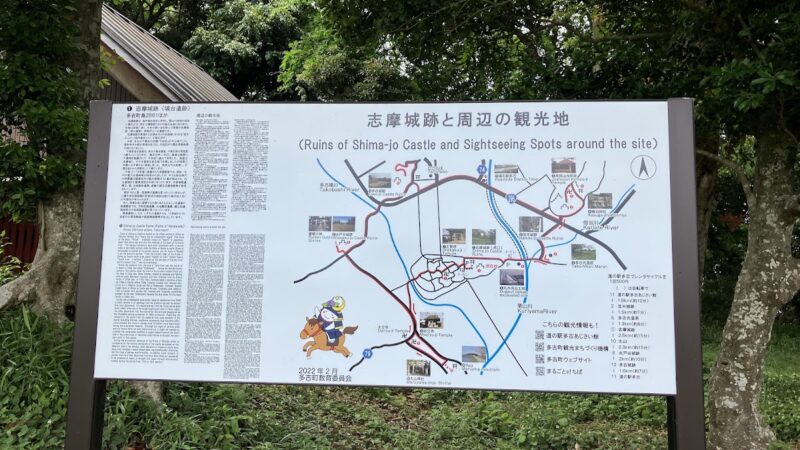
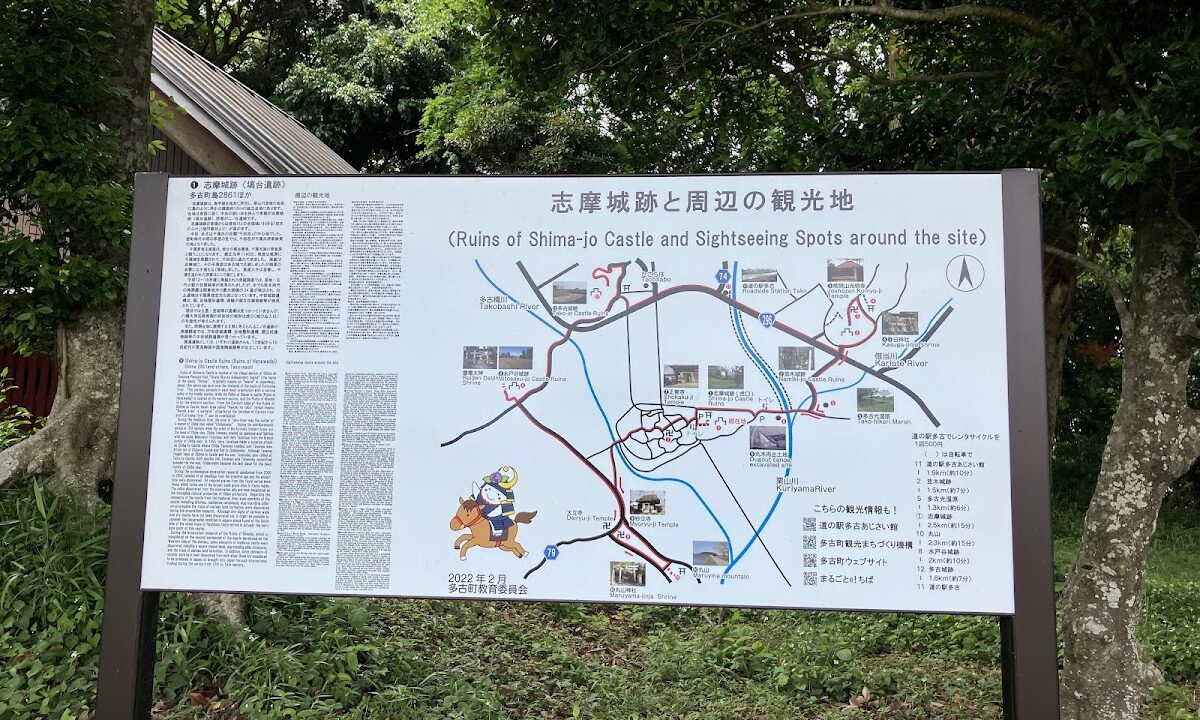
The Tako region was historically one of the Chiba clan’s strongholds, and several castles, including Tako Castle, were built around Shima Castle. These castle complexes are thought to have formed a coordinated defensive network protecting the Kuriyama River basin.
Structure of Shima Castle
Location and Topography of the Castle
Shima Castle is classified as a hilltop castle. Located at the eastern edge of the current Shima settlement, it was once built on a plateau surrounded by wetlands. During the medieval period, this area was a floodplain of the Kuriyama River, a low-lying wetland dotted with large and small lakes and marshes. As the place name “Shima” (meaning “island”) suggests, the castle was built utilizing the island-like topography of the wetlands.
This topographical feature was an important factor in enhancing the castle’s defensibility. It is believed that the attacking forces could not approach the castle without crossing a wetland, making a large-scale siege difficult. While the area is now covered with rice paddies due to land improvement, it is said that the area around the former parking lot was once filled with rice paddies irrigated by river water.
Remains and Current State
The remains of Shima Castle include some baileys (enclosures) and parts of earthworks. However, many remains have been lost due to years of development, and the area is now farmland and residential land. It is not designated as a historical site, and its state of preservation is not necessarily good.
At the site, one can imagine its former appearance from the topographical undulations indicating the former castle area and the few remaining traces of earthworks. Also, a five-tiered pagoda commemorating Chiba Tanenao and his family remains around the castle site, conveying the tragic history of Shima Castle.
Layout and Defensive Facilities
Although a detailed layout map does not exist, archaeological excavations and topographical observations suggest that Shima Castle had a structure with multiple baileys. It is believed that the castle was constructed with the main enclosure at its center, surrounded by the second and third enclosures, and defended by earthworks and moats.
Because the castle made maximum use of the natural fortifications of the wetland, it seems that large-scale civil engineering works such as stone walls were not carried out. The defensive system, combining earthworks, moats, and the natural obstacles of the wetland, can be said to have been a characteristic feature of Shima Castle.
Highlights of Shima Castle
Chiba Tanenao’s Five-Ring Pagoda
The greatest highlight when visiting the Shima Castle ruins is the five-ring pagoda commemorating Chiba Tanenao and his family. Erected to comfort the spirit of Tanenao, who committed suicide in the castle town, this pagoda is a valuable historical site that conveys the tragic end of the Chiba family. Standing before the pagoda, one can reflect on the fates of the warriors who were tossed about by the turbulent times of the Kyōtoku Rebellion.
Topography of the Castle Ruins
Although the area is now farmland and residential land, careful observation reveals the former castle’s topography. The faint traces of earthworks and subtle differences in elevation indicate that this was once a castle. Particularly at the eastern edge of the Shima settlement, the edge of a plateau is clearly visible, allowing one to imagine what it was once surrounded by wetlands.
Surrounding Historical Landscape
Several castle ruins, including Tako Castle, are scattered around Shima Castle. Visiting these sites provides insight into the Chiba clan’s sphere of influence in the Tako region during the medieval period and the overall picture of their castle network. Furthermore, the rural landscape along the Kuriyama River basin is valuable as a precious environment that evokes the scenery of the medieval period.
Access
Access by Public Transportation
When visiting Shima Castle Ruins by public transportation, access from Narita Airport is convenient. Take a Chiba Kotsu bus from Narita Airport Terminal 2 Station and get off at the “Michi-no-Eki Tako” bus stop. From the bus stop, it’s about a 15-20 minute walk to Shima Castle Ruins.
Since bus service is limited, we recommend checking the timetable in advance. Please note that the schedule may change, especially on holidays and during peak tourist seasons.
Access by Car
If traveling by car, the nearest interchanges are Narita IC or Daiei IC on the Higashi-Kanto Expressway. From the ICs, it’s about a 20-30 minute drive via national and prefectural roads to the vicinity of Shima Castle Ruins.
There is no dedicated parking lot near the castle ruins, but you can park at the Tako Roadside Station and walk. However, since the castle ruins are located within residential and agricultural areas, please be considerate of local residents and avoid disturbing their daily lives and farming.
Points to Note During Visits
Because Shima Castle Ruins includes privately owned land that is not designated as a historical site, please observe the following points when visiting.
- Avoid trespassing on private property; view from roads and public areas.
- Be considerate and avoid interfering with agricultural work.
- Always take your trash with you.
- Destroying or removing any historical remains is strictly prohibited.
- Be sure to greet local residents.
Attractions around Shima Castle
Tako Castle
Located approximately 2km from Shima Castle, Tako Castle was besieged by Makari Yasutane when Chiba Tanenao took refuge in Shima Castle. Visiting both Shima Castle and Tako Castle together will give you a deeper understanding of the battle situation during the Kyotoku Rebellion.
Roadside Station Tako
Conveniently located as a base for visiting Shima Castle, Roadside Station Tako offers fresh local produce and specialty products. Information on the history and culture of Tako Town is also available, so we recommend stopping by before or after your castle tour.
Landscape of the Kuriyama River Basin
The Kuriyama River basin boasts a rural landscape that retains the atmosphere of the Middle Ages. This region, once a wetland, has been transformed into a fertile granary through land improvement, but the landscape along the river still retains traces of its former topography.
Historical Significance of Shima Castle and the Chiba Clan
Genealogy of the Chiba Main Family
The Chiba clan was a prestigious samurai family that wielded power primarily in Shimosa Province from the late Heian period to the Sengoku period. Since Chiba Tsunetane participated in Minamoto no Yoritomo’s uprising, they prospered as powerful retainers of the Kamakura Shogunate. Chiba Tanenao, who perished at Shima Castle, was the 16th head of the main Chiba family.
The Kyōtoku Rebellion and the Turmoil in the Kanto Region
The Kyōtoku Rebellion was a large-scale civil war that ravaged the Kanto region for approximately 30 years, starting in 1455. Centered on the conflict between the Koga Shogun, Ashikaga Shigeuji, and the Kanto Kanrei (deputy shogun of the Kanto region), the samurai of Kanto were divided into two factions and fought against each other. The Chiba clan was also caught up in this rebellion, and internal conflicts within the family resulted in the tragic downfall of the main branch.
The Battle of Shima Castle was one of the crucial turning points in the Kyōtoku Rebellion, and the downfall of the main branch of the Chiba clan significantly altered the power balance in the Kanto region. After this, real power shifted from the Chiba clan to the Makari clan (later the Chiba clan), leading into the Sengoku period.
Value as a Medieval Castle
Shima Castle occupies an important position in castle research as a typical example of a medieval castle that made maximum use of the natural terrain of a wetland. While it has a simple structure lacking elements of early modern castles such as stone walls and keeps, it is therefore a valuable example for understanding medieval castle construction techniques and defensive philosophies.
Significance of Visiting Shima Castle
Unlike early modern castles with their ornate keeps and stone walls, the Shima Castle ruins are, at first glance, located in an unremarkable rural landscape. However, standing on this site allows one to feel firsthand the turbulent era of the Kyōtoku Rebellion, the historical tragedy of the downfall of the Chiba clan, and the lives and battles of the people of the medieval period.
Visiting historical sites and experiencing their topography and landscape firsthand provides a deeper understanding that cannot be gained from books alone. Shima Castle ruins can be said to be one of the essential historical sites for understanding Japanese medieval history, especially the eve of the Sengoku period in the Kanto region.
Summary
Shima Castle was a medieval hilltop castle located in Shima, Tako-machi, Katori-gun, Chiba Prefecture, and is a historically important site where the Chiba clan’s main branch was destroyed. It is known as the tragic site where Chiba Tanenao and his younger brother Tanekata were besieged and met their end during the Kyōtoku Rebellion of 1455.
Although the site is now farmland and residential area, and the remains are limited, the five-tiered pagoda and traces of the topography allow us to imagine what it was like in the past. The castle’s location—a plateau seemingly floating amidst a wetland—makes it a valuable example for understanding the defensive philosophy of medieval castles.
Access is via bus from Narita Airport to Michi-no-Eki Tako, followed by a 15-20 minute walk. When visiting, please be mindful of private property and observe proper etiquette. Visiting the castle in conjunction with the surrounding Tako Castle and the Kuriyama River basin will provide a deeper understanding of the medieval Tako region.
As the final resting place of the Chiba clan and a crucial stage in the Kyotoku Rebellion, Shima Castle is an indispensable historical site for studying medieval Japanese history. Within its tranquil ambiance lies the fate of those who lived through a turbulent era.