Ikewada Castle (Chiba Prefecture) Complete Guide: The Residence of the Taga Clan, a Senior Retainer of the Satomi Clan, and its Sengoku Period History
Located in Ichihara City, Chiba Prefecture, Ikewada Castle is an important fortress indispensable to understanding the Sengoku period history of the Boso Peninsula. From the Kamakura period to the Sengoku period, the castle’s lord changed hands from the Wada clan to the Taga clan, becoming the stage for fierce battles over Boso. This article comprehensively introduces information you should know before visiting Ikewada Castle, including its history, highlights, existing remains, and access methods.
Basic Information on Ikewada Castle
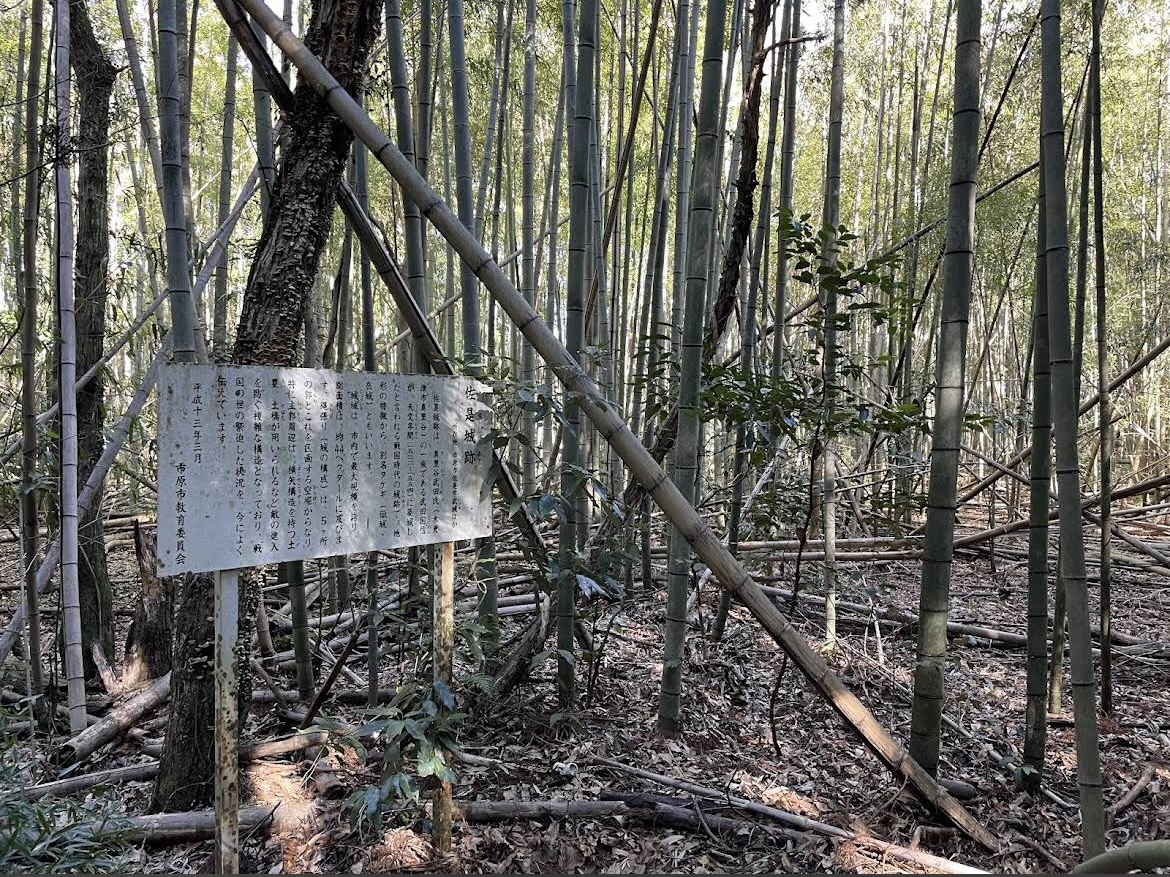
Ikewada Castle (Ikewada-jo) was a hilltop castle located in Ikewada, Ichihara City, Chiba Prefecture. Although the area is now largely residential, parts of the earthworks and moats remain as historical remnants, conveying the atmosphere of the Sengoku period.
Location: Ikewada, Ichihara City, Chiba Prefecture
Castle Structure: Hilltop Castle
Builder: Wada Taro Masaharu (legend)
Construction Period: Kamakura period
Main Lords: Wada clan, Taga clan
Remains: Earthworks, moats
Designated Cultural Property: None
Ikewada Castle was a strategically important location in the central part of Kazusa Province, built in the tributary of the Yoro River. Several other castles, such as Saze Castle, were scattered around the area, playing an important role in the power struggles of the Boso Peninsula.
History and Changes of Ikewada Castle
Kamakura Period: Construction by the Wada Clan
The construction of Ikewada Castle is believed to date back to the Kamakura period. According to legend, it was built by Wada Taro Masaharu. The Wada clan is said to be a branch of Wada Yoshimori, a powerful retainer of the Kamakura Shogunate, and it is thought to have functioned as one of the Wada clan’s power bases in the Boso Peninsula. During the Kamakura period, the Boso region was dominated by samurai groups centered around the Chiba clan, and the Wada clan also played a significant role. The place name Ikewada itself is thought to originate from the Wada clan, illustrating their strong influence in the region.
Muromachi Period: Becoming a Branch Castle of the Mariya Takeda and Satomi Clans
In the mid-Muromachi period, the power dynamics of Kazusa Province changed dramatically. Ikewada Castle came to be positioned as a branch castle of the Mariya Takeda and Satomi clans.
The Mariya Takeda clan was a branch of the Kai Takeda clan that settled in Kazusa Province and wielded considerable power as the deputy governor of Kazusa Province. Meanwhile, the Satomi clan, based in Awa Province, gradually increased its influence in Kazusa Province, and it is possible that the ownership of Ikewada Castle shifted between these two forces.
Sengoku Period: As the Residence of the Taga Clan
During the Sengoku period (Warring States period), Ikewada Castle became the residence of the Taga clan, important retainers of the Satomi clan. The Taga clan was one of the powerful vassal groups serving the Satomi clan, and Taga Etchu-no-kami Takaaki is known as the castle’s lord.
Taga Takaaki was an important warrior who supported the Satomi clan’s military, but he was killed in the First Battle of Kōnodai in 1538. This battle was a large-scale conflict between the Hojo clan and the combined forces of the Satomi clan and Ashikaga Yoshiaki, the Oyumi Shogun, and was a crucial battle that determined the balance of power in the Bōsō region.
Ikewada Castle After the Battle of Kōnodai
After Taga Etchu-no-kami Takaaki was killed in the Battle of Kōnodai, Ikewada Castle was defended by his eldest son, Taga Kurōdo, and his younger brother, Taga Hyōe. The brothers carried on their father’s will, maintaining their loyalty to the Satomi clan while preserving the castle.
However, from the Eiroku era to the Tensho era, the Hojo clan’s expansion into the Boso Peninsula intensified. Hojo Ujimasa aimed to conquer Kazusa Province, successively capturing castles belonging to the Satomi clan.
The Fall of Ikewada Castle
Ultimately, Ikewada Castle was attacked by a large army of approximately 10,000 men led by Hojo Ujimasa. The Taga brothers fought bravely, but Ikewada Castle fell due to the overwhelming difference in troop strength. This fall marked the end of the Taga clan’s rule over Ikewada Castle.
There are various theories regarding the exact date of Ikewada Castle’s fall, but it is generally believed to have fallen during the Hojo clan’s invasion of Kazusa Province during the Tensho era (1573-1592). During this period, the Satomi clan’s power gradually declined under pressure from the Hojo clan, and many of their branch castles in Kazusa Province fell into Hojo hands.
After the Edo Period
When the Hojo clan was destroyed in Toyotomi Hideyoshi’s siege of Odawara in 1590, many castles in the Boso region were abandoned. It is believed that Ikewada Castle was also abandoned around this time.
Subsequently, throughout the Edo period, the Ikewada Castle site was used for farmland and residential areas, and its function as a castle was completely lost. However, the topography and some remains have survived to the present day, conveying the existence of the former castle.
Layout and Structure of Ikewada Castle
Ikewada Castle is a typical flatland castle, characterized by its layout that skillfully utilizes the surrounding terrain.
Arrangement of the Main Enclosure and Baileys
The main enclosure of Ikewada Castle was built on a relatively flat plateau. It is believed that multiple baileys were arranged around the main enclosure, each separated by earthworks and moats.
Based on the current topography, the main enclosure is estimated to have been approximately 80 meters east-west and 60 meters north-south. The surrounding area consisted of the second and third baileys, forming a tiered defensive line.
Characteristics of Earthworks and Moats
The earthworks and moats were crucial defensive features of Ikewada Castle. The following characteristics can be observed from the existing remains:
Earthworks: Earthworks approximately 2-3 meters high remain in some sections. These earthworks surrounded the baileys, preventing enemy intrusion and likely enhancing defensive capabilities by allowing for the construction of fences or walls on top.
Moats: Primarily dry moats, estimated to be 3-4 meters deep. While not entirely preserved due to burial and alteration, traces of the moats can still be seen in some areas.
Entrance and Passageways
The entrances to the castle, known as “koguchi,” were designed to prevent enemy intrusion. Instead of straight passageways, they were likely designed with curves to reduce the attacker’s momentum.
Highlights and Existing Remains of Ikewada Castle
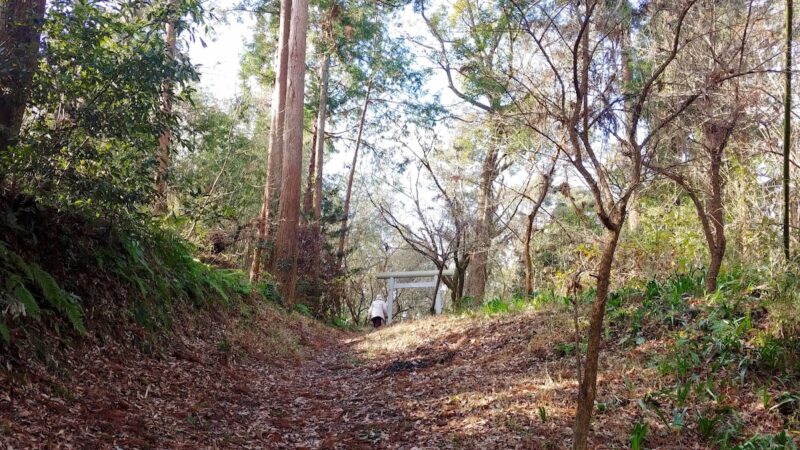
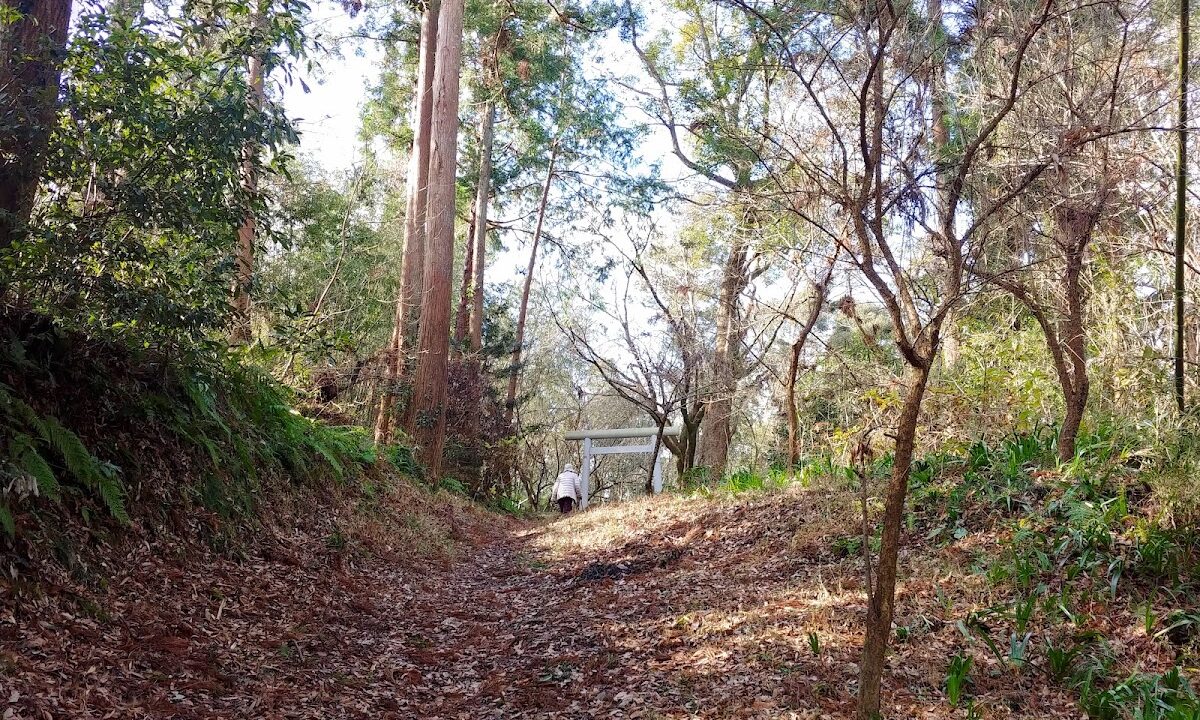
Although the current Ikewada Castle site is undergoing residential development, careful observation reveals traces of the Sengoku period (Warring States period).
Remaining Earthworks
Some parts of the castle site retain relatively well-preserved earthworks. Traces of the earthworks can be seen along the boundaries of private property and roadsides, providing clues to imagining the castle’s structure at the time.
The height of the earthworks varies depending on the location, but in well-preserved areas, some sections maintain a height of over 2 meters. Walking along the earthworks allows you to experience the scale of the castle and its defensive lines.
Topography of the Moat Remains
While much of the moat has been filled in, traces of the moat can be seen in the undulations and depressions of the terrain. Especially around the main enclosure, changes in the terrain suggest the former location of the moat.
Surrounding Landscape
From the Ikewada Castle site, you can enjoy panoramic views of the surrounding landscape. You can appreciate the topographical advantages of the plateau where the castle was built and understand why this location was chosen for a castle.
The complex terrain, with its valleys and plateaus formed by the tributaries of the Yoro River system, is ideal for a medieval castle, and it is clear that Ikewada Castle made the most of this terrain.
How to Access Ikewada Castle
This section introduces how to access the Ikewada Castle ruins.
Access by Public Transportation
Train and Bus:
- Take the Kominato Railway bus from Goi Station on the JR Uchibo Line.
- Get off at the Ikewada bus stop and walk for about 5 minutes.
Since the number of Kominato Railway buses is limited, it is recommended to check the timetable in advance.
Access by Private Car
By Car:
- Approximately 15 minutes from the Ichihara Interchange on the Tateyama Expressway
- Accessible via National Route 297
There is no designated parking area, so please avoid street parking and be considerate of the surrounding area.
Precautions During Visits
Since the Ikewada Castle Ruins are located in a residential area, please observe the following points when visiting:
- Do not trespass on private property
- Be considerate of residents’ lives and visit quietly
- Always take your trash with you
- Do not damage or remove any remains
- When taking photographs, please be careful not to include private homes in your shots
About the Ikewada Castle Stamp
In Chiba Prefecture, the Chiba Castle Preservation and Utilization Association is the main organization that issues castle stamps at many castles throughout the prefecture. Ikewada Castle is also included in the stamp collection and is popular among castle enthusiasts.
How to Obtain a Castle Stamp
The castle stamp for Ikewada Castle can be obtained at designated distribution locations within Ichihara City. Castle stamps in Chiba Prefecture are available for purchase at roadside stations and tourist facilities, without requiring a special reception.
The castle stamp is postcard-sized, featuring the castle’s design and history, making it a valuable collector’s item.
Visiting Castle Stamps in Chiba Prefecture
More than 100 castles in Chiba Prefecture issue castle stamps, allowing you to enjoy a “castle tour” starting from Ikewada Castle and visiting surrounding castles.
Nearby Castles Issuing Castle Stamps:
- Saze Castle (Ichihara City)
- Kururi Castle (Kimitsu City)
- Otaki Castle (Otaki Town)
- Tateyama Castle (Tateyama City)
Visiting these castles will allow you to gain a deeper understanding of the Sengoku period history of the Boso Peninsula.
Nearby Historical Sites and Tourist Attractions
When visiting Ikewada Castle, we recommend also visiting the nearby historical sites and tourist attractions.
Saze Castle
Saze Castle, located near Ikewada Castle, is also a medieval castle in Ichihara City. It is a castle associated with the Mariya Takeda and Satomi clans, and shares a similar historical background to Ikewada Castle.
Kururi Castle
Kururi Castle, located in Kimitsu City, was one of the important strongholds of the Satomi clan, and its keep has now been restored. It is about a 30-minute drive from Ikewada Castle and is a must-see spot for learning about the Sengoku period history of the Boso Peninsula.
Ichihara City History Museum
This museum allows you to learn about the history and culture of Ichihara City, and also features exhibits on castles in the city, including Ikewada Castle. Visiting before or after your castle tour will give you a deeper understanding.
Ikewada Castle and the Sengoku History of Boso Peninsula
The history of Ikewada Castle is closely intertwined with the Sengoku period history of the Boso Peninsula.
The Conflict Between the Satomi and Hojo Clans
During the Sengoku period, Boso Peninsula was the front line of the struggle for supremacy between the Satomi clan of Awa Province and the Hojo clan of Sagami Province. The two forces fiercely clashed over control of Kazusa and Shimosa Provinces, resulting in numerous battles.
Ikewada Castle was located within the Satomi clan’s sphere of influence and functioned as a defensive base against Hojo invasions. The Taga clan’s service to the Satomi clan as castle lords was also due to this geopolitical importance.
The Impact of the Battle of Kōnodai
The First Battle of Kōnodai in 1538 significantly altered the balance of power in Boso Peninsula. In this battle, the Satomi clan fought against the Hojo clan alongside Ashikaga Yoshiaki, the Oyumi Shogun, but suffered a defeat.
Taga Etchu-no-kami Takaaki, lord of Ikewada Castle, was killed in this battle, causing temporary unrest at Ikewada Castle. However, Takaaki’s sons continued to defend the castle, maintaining their loyalty to the Satomi clan.
Hojo Clan’s Invasion of Kazusa
From the Eiroku to the Tensho eras, the Hojo clan intensified their invasion of Kazusa Province. Hojo Ujimasa mobilized a large army and successively captured castles belonging to the Satomi clan.
Ikewada Castle also became a target and was attacked by a large army of 10,000 men. The Taga brothers fought bravely, but ultimately the castle fell, and the Satomi clan’s power in Kazusa Province declined significantly.
Research and Preservation Activities of Ikewada Castle
Ikewada Castle holds an important position in the study of medieval castles in Chiba Prefecture.
Academic Research
Ikewada Castle has been investigated by local historians and castle researchers. While archaeological excavations have been limited, the structure and historical changes of the castle are gradually being revealed through historical documents, topographical surveys, and observations of the remains.
In particular, research themes include the relationship between the Satomi and Taga clans, its connection to the Battle of Kōnodai, and the Hōjō clan’s role in their invasion of Kazusa Province.
Current Status of Preservation Activities
Ikewada Castle ruins are not designated as a cultural property, and no official preservation and maintenance work is being carried out. However, organizations such as the Chiba Castle Preservation and Utilization Association are conducting surveys and public awareness activities for castles in Chiba Prefecture, and Ikewada Castle is one of their targets.
The issuance of castle stamps is also part of efforts to increase interest in castles and foster preservation awareness.
Points to Note When Visiting Ikewada Castle
Here are some points to note for effectively visiting Ikewada Castle.
Preparation
- Gain basic knowledge about the history and layout of Ikewada Castle.
- Prepare topographic maps and layout diagrams and compare them on-site.
- Prepare appropriate clothing and shoes (comfortable walking shoes, seasonal attire).
- Bringing a camera or binoculars will be helpful for observing the remains.
On-site Visit
- Carefully observe remains such as earthworks and moat traces.
- Pay attention to the topography and imagine the castle’s defensive structure.
- Look around at the surrounding landscape to understand the castle’s location.
- Take photographs and keep records (but be considerate of private property and houses).
Comparison with Surrounding Castles
By comparing Ikewada Castle with surrounding castles, rather than just viewing it alone, you can understand the characteristics and regional features of castles in the Boso Peninsula. We recommend visiting it in conjunction with Saze Castle, Kururi Castle, Otaki Castle, etc.
Summary: The Historical Value of Ikewada Castle
Ikewada Castle, located in Ichihara City, Chiba Prefecture, is an important historical site that tells the story of the Sengoku period in the Boso Peninsula as a medieval castle. From its construction by the Wada clan during the Kamakura period, to its role as the residence of the Taga clan during the Sengoku period, and finally its fall to the Hojo clan, it experienced a turbulent history.
Although the site has been largely developed into residential areas and does not retain its original appearance, the remaining earthworks, moat remains, and topography allow us to imagine the castle’s appearance during the Sengoku period. The issuance of castle stamps has increased its recognition among castle enthusiasts, making it an important spot for castle tours in Chiba Prefecture.
Visiting Ikewada Castle is not simply about viewing ruins; it is a valuable opportunity to learn about the Sengoku period history of Boso, the conflict between the Satomi and Hojo clans, and the local history and culture. Visiting related historical sites in the surrounding area will allow for a deeper understanding of history and a more fulfilling castle exploration.
Chiba Prefecture is home to numerous medieval castles, and Ikewada Castle is one of them, an important cultural heritage site that is expected to continue to be researched and preserved.