A Thorough Explanation of the History and Remains of Maegasaki Castle (Nagareyama City, Chiba Prefecture) | A Strategic Sengoku Period Fortress that Functioned as a Branch Castle of Kogane Castle
What is Maegasaki Castle?
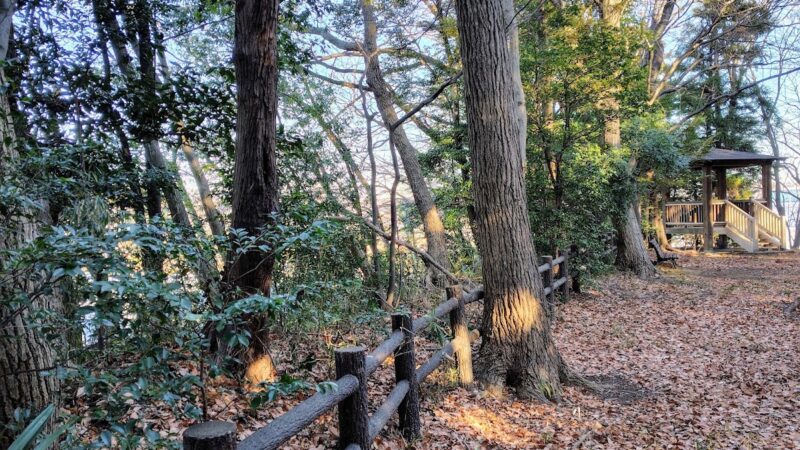
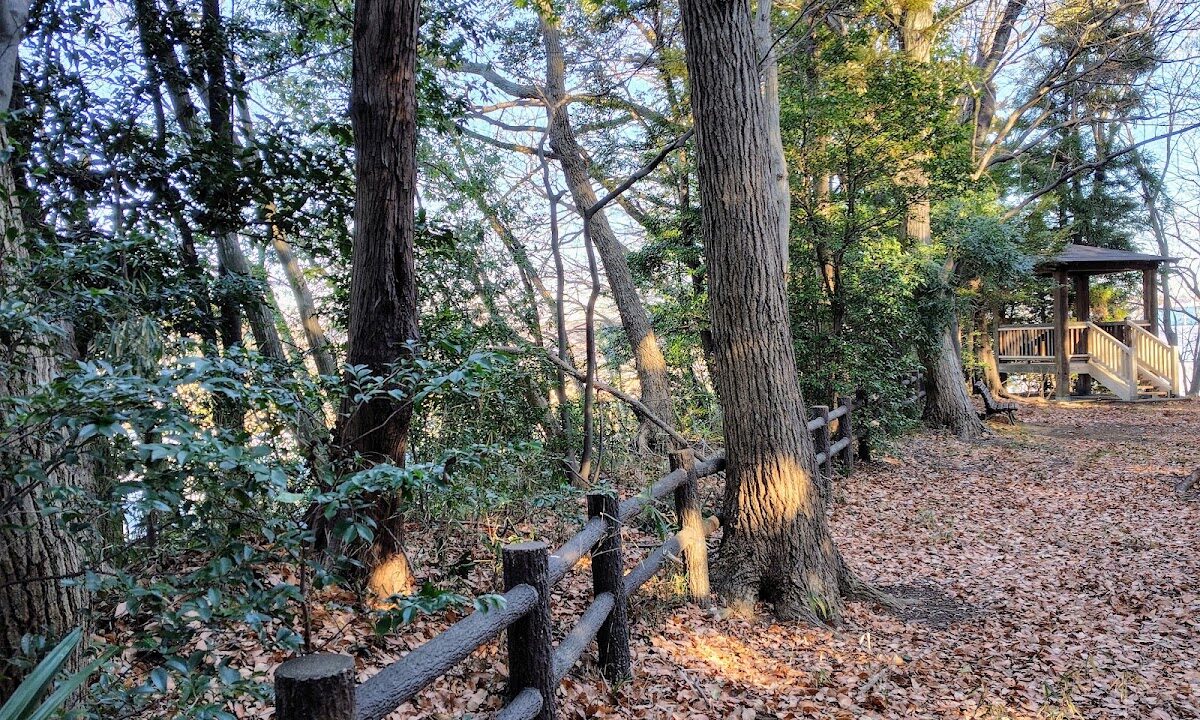
Maegasaki Castle is a medieval flatland castle located in Maegasaki, Nagareyama City, Chiba Prefecture. Built on a plateau approximately 20 meters above sea level, jutting out northwest along the right bank of the Fujikawa River (also written as Fujikawa), the castle is now maintained as Maegasaki Castle Ruins Park, a place of recreation for citizens.
During the Sengoku period, it is believed to have functioned as a branch castle of the Takagi clan, lords of Kogane Castle who ruled this region, and played a part in the Takagi clan’s castle network, which was based at Negiuchi Castle (Otaniguchi Castle). While the castle itself is not particularly large, the remains of earthworks, dry moats, and watchtower bases are well-preserved, making it a valuable historical site for understanding the structure of medieval castles.
Basic Information on Maegasaki Castle
Location and Geographical Features
Location: 409-1 Maegasaki, Nagareyama City, Chiba Prefecture (Maegasaki Castle Ruins Park)
Maegasaki Castle is located on a plateau on the right bank of the Fuji River, utilizing the river as a natural moat. The main enclosure is located at the tip of the plateau, and the castle’s layout makes maximum use of the long, narrow terrain extending northwestward. This location is thought to have served to monitor surrounding transportation routes and prevent enemy incursions towards Kogane Castle.
Common Names and Alternative Names
Maegasaki Castle does not have any particularly well-known alternative names, but it is sometimes called “Maegasaki Castle Ruins” or “Okunodai Castle” locally. It is presumed that these names originated from the place name of the castle ruins, “Okunodai” (meaning “inner plateau”).
Castle Classification
- Castle Structure: Hilltop Castle
- Construction Period: Late Muromachi Period to Sengoku Period (Late 15th to 16th Century)
- Main Lords: Hananoi Clan, Tajima Gyobu-no-Shosuke (Tradition)
- Remains: Earthworks, Dry Moats, Watchtower Bases
History of Maegasaki Castle
Background of Construction and the Takagi Clan
There are no clear historical records regarding the construction period or builder of Maegasaki Castle, and much of the information is inferred from tradition and place name research. However, it is supported by multiple historical documents and local traditions that this castle was under the control of the Takagi clan, whose base was Kogane Castle (Negiuchi Castle).
The Takagi clan was a powerful local lord in Shimosa Province, a branch of the Chiba clan. The second head of the family built Negiuchi Castle (also known as Otaniguchi Castle) and brought this entire region under his control. The Takagi clan established a castle network centered around Kogane Castle, with several subsidiary castles located in the surrounding area. It is believed that Maegasaki Castle functioned as one of these castles.
Legends Regarding the Castle Lord
There are mainly two legends concerning the lord of Maegasaki Castle.
One theory suggests that the lord was the Hananoi clan (Hanai family), vassals of the Takagi clan. Hananoi is a place name in the area around present-day Kashiwa City, and it is possible that a family based in this region served the Takagi clan and was entrusted with the defense of Maegasaki Castle.
The other legend suggests that the lord was Tajima Gyobu-no-sho, also a vassal of the Takagi clan. While detailed historical records of the Tajima clan are scarce, local oral traditions and old place names suggest that this individual was involved with Maegasaki Castle.
In any case, it is certain that Maegasaki Castle, as a subsidiary castle defended by a direct retainer of the Takagi clan, played a part in the defense of Kogane Castle.
Battle with Ota Dokan in Bunmei 10 (1478)
A significant event recorded in the history of Maegasaki Castle is its fall on November 3, Bunmei 10 (1478). In that year, Ota Dokan, a renowned general serving the Kanto Kanrei Uesugi clan, engaged in fierce battles with the combined forces of the Chiba and Nagao clans.
It is said that Maegasaki Castle fell during this battle under Ota Dokan’s attack. During this period, Ota Dokan was conducting military operations throughout the Kanto region from his base at Edo Castle, capturing Chiba clan strongholds one after another. The fall of Maegasaki Castle is thought to have occurred as part of this series of military operations.
However, there are no clear records of what fate befell Maegasaki Castle after its fall. It’s possible that it returned to the control of the Takagi clan, or that it was temporarily placed under the control of the Uesugi clan.
From the Sengoku Period to Abandonment
In the 16th century, the situation in the Kanto region changed dramatically due to the expansion of the Later Hojo clan’s power. The Takagi clan initially opposed the Later Hojo clan, but eventually came under their control. While the exact role of Maegasaki Castle during this process is unclear, it is presumed to have maintained a certain function as a subsidiary castle of Kogane Castle.
In 1590, when the Later Hojo clan was destroyed in Toyotomi Hideyoshi’s siege of Odawara, the Takagi clan also declined, and Kogane Castle was abandoned. It is believed that Maegasaki Castle was also abandoned at the same time. Afterward, while the castle site was used for farmland and residential areas, remnants such as earthworks and moats remained as topographical features.
Remains of Maegasaki Castle
Existing Castle Remains
Even today, as Maegasaki Castle Ruins Park, the remains of a medieval castle can be clearly seen. The main remains are as follows:
Main Enclosure (Honmaru)
Located at the tip of the plateau, the main enclosure is the central enclosure of the castle. Although it is now leveled and used as a park, traces of earthworks remain around it. The main enclosure is relatively small, suggesting it served more as a military surveillance and defensive base than as a residential facility.
Earthworks
Earthworks surround the main enclosure, and some can still be seen today as mounds of earth about 1-2 meters high. It is presumed that fences or walls were installed on top of the earthworks, functioning as defensive structures to prevent enemy intrusion.
Dry Moat
A dry moat remains, separating the main enclosure from the second enclosure. Although the depth is currently shallow, it is believed to have been several meters deep in the past. The bottom of the moat is presumed to have been either a V-shaped or U-shaped moat, but accurate determination of its exact shape is difficult due to years of burial.
Watchtower Base
An earthen mound, believed to be a watchtower base, can be seen in one corner of the main enclosure. From this base, a wide view of the surrounding terrain could be observed, suggesting that a watchtower stood here to monitor enemy movements.
Layout Characteristics
The layout of Maegasaki Castle is a series of interconnected enclosures, taking advantage of the long, narrow plateau. The second and third enclosures are arranged southeast from the main enclosure, with each enclosure separated by moats and cliffs.
This layout exhibits typical characteristics of a medieval castle, lacking large-scale stone walls or keeps, elements of early modern castles. However, the defensive design, which maximizes the use of the limited terrain, indicates that it possessed sufficient functionality as a practical castle during the Sengoku period.
Relationship with Kogane Castle and the Castle Network
Defense System Centered on Kogane Castle (Negiuchi Castle)
Understanding Maegasaki Castle is crucial to understanding its relationship with Kogane Castle (Negiuchi Castle, Otaniguchi Castle). Kogane Castle was a large-scale castle built in the area around present-day Kogane, Matsudo City, as the base of the Takagi clan.
The Takagi clan constructed a castle network centered on Kogane Castle, with multiple branch castles positioned around it. Besides Maegasaki Castle, Hanawa Castle, Tobari Castle, Fuse Castle, and Minowa Castle are known as branch castles of the Takagi clan. These branch castles were independent defensive strongholds, but at the same time, they cooperated to form a defensive line protecting Kogane Castle.
Strategic Location of Maegasaki Castle
Maegasaki Castle is located northwest of Kogane Castle and is thought to have played a role in monitoring the transportation routes along the Fujikawa River. This location was ideal as an outpost to detect enemy incursions from the north early and issue warnings to Kogane Castle.
Furthermore, the Fujikawa River may have been used for water transport, making it an important route for transporting goods. Maegasaki Castle was a strategic base controlling this crucial transportation and logistics hub.
Connection to Kōnodai Castle
Kōnodai Castle was also within the sphere of influence of the Takagi clan. Kōnodai Castle is located in present-day Kōnodai, Ichikawa City, and was in an important location near the Shimōsa Provincial Capital. It is presumed that a communication route from Maegasaki Castle to Kōnodai Castle was maintained within the Takagi clan’s territory and functioned as part of a castle network.
Access and Transportation to Maegasaki Castle
Access by Public Transportation
Nearest Station: JR Jōban Line “Kita-Kogane Station”
From Kita-Kogane Station to Maegasaki Castle Ruins Park is approximately a 25-minute walk, a distance of about 1.7 kilometers. Exit the station and head north, passing through the residential area towards the plateau. Since there are few road signs and guideposts, it is recommended to check the route beforehand using a map app.
Using the Ryutetsu Nagareyama Line: The Ryutetsu Nagareyama Line’s “Heiwadai Station” is also accessible. It’s about a 20-minute walk from Heiwadai Station, and this route is another option. You can purchase a castle stamp for Maegasaki Castle at Heiwadai Station. Be sure to get one as a memento of your castle visit.
Access by Car
It takes about 10 minutes from the Joban Expressway “Nagareyama Interchange. While there is no dedicated parking lot at Maegasaki Castle Ruins Park, there are spaces for short-term parking on the streets around the park. However, since it is a residential area, please be considerate of the nearby residents.
Nearby Castle Tour Routes
When visiting Maegasaki Castle, it is also recommended to visit the surrounding castles related to the Takashiro clan.
- Kogane Castle (Negiuchi Castle): Located in Kogane, Matsudo City. The main base of the Takagi clan, with extensive remains.
- Kofudai Castle: Located in Kofudai, Ichikawa City. Famous as the site of fierce battles between the Satomi and Hojo clans.
- Hanawa Castle, Tobari Castle, Fuse Castle: All are branch castles of the Takagi clan, scattered around Matsudo City.
Visiting these castle ruins in one day allows you to understand the overall picture of the Takagi clan’s castle network.
Information on using Maegasaki Castle Ruins Park
Park Development Status
Maegasaki Castle Ruins Park is an urban park developed by Nagareyama City. While preserving the remains, it is used as a space for citizens to relax, with benches and playground equipment installed.
Explanatory boards about the castle ruins are installed within the park, allowing you to learn about the history and remains of Maegasaki Castle. However, since detailed layout maps and archaeological findings are not displayed, it is recommended to read reference materials beforehand if you wish to learn more.
Points to Note When visiting Maegasaki Castle Ruins Park, please pay attention to the following points:
- Earthwork Embankments: The earthworks around the main enclosure are covered with vegetation, but they can be clearly seen as part of the terrain’s undulations.
- Traces of Dry Moats: The depressions between the enclosures are traces of dry moats. Although they are largely buried, their location can be inferred from the changes in the terrain.
- Watchtower Base: The raised area in one corner of the main enclosure is the watchtower base. Looking around from this spot, you can appreciate the castle’s advantageous location.
- Edge of the Plateau: Standing on the edge of the plateau, you can see the difference in elevation with the lowlands towards the Fujikawa River. This topographical advantage enhanced the castle’s defensive capabilities.
Notes for Visitors
- You are free to explore the park, but please be considerate and avoid damaging the historical remains.
- In summer, the vegetation can be overgrown, making the remains difficult to see. Visiting in spring or autumn is recommended.
- Bringing insect repellent and long-sleeved clothing will make your visit more comfortable.
- There are no drinking fountains or restrooms in the park, so it is recommended to prepare these in advance.
Information on Spots Around Maegasaki Castle
Historical and Cultural Facilities
Nagareyama City Museum: A museum introducing the history and culture of Nagareyama City, including exhibits on castles in the city, such as Maegasaki Castle. Visiting before or after visiting the castle ruins will deepen your understanding.
Issa Soju Memorial Hall: A facility associated with Kobayashi Issa, a haiku poet from the Edo period. You can experience the history and culture of Nagareyama.
Nature and Parks
Tone Canal: A canal excavated during the Meiji era, now maintained as a walking path. Just a short walk from Maegasaki Castle, you can enjoy a rich natural environment.
Nagareyama General Sports Park: A large park equipped with sports facilities. Perfect for refreshing yourself after visiting the castle ruins.
Gourmet & Shopping
Nagareyama City is a residential city known for its slogan, “If you’re going to be a mother, choose Nagareyama City.” The area around Otakanomori Station boasts numerous large commercial facilities. You can enjoy shopping and dining after visiting the castle ruins.
Castle Stamps and How Castle Fans Can Enjoy
How to Obtain a Castle Stamp
The Maegasaki Castle stamp can be purchased at Heiwadai Station on the Ryutetsu Nagareyama Line. Simply ask a station attendant, and the price is around 300 yen, similar to other castle stamps (prices may change).
The castle stamp features the name of Maegasaki Castle and the Nagareyama City emblem, and is popular as a souvenir of castle visits. Collectors should definitely get one.
Recommended Points for Castle Enthusiasts
Maegasaki Castle is a simple castle ruin that hasn’t been heavily commercialized for tourism. Therefore, you can quietly observe the remains and feel the atmosphere of a medieval castle. The following ways to enjoy your visit are recommended:
- Creating a Layout Map: While walking around the site, try creating your own layout map. Observing the topography will help you understand the castle’s structure.
- Photography: Photograph the remains of the earthworks and moats from various angles to create a record. Seasonal changes in vegetation are also an interesting topic.
- Researching the Takagi Clan’s Castle Network: Starting from Maegasaki Castle, explore Kogane Castle and surrounding branch castles to investigate the reality of the Takagi clan’s rule over their territory.
References and Research Materials
For those who want to learn more about Maegasaki Castle, the following references are provided.
Main References
- *Medieval Castles of Chiba Prefecture* (Chiba Castle Research Association)
- *Comprehensive Survey of Japanese Castles, Vol. 6: Chiba and Kanagawa* (Shin Jinbutsu Oraisha)
- *History of Nagareyama City* (Nagareyama City History Compilation Committee)
- *A Tour of Ancient Castle Sites in Boso* (Arimine Shoten Shinsha)
Papers and Research Reports
- Cultural Property Survey Report by the Nagareyama City Board of Education
- Various research papers on medieval castles in Chiba Prefecture
Internet Resources
- Nagareyama City Official Website (Cultural Property Information)
- Castle-related databases (Kojodan, Shiro Meguri, etc.)
By referring to these materials, you can gain a deeper understanding of the historical background and details of the remains of Maegasaki Castle.
Summary: Historical Value of Maegasaki Castle
Although small in scale, Maegasaki Castle is a valuable historical site that shows the reality of regional control in Shimosa Province during the Sengoku period. This site is a crucial piece of evidence illustrating how the Takagi clan, a powerful local family, controlled their territory by building a network of branch castles centered around their base, Kogane Castle.
The site also records a specific historical event: the attack and fall of the castle by Ota Dokan in 1478, making it a significant castle for understanding the Sengoku period history of the Kanto region. Furthermore, the well-preserved remains of earthworks, dry moats, and watchtower bases make it valuable as a learning tool for studying the structure of medieval castles.
While currently known as Maegasaki Castle Ruins Park and enjoyed by locals, its historical value is not widely recognized. However, for castle enthusiasts and history buffs, it is a precious place to quietly observe the remains and feel the spirit of the Sengoku period.
If you have the opportunity to visit Nagareyama City, be sure to visit Maegasaki Castle Ruins Park and reflect on the historical drama that unfolded here. Visiting Kogane Castle and the surrounding branch castles will provide a comprehensive picture of the Takagi clan’s control over their territory. Why not take a castle stamp in hand and embark on a journey to rediscover the charm of medieval castles?