Complete Guide to Monomidai Castle (Tako Town, Chiba Prefecture) | History, Ruins, Castle Stamp, and Access Information
What is Monomidai Castle?
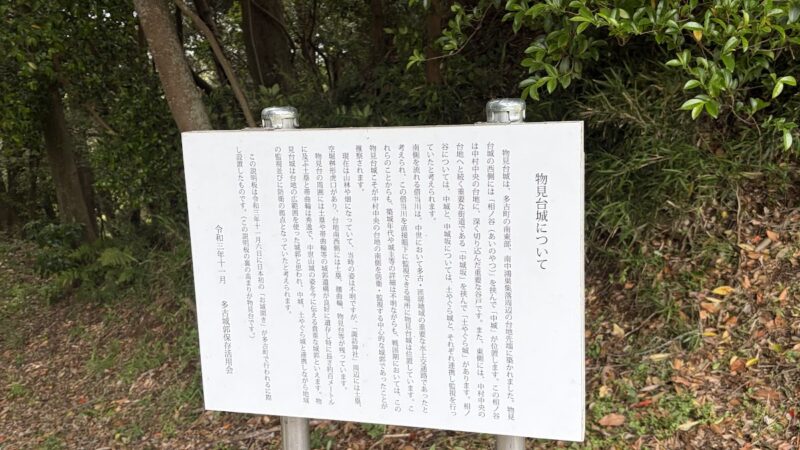
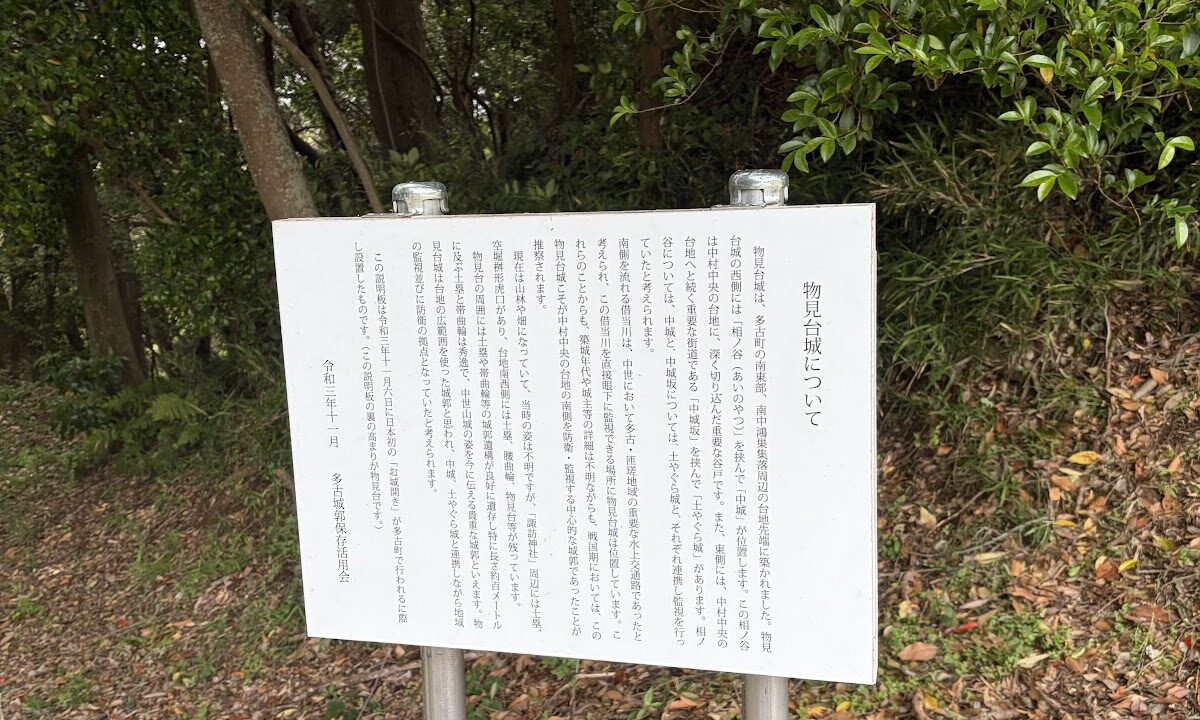
Monomidai Castle is a medieval castle located in Minami-naka, Tako Town, Katori District, Chiba Prefecture. As a valuable historical site that tells the story of the Sengoku period in Shimosa Province, defensive structures such as baileys, dry moats, and earthworks can still be seen today.
Built on a plateau approximately 35 meters above sea level, this castle, along with the adjacent Tsuchiyagura Castle, is also known as “Nakajo” (Middle Castle) and is thought to have functioned as a single integrated castle complex. While numerous castle ruins exist in Chiba Prefecture, Monomidai Castle is noteworthy as an important historical site that conveys a typical structure of a medieval castle in the Kanto region.
History of Monomidai Castle
Background and Era of Construction
Regarding the detailed construction date and builder of Monomidai Castle, there is a lack of reliable historical records, and many aspects remain unclear. However, based on the castle’s structure and the historical background of the surrounding area, it is presumed to be a castle built during the Sengoku period (Warring States period).
Shimosa Province was a region where powerful local lords, primarily the Chiba clan, held sway, and the area around Tako Town was no exception. The area where Monomidai Castle is located was within the Chiba clan’s sphere of influence, and it is highly likely that it functioned as a base for regional control or as a defensive facility.
Characteristics as a “Nakajo” (Middle Castle)
A major characteristic of Monomidai Castle is that it was collectively referred to as “Nakajo” (Middle Castle) along with the adjacent Tsuchiyagura Castle. This designation suggests that the two castles functioned as an integrated defensive system.
The method of arranging multiple castles on the same plateau and coordinating them is a common tactic in castle construction during the Sengoku period. It is presumed that Monomidai Castle and Tsuchiyagura Castle, while each being an independent defensive base, were structured to cooperate in emergency situations to deal with enemy invasions.
The Castle’s Demise
There are no clear records of when or how Monomidai Castle was abandoned. However, since many medieval castles ceased to exist from the late Sengoku period to the early Edo period, it is believed that Monomidai Castle was abandoned around the same time.
Structure and Remains of Monomidai Castle
Castle Layout and Arrangement
Monomidai Castle is a flatland castle that skillfully utilizes the topography of the plateau. Built on a plateau approximately 35 meters above sea level and 23 meters above sea level, it boasts a location that allows it to overlook the surrounding lowlands.
The castle area is estimated to be approximately 200 meters east-west and 150 meters north-south, making it a medium-sized castle for a medieval regional castle. Defensive facilities were arranged mainly along the edge of the plateau, and a clever defensive system was constructed combining natural terrain and artificial civil engineering works.
Major Remains
Enclosures (Kuruwa)
Multiple enclosures (kuruma) have been identified at Monomidai Castle. The castle’s framework consists of a series of baileys arranged in stages around the main enclosure. These baileys are thought to have functioned not only as defensive strongholds but also as living spaces and storage areas for supplies.
Each bailey is positioned with a difference in elevation, a design feature intended to make it difficult for attackers to penetrate from lower to higher baileys. This staged defensive structure is a tactical consideration designed to gradually halt enemy attacks and protect the main enclosure, the final line of defense.
Lower Baileys (Koshikuruwa)
Lower baileys (koshikuruwa) are located around the main baileys. These are flat, belt-shaped areas surrounding important sections such as the main enclosure and the second bailey, enhancing defensive capabilities and providing space for defending troops.
The lower baileys of the Momidai Castle were constructed by leveling the slopes of the plateau, demonstrating the advanced civil engineering techniques of the time. From the lower baileys, a wide view of the surrounding terrain was possible, suggesting they also functioned as lookout posts for monitoring enemy movements.
Dry Moats
The dry moats were particularly important as defensive structures at Monomidai Castle. Dry moats, which did not hold water, were excavated around the castle and between the baileys, functioning as a physical barrier to prevent enemy intrusion.
Some of the dry moats reached depths of several meters, preserving traces of the large-scale civil engineering work of the time. The bottom of the moats was not flat, but had V-shaped and U-shaped sections, showing ingenuity to further make it difficult for enemy soldiers to cross.
Earthworks
Earthworks were built along the edges of the baileys and beside the dry moats. These earthworks were walls of earth built by piling up soil, protecting defenders from enemy arrows and firearms, and also serving to demonstrate the castle’s imposing presence.
Some sections of the earthworks at Monomidai Castle still remain today, reaching heights of 1-2 meters, allowing us to imagine the defensive structures of the time. It’s possible that fences or walls were erected on top of the earthworks, further enhancing its defensive capabilities.
Masugata Koguchi (Square Enclosure)
One of the highlights of Monomidai Castle is the Masugata Koguchi. A koguchi is the entrance to a castle, and a Masugata Koguchi is a highly sophisticated defensive structure that encloses the entrance in a square space (masugata), preventing enemy intrusion.
Enemies who entered the Masugata would be attacked from three sides in a confined space, creating a favorable battle situation for the castle’s defenders. The Masugata Koguchi of Monomidai Castle is important evidence that castle construction techniques from the Sengoku period had spread to smaller and regional castles.
Preservation Status of the Remains
Due to being neglected for many years, the remains of Monomidai Castle were in a state of disrepair. Trees had grown thick, and areas of earthworks and dry moats were buried, making it difficult to grasp the overall structure of the castle.
However, since 2021 (Reiwa 3), the Tako Castle Preservation and Utilization Association has begun maintenance activities, and efforts toward the preservation and utilization of the remains are progressing. Activities such as grass cutting, tree felling, and surveying of the remains are being carried out, laying the foundation for passing on the value of the castle ruins to future generations.
Initiatives of the Tako Castle Preservation and Utilization Association
Commencement of Maintenance Activities
The maintenance activities by the Tako Castle Preservation and Utilization Association, which began in earnest in 2021, have become a groundbreaking turning point in the preservation and utilization of Momida-dai Castle. Local residents and castle enthusiasts are at the forefront, working on environmental improvements to the castle ruins on a volunteer basis.
The maintenance activities first focused on improving walking paths and hazardous areas to ensure visitors can safely visit the castle ruins. Furthermore, explanatory signs have been installed to make it easier for visitors to understand the history and structure of the castle.
Issuance of Castle Stamps
As part of the activities of the Tako Castle Preservation and Utilization Association, castle stamps for Momida-dai Castle are being issued. A “Gojo-in” (castle stamp) is like a certificate obtained as a memento of visiting a castle, and it has become a nationwide trend in recent years.
The Gojo-in for Momomidai Castle can be purchased at the “Tako Ajisai-kan” roadside station. The design reflects the castle’s features and historical background, making it a popular collector’s item for castle enthusiasts. Proceeds from the Gojo-in are used for castle site preservation activities, contributing to the creation of a sustainable preservation system.
Highlights of Momomidai Castle
Observing the Castle Remains
The greatest appeal of visiting Momomidai Castle is the opportunity to actually see and experience the remains of a medieval castle. You can experience a sense of realism that cannot be conveyed through textbooks or photographs, such as the layout of the baileys, the depth of the dry moats, and the height of the earthworks.
In particular, the Masugata Koguchi (square-shaped gate) is a defensive structure that embodies the pinnacle of castle construction technology from the Sengoku period, and is a valuable relic that allows you to appreciate the wisdom and ingenuity of the castle’s builders at the time. Standing at the castle’s entrance and imagining the perspectives of both the attackers and defenders, you can relive the tension of the Sengoku period.
View from the Plateau
Located on a plateau approximately 35 meters above sea level, the Momidai Castle offers a wide panoramic view of the surrounding terrain. This view may be one of the reasons the castle was named “Momidai” (meaning “watchtower”).
On a clear day, the rural landscape of Tako Town unfolds below, and you can even see the distant mountain ranges. During the Sengoku period, the castle lord and defenders would have monitored the surroundings from this spot, keeping a watchful eye on enemy movements. This is a valuable experience that allows you to superimpose the memories of the Sengoku period onto the peaceful landscape of today.
Connection to Tsuchiyagura Castle
If you visit Momidai Castle, we highly recommend also visiting the adjacent Tsuchiyagura Castle. Since both castles functioned as a single integrated “Nakajo” (middle castle), visiting both will allow you to gain a deeper understanding of the castle’s overall structure.
By observing the positional relationship with the earthen watchtower castle, mutual visibility, and the continuity of the defensive lines, you can learn about the actual castle tactics of the Sengoku period.
Access Information
Location
Address: Nakajo, Minami-naka, Tako-machi, Katori-gun, Chiba Prefecture
Access by Car
Access to Momidaidai Castle is convenient by private car.
- From Narita IC on the Higashi-Kanto Expressway: Approximately 30 minutes
- From Daiei IC on the Higashi-Kanto Expressway: Approximately 25 minutes
Take National Route 296 towards Tako-machi. Since there may not be designated parking areas around the castle ruins, please be considerate of local residents when parking on the street. Alternatively, you can use the “Tako Ajisai-kan” roadside station as a base and travel on foot or by car from there.
Access by Public Transportation
While somewhat inconvenient, the following routes are available when using public transportation.
- From JR Narita Line Narita Station or Yokaichiba Station: Use Chiba Kotsu bus or taxi.
- Tako Town Community Bus: We recommend checking the operating status and timetable in advance.
Since public transportation is limited, it is important to check the latest timetable before visiting and plan your trip accordingly.
How to obtain the castle stamp
The castle stamp for Momidai Castle can be purchased at Michi-no-Eki Tako Ajisai-kan.
- Address: 1069-1 Tako, Tako-machi, Katori-gun, Chiba Prefecture
- Opening Hours: 9:00 AM – 6:00 PM (may vary depending on the season)
- Closed Days: Open all year round (except New Year’s holidays)
The roadside station also sells local specialties and agricultural products, so we recommend stopping by in conjunction with your castle ruins visit.
Nearby Tourist Attractions
Other Castle Ruins in Tako Town
Besides Momidaidai Castle, Tako Town has several other castle ruins.
- Tsuchiyagura Castle: A castle complex that formed part of the “Nakajo” (Middle Castle) along with Momidaidai Castle.
- Namiki Castle: A medieval castle located within Tako Town.
- Doya Castle: A castle ruin that tells the history of the region.
Visiting these castle ruins will allow you to gain a deeper understanding of Tako Town’s medieval history.
Tako Ajisai-kan Roadside Station
The Tako Ajisai-kan roadside station is an ideal base for visiting Momidaidai Castle. It offers a wide variety of fresh local produce, specialty products, and souvenirs. You can purchase local specialties, including Tako rice, and enjoy dishes made with local ingredients at the restaurant.
With restrooms and rest facilities available, stopping by before or after visiting the castle ruins will make your trip more comfortable.
Major Castles in the Surrounding Area
Numerous famous castle ruins exist in Chiba Prefecture and the surrounding areas that are worth visiting along with Momomidai Castle.
- Sakura Castle (Sakura City): One of Japan’s 100 Famous Castles, a large-scale early modern castle.
- Hon-Sakura Castle (Shisui Town/Sakura City): One of Japan’s Continued 100 Famous Castles, the base of the Chiba clan.
- Otaki Castle (Otaki Town): A famous castle that served as the residence of Honda Tadakatsu.
By comparing these castles with Momomidai Castle, you can understand the development process of castles in Chiba Prefecture and its regional characteristics.
Notes for Visitors
Clothing and Equipment
Since Momomidai Castle is located in a mountainous forest, appropriate clothing and equipment are necessary for visiting.
- Shoes: Non-slip trekking shoes or athletic shoes are recommended.
- Clothing: Wear long sleeves and long pants to avoid skin exposure (to prevent insect bites and injuries from vegetation).
- Items to Bring: Drinking water, towel, insect repellent spray, hat, etc.
Especially in summer, there are many insects such as mosquitoes and horseflies, so insect repellent is essential. Also, the ground can become slippery after rain, so pay attention to the weather.
Manners and Rules
- Consideration for Private Property: The area around the castle ruins may include private property. Please do not enter restricted areas.
- Protection of Historical Structures: Do not damage or remove historical structures such as earthworks and moats.
- Take Your Trash Home: Always take your trash home to protect the natural environment.
- No Open Flames: To prevent forest fires, the use of open flames is strictly prohibited.
Best Time to Visit
Momida Castle is open to visitors year-round, but the ease of visiting varies depending on the season.
- Spring/Autumn: The weather is mild and ideal for visiting. You can also enjoy the fresh greenery and autumn leaves.
- Summer: Heat and insect repellent are necessary. Visiting in the early morning or evening is recommended.
- Winter: The fallen leaves make the historical structures easier to see, but take precautions against the cold.
Historical Value of Momida Castle
Position in the History of Castles in Chiba Prefecture
Chiba Prefecture, as the center of Shimosa Province, saw the construction of many castles from the medieval to the early modern period. Numerous castles played a prominent role in history, serving as bases for powerful samurai clans such as the Chiba clan, and as a stage for the warring states period.
While Momomidai Castle is classified as a relatively small, regional castle among these Chiba Prefecture castles, it is precisely for this reason that it is valuable for understanding the role of castles in local communities and the actual living conditions of ordinary samurai. While large castles functioned as political and military centers, smaller castles like Momomidai Castle handled the practical aspects of regional governance and were closely intertwined with the lives of the residents.
Characteristics of Medieval Castles in the Kanto Region
Unlike the stone-walled castles of western Japan, medieval castles in the Kanto region were predominantly “earthen castles,” using earth as the primary building material. Momomidai Castle is a typical example, constructed using civil engineering techniques such as earthworks, dry moats, and steep slopes.
Castles built on the plains and plateaus of Kanto, unlike mountain castles blessed with natural fortifications, required ingenuity in artificial defensive structures. The masugata koguchi (square-shaped gate) and the tiered layout of the baileys at Monomidai Castle can be seen as manifestations of technological advancements aimed at overcoming these topographical constraints.
Significance of Preservation and Utilization
In recent years, the preservation and utilization of medieval castles has attracted attention nationwide. While many castle ruins are being lost due to development and natural erosion, examples like Monomidai Castle, where preservation activities are being carried out by local residents, are invaluable.
The efforts of the Tako Castle Preservation and Utilization Association have the potential to become a model case for other regions, serving as a good example of citizen participation in cultural property protection. The system, in which experts, local residents, and castle enthusiasts cooperate to protect and utilize the castle ruins, demonstrates a sustainable approach to cultural property protection.
To Learn More About Monomidai Castle
Related Books and Materials
For those who wish to learn more about Monomidai Castle, the following materials may be helpful.
- “The Complete Guide to Japanese Castles”: A fundamental document covering castles throughout Japan.
- “A Tour of Ancient Castle Sites in Boso Peninsula”: A detailed introduction to castles in Chiba Prefecture.
- “Detailed Distribution Survey Report of Medieval and Early Modern Castle Sites in Chiba Prefecture”: An academic survey report by the Chiba Prefectural Board of Education.
These materials are available for viewing and purchase at libraries and specialized bookstores.
Castle Research Organizations and Websites
The latest information and detailed research findings regarding Momidai Castle can be obtained from the following organizations and websites:
- Kojodan: A community site aggregating castle information from across Japan. Features numerous visit records and photographs.
- Jōkaku Hōrōki: A privately run site providing detailed castle information.
- Tako Town Tourism Association: Provides local tourism information and the latest event information.
Utilizing these information sources can be helpful for pre-visit research and deepening your knowledge after your visit.
Photography Tips
When visiting Momidai Castle, be sure to document your visit with photographs. Here are some photography tips:
- Cross-section of the dry moat: Capture the impressive depth of the moat.
- Lines of the earthworks: Capture the continuity of the earthworks surrounding the baileys.
- Masugata Koguchi (square-shaped gate): Photograph the complex structure from multiple angles.
- View from the plateau: Photograph the landscape to show the castle’s location.
When taking photographs, be careful not to damage the remains and avoid entering private property or restricted areas.
Summary
Momidai Castle is a valuable medieval castle remaining in Tako Town, Chiba Prefecture. Although much of its detailed history is unknown, the existing remains convey the castle construction techniques and the way of life of the local community during the Sengoku period.
The castle boasts a diverse array of remains, including baileys, lower baileys, dry moats, earthworks, and square-shaped gates. Its historical background—functioning as a unified “Nakajo” (middle castle) alongside the adjacent Tsuchiyagura Castle—is a major characteristic. Thanks to the maintenance activities of the Tako Castle Preservation and Utilization Association since 2021, the castle ruins are being preserved and utilized, making it an increasingly attractive spot for visitors.
By obtaining a castle stamp at the “Tako Ajisai-kan” roadside station and actually visiting the castle ruins to observe the remains, you can experience Chiba Prefecture’s medieval history and castle culture. Visiting nearby famous castles such as Sakura Castle and Hon-Sakura Castle in conjunction will allow for a deeper understanding and a more fulfilling castle tour.
Momomidai Castle, which conveys the history of Shimosa Province to the present day, is a valuable historical site where you can feel the tension of the Sengoku period and the lives of the people within its tranquil atmosphere. Why not pay a visit?