Complete Guide to Katsuyama Castle (Kyonan Town, Chiba Prefecture) | The Complete Story of the Satomi Navy’s Naval Castle and the Legend of Minamoto no Yoritomo
Located in Kyonan Town, Awa District, Chiba Prefecture, Katsuyama Castle is a medieval naval castle that controlled a crucial point for maritime traffic in the southern part of the Boso Peninsula. It served as the base of the Satomi Navy and is also known as a historical stage that supported Minamoto no Yoritomo’s resurgence. This article comprehensively introduces information that castle enthusiasts and history buffs want to know, from the history of Katsuyama Castle, its remains, highlights, and access methods.
What is Katsuyama Castle? – Characteristics and Location as a Naval Castle
Katsuyama Castle was a mountain castle located in Katsuyama, Kyonan Town, Awa District, Chiba Prefecture, also known as Kachiyama Castle. The castle straddled Mt. Hachiman and Mt. Daikoku, overlooking Katsuyama Port, and boasted an excellent location with a natural harbor below.
Strategic Value as a Coastal Castle
The most distinctive feature of Katsuyama Castle is its function as a coastal castle. The southern part of the Boso Peninsula is a crucial point for maritime traffic connecting Tokyo Bay and the Pacific Ocean, and Katsuyama Port has been used as a natural harbor since ancient times. The castle was built around Mt. Hachiman, approximately 60 meters above sea level, and functioned as a base for the navy, monitoring enemy attacks from the sea.
During the Satomi clan’s era, this area was developed as the headquarters of the Satomi navy, playing a vital role in securing control of the seas along the Boso coast. Its terrain, allowing for defense from both land and sea, makes it a prime example of a typical medieval coastal castle.
Castle Structure and Scale
Katsuyama Castle’s main enclosure was Mt. Hachiman, and it is believed that related facilities were also located on Mt. Daikoku. From the remaining ruins, we can confirm features such as baileys, lower baileys, moats, dry moats, and earthen bridges, indicating that it possessed the basic defensive structures of a medieval castle.
The History of Katsuyama Castle – From Minamoto no Yoritomo to the Satomi Clan
Minamoto no Yoritomo and the Anzai Clan – The Castle’s Origins
The exact date of Katsuyama Castle’s construction is uncertain, but the most famous legend concerns the fleeing of Minamoto no Yoritomo in 1180. After being defeated by the Taira clan at the Battle of Ishibashiyama, Minamoto no Yoritomo fled from Izu to Awa Province by sea with a small number of retainers.
At this time, Yoritomo was welcomed by the local powerful clan, the Anzai clan. The Anzai clan quickly pledged allegiance to Yoritomo and is said to have built Katsuyama Castle as an outpost to protect him, or to have strengthened an existing fort. This decision contributed to the later establishment of the Kamakura Shogunate, and the Anzai clan established their position as jitō (land stewards) in Awa Province.
The Sengoku Period – The Era of the Satomi and Masaki Clans
During the Sengoku period, Katsuyama Castle became an important base for the Satomi clan, who controlled the Boso Peninsula. While the Satomi clan was based at Tateyama Castle, they also established a naval base at Katsuyama, a strategic point for maritime traffic, to defend against attacks from the sea and manage trade.
In particular, during the period when the Masaki clan, a senior retainer of the Satomi clan, served as castle lords, Katsuyama Castle functioned as the core of the Satomi navy. The Masaki clan was skilled in naval operations and is known for contributing to securing control of the seas along the Boso Peninsula coast. The Anzai clan continued to rule this area under the Satomi clan, and used Katsuyama Castle as their base until the Satomi clan’s downfall in the early Edo period.
Edo Period – Transformation to Katsuyama Jinya and Abandonment of Katsuyama Castle
In 1614 (Keicho 19), when the Satomi clan was dispossessed of their domain, Naito Kiyomasa took control of Katsuyama. The Naito clan built a new Katsuyama Jinya (fortified residence) at the northeastern foot of Mt. Hachiman, and it is believed that Katsuyama Castle, as a mountain castle, was abandoned.
The Katsuyama Jinya (fortified residence) served as the administrative center of the Awa Katsuyama Domain (later renamed the Kachiyama Domain) and continued to operate until the end of the Edo period. After the Meiji Restoration, the Jinya was abolished due to the abolition of the feudal domains and the establishment of prefectures, becoming part of the history that led to the present-day Kyonan Town.
Remains and Highlights of Katsuyama Castle
Castle Remains on Hachimanyama
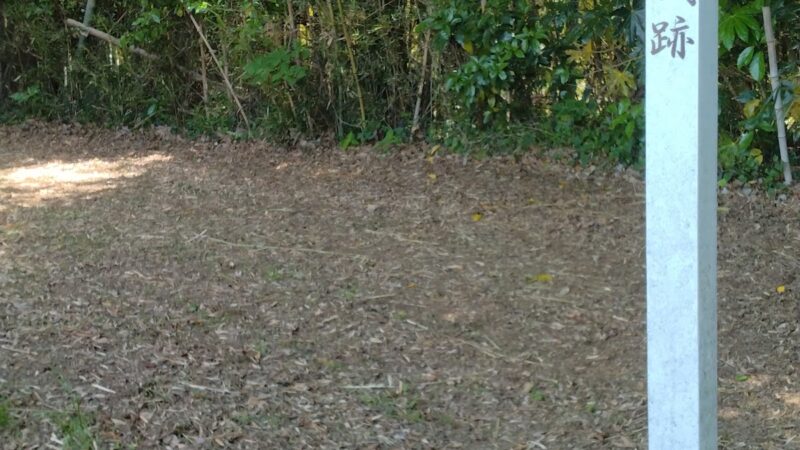
The main remains of Katsuyama Castle are concentrated on Hachimanyama. Hachiman Shrine is built on the mountaintop, and the castle ruins can be accessed by climbing the approach path.
Main Remains That Can Be Confirmed
- Kuruwa (Enclosures): Multiple flat areas can be identified, revealing the layout of the main and secondary enclosures.
- Horikiri (Moat): A defensive structure cutting across the ridge remains, showing ingenuity in preventing enemy intrusion.
- Koshikuruwa (Waist Enclosure): Small enclosures arranged to surround the main enclosure.
- Yokobori (Dry Moat): A moat dug horizontally along the mountainside, forming a defensive line.
- Tsuchibashi (Earthen Bridge): An earthen bridge used to cross the moat.
However, many areas outside the walking paths are covered in bushes even in the middle of winter, so caution is necessary when observing the remains in detail.
Daikokuyama Observation Deck – A Mock Castle Tower-Style Building
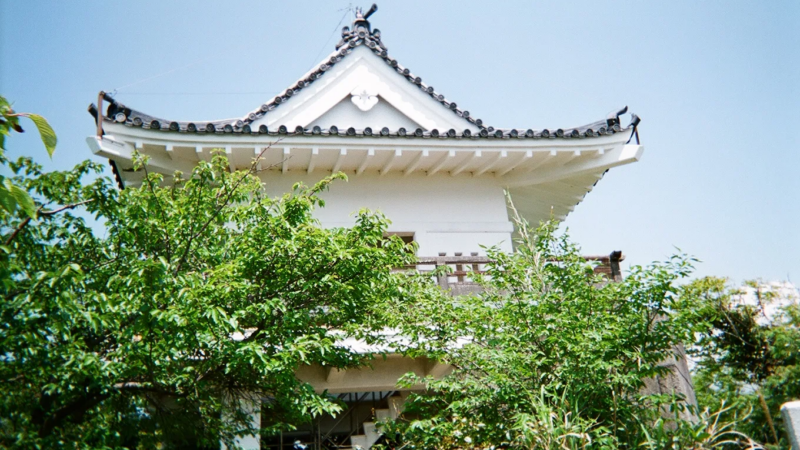
On the summit of Daikokuyama, there is a mock castle tower-style observation deck called Katsuyama Castle Observation Tower. This observation deck is not a reconstruction of the historical Katsuyama Castle, but was constructed later as a tourist facility.
From the observation deck, you can see Katsuyama Port, Tokyo Bay, and on clear days, even Mount Fuji, giving you a real sense of Katsuyama Castle’s excellent location for monitoring maritime traffic. However, it’s important to note that the actual Katsuyama Castle ruins are located on the Hachimanyama side, not on Daikokuyama where the observation deck is situated.
Katsuyama Port and the Coastal Castle Landscape
The view of Katsuyama Port from the castle ruins is essential for understanding Katsuyama Castle as a coastal castle. Katsuyama Port, still functioning as a fishing port today, is known as a landing point for fresh seafood, and numerous seafood restaurants are scattered throughout the area.
By exploring the port area in conjunction with your castle visit, you can easily visualize how this medieval naval base functioned.
Access and Visiting Guide to Katsuyama Castle
Access by Train
The nearest station is JR Uchibo Line’s “Awa-Katsuyama Station“. It’s approximately a 15-minute walk from the station to the Katsuyama Castle ruins (Hachimanyama).
- From Tokyo: The JR Sobu Line/Uchibo Line’s “Sazanami” limited express train is convenient. Approximately 2 hours from Tokyo Station.
- From Chiba Station: Approximately 1 hour 30 minutes by Uchibo Line local train.
The basic route is to head towards Katsuyama Port from the station and then towards the approach to Hachiman Shrine.
Access by Car
- Futtsu-Tateyama Expressway: Approximately 15 minutes from Tomiura IC via National Route 127.
- From Tokyo: Approximately 1 hour 30 minutes via the Aqua-Line.
There are public parking spaces around Hachiman Shrine and near Katsuyama Port, but spaces are limited, so early arrival is recommended on holidays.
Points to Note During Your Visit
- Estimated Time Required: 30 minutes to 1 hour for the Hachimanyama Castle Ruins visit, approximately 1 hour 30 minutes including the Daikokuyama Observatory.
- Attire: Comfortable walking shoes and clothing are essential as you will be walking on mountain paths.
- Season: Winter (December to February) is ideal for observing the ruins due to less undergrowth, but summer offers lush green scenery.
- Caution: Many areas outside the designated walking paths are unmaintained, so avoid exploring unnecessarily.
Nearby Tourist Spots and Related Historical Sites
Historical Spots in Kyonan Town
This section introduces nearby historical sites and tourist attractions that can be enjoyed in conjunction with a visit to Katsuyama Castle.
Nihonji Temple and Nokogiriyama Mountain
Nokogiriyama Mountain, a representative tourist spot in Kyonan Town, is approximately 20 minutes by car from Katsuyama Castle. It is famous for the Great Buddha of Nihonji Temple and the “Hell’s Gaze” viewpoint, and is a popular scenic spot on the Boso Peninsula.
Hishikawa Moronobu Memorial Museum
Hishikawa Moronobu, considered the founder of Ukiyo-e (woodblock prints), was from Kyonan Town. At the memorial museum, you can learn about Moronobu’s works and life.
Castles Related to the Satomi Clan in Boso Peninsula
Those interested in the Satomi clan should add the following castles to their itinerary:
- Tateyama Castle: The Satomi clan’s base. The Tateyama City Museum is located within the castle grounds.
- Okamoto Castle: One of the Satomi clan’s important strongholds.
- Inamura Castle: The Satomi clan’s early base.
Visiting these castles will allow you to experience the Satomi clan’s sphere of influence on the Boso Peninsula.
The Charm of Katsuyama Castle – Castle Notes and Points to Note
The Splendor of its Location as a Coastal Castle
The greatest charm of Katsuyama Castle lies in its location, where the sea and mountains are integrated. The view of Katsuyama Port and Tokyo Bay from Hachimanyama Mountain speaks volumes about how important this area was to the medieval navy. The sea view is also important; approaching Katsuyama Port by boat reveals how strategically located the mountaintop castle was for monitoring and controlling maritime traffic.
The Stage of the Minamoto no Yoritomo Legend
Awa Province played a crucial role in Minamoto no Yoritomo’s uprising and subsequent rise to power, a turning point in Japanese history. His resurgence in Awa Province, where Katsuyama Castle is located, was decisively significant in his path from the defeat at Ishibashiyama to the establishment of the Kamakura Shogunate, a source of great romance for history enthusiasts.
Standing at the castle ruins and gazing at the coast where Yoritomo landed, one can relive a historical moment.
Preservation of the Remains
Because it escaped large-scale development, basic remains such as moats and baileys are well-preserved. While some areas are overgrown with vegetation, this actually contributes to preserving the atmosphere of a medieval castle. For castle enthusiasts, there is the pleasure of exploring untouched remains.
The Relationship Between Katsuyama Castle and the Satomi Navy
Organization and Role of the Satomi Navy
The Satomi clan was a powerful daimyo family that ruled the Boso Peninsula during the Sengoku period, and they placed great importance on maritime trade. The Satomi Navy was responsible for securing control of the seas along the Boso coast, protecting maritime trade, and blockading opposing forces.
Katsuyama Castle served as the headquarters of the Satomi Navy, acting as a mooring place for ships, a garrison for naval personnel, and a storage area for weapons and food. It was a strategically important point controlling the sea routes through Tokyo Bay to Edo, the Miura Peninsula, and the Izu Peninsula.
Naval Operations of the Masaki Clan
The Masaki clan, senior retainers of the Satomi clan, are said to have been particularly skilled in naval operations. Using Katsuyama Castle as their base, they guarded the Boso coast, countered piracy, managed maritime trade, and supported the Satomi clan’s economic foundation.
During the time when the Masaki clan served as lords, Katsuyama Castle is believed to have functioned not only as a military base but also as a hub for maritime trade.
Relationship with Katsuyama Jinya – Changes in the Edo Period
Transition from Mountain Castle to Jinya
With the arrival of the Edo period, many mountain castles from the Sengoku period lost their practicality and were abandoned. Katsuyama Castle was no exception, and when the Naito clan took control, the Katsuyama Jinya was built in a location closer to the plains.
The Katsuyama Jinya was located at the northeastern foot of Mt. Hachiman, in the present-day Katsuyama area of Kyonan Town. The Jinya functioned as the administrative and economic center and became the domain office of the Awa Katsuyama Domain (later the Kachiyama Domain).
Scale and Structure of the Jinya
The Katsuyama Jinya was a small Jinya, and the domain’s rice yield was only about 10,000 koku. However, its location controlling a key point for maritime traffic in the southern part of the Boso Peninsula made it an important base for the shogunate.
Although very little remains of the former jinya (fortified residence) exist today, traces of that time can still be seen in place names and town layouts.
Points to Note and Manners When Visiting Katsuyama Castle
Safety Precautions
- Condition of Mountain Paths: Outside of the well-maintained walking paths, there are areas with poor footing.
- Bush and Insects: In summer, the bushes are dense and there are many insects, so long sleeves, long pants, and insect repellent are recommended.
- Weather: Rainy weather can make the path slippery, so visiting on a sunny day is safer.
- Solo Visiting: Visiting in groups is preferable if possible.
Visiting Manners
- Respect for Private Property: There are private residences around the castle ruins, so please be careful not to trespass on private property.
- Protection of Remains: Please be careful not to damage the remains such as moats and earthworks.
- Take Your Trash Home: For the protection of the natural environment, please be sure to take your trash home.
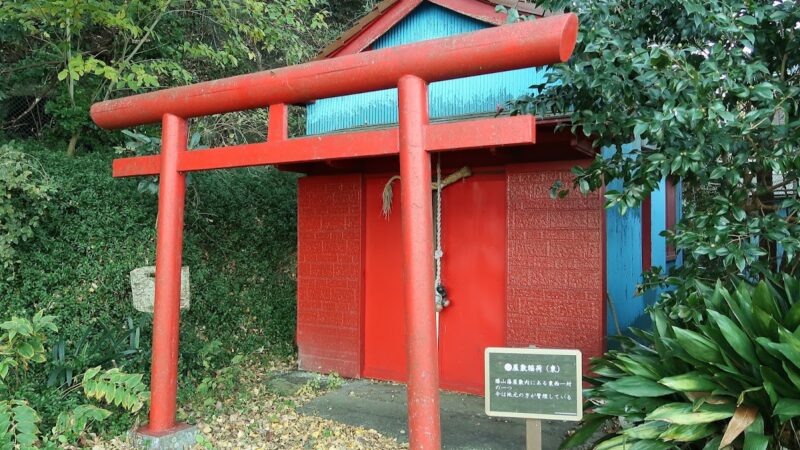
- Respect for Hachiman Shrine: Since there is a shrine on the access route to the castle ruins, please observe proper worship etiquette.
Research and Materials on Katsuyama Castle
Katsuyama Castle as Seen in Historical Documents
Historical documents concerning Katsuyama Castle are fragmentary, but the following materials provide insight into the castle’s history:
- Azuma Kagami: A description of Minamoto no Yoritomo’s escape to Awa Province
- Satomi Clan Related Documents: Records concerning the Satomi clan’s territorial management and naval operations
- Awa no Kuni Shi: A geographical record of Awa Province compiled in the late Edo period
Archaeological Investigation
While large-scale excavations have not been conducted at Katsuyama Castle, the general structure of the castle has been grasped through surface observations. Further detailed surveys and excavations may reveal a more accurate picture of the castle.
Katsuyama Castle and Kyonan Town Today
The Role of Katsuyama Castle in the Region
For present-day Kyonan Town, Katsuyama Castle is an important historical asset. It is utilized as a tourist resource and as teaching material for local history education.
The Daikokuyama Observatory functions as a tourist attraction, drawing many visitors throughout the year. Local efforts are also underway to pass on the history of Katsuyama Castle to future generations.
The Charms of the Katsuyama Area
The Katsuyama area remains a vibrant fishing town, boasting fresh seafood. Fixed-net fishing is practiced at Katsuyama Port, landing catches of horse mackerel, mackerel, and sardines.
After visiting the castle ruins, enjoying fresh seafood at a local seafood restaurant is highly recommended. Sashimi set meals and seafood bowls featuring local fish are a highlight of a visit to Katsuyama.
Summary – The Historical Value and Significance of Visiting Katsuyama Castle
Katsuyama Castle in Kyonan Town, Chiba Prefecture, is a historical stage that supported Minamoto no Yoritomo’s resurgence. During the Sengoku period, it was an important coastal castle that controlled maritime traffic on the Boso Peninsula as the base of the Satomi naval force.
The remaining structures such as moats, baileys, and lateral moats are valuable historical sites that convey the structure of a medieval castle. The view of Katsuyama Port and Tokyo Bay from Hachimanyama Mountain truly highlights the excellent location of this coastal castle.
While the observation deck on Daikokuyama Mountain is not an actual castle site, it helps to understand Katsuyama’s geographical importance as a key point for maritime traffic. For castle enthusiasts, history buffs, and anyone who wants to enjoy the nature and history of the Boso Peninsula, Katsuyama Castle is a historical site well worth visiting.
Access is relatively easy, and there are many other tourist attractions nearby, such as Nokogiriyama Mountain and the Hishikawa Moronobu Memorial Museum. Be sure to visit Katsuyama, the land where Minamoto no Yoritomo landed and where the Satomi naval forces were active, and experience the romance of history.