Yajima Castle (Akita Prefecture) Complete Guide: A Tour of Historical Sites and Castle Town in Yurihonjo City
Located in Yajima-cho, Yurihonjo City, Akita Prefecture, Yajima Castle, also known as “Hachimori Castle,” played a crucial role as a strategic point in the Yuri region from the Sengoku period to the Edo period. The Yajima area, spread out at the foot of Mount Chokai, flourished from ancient times as a post town for Chokai Shugendo practitioners, and has a rich history from the time of the Twelve Lords of Yuri to the Meiji Restoration.
This article thoroughly explains the charm of Yajima Castle and its castle town, including its history, highlights of the historical sites, surrounding tourist spots, and access methods.
History of Yajima Castle: From the Sengoku Period to the Meiji Restoration
Origin and Construction of Yajima Castle
Yajima Castle is said to have been built by Oi Yoshihisa during the Sengoku period. This region was a territory where local lords known as the Twelve Lords of Yuri held sway, and Yajima Castle served as the residence of the Yajima clan, who ruled the Yajima area.
The Yajima clan was a powerful local family that occupied a corner of the Twelve Lords of Yuri and is known for its connection to the worship of Mount Chokai. Yajima Mitsuyasu (Yajima Goro Mitsuyasu) is a particularly famous figure, recorded as a brave warrior who demonstrated courageous actions during the turbulent Sengoku period.
The Era of the Mogami and Tateoka Clans
After the Battle of Sekigahara, most of Dewa Province became the territory of Mogami Yoshiaki. In 1602 (Keicho 7), when Tateoka Mitsushige, a vassal of the Mogami clan, became the lord of Honjo Castle, his younger brother, Tateoka Mitsuhiro, entered Hachimori Castle (Yajima Castle).
During this period, Yajima Castle functioned as a base for the Mogami clan’s southern defense and played an important role in supporting the Mogami clan’s control over the Yuri region. However, when the Mogami clan was dispossessed of their domain in 1622 (Genna 8), Yajima Castle also received a new ruler.
The Arrival of the Ikoma Clan and the Construction of the Hachimori Jinya
The most important turning point in the history of Yajima Castle came in 1636 (Kanei 13). Ikoma Takatoshi, the lord of the Takamatsu Domain in Sanuki Province, was dispossessed of his domain due to the so-called “Ikoma Rebellion” and was appointed to Yajima with a 10,000 koku stipend.
Ikoma Takatoshi was ordered to relocate to Yajima in Dewa Province, far from Takamatsu in Shikoku, but there he built the Hachimori Jinya and established the foundation of the Yajima Domain. The Ikoma clan continued to rule Yajima for approximately 230 years until the Meiji Restoration.
During the Ikoma clan’s rule, Yajima, though a small domain, fostered its own unique culture and developed as a castle town at the foot of Mount Chokai. Many temples were built in Yajima during the feudal period, and many of these historical buildings remain today.
The Turmoil of the Late Edo Period and Yajima Castle
During the Boshin War at the end of the Edo period, Yajima Castle once again became a stage in history. The Yajima Domain, which participated in the Ouetsu Reppan Alliance, was drawn into battle with the new government forces.
In 1868 (the first year of the Meiji era), fierce fighting raged around Yajima Castle, and the castle town was engulfed in flames. Ultimately, the Yajima Domain surrendered to the new government, leading to the Meiji Restoration.
With the abolition of the feudal domains and establishment of prefectures in the Meiji era, the Yajima Domain was abolished, and Yajima Castle ceased to function as a fortress. The current site of Yajima Elementary School corresponds to the former central part of the castle.
Structure and Layout of Yajima Castle
Castle Location and Topography
Yajima Castle is a single-enclosure flatland castle built on a plateau called Hachimoriyama. Located in a basin blessed with abundant spring water flowing from Mount Chokai, it features a defensive system that skillfully utilizes the natural terrain.
The castle was surrounded by many slopes, and the undulating terrain functioned as a natural defensive wall. Furthermore, it benefited from the unique topography of the foothills of Mount Chokai, providing excellent water resources.
Structure of the Jinya (Fortified Residence)
The Hachimori Jinya, built by the Ikoma clan, was a typical Edo period fortified residence. With the main keep at its center, the residences of retainers and the merchant district were arranged, forming a compact yet functional castle town.
The Jinya housed the lord’s residence, administrative offices, and an armory, providing well-equipped facilities for a small domain of 10,000 koku.
Remains and Highlights of Yajima Castle
Existing Stone Walls and Earthworks
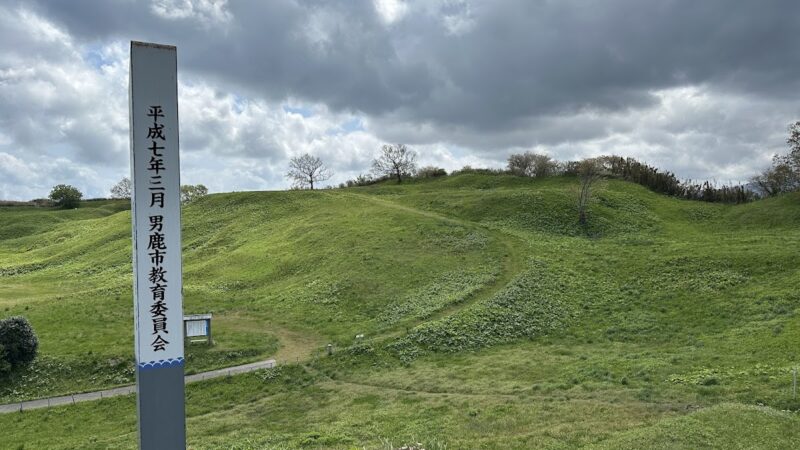
The current Yajima Castle site retains well-preserved Edo period stone walls and earthworks. In particular, some of the original defensive structures are preserved around Yajima Elementary School, allowing visitors to imagine the scale of the castle.
The stone walls were built using the Nozurazumi technique, making them valuable relics that convey the castle-building techniques of the early Edo period. Although only about 2-3 meters high, it possesses a solid structure and has withstood hundreds of years of wind and snow.
Traces of the Moat
Yajima Castle was surrounded by a moat, and parts of it can still be seen today. Utilizing the abundant spring water from Mount Chokai, the moat played an important role not only in defense but also as a source of water for the castle town.
The moat is estimated to have been 5-8 meters wide and 2-3 meters deep. While much of it has been filled in, the original layout of the moat can still be discerned from the topography.
Traces of Paths and the Castle Town
In the castle town of Yajima, traces of Edo-period paths still remain. These narrow paths were used as daily routes connecting samurai residences and merchant districts, and they strongly retain the atmosphere of the castle town at that time.
The winding paths were also a defensive feature, serving to hinder enemy incursions. Even today, walking through the Yajima area, you can encounter these historical routes.
Temples and Historical Sites in the Yajima Castle Town
Ryugenji Temple: The Family Temple of the Ikoma Clan
Ryugenji Temple is known as the family temple of Ikoma Takatoshi, the lord of the Yajima domain who was transferred from Takamatsu in Shikoku. It houses the tombs of successive generations of the Ikoma clan and is an important temple for commemorating the family of the feudal lords.
Numerous stone monuments and tombstones from the Edo period remain on the temple grounds, making it a valuable historical site that conveys the era of the Ikoma clan’s rule. The main hall was rebuilt during the Meiji period, but it retains its dignified architectural style.
Temples and Shrines Associated with Chokai Shugendo
The Yajima area is considered the oldest climbing route to Mount Chokai and flourished as a post town for Chokai Shugendo practitioners from ancient times. Therefore, numerous temples and shrines related to Shugendo are scattered throughout the area.
Religious sites deeply connected to the Chokai faith, such as Kanmanji Temple and Hyuga Shrine, still remain, conveying the history of Shugendo (mountain asceticism). These temples and shrines are important cultural assets for understanding the state of faith from the Sengoku period to the Edo period.
Historical Buildings of Yajima Town
Yajima Town is dotted with historical buildings from the feudal period to the Meiji period. You can see buildings that retain the appearance of samurai residences and merchant storehouses, architecture that tells the story of the prosperity of the castle town.
In particular, the town center retains the Edo period town layout, allowing you to understand the structure of the castle town in its heyday.
Access and Tourist Information for Yajima Castle
Access by Public Transportation
The nearest station to the Yajima Castle ruins (around Yajima Elementary School) is Yajima Station on the Yuri Kogen Railway Chokaisanroku Line. The castle ruins can be reached in about 10 minutes on foot from Yajima Station.
The Yuri Kogen Railway operates from Ugo-Honjo Station to Yashima Station, offering a scenic 40-minute train ride. From the train windows, you can enjoy magnificent views of Mount Chokai and the rural landscape of the Yuri Plain, making it an attractive route for sightseeing.
Ugo-Honjo Station is accessible from Akita Station in about an hour via the JR Uetsu Main Line. From Akita Airport, the most common route is to take the airport shuttle bus to Akita Station and then the train.
Access by Car
By car, it takes about 30 minutes from the Honjo Interchange on the Nihonkai Tohoku Expressway via National Route 107 to reach the Yashima area. While there is parking available around the Yashima Castle ruins, the elementary school grounds are closed on weekdays, so it is recommended to use nearby public parking lots.
It is approximately 1 hour and 30 minutes by car from Akita Airport and approximately 1 hour and 15 minutes from central Akita City.
Important Notes for Visitors
The central part of the Yajima Castle ruins is located on the grounds of Yajima Elementary School, therefore, entry to the school grounds is prohibited during weekday school hours. On weekends, holidays, and during school breaks, you can view the outer stone walls and earthworks.
Viewing the ruins is free, but please be respectful of the school facilities and observe quietly. Photography is permitted, but please be mindful of the safety and privacy of the children.
Model Course for Touring Yajima Castle Town
Half-Day Course (Approx. 3 Hours)
- Yajima Station (Start)
- Yajima Castle Ruins (Stone Walls & Earthworks Viewing: 30 Minutes)
- Ryugenji Temple (Ikoma Clan’s Family Temple: 30 Minutes)
- Yajima Town Historical Walk (Walking the Castle Town’s Paths: 1 Hour)
- Chokai Shugendo Related Temples and Shrines (Kanmanji Temple, etc.: 40 Minutes)
- Yajima Station (Goal)
Full-Day Course (Approx. 6 Hours)
By adding the following spots to the half-day course, you can experience the charm of the Yajima area more deeply.
- Hachimori Nature Park: Nature walk around the castle ruins
- Yajima Local History Museum: Learn about the history and culture of the region
- Yajima Onsen: Relax in the hot springs to conclude your sightseeing
- Local Cuisine: Enjoy Yajima soba noodles and dishes made with local ingredients
The Charm of the Yajima Region: Castle Town and Nature
Abundant Nature at the Foot of Mt. Chokai
The greatest charm of the Yajima region is the abundant natural environment at the foot of Mt. Chokai. The pure water flowing from Mt. Chokai, which rises to an altitude of 2,236 meters, nourishes the town of Yajima, fostering rich agriculture and beautiful scenery.
You can enjoy the beautiful nature of each season: cherry blossoms in spring, fresh greenery in summer, autumn leaves in fall, and snowscapes in winter. In particular, the townscape of Yajima with Mt. Chokai in the background boasts one of the most beautiful landscapes in the Tohoku region.
Yajima Onsen and Hot Spring Culture
The Yajima region has several hot spring facilities, which are popular with tourists and local residents alike. The hot springs, created by the volcanic activity of Mount Chokai, are believed to be effective in relieving fatigue and promoting health, and have been used as a therapeutic hot spring resort since ancient times.
Relaxing in the hot springs after strolling through the castle town is a classic part of sightseeing in Yashima.
Yuri Kogen Railway and Railway Sightseeing
The Yuri Kogen Railway Chokaisanroku Line is a local railway connecting Ugo-Honjo Station to Yashima Station. Along the line, you can enjoy rural landscapes and mountain scenery, making for a leisurely train journey.
The sightseeing train “Obako-go” is particularly popular, offering a scenic experience where you can enjoy local cuisine while taking in the views from the train windows. Combining a train trip with a visit to Yashima Castle is highly recommended.
Deepening Your Understanding of Yashima’s History and Culture
The Twelve Lords of Yuri and the Yuri Region in the Sengoku Period
The Twelve Lords of Yuri are a collective term for the 12 local lords who ruled the Yuri region during the Sengoku period. The Yajima clan also held a position within this group, maintaining their independence while cooperating with others, and forging relationships with powerful forces such as the Uesugi and Mogami clans.
The era of the Twelve Lords of Yuri was a period in which the region’s unique characteristics remained strong, and castles and residences built by each lord still remain throughout the Yuri region. Yajima Castle is one of the legacies of this era.
The Ikoma Rebellion and the Transfer to Yajima
The background to Ikoma Takatoshi’s transfer to Yajima was a family dispute within the Takamatsu Domain known as the “Ikoma Rebellion.” The conflict within the domain became known to the shogunate, and Ikoma Takatoshi was held responsible, stripped of his domain, and ordered to transfer to Yajima with a 10,000 koku stipend.
This fall from a major lord in Shikoku to a minor lord in Dewa was a great trial for the Ikoma clan, but they established a new form of governance in Yajima and contributed to the region’s development. This history is a source of pride for the people of Yajima and is still recounted today.
Yajima After the Meiji Restoration
After the Meiji Restoration, Yajima began a new chapter as Yajima Town in Yuri District. Taking advantage of the rich natural environment and water resources at the foot of Mount Chokai, agriculture and forestry flourished.
During the Showa era, the Yajima Lumber Railway operated, and it prospered as a timber transport hub. Currently, the former railway line has been developed into a hiking trail and is attracting attention as an industrial heritage site.
In 2005, it merged with Honjo City and six towns in Yuri District to become part of Yurihonjo City, but the name and historical identity of Yajima Town are still carefully preserved.
Tourist Spots Around Yajima
Mount Chokai
If you visit the Yajima area, be sure to try climbing Mount Chokai. The Yajima entrance is considered the oldest trailhead for Mount Chokai, and a historic hiking trail has been maintained.
From the summit at an altitude of 2,236 meters, a spectacular view unfolds, overlooking the Sea of Japan, the Shonai Plain, and even Mount Gassan in the distance. In summer, alpine plants bloom in abundance, attracting many hikers.
Hotai Falls
Located about 30 minutes by car from the Yashima area, Hotai Falls is a famous waterfall selected as one of Japan’s Top 100 Waterfalls. The three-tiered waterfall with a drop of 57 meters is breathtaking, and it attracts many tourists, especially during the seasons of fresh greenery and autumn leaves.
A walking trail is maintained around the waterfall, allowing visitors to enjoy nature walks.
Honjo Castle Ruins
Another place worth visiting along with Yashima Castle is the Honjo Castle Ruins, located in the center of Yurihonjo City. Built by Tateoka Mitsushige, a retainer of the Mogami clan, the castle is now maintained as Honjo Park.
It is also known as a cherry blossom viewing spot, and is bustling with many flower viewers in spring.
Yashima’s Gourmet Food and Local Products
Yashima Soba
The Yashima area is known as a producer of high-quality soba noodles. Yajima soba noodles, made with the pure water of Mount Chokai, are characterized by their fragrant aroma and firm texture.
There are several soba restaurants in the town, each offering noodles made using their own unique methods. For lunch during your stroll through the castle town, be sure to try the local soba.
Local Sake and Craft Beer
The Yajima region also produces local sake using the groundwater of Mount Chokai. This crisp sake pairs perfectly with local cuisine.
In recent years, craft beer brewing has also begun, attracting attention from craft beer enthusiasts.
Wild Vegetables and Local Ingredients
Wild vegetables nurtured by the rich nature at the foot of Mount Chokai are an important element of Yajima’s food culture. In spring, wild vegetable foraging is popular, and butterbur sprouts, angelica sprouts, and bracken ferns grace the tables.
Local restaurants offer regional dishes using these wild vegetables, allowing you to enjoy the flavors of each season.
Recommended Seasons for Visiting Yajima Castle
Spring (April-May)
During cherry blossom season, the area around Yajima Castle ruins is adorned with beautiful cherry blossoms. The contrast between the remaining snow on Mt. Chokai and the cherry blossoms is magnificent, making it an ideal season for photography.
It’s also the season for wild mountain vegetables, making it a great time to enjoy local cuisine.
Summer (June-August)
The fresh greenery is beautiful, making it the best season for climbing Mt. Chokai. The pleasant weather also makes strolling through the castle town enjoyable.
Many sightseeing trains on the Yuri Kogen Railway operate during this time, allowing you to fully enjoy a train journey.
Autumn (September-November)
The autumn foliage season is when the Yajima region shines most beautifully. The autumn scenery of Mt. Chokai and the castle town is exceptional, attracting many tourists.
It’s also the season for new soba noodles, making it the perfect time to savor Yajima soba.
Winter (December-March)
The snow-covered scenery of Yajima Castle ruins and Mount Chokai creates a solemn and beautiful atmosphere. While there are fewer tourists, it’s a good season to quietly appreciate history.
You can enjoy the winter scenery of Tohoku while warming yourself in a hot spring.
Summary: The Charm of Yajima Castle and its Castle Town
Yajima Castle (Hachimori Castle) in Yurihonjo City, Akita Prefecture, is an important castle that watched over the history of the Yuri region from the Sengoku period to the Meiji Restoration. Remains such as stone walls, earthworks, and moats still exist, allowing visitors to imagine its former glory.
Yajima, which developed under different rulers throughout history—from the era of the Twelve Lords of Yuri to the rule of the Mogami clan and the Ikoma clan—is a fascinating region where diverse history and culture are layered upon one another.
The rich nature at the foot of Mount Chokai, the history of Chokai Shugendo, the townscape that retains the atmosphere of a castle town, delicious cuisine, and hot springs. A visit to Yajima Castle will be more than just sightseeing; it will be a rich journey where you can experience the history, culture, and nature of Tohoku.
Take your time to discover the charm of Yajima while riding the Yuri Kogen Railway. Yajima Castle and its castle town, a hidden gem in Akita Prefecture, are sure to captivate you.