Complete Guide to Ogasaki Castle Ruins (Akita Prefecture) | History, Highlights, and Access Information
What are Ogasaki Castle Ruins?
Ogasaki Castle Ruins are the remains of a medieval castle located in Akita Prefecture. It is believed to have functioned as a stronghold, taking advantage of its geographical location facing the Sea of Japan, and is an important historical site for understanding the region’s history.
Currently, some remains of the castle still exist, allowing us to imagine its former appearance. While numerous medieval castle ruins exist in Akita Prefecture, Ogasaki Castle Ruins are noteworthy in regional history research due to its location and historical background.
Location and Geographical Characteristics of the Castle
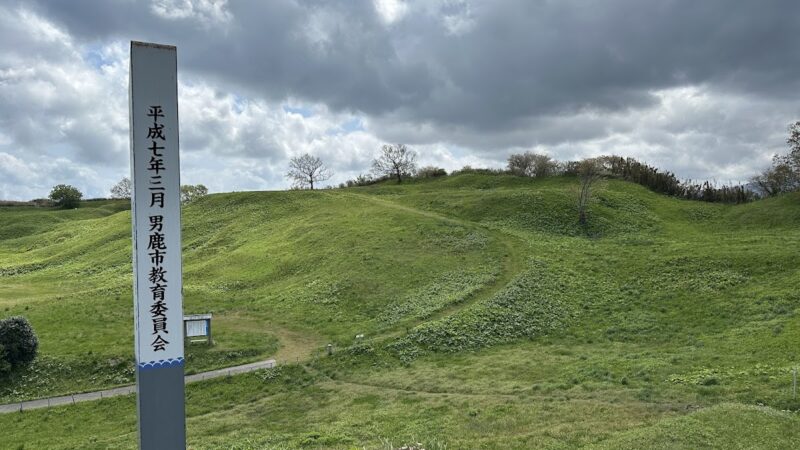
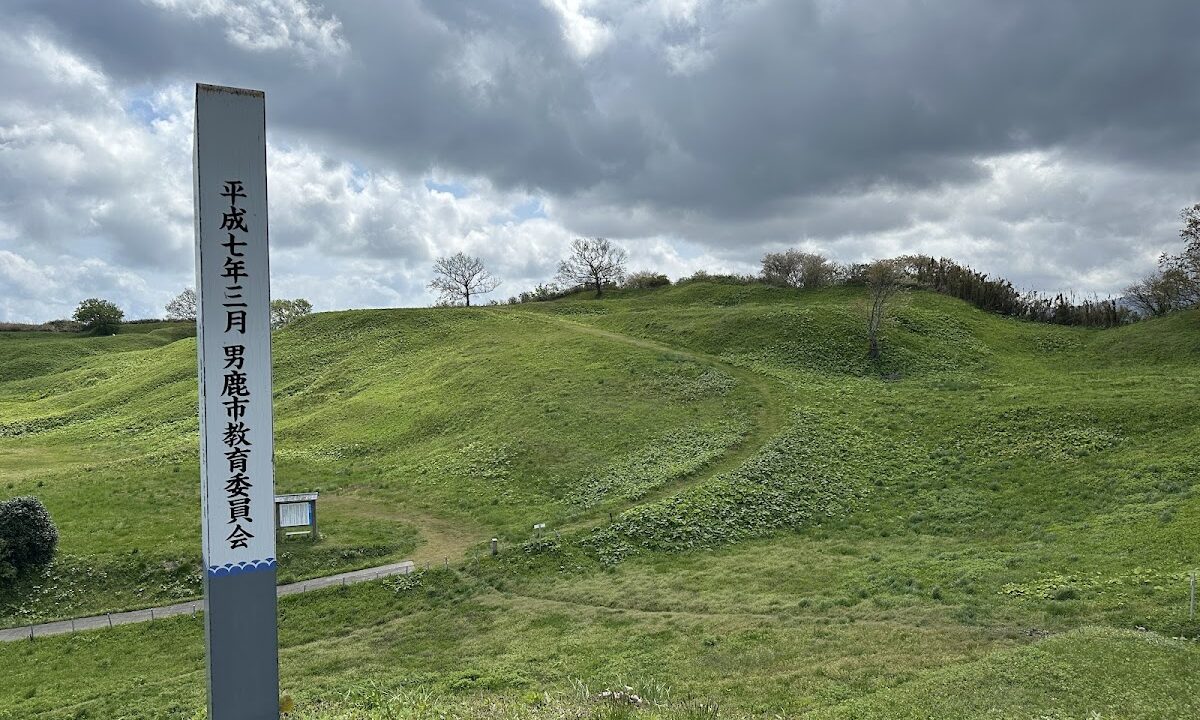
Ogasaki Castle Ruins are located on a hilly area along the Sea of Japan coast. This location is suitable for monitoring and defending maritime traffic, suggesting it was a strategically important base in the medieval period.
The surrounding terrain is undulating, and the castle’s layout is characterized by its skillful use of the natural topography. It is believed that the structure was designed to prepare for both invasions from the sea and attacks from land.
History of Ogazaki Castle Ruins
Construction Period and Builder
While the exact construction period of Ogazaki Castle Ruins cannot be definitively determined due to limited historical records, it is estimated to have been developed in the late medieval period, particularly during the Sengoku period (Warring States period).
The Akita region was a hub of power struggles during the medieval period, with powerful clans such as the Ando clan (later the Akita clan) vying for influence. It is highly probable that Ogazaki Castle Ruins functioned as a base for regional control.
Historical Background and Role
The Akita region in the medieval period flourished as a key point for trade along the Sea of Japan. The area around the Oga Peninsula, in particular, held an important position as a base for northern trade and fishing.
Ogazaki Castle Ruins are thought to have played a role in managing and defending this maritime traffic. Furthermore, it likely served as a residence for the local lord and functioned as a government office governing the surrounding area.
During the Sengoku period (Warring States period), the Akita region was also the site of fierce battles between various powers. The Ogazaki Castle ruins likely underwent changes in rulers over time, and may have been renovated and expanded accordingly.
Abandonment and Aftermath
There are no clear records of when the Ogazaki Castle ruins were abandoned. However, given that many medieval castles were abandoned during the early modern period due to the “One Castle Per Province” decree and the Akita domain’s territorial reorganization, it is presumed that the castle lost its function around this time.
After its abandonment, the land was used for farming and forestry, and some of the remains were lost over time. However, traces of the main earthworks and baileys can still be seen today.
Features and Highlights of the Remains
Arrangement of Baileys (Kuruwa)
The layout of the Ogazaki Castle ruins consists of multiple baileys (kuruwa). The topography suggests that the second and third baileys are arranged in a stepped pattern around the main bailey.
This layout is typical of medieval castles and fortifications, serving to enhance defensibility while also distributing functions such as living spaces and warehouses.
Earthworks and Moats
Traces of earthworks can be seen at the site. These earthworks surrounded the enclosures and functioned as defensive walls. Some sections of the earthworks, approximately 1-2 meters high, remain in good condition.
Furthermore, traces of moats (horikiri) cutting across the ridgeline can be observed. Moats are defensive structures that artificially cut across ridgelines to prevent enemy intrusion, and are a characteristic feature of medieval mountain castles.
Entrance (Koguchi)
Traces of entrances (koguchi) to the castle can also be seen. Koguchi were not merely entrances but important defensive points, and generally had complex structures.
The koguchi at the Ogazaki Castle site is not straight but curved, showing ingenuity to make enemy intrusion difficult.
Views and Scenery
From the site of the castle, you can enjoy a panoramic view of the Sea of Japan. On clear days, you can see the coastline of the Oga Peninsula and the distant Shirakami Mountains, captivating visitors.
This view gives a real sense of the castle’s function in monitoring maritime traffic. It’s also a spot where you can enjoy the natural scenery of the four seasons.
Excavation and Research Results
Previous Investigations
At the Ogazaki Castle Site, surveys and field research have been conducted in the past by local historians and archaeologists. These investigations have revealed the general layout and arrangement of the remains.
However, since large-scale excavations have not been conducted, much remains to be determined by future research regarding excavated artifacts and detailed dating.
Excavated Artifacts and Dating Estimation
Surface collection and small-scale investigations have uncovered fragments of medieval pottery and iron products. These artifacts provide clues to estimating the period when the castle site was in use.
In particular, fragments of medieval pottery, such as Suzu ware and Echizen ware, are important materials indicating a connection to trade along the Sea of Japan. These pottery pieces are thought to have been transported by sea from the Hokuriku region.
Future Research Topics
Many aspects of the Ogazaki Castle ruins remain unclear. In particular, the builder, the specific period of use, and the relationship with other castles are future research topics.
Ground-penetrating radar surveys and detailed archaeological excavations could yield even more information. Continued research is expected to shed light on the region’s history.
Nearby Historical Spots
Castle Ruins on the Oga Peninsula
Besides the Ogazaki Castle ruins, several other medieval castle ruins exist around the Oga Peninsula. These are thought to have worked together to form a regional defense network.
Wakimoto Castle ruins are a large mountain castle representative of the Oga Peninsula and are designated as a national historic site. Visiting both the Ogazaki Castle ruins and Wakimoto Castle ruins will provide a deeper understanding of the region’s medieval history.
Related Shrines and Temples
Nearby, there are numerous shrines and temples dating back to the Middle Ages. These temples and shrines often had close ties to the castle and offer clues to the beliefs and culture of the time.
Visiting local guardian shrines and ancient temples will provide a more comprehensive understanding of the historical background of the Ogazaki Castle ruins.
Oga Historical and Folk Museum
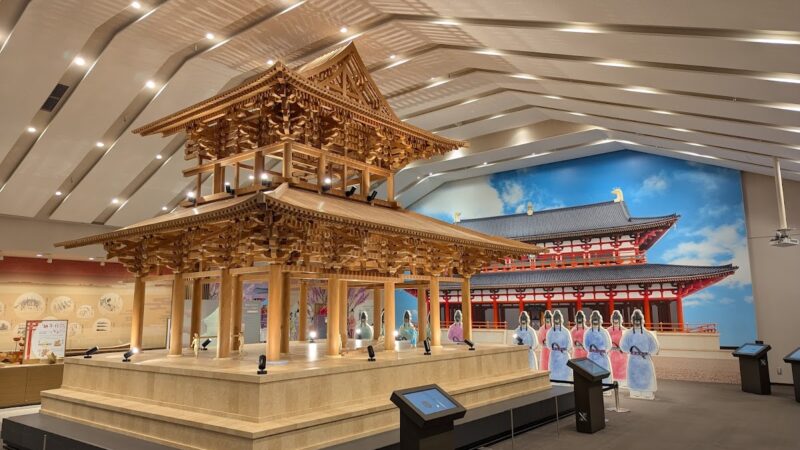
Within Oga City, there is a museum showcasing the region’s history and culture. You can see exhibits related to medieval castles and excavated artifacts. A visit before or after visiting the Ogazaki Castle ruins is recommended.
Access Information
Access by Public Transportation
Public transportation access to the Ogazaki Castle ruins is limited. The nearest train station is on the JR Oga Line, but you will need to use a bus or taxi from there.
Since bus services are limited, it is recommended to check the timetable in advance. Also, if using a taxi, plan your return trip accordingly.
Access by Car
Access by car is the most convenient. From the nearest interchange on the Akita Expressway, you can reach the site via national and prefectural roads.
When setting your destination on your car navigation system, it may not be possible to find “Ogazaki-kan Ruins” in some cases, so it’s best to set a nearby village name or landmark.
Parking Information
Since there are often no dedicated parking lots for historical sites, you will need to park in a safe place on the roadside or use the parking lots of nearby public facilities.
When parking, please be considerate of local residents and avoid unauthorized parking on private property.
Best Time to Visit
As Ogazaki-kan Ruins is an outdoor historical site, it is recommended to visit on a day with good weather. The period from spring to autumn is particularly suitable for walking due to the stable climate.
In winter, there is snow, making the ground difficult to walk on, so caution is required. Also, in summer, vegetation can grow thickly, making the remains difficult to see.
Important Notes for Visitors
Clothing and Equipment
The Ogazaki-kan Ruins are not a well-maintained tourist site, so appropriate clothing and equipment are necessary for your visit.
- Comfortable clothing (long sleeves and long pants recommended)
- Trekking shoes or athletic shoes
- Hat, sunscreen
- Insect repellent spray
- Drinking water
- Map and compass (or smartphone GPS app)
Safety Precautions
The historical site has steep slopes and unstable terrain. Pay attention to your footing and avoid reckless actions. Particular caution is needed during and after rain, as the ground becomes slippery.
Avoid visiting alone; it is recommended to visit in groups if possible. Checking your cell phone signal strength beforehand is also advisable.
Manners and Rules
The Ogazaki-kan Ruins are a valuable cultural asset. Please observe the following manners when visiting.
- Do not damage the ruins.
- Always take your trash with you.
- Do not collect plants or capture animals.
- Use of fire is strictly prohibited.
- Do not trespass on private property.
- Do not engage in activities that disturb local residents, such as shouting.
Preservation and Utilization of the Ogazaki-kan Site
Current Situation and Challenges
The Ogazaki-kan site is an important historical heritage site for the region, but challenges exist in its preservation and utilization. Weathering of the ruins and erosion by vegetation are progressing, and appropriate preservation measures are needed.
Furthermore, due to low awareness as a historical site and limited visitors, its utilization as a regional resource is not progressing sufficiently.
Preservation Activities
Local local history research groups and cultural property protection organizations are working on preservation activities for the Ogazaki-kan site. They are striving to preserve and promote the historical site through regular grass cutting, surveying, and holding guided tours.
These steady activities are essential for passing on this valuable cultural property to future generations.
Future Utilization Strategies
To utilize the Ogazaki Castle Ruins as a local tourism resource, the following initiatives can be considered:
- Installation of information boards and explanatory signs
- Development of walking paths
- Implementation of guided tours
- Creation of reconstructed CG using digital technology
- Utilization as a site for learning about local history
- Development of sightseeing routes in conjunction with other historical sites
These initiatives are expected to lead to wider recognition of the value of the Ogazaki Castle Ruins and contribute to the revitalization of the region.
The Charm of Medieval Castle Ruins
Experiencing Historical Romance
Medieval castle ruins like the Ogazaki Castle Ruins possess a different charm from the ornate castles of the early modern period. While there are no stone walls or keeps, the simple remains built of earth and wood evoke the spirit of the people who lived through a time of war.
Walking through the ruins and imagining the people who once lived and fought here will be a valuable experience that evokes a sense of historical romance.
The Joy of Reading the Topography
Visiting medieval castle ruins offers the joy of interpreting the topography. By considering how the natural terrain was utilized to construct defensive structures, and the intentions behind the placement of baileys and moats, one can understand the castle-building techniques and strategies of the time.
At the Ogazaki Castle Ruins, walking the site with a topographic map in hand will allow you to truly appreciate the ingenuity of the layout.
Learning About Local History
Castle ruins also serve as a window to local history. Visiting the Ogazaki Castle Ruins allows you to learn deeply about the medieval history of Akita Prefecture, particularly the history and culture of the Oga region.
Researching related materials at local libraries and museums, and listening to stories from local residents, will provide a richer historical experience.
Summary
The Ogazaki Castle Ruins are an important historical site that tells the story of medieval history in Akita Prefecture. Its location overlooking the Sea of Japan, its complex layout, and its deep connection to local history all contribute to its many attractions.
Learning About Local History
The Ogazaki Castle Ruins are an important historical site that tells the story of medieval history in Akita Prefecture. It possesses many charms, including its location overlooking the Sea of Japan, its complex layout, and its deep connection to local history. While not a well-maintained tourist destination, it offers a profound sense of history and a quiet, unhurried atmosphere. It’s a worthwhile spot for history buffs, castle enthusiasts, and anyone interested in Akita’s regional history.
When visiting, please be sure to prepare appropriately, observe proper etiquette, and respectfully view the valuable cultural artifacts. We hope your experience at the Ogazaki Castle Ruins will deepen your understanding of medieval Japanese history and spark your interest in the region’s history and culture.