Kabayama Castle (Yuzawa City): A Complete Guide to its History and Highlights | A Thorough Explanation of a Medieval Mountain Castle in Akita Prefecture
Kabayama Castle, located in Yuzawa City, Akita Prefecture, is a mountain castle associated with the Onodera clan, who ruled the area from the medieval period to the Sengoku period. Currently, it attracts attention from castle enthusiasts and history buffs as a historically valuable castle site with surviving remains. This article provides a detailed explanation of Kabayama Castle, from its historical background to the remains that can be seen on-site and how to access it.
Basic Information on Kabayama Castle
Kabayama Castle is a medieval mountain castle located in Yuzawa City, Akita Prefecture, and is known by its simple name without any other names. Built on a hill approximately 200 meters above sea level, the castle occupies a strategically important location overlooking the tributaries of the Omono River system.
Location and Geographical Characteristics of the Castle
Kabayama Castle was built in a mountainous area relatively close to the city center of Yuzawa. This region has long been known as a strategic point on the Ushu Kaido (Dewa Kaido) road, serving as a vital transportation hub connecting southern Akita Prefecture and Yamagata Prefecture. The castle was built skillfully utilizing the natural terrain, boasting a highly defensible structure surrounded by steep slopes.
From the castle ruins, one can enjoy a panoramic view of the Yuzawa Basin, suggesting its former importance as a base for monitoring and controlling the surrounding area. Furthermore, Yuzawa Castle (the old castle), the base of the Onodera clan, is located nearby, and it has been suggested that Kabayama Castle may have functioned as a subsidiary or auxiliary castle.
History of Kabayama Castle
Background and Period of Construction
The exact construction date of Kabayama Castle is unclear due to limited historical records, but it is generally believed to have been built between the 14th and 15th centuries, during the Nanboku-cho period and the early Muromachi period. During this period, the Onodera clan was expanding its power in southern Dewa Province (present-day southern Akita Prefecture), building castles and fortifications throughout the region to strengthen its control over its territory.
The Onodera clan was a prominent family that had existed since the Kamakura period. Originally based near present-day Yokote City, they gradually extended their influence into the Yuzawa region. Kabayama Castle is thought to be one of the castles built during this process of territorial expansion.
The Onodera Clan and Kabayama Castle
The Onodera clan was a prominent Sengoku period daimyo (feudal lord) in southern Dewa Province. At its peak, it controlled a vast territory centered around Ogachi District (present-day Yuzawa City and Ogachi District). Successive heads of the Onodera clan used Yuzawa Castle as their base, while managing their territory by strategically placing multiple branch castles in the surrounding area.
Kabayama Castle likely functioned as part of this network of branch castles, particularly serving as a defensive stronghold protecting the rear of Yuzawa Castle, or as a forward base to prepare for invasions from the south. While there are no clear records regarding the castle lord or castellan, it is believed that members of the Onodera clan or influential retainers were stationed there.
Kabayama Castle in the Sengoku Period
During the Sengoku period, southern Akita Prefecture became a stage for fierce power struggles. The Onodera clan maintained their territory while engaging in conflicts with the Mogami clan to the south, the Ando clan (later the Akita clan) to the north, and the Tozawa clan to the east.
Particularly in the latter half of the 16th century, the Onodera clan faced significant pressure due to the expansion of Mogami Yoshiaki‘s power. It is believed that Kabayama Castle also increased in importance as a defensive stronghold amidst this tense situation.
Abandonment and the Early Modern Period
There are no clear records regarding the time when Kabayama Castle was abandoned, but it is believed that the dispossession of the Onodera clan in Keicho 7 (1602) was a major turning point. During the Battle of Sekigahara, Onodera Yoshimichi initially sided with the Eastern Army, but his indecisive attitude angered Tokugawa Ieyasu, leading to his dismissal from his domain.
As a result, the Onodera clan’s territory was confiscated, and the Satake clan took over Akita. At this time, the Yuzawa region came under the control of the Satake clan, and Yuzawa Castle was redeveloped as a branch castle of the Satake clan. However, smaller mountain castles like Kabayama Castle lost their strategic value and were likely abandoned.
From the Edo period onward, the Kabayama Castle site was left as a forest and gradually returned to nature. However, remnants such as earthworks and baileys remain as part of the topography, allowing us to imagine its former appearance even today.
Layout and Remains of Kabayama Castle
Characteristics of the Castle Structure
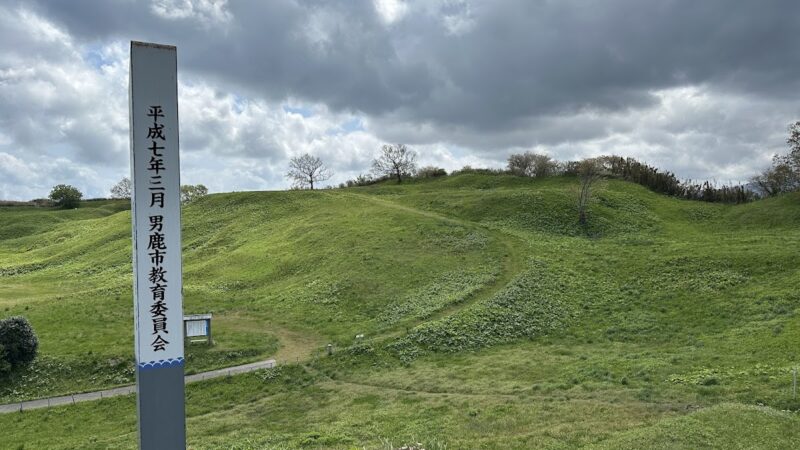
Kabayama Castle has the structure of a typical medieval mountain castle. The castle features a main enclosure (honmaru) at the mountaintop, surrounded by multiple smaller enclosures (kuruma) arranged in a stepped pattern, creating a linear layout. While the overall size of the castle is not particularly large, it is characterized by a robust defensive structure that skillfully utilizes the terrain.
The castle’s defenses primarily consist of the following elements:
- Kuruwa: A flat, leveled area used for buildings and soldier placement.
- Horikiri: A dry moat dug across a ridge to prevent enemy intrusion.
- Dorui: A defensive wall constructed by piling up earth.
- Kirigishi: An artificially excavated steep slope.
Structure of the Main Enclosure (Honmaru)
The main enclosure, located at the highest point of the castle, has a roughly rectangular shape and is estimated to have an area of approximately 300-400 square meters. Around the main enclosure, traces of earthworks remain in some areas, suggesting the possibility of wooden fences or simple watchtowers being erected there in the past.
From the main enclosure, the surrounding area offers unobstructed views, overlooking the Yuzawa Basin and the main road. This excellent visibility was crucial for detecting enemy movements early on.
Second and Third Enclosures
Below the main enclosure are the second and third enclosures arranged in a stepped fashion. These enclosures are larger than the main enclosure and are thought to have been used as living quarters for soldiers and storage for supplies during peacetime.
There are clear elevation changes between each enclosure, which functioned as a defensive line. Even if the enemy breached one enclosure, they could resist again in the next, creating a multi-layered defensive structure.
Moats and Vertical Ditches
Among the defensive structures of Kabayama Castle, the moats are particularly noteworthy. A clear moat can be seen behind the castle (continuing along the ridge), with a depth of approximately 3-5 meters. This trench effectively prevented enemies attacking along the ridge.
Furthermore, traces of vertical trenches can be seen on the slope. Vertical trenches are ditches dug vertically into the slope, preventing enemies from climbing the slope and restricting their lateral movement.
Structure of the Entrance (Koguchi)
The koguchi (entrance to the castle) was a weak point in defense and was therefore designed with particular care. At Kabayama Castle, the access road to the baileys is not straight but curved, a design intended to prevent enemy charges.
Near the koguchi, traces of earthworks and stone walls suggest the presence of gates and fences.
Preservation of the Remains
Despite more than 400 years having passed since the castle’s abandonment, the remains of Kabayama Castle remain in relatively good condition. This is mainly due to the lack of large-scale development after the Edo period.
Currently, the castle ruins are covered in forest and trees, but the flat areas of the baileys, the rises of the earthworks, and the depressions of the moats are clearly visible. However, stone structures such as stone walls are thought to have either not been used originally or to have been lost in later periods, and are not currently visible.
Highlights of Kabayama Castle
Recommended Points for History Fans
Here are the main highlights when visiting Kabayama Castle:
1. View from the Main Bailey
Standing in the main bailey, you can enjoy a panoramic view of the Yuzawa Basin. The former lords of the castle likely watched over the safety of their territory while gazing at this view. On a clear day, you can even see Mount Chokai in the distance.
2. Clear Moats
The moats remaining behind the castle are remnants that demonstrate the defensive techniques of medieval mountain castles. Seeing the deeply dug trenches, one is amazed by the high level of castle construction technology of the time.
3. A Series of Enclosures
By exploring the stepped arrangement of enclosures, you can understand the castle’s three-dimensional structure. Observe the elevation changes and the ingenious arrangement of each enclosure.
4. The Atmosphere of the Castle Ruins Integrated with Nature
The quiet mountain castle, covered in trees, exudes a peaceful atmosphere, a stark contrast to the tension of the Sengoku period. You can also enjoy a forest bath while feeling the history.
Points to Note When Visiting
When visiting the Momijiyama Castle Ruins, please note the following:
- Preparation for Hiking: Climbing to the mountain castle is a light hike. Please wear comfortable clothing and shoes.
- Season: Spring to autumn is the best time to visit. Winter is dangerous due to snow.
- Insect Repellent: In summer, there are many mosquitoes and gnats, so bring insect repellent spray.
- Avoiding Solo Visits: It is recommended to visit with multiple people if possible.
- Protection of Historical Remains: Please be careful not to damage the earthworks or moats.
Access to Kabayama Castle
Access by Public Transportation
By Train/Bus:
- Get off at JR Ou Main Line “Yuzawa Station”
- Take a local bus or taxi from Yuzawa Station (please contact the Yuzawa City Tourism Association for details)
- Walk to the castle ruins from the nearest bus stop or disembarking point.
Public transportation may have limited service, so it is recommended to check the timetable in advance.
Access by Private Car
By Car:
- Approximately 10-15 minutes from Yuzawa IC on the Yuzawa-Yokote Expressway (please refer to local signs and maps for distance and specific routes)
- Parking availability varies depending on the situation around the castle ruins. Please avoid street parking and park in an appropriate location.
Car Navigation Settings:
If you cannot find the location by searching for “Kabayama Castle Ruins,” please search for “Yuzawa City [nearest place name]” and follow the local signs.
Location Information
- Address: Yuzawa City, Akita Prefecture (For detailed street addresses, please contact the Yuzawa City Board of Education or Tourism Association)
- Contact Information: Yuzawa City Board of Education Cultural Properties Protection Division, Yuzawa City Tourism Association
Nearby Tourist Attractions
When visiting Kabayama Castle, we recommend also visiting other tourist attractions in Yuzawa City.
Yuzawa Castle Ruins (Ancient Castle)
Yuzawa Castle Ruins, the base of the Onodera clan, is a historical site worth visiting along with Kabayama Castle. Currently, the remains are located close to the city center, allowing visitors to learn about the history of the Onodera clan.
Inaniwa Castle
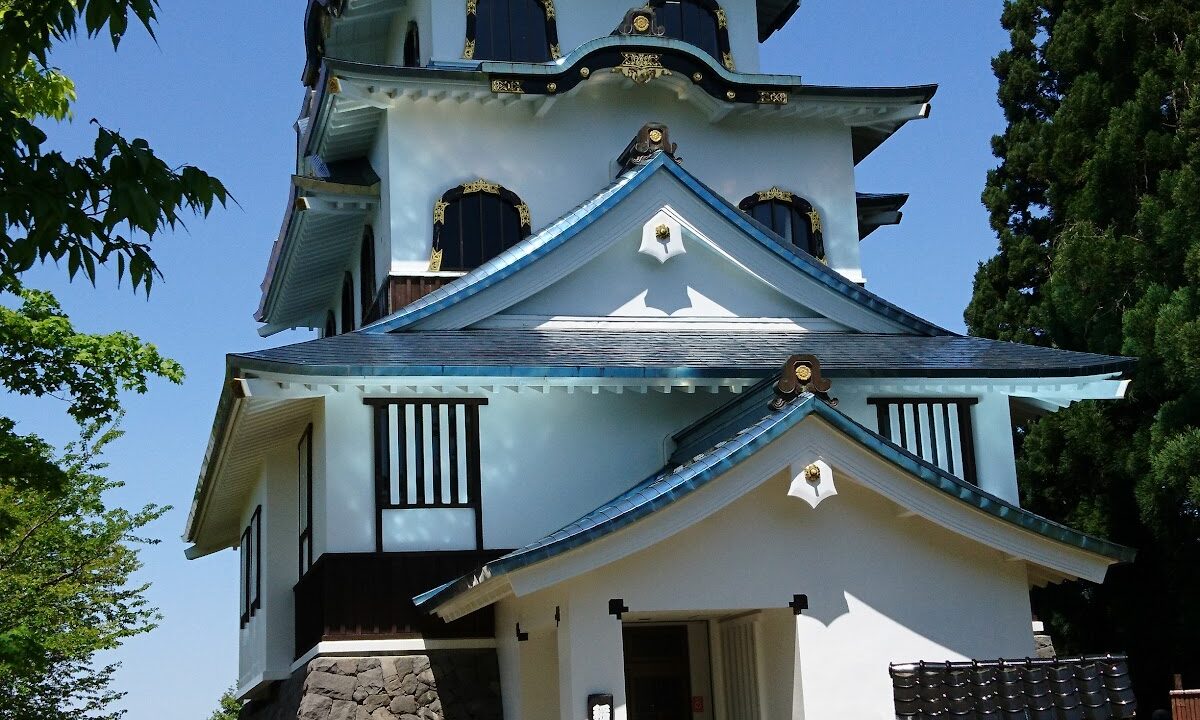
Located in the Inagawa district of Yuzawa City, Inaniwa Castle was one of the branch castles of the Onodera clan. Currently, a replica keep stands there, and it is open to the public as a local history museum. The view from the observation deck is magnificent, and the exhibits are extensive, allowing visitors to learn about the history of the Onodera clan.
Kawatsura Lacquerware Traditional Crafts Museum
Yuzawa City is known as a production area for Kawatsura lacquerware. At the Kawatsura Lacquerware Traditional Crafts Museum, visitors can observe the traditional lacquerware production process and purchase beautiful lacquerware products.
Koyasu Gorge Hot Springs
Koyasu Gorge, rich in nature, is a scenic spot known for its beautiful gorge and hot springs. Refreshing yourself in the hot springs after exploring Kabayama Castle is highly recommended.
Akinomiya Hot Spring Village
Located in the mountainous area of Yuzawa City, Akinomiya Hot Spring Village is a hot spring resort that has been cherished as a therapeutic bathing spot since ancient times. You can soothe your fatigue from historical sightseeing in the quiet mountain hot springs.
History of Yuzawa City and the Onodera Clan
Genealogy of the Onodera Clan
The Onodera clan was a prestigious family descended from the Fujiwara Hokke (Northern Fujiwara clan), and their origins are traced back to the Kamakura period when they were appointed as jitō (land stewards) of Ogachi District in Dewa Province. They expanded their power from the Muromachi period to the Sengoku period, and at their peak, they became a powerful daimyo (feudal lord) controlling the area encompassing present-day Yuzawa City and Ogachi District.
Among the successive heads of the clan, Onodera Terumichi and Onodera Yoshimichi are particularly well-known. Terumichi expanded the Onodera clan’s power during the mid-Sengoku period, while Yoshimichi served as head of the clan during the Battle of Sekigahara, but as mentioned above, he was dispossessed of his domain.
Medieval History of the Yuzawa Region
The Yuzawa region was an important base in southern Dewa Province from ancient times. During the Heian period, Ogachi Castle was located there, making it one of the northernmost regions under the control of the imperial court. In the medieval period, the Onodera clan rose to prominence, laying the foundation for their regional control that continued until the Sengoku period.
Yuzawa developed as a post town on the Ushu Kaido road, experiencing a bustling flow of people and goods. This strategic location was one of the factors that encouraged the construction of castles like Kabayama Castle.
Yuzawa after the Satake Clan Era
After the Onodera clan’s downfall, the Satake clan, who took control of Akita, positioned Yuzawa as one of their important branch castles. The Satake clan renovated Yuzawa Castle, stationing family members and important retainers there to strengthen their southern defenses.
Throughout the Edo period, Yuzawa developed as a branch castle town of the Kubota Domain (Akita Domain), forming the foundation of present-day Yuzawa City.
Research and Preservation Activities of Kabayama Castle
Academic Investigation
Investigations of Kabayama Castle have been conducted by the cultural property departments of Akita Prefecture and Yuzawa City, as well as by castle researchers. The creation of layout maps and surveys of remains have been carried out, gradually revealing the castle’s structure and historical significance. However, archaeological excavations have been limited, and the information gathered from unearthed artifacts is still insufficient. Further research is expected to shed more detailed light on its history.
Protection as a Cultural Property
The Kabayama Castle ruins are recognized as a valuable historical heritage site in Yuzawa City. Appropriate management is required to maintain the preservation of the remains.
Local history enthusiasts and cultural property protection groups play a crucial role in preservation activities, such as mowing grass and installing information boards.
Towards Future Utilization
There are also movements to utilize the Kabayama Castle ruins as a regional historical resource. Development as a tourist attraction and its use in educational programs may be considered.
It is hoped that an increase in visitors to the castle ruins will raise interest in local history and deepen understanding of preservation efforts.
Things to Know Before Visiting Kabayama Castle
Preparations
When planning a visit to Kabayama Castle, we recommend the following preparations:
Information Gathering:
- Check the latest information on the Yuzawa City Board of Education and Tourism Association websites.
- Study castle-related books and websites.
- Prepare a topographic map and GPS app.
Equipment:
- Trekking shoes or athletic shoes.
- Long-sleeved shirt and long pants (to protect your skin from plants and insects).
- Hat and gloves.
- Drinking water and snacks.
- Camera (for documenting the ruins).
- Map and compass (or GPS app on your smartphone).
Best Season to Visit
The best season to visit Kabayama Castle is:
Spring (April-May): The fresh greenery is beautiful, the weather is mild, and it’s suitable for climbing the castle. However, caution may be needed regarding remaining snow.
Autumn (September-November): The autumn foliage is particularly beautiful, and the temperature is comfortable. With fewer insects, it’s the perfect time to visit the castle.
Summer (June-August): The greenery is dense, which may limit visibility. There are many insects, and precautions against the heat are necessary.
Winter (December-March): Snowfall makes visiting the castle difficult or dangerous. Visiting during this period should be avoided.
Estimated Time Required
The time required to visit the Kabayama Castle ruins is:
- Ascent: 30 minutes to 1 hour
- Castle Ruins Exploration: 30 minutes to 1 hour
- Descent: 30 minutes to 1 hour
- Total: Approximately 2-3 hours
If you take your time to observe the remains or enjoy taking photographs, it may take longer.
Summary: The Charm and Historical Significance of Kabayama Castle
Kabayama Castle in Yuzawa City, Akita Prefecture, is an important historical site that tells the story of the Onodera clan’s sphere of influence during the Sengoku period. Although not large in scale, it retains the typical structure of a medieval mountain castle in excellent condition, making it a valuable resource for castle research and historical education.
Its main attractions can be summarized as follows:
- Well-preserved remains: Clearly visible baileys, moats, and earthworks.
- Strategic location: Experience the castle’s strategic location overlooking the Yuzawa Basin.
- History of the Onodera clan: Learn about the history of a Sengoku-era daimyo who ruled southern Akita Prefecture.
- Harmony with nature: Enjoy a historical walk in a quiet mountain forest.
- Easy access: Relatively close to Yuzawa city center, making it easily accessible.
While Kabayama Castle lacks the grandeur of famous early modern castles, it is full of the simple and practical charm of a medieval mountain castle. It is a valuable place where you can feel the tension of the Sengoku period and the history of the region firsthand.
When visiting Akita Prefecture, be sure to visit Kabayama Castle in Yuzawa City and experience the history of the Onodera clan and the charm of a medieval mountain castle. Standing on the castle ruins and reliving the perspective of the warriors who once defended this land will make history feel much closer.
Besides Kabayama Castle, Yuzawa City has many other historical sites and tourist attractions, so visiting them together will make for a more fulfilling historical exploration trip.