History and Highlights of Kobusawa-tate Ruins (Akita Prefecture): A Thorough Explanation of the Complete Medieval Castle Site
Kobusawa-tate Ruins, one of the medieval castle sites remaining in Akita Prefecture, is a valuable historical site that conveys the history of the region. This article provides a detailed explanation of the historical background of Kobusawa-tate Ruins, the characteristics of the remains, the current state of the site, and how to access it.
What are Kobusawa-tate Ruins?
Kobusawa-tate Ruins are the remains of a medieval castle site located in Akita Prefecture. Medieval castles were facilities built by local samurai and powerful families for residence and defense during the Sengoku period (Warring States period), and many castle sites remain in Akita Prefecture.
Kobusawa-tate Ruins is one such site, and is thought to have played an important role as a base for regional control at the time. Currently, some remains are preserved, making it a valuable historical site for understanding the history of the region.
Historical Background of Kobusawa-tate Ruins
Situation in Medieval Akita
The Akita region in the medieval period was in a complex political situation. From the Kamakura period to the Sengoku period, various samurai groups and powerful clans held influence in this region, each building castles and fortified residences as bases for governing their territories.
Medieval castles and fortified residences in Akita Prefecture generally have the following characteristics:
- Location Utilizing Topography: Utilizing natural terrain such as hills and rivers for defense
- Defensive Facilities Using Earthworks and Moats: Defensive structures made of earth without the use of stone walls
- Balancing Living Space and Defensive Function: Serving as both a place for daily life and a fort during wartime
Construction Period and Builder of Kobusawa Castle
Regarding the specific construction period and builder of Kobusawa Castle, many details remain unclear due to limited historical records. However, comparative studies with other medieval castles and fortified residences in Akita Prefecture, and the historical context of the surrounding area, allow us to infer the approximate historical background.
Generally, medieval castles and fortifications in Akita Prefecture are found to have been built during the following periods:
- Late Kamakura Period to Nanboku-cho Period (Late 13th to 14th centuries)
- Muromachi Period to Sengoku Period (15th to 16th centuries)
It is highly likely that the Kobusawa Castle ruins were also built during one of these periods.
Role in the Region
Medieval castles and fortifications were not merely military facilities, but played multifaceted roles such as:
- Lord’s Residence: Living space for samurai who ruled the region
- Administrative Center: A base for managing the territory and handling land tax
- Defense Base: Military facility prepared for attacks from external enemies
- Core of the Local Community: A political and economic center for the surrounding residents
It is presumed that Kobusawa Castle, as a facility with these complex functions, occupied an important position in the local community.
Remains and Characteristics of Kobusawa Castle Site
Existing Remains
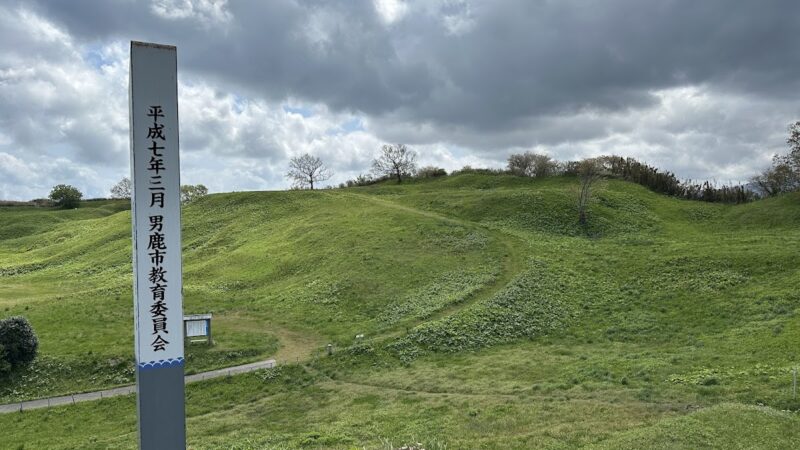
The Kobusawa Castle site retains remains that exhibit the characteristics of a medieval castle. Like many medieval castles, the structures are primarily made of earth rather than stone.
Typical Elements of a Medieval Castle Remains:
Kuruwa (Enclosure)
A flat area at the center of the castle, where buildings were constructed. Often divided into a central area called the Shukaku (main enclosure) and surrounding enclosures such as the Ni-no-kuruwa (second enclosure), San-no-kuruwa (third enclosure), etc.
Dorui (Earthwork)
A defensive wall made by piling up earth. Built to surround the enclosure, it served to prevent enemy intrusion and ensure visibility from within.
Hori (Moat)
A ditch dug around the enclosure, a defensive structure that made it difficult for enemies to approach. There are water-filled moats and dry moats (moats without water).
Koguchi (Tiger’s Mouth Entrance)
This is the entrance to a castle or fortified residence. Often featuring complex structures to prevent enemy intrusion, it was a crucial defensive element.
Characteristics of the Location
Many medieval castles and fortified residences were built on terrain suitable for defense. Common location patterns include:
- On a Hill: Located on high ground offering a panoramic view of the surroundings
- Along a River: Utilizing rivers as natural barriers
- Edge of a Plateau: Steep cliffs providing natural defensive walls
The Kobusawa Castle ruins are also thought to have been built on terrain chosen for these defensive considerations.
Scale and Structure
Medieval castles and fortified residences varied in size, ranging from small local residences to large ones with multiple baileys. Medieval castles and fortified residences in Akita Prefecture are generally relatively small, primarily those built as residences by powerful local figures.
Medieval Castle Sites in Akita Prefecture
Major Medieval Castle Sites in Akita Prefecture
Besides the Kobusawa Castle Site, many other medieval castle sites remain in Akita Prefecture. Here are some representative examples:
Hiyama Castle Site (Noshiro City)
A large mountain castle located in Noshiro City, it was the residence of the Hiyama Ando clan. It is a prefecturally designated historical site, and well-preserved remains exist.
Wakimoto Castle Site (Oga City)
A mountain castle located on the Oga Peninsula, boasting an excellent location overlooking the Sea of Japan. It is a nationally designated historical site and one of the largest in the Tohoku region.
Minato Castle Site (Akita City)
A castle located in the Tsuchizaki district of Akita City, it was the base of the Minato Ando clan. Although urbanization is progressing, some remains still exist.
Yokote Castle Ruins (Yokote City)
Located in the heart of Yokote City, these castle ruins served as a branch castle of the Kubota Domain during the Edo period. Currently, the site is maintained as a park.
Medieval History of Akita and the Ando Clan
The Ando clan is indispensable when discussing the medieval history of Akita Prefecture. The Ando clan was a powerful samurai group that ruled the Akita region from the Kamakura period to the Sengoku period, possessing the following characteristics:
- Control of the Sea of Japan Trade: Accumulated wealth through trade via the Sea of Japan
- Relationship with Ezo (Hokkaido): Trade and exchange with the north (present-day Hokkaido)
- Division into Multiple Forces: Divided into the Minato Ando clan and the Hiyama Ando clan, and engaged in conflict
Many castles and residences were built within the Ando clan’s territory, supporting their system of rule. The Kobusawa Castle Ruins may also have been built within this political context of medieval Akita.
Investigation and Research of Medieval Castles and Fortifications
Importance of Archaeological Investigation
Research on medieval castle and fortification sites is conducted using both documentary sources and archaeological investigations. Especially for small-scale castles and fortifications in rural areas, records are often lacking in written documents, making archaeological investigations a crucial source of information.
Excavation
By excavating buried structures and artifacts, the structure, period of use, and lifestyle of the castle or fortifications are revealed.
Survey
The local topography is surveyed in detail to accurately record the layout and scale of the remains. In recent years, advances in laser surveying technology have made it possible to create precise topographic maps even in areas covered by trees.
Distribution Survey
The distribution of castle and fortification sites over a wide area is investigated to study their relationship to regional power structures and transportation routes.
Castle and Fortification Site Investigations in Akita Prefecture
In Akita Prefecture, investigations of medieval castle and fortification sites are being conducted primarily by the prefectural board of education, municipal boards of education, and universities. Reports such as “Medieval Castles and Fortifications in Akita Prefecture” have been published, and the overall picture of castle and fortification sites in the prefecture is becoming clearer.
These surveys and research have yielded the following results:
- Understanding the total number and distribution of medieval castles and fortifications in the prefecture
- Clarification of the construction period and changes of each castle and fortification
- Understanding the relationship with the historical changes of the region
- Accumulation of basic data for preservation and utilization
Preservation and Utilization of Historic Sites
Value as Cultural Property
Medieval castle and fortification sites have the following cultural property value:
Historical Value
They provide clues to the state of medieval local communities and the lives of people at that time.
Academic Value
They are important research subjects in medieval history research and archaeological research.
Landscape Value
They are elements that constitute the historical landscape of the region and are related to the regional identity.
Educational Value
They can be used as teaching materials for learning local history.
Preservation Challenges
Preserving medieval castle ruins presents several challenges:
Coordination with Development
There is a risk of loss of the ruins due to urbanization and agricultural development.
Natural Disasters
Landslides and fallen trees can damage the remains.
Difficulty in Management
If the ruins are located in forests or on private land, daily management can be difficult.
Low Awareness
Many historical sites are not well known even to local residents, making it difficult to raise awareness for preservation.
Utilization Initiatives
Across Japan, efforts are underway to utilize medieval castle ruins as local historical resources:
Development as Historical Parks
While preserving the remains, pathways and information boards are developed to make them easier to visit.
Guided Tours
Guided tours with explanations by local volunteer guides are held.
Utilization of Digital Technology
CG and VR technology are used to reconstruct the appearance of the castle in its heyday, making it easier to understand visually.
Integration into Educational Programs
It will be used as material for learning local history within regional school education.
Access and Visiting Information for Kobusawa Castle Ruins
Access Methods
For specific access methods to Kobusawa Castle Ruins, detailed location information is required. Generally, the following points should be noted when visiting medieval castle ruins in Akita Prefecture:
Public Transportation
Many castle ruins are located in inconvenient locations, making access by public transportation alone difficult.
Private Car
Visiting by private car is the most convenient option, but parking facilities may not be available.
Approach on Foot
If the site is located in a forest, equipment similar to that used for mountain climbing may be necessary.
Precautions During Visits
When visiting medieval castle ruins, please note the following:
- Respect for Private Property: Many castle ruins are located on private property. Please be careful not to trespass.
- Safety Precautions: The forest area has uneven ground and steep slopes. Please wear appropriate clothing and footwear.
- Protection of Historical Structures: Please be careful not to damage the historical structures such as earthworks and moats.
- Season and Weather: In summer, vegetation is dense, and in winter, snow can make viewing difficult.
- Information Gathering in Advance: Please contact the local education board or tourist association to obtain the latest information.
Related Historical Sites in the Surrounding Area
When visiting the Kobusawa Castle Ruins, visiting the related historical sites in the surrounding area will allow you to gain a deeper understanding of the region’s history. Akita Prefecture has many medieval castle ruins, historical buildings, and museums.
Many local history museums and museums display excavated artifacts and related materials from the medieval period, which can be helpful in deepening your understanding of the castle ruins.
Points for Enjoying Medieval Castles and Fortifications
Recommendations for Prior Study
To better enjoy medieval castle ruins, prior study is effective:
Acquiring Basic Knowledge
Learning the basic structure and terminology of medieval castles and fortifications will deepen your understanding on-site.
Learning Local History
Understand the basic flow of medieval history in the region.
Checking Topographic Maps
Checking the topography beforehand using topographic maps from the Geospatial Information Authority of Japan will make it easier to understand the unique location of the castle.
Points for Observation on-site
When visiting castle ruins, pay attention to the following points:
Overall Topography
First, observe the overall topography of the castle. Is it on high ground, along a river, what are the surrounding views like?
Arrangement of Enclosures
Confirm how the main enclosure and the surrounding enclosures are arranged.
Earthworks and Moats
Observe the height and width of the earthworks, and the depth and width of the moats. It’s also important to pay attention to which direction is most heavily defended.
Structure of the Entrance
Observe the structure of the entrance and any defensive features.
Trees and Vegetation
The current state of the trees can help infer past use of the area.
Photography Tips
Effective photography points for documenting castle ruins:
- Panoramic View: Take a photo from a distance to show the overall topography of the castle.
- Detailed View: Photograph ruins such as earthworks and moats to convey a sense of scale.
- Directional Record: Record the direction from which the photo was taken.
- Seasonal Variations: If possible, visit and photograph in different seasons to see how the ruins appear.
Latest Trends in Medieval Castle Research
Advances in Research Methods
In recent years, research on medieval castles has advanced significantly with the introduction of new technologies:
Aerial Laser Surveying
Laser scanners mounted on helicopters and drones can now measure the ground surface and create accurate topographic maps by penetrating trees. This has made it possible to uncover ruins that were previously difficult to find.
Utilization of GIS (Geographic Information System)
It is now possible to analyze the positional relationships of multiple castle ruins and their relationship to roads on a computer.
Natural Scientific Analysis
Trend-ring dating of excavated wood and soil analysis are enabling more accurate dating and environmental reconstruction.
Research from New Perspectives
In addition to traditional research focused on political and military history, research from new perspectives is also progressing:
Life History Perspective
Research is underway to reconstruct daily life in the castle based on excavated artifacts.
Landscape History Perspective
This research places the castle within the local landscape and studies how people at the time perceived space.
Environmental History Perspective
This research studies the relationship between environmental changes around the castle and the rise and fall of the castle.
Future Prospects for the Kobusawa Castle Site
Deepening of Research
Further research is expected for the Kobusawa Castle site. Detailed surveys and, if possible, archaeological excavations are expected to reveal the following:
- Identification of the castle’s construction and abandonment periods
- Clarification of the lineage of the castle’s builders and lords
- Detailed information on the castle’s structure and its transformations
- Relationship with other castle sites in the surrounding area
Directions for Preservation and Utilization
The following directions are considered for the preservation and utilization of the Kobusawa Castle Ruins:
Appropriate Preservation Management
Accurately record the current state of the remains and take measures to protect them from development, etc.
Strengthening Information Dissemination
Disseminate information widely through websites and social media to increase awareness.
Utilization as a Regional Resource
Utilize it as a regional historical and cultural resource for tourism and education.
Collaboration with Local Residents
Support preservation and utilization activities led by local residents.
Summary
The Kobusawa Castle Ruins are a valuable historical site that tells the story of medieval history in Akita Prefecture. Given the limited historical records available, the ruins themselves eloquently tell the story of that era.
Medieval castle sites were not merely military facilities; they played multifaceted roles as centers of local communities. The Kobusawa Castle site likely functioned as a vital political, economic, and social hub in the region when it was built.
Currently, many castle sites are being lost due to development and natural erosion. Appropriate preservation and utilization are essential to pass on historical sites like the Kobusawa Castle site to future generations.
Taking an interest in local history and visiting such sites provides a valuable opportunity for us to engage with the past and reaffirm our regional identity. Why not reflect on the history of medieval Akita through the Kobusawa Castle site?
Akita Prefecture has many other medieval castle sites besides the Kobusawa Castle site. Each castle site has its own history and story. By visiting these sites and learning about local history, we can reflect on the lives of our ancestors and gain a deeper understanding of the current local community.
The preservation and utilization of medieval castle ruins is not merely about protecting past heritage, but also about creating the future of the region. We hope that the Kobusawa Castle ruins will be utilized for many years to come as a historical resource for the region, as well as as an educational and tourist resource.