Complete Guide to Nejokan Castle Ruins (Akita Prefecture): History and Highlights of the Remains of the Castle of the Yuri Twelve Lords, the Oi Clan
Located in Arasawa, Yashima-cho, Yurihonjo City, Akita Prefecture, the Nejokan Castle Ruins are a mountain castle known as the residence of the Oi clan, one of the Yuri Twelve Lords who ruled the Yuri region during the Sengoku period. Built on a hill approximately 120 meters above sea level, this castle retains well-preserved Sengoku period castle remains such as earthworks, horizontal moats, and ridged vertical moats, and is protected as a city historical site by the local community.
This article provides a detailed explanation of this valuable historical site, from its historical background to its castle structure, highlights, and access methods. We will convey the unique characteristics and appeal of the Nejokan Castle Ruins in detail, comparing it with other castle ruins in Akita Prefecture.
Basic Information on Nejokan Castle Ruins
The Nejokan Castle Ruins are a medieval mountain castle located in Nejokan, Arasawa, Yashima-cho, Yurihonjo City, Akita Prefecture. Located in Yuri District, Dewa Province, the castle was built on a hill approximately 70 meters high. Currently designated as a city historical site, remnants such as earthworks, baileys, and moats can be seen.
Location: Nejokan, Arasawa, Yajima-cho, Yurihonjo City, Akita Prefecture
Castle Type: Mountain Castle
Elevation: Approximately 120 meters
Relative Height: Approximately 70 meters
Construction Period: Sengoku period
Lord: Oi clan (later Yajima clan)
Designation: Yurihonjo City Historical Site
History of Nejokan: From the Oi Clan to the Yajima Clan
The Establishment of the Twelve Lords of Yuri and the Oi Clan
Nejokan was built as the residence of the Oi clan, whose ancestor was Oi Daizen-no-taifu Yoshihisa, one of the Twelve Lords of Yuri. The Twelve Lords of Yuri refer to the local lords who ruled the Yuri region from the medieval period to the Sengoku period, including the Oi, Nikaho, Akaotsu, and Iwaya clans.
Oi Yoshihisa, considered the first head of the Oi clan, built Nejo Castle in this area, establishing his power base in the Yuri region. Following Yoshihisa, the Oi clan continued with Mitsuhisa and Yoshimitsu, developing into a powerful local lord in the region.
Renaming to the Yajima Clan and Expansion of Power
During the time of Goro Mitsuyasu, the fourth head of the Oi clan, the family began to call themselves the “Yajima clan.” This name change indicated the establishment of control over the Yajima region and a broader territorial control. The Yajima clan, using Nejo Castle as their base, built several castles and fortifications, including Yajima Castle, and expanded their power.
Conflict between Mogami Yoshiaki and the Onodera Clan
In the late Sengoku period, the Yuri region, a strategic stronghold in southern Dewa Province, became a target of conflict among surrounding powers. As the conflict between Mogami Yoshiaki of Yamagata and the Onodera clan of Senboku intensified, the twelve lords of Yuri were forced to choose their allegiances.
At this time, while most of the twelve lords of Yuri pledged allegiance to Mogami Yoshiaki, Yajima Mitsuyasu chose to side with the Onodera clan. This choice led to the Yajima clan’s isolation in the Yuri region. The conflict with the Nikaho clan intensified, making the Yajima clan’s position increasingly precarious.
Relocation of the Headquarters to Shinjo Castle
Facing increasing isolation, Yajima Mitsuyasu ultimately decided to relocate his headquarters from Nejo Castle to Shinjo Castle. This relocation represented a change in strategic defensive positioning and an adaptation to the new political situation. It is believed that Nejo Castle ceased to serve as the Yajima clan’s main base after this period.
Subsequently, the Yajima clan continued to exist as a rotating yoriai (a type of samurai family) during the Edo period, ruling the Yajima region until the Meiji Restoration.
Castle Structure and Layout of Nejokan Site
Location and Topographical Utilization as a Mountain Castle
Nejokan is a typical mountain castle built on a hill approximately 120 meters above sea level and 70 meters above sea level. It cleverly utilizes the surrounding valleys, maximizing natural defensive capabilities.
The castle’s location overlooks the Yajima Basin, making it ideal for monitoring and defending the territory. Its proximity to a tributary of the Koyoshigawa River system also ensured a water supply.
Major Remains: Earthworks and Enclosures
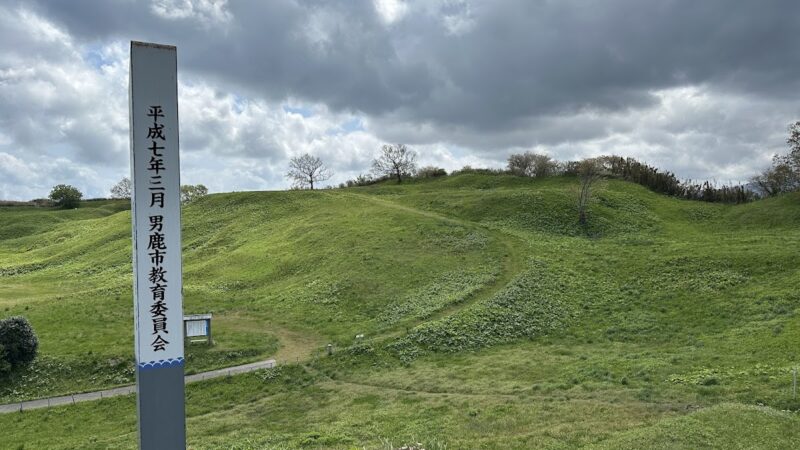
The greatest highlight of Nejokan Site is the well-preserved earthworks. Multiple enclosures are arranged around the main enclosure, each surrounded by earthworks. The earthworks around the main enclosure, in particular, remain at a height of 2-3 meters, conveying the castle’s structure from that time.
The enclosures are arranged in a stepped pattern following the terrain, with the main enclosure at the summit, followed by the second and third enclosures. Each enclosure is demarcated by earthworks and moats, incorporating features to enhance defensibility.
Arrangement of Horizontal and Dry Moats
A notable feature of the Nejo Castle’s defensive structures is the arrangement of horizontal and dry moats. The horizontal moats surrounding the enclosures prevented enemy intrusion and also served as a source of soil for constructing earthworks.
The dry moats are positioned to block the ridges, limiting enemy access routes. In particular, multiple trenches are found in the direction believed to be the main entrance, indicating a robust defensive system.
Ridge-shaped Vertical Moats: A Characteristic of Sengoku Period Castles
Ridge-shaped vertical moats have been identified as an important feature of the Nejo Castle site. These are multiple vertical moats dug parallel to the slope, a characteristic defensive feature of mountain castles from the late Sengoku period.
These vertical trenches effectively restricted enemy movement as they climbed the slopes and made lateral movement difficult. The ridged vertical trenches at Nejo Castle are valuable remains demonstrating the advanced castle-building techniques of the time.
Presence of Stone Walls
At the Nejo Castle site, remains including stone walls have been confirmed in some areas. Earthen ramparts were predominant in medieval castles in Akita Prefecture, and the use of stone walls was limited. The presence of stone walls at Nejo Castle may indicate the importance of the castle, the period of its construction, or traces of renovations.
The stone walls are thought to have been mainly used around the entrance (koguchi) and parts of important baileys, and are noteworthy as evidence of efforts to strengthen defensive capabilities.
Relationship with Hachiman Shrine
Currently, a Hachiman Shrine is located on part of the Nejo Castle site. The relationship between castles and shrines was common in medieval castles, and Hachiman was often enshrined as the guardian deity of the castle.
The Hachiman Shrine at Nejo Castle is also thought to have served as the spiritual pillar of the castle, as the tutelary deity of the Oi and Yajima clans. The existence of the shrine is an important element demonstrating the historical continuity of the castle.
Highlights and Visitor Guide to Nejo Castle Ruins
Earthworks of the Main Enclosure
The biggest highlight when visiting Nejo Castle is the earthworks surrounding the main enclosure. The earthworks, 2-3 meters high, are well-preserved, allowing visitors to experience the appearance of a Sengoku period mountain castle. Walking along the earthworks allows you to survey the surroundings from the perspective of the castle’s soldiers, giving you a real sense of the castle’s advantageous location.
Observation of the Horizontal and Ridge-Shaped Vertical Moats
The horizontal moats encircle the enclosure, and their scale and arrangement reveal the defensive strategy. Furthermore, the ridge-shaped vertical moats remaining on the slopes are valuable remains that demonstrate the castle construction techniques of the Sengoku period. Even in the season when fallen leaves accumulate, the presence of the moat can be confirmed from the undulations of the terrain.
Views and Surrounding Landscape
From the main enclosure, you can enjoy a panoramic view of the Yajima Basin, and on clear days, you can even see the majestic figure of Mount Chokai. This view speaks to the castle’s importance as a base for monitoring the territory.
Visiting Hachiman Shrine
The Hachiman Shrine within the castle ruins is still cherished as a place of worship for the local community. By visiting the shrine, you can feel the historical continuity of the castle and the depth of the local culture.
Important Notes for Visitors
Since Nejokan Castle Ruins are a mountain castle, the following preparations are necessary for your visit:
- Clothing: Comfortable clothing and non-slip shoes (trekking shoes recommended)
- Season: Spring to autumn is suitable for visiting, but insect repellent is necessary in summer.
- Time Required: Approximately 1-2 hours for a thorough visit.
- Safety: Avoid visiting alone; visiting with multiple people is preferable.
- Manners: Please observe proper etiquette on private property and within shrine grounds.
Access Information
Access by Public Transportation
While private car access to Nejokan Castle Ruins is convenient, the following route is available if using public transportation:
- Get off at Ugo-Honjo Station on the JR Uetsu Main Line
- Transfer to the Yuri Kogen Railway and get off at Yashima Station (approximately 40 minutes)
- From Yajima Station by taxi or on foot (approximately 40 minutes on foot)
The Yuri Kogen Railway has limited service, so it is recommended to check the timetable in advance.
Access by Private Car
- Approximately 30 minutes from Honjo IC on the Nihonkai Tohoku Expressway
- Via National Route 108 towards Yajima
- Parking: Limited space available around Hachiman Shrine (confirmation required)
Map and Navigation
Searching for “Nejokan, Arazawa, Yajima-cho, Yurihonjo City, Akita Prefecture” or “Hachiman Shrine (Arazawa, Yajima-cho)” on your car navigation system or smartphone map app will show the approximate location. However, the specific entrance to the castle ruins needs to be confirmed on-site.
Related Castles in Akita Prefecture
Yajima Castle (Yajima Jinya)
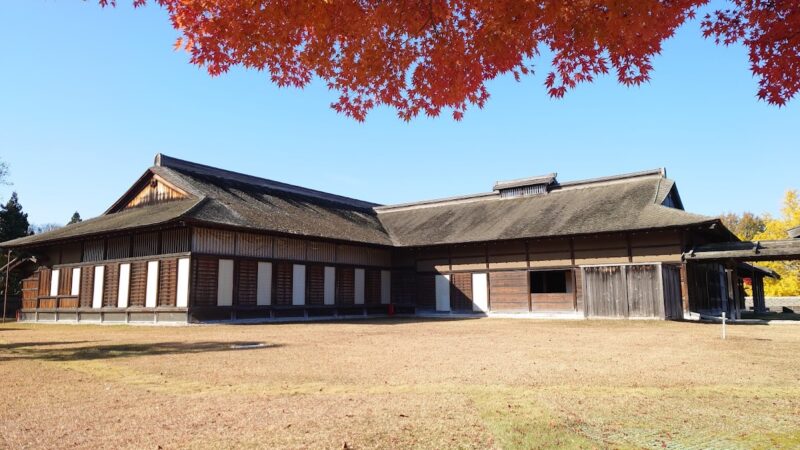
Yajima Castle (Yajima Jinya), located in Yajima-cho, Yurihonjo City, served as the residence of the Yajima clan, who moved their base from Nejokan, during the Edo period. It is an important historical site for understanding the history of the Yajima clan, who survived as a rotating samurai family until the end of the Edo period.
Kubota Castle (Akita City)
Kubota Castle, a representative castle of Akita Prefecture, is a flatland castle built in 1602 by Satake Yoshinobu. It is now maintained as Senshu Park, and the corner turret has been restored. It is an indispensable historical site for understanding the history of castles in Akita Prefecture.
Akita Castle Ruins (Akita City)
The Akita Castle Ruins, an ancient fortified settlement located in Dewa Province from the Nara period to the Heian period, are designated as a national historical site. Although from a different era than the medieval Nejo-kan, this is an important historical site for understanding Akita’s history. It boasts numerous attractions, including a reconstructed government office and ancient flush toilets.
Wakimoto Castle (Oga City)
Wakimoto Castle, built on a hill overlooking the Sea of Japan, is a large mountain castle known as the residence of the Ando clan. Designated a national historic site, its magnificent layout and views are its main attractions. Like Nejo-kan, it is a subject of comparative research as a castle of Dewa Province during the Sengoku period.
Yokote Castle (Yokote City)
Yokote Castle is a flatland castle built on a hill overlooking the Yokote Basin and functioned as a branch castle of the Onodera clan. As a related castle of the Onodera clan, who were allied with the Yajima clan, it is useful for understanding the history of Nejo-kan.
Kanazawa-saku (Yokote City)
Kanazawa-saku, known for the Former Nine Years’ War of the late Heian period, is one of the oldest castle ruins in Akita Prefecture. This is an important historical site for understanding the transformation of castles from ancient to medieval times.
Historical Background of the Yuri Region
The Formation and Development of the Twelve Lords of Yuri
In the medieval period, the Yuri region was divided and ruled by local lords known as the Twelve Lords of Yuri. These lords, while forming marital ties, were also at times in conflict, creating complex political relationships.
The Oi clan (Yajima clan) was a powerful family among them, maintaining their influence from their base at Nejo Castle. Their relationships with the Nikaho, Akaotsu, and Iwaya clans alternated between cooperation and conflict depending on the era, complicating the political situation in the Yuri region.
The Conflict Between the Mogami and Onodera Clans
In the late Sengoku period, southern Dewa Province was caught between two major powers: Mogami Yoshiaki of Yamagata and the Onodera clan of Senboku. The Twelve Lords of Yuri were forced to choose their own positions within this conflict.
Yoshiaki Mogami expanded his power from the Shonai region to the Yuri region, bringing many of the Twelve Lords of Yuri under his control. Meanwhile, the Yajima clan prioritized their relationship with the Onodera clan and chose to oppose the Mogami clan. This choice led to the Yajima clan’s isolation, but also preserved their unique identity.
The Yajima Clan in the Edo Period
In the Edo period, the Yajima clan was allowed to continue as a kōtai yoriai (alternate lord). Although their landholding was only around 10,000 koku, they managed their territory independently and ruled the Yajima region until the Meiji Restoration. As the Yajima Domain (officially not a domain but a kōtai yoriai territory), they contributed to the development of the region’s culture and economy.
Preservation of the Nejokan Site and Future Challenges
Protection as a City Historic Site
The Nejokan site is designated as a historic site of Yurihonjo City and is subject to protection. However, compared to national and prefectural designated historic sites, the budget for maintenance and research is limited, and full-scale excavation and preservation of the remains are not yet adequately carried out. ### Preservation Status of the Remains
Fortunately, the main remains of the Nejo Castle site—earthworks, moats, and ridged trenches—are preserved in relatively good condition. This is due to the fact that the castle was not subjected to large-scale development after its abandonment, and to the high level of preservation awareness among local residents.
Future Challenges and Possibilities
The following points are considered future challenges for the Nejo Castle site:
- Detailed surveying and creation of a layout map: To clarify its academic value and serve as the basis for a preservation plan.
- Installation of information boards and explanatory signs: To provide information to visitors and utilize it as a place for historical education.
- Improvement of access routes: To ensure a safe viewing environment.
- Collaboration with the local community: Preservation activities in cooperation with local residents and history enthusiasts.
- Utilization as a tourist resource: Positioning it as part of historical tourism in the Yajima area.
In particular, Yurihonjo City has many medieval castle sites, including the Yajima Castle site, and the development of historical walking routes connecting these sites is expected.
Photography Tips
Here are some photography tips for visiting the Nejo Castle Ruins:
Cross-section and Height of the Earthworks
The earthworks of the main enclosure are quite high, allowing for photographs that convey a sense of scale. Including people in the shot helps to convey the sense of scale.
Continuity of the Horizontal Moat
Photographing the horizontal moat encircling the enclosure from a slightly elevated position makes for a photograph that clearly shows the castle’s defensive structure.
Topography of the Ridge-Shaped Vertical Moat
The ridge-shaped vertical moat remaining on the slope is best photographed in the early morning or evening, when the undulations are emphasized by the angle of the light.
Scenic Photography
The view of the Yajima Basin from the main enclosure is an important element that demonstrates the castle’s excellent location. On clear days, photographs with Mount Chokai in the background are also attractive.
Combination with Hachiman Shrine
Photographs showing the relationship between the shrine and the castle ruins can express historical continuity.
Current Status of Research on the Nejo Castle Site
Academic Evaluation
The Nejo Castle site occupies an important position in the study of castles of the Twelve Lords of Yuri. In particular, its academic value is highly regarded for the preservation of characteristic structures of Sengoku period castles, such as ridged vertical moats.
Comparison with Historical Documents
A relatively large amount of historical documents concerning the Yajima clan remain, and the historical position of the Nejo Castle site is supported by these documents. In particular, the activities of the Yajima clan during the conflict between Mogami Yoshiaki and the Onodera clan can be confirmed by multiple historical sources.
Future Research Issues
The following are issues that need to be clarified in future research on the Nejo Castle site:
- Determining the construction date
- The process of changes in the castle structure
- Details of the timing and reasons for relocation to Shinsho Castle
- Relationship with surrounding subsidiary castles
- Establishing a chronological view based on excavated artifacts
Resolving these issues requires the implementation of archaeological excavations and surveying.
Summary: Historical Significance of Nejokan Site
Nejokan Site is a valuable historical heritage site as a castle of a local lord in the Yuri region during the Sengoku period. As the base of the Yajima clan, which continued from the Oi clan, it is an important historical site that tells the story of the medieval history of this region.
The castle remains, such as earthworks, horizontal moats, and ridged vertical moats, are well-preserved, conveying the appearance of a Sengoku period mountain castle. The ridged vertical moats, in particular, are noteworthy as valuable remains demonstrating the high level of castle construction technology of the time.
Within the unique regional governance system of the Twelve Lords of Yuri, the Yajima clan, while being tossed about by the major historical currents of the conflict between Mogami Yoshiaki and the Onodera clan, forged their own path, which holds significant importance in regional history research.
While Akita Prefecture has many famous castles such as Kubota Castle, Akita Castle, and Wakimoto Castle, medieval local lord castles like Nejokan Site are also indispensable for understanding the history of the region. This historical site is quiet and receives few visitors, but that allows you to fully immerse yourself in the atmosphere of the Sengoku period.
When you visit the Yajima area, be sure to stop by the Nejo Castle ruins and reflect on the era of the Twelve Lords of Yuri. As you climb the earthworks, follow the moats, and look down at the slopes of the ridged vertical moats, you might even hear the breath of the warlords of that time.