Shinano-kan Ruins (Akita Prefecture): Understanding the Important Center of Medieval Akita Through History and Remains
The Shinano-kan Ruins in Akita Prefecture are important remains that convey the history of the medieval period. These ruins are believed to have functioned as a political and military center in the Akita region from the Sengoku period to the early Edo period, making them a valuable historical site for understanding the realities of samurai society and regional governance at the time. This article provides a detailed explanation of the historical background, characteristics of the remains, and current state of preservation of the Shinano-kan Ruins.
Overview and Location of Shinano-kan Ruins
The Shinano-kan Ruins are one of the medieval castle ruins located in Akita Prefecture. The name “Shinano” is thought to originate from the samurai who ruled this area or from the old name of the region, but there are various theories about its detailed origin, and debate continues among regional researchers.
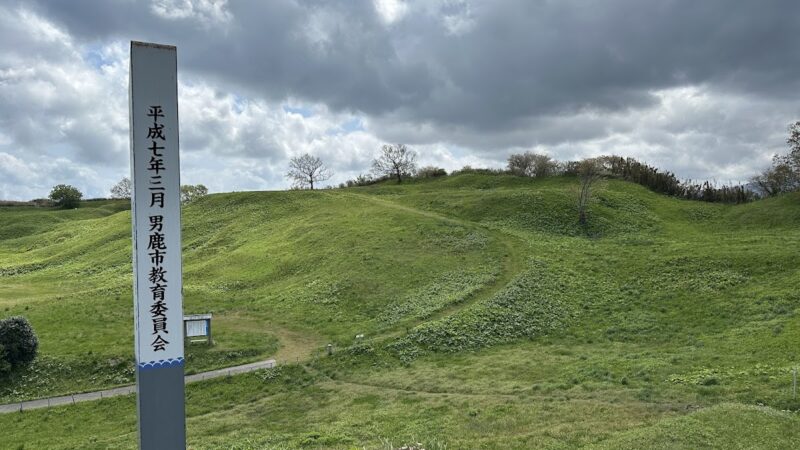
The ruins are located on a relatively flat plateau, and traces have been confirmed of defensive structures that utilized the natural terrain. This location is typical of medieval fortifications, indicating it was a suitable place to monitor and control the surrounding area while preventing enemy incursions.
Geographical Characteristics
The location of the Shinano Fort site held significant military and economic importance. The fort was located near major roads and rivers, suggesting a convenient location for transporting goods and transmitting information. Furthermore, topographical analysis reveals that farmland surrounded the site, providing the necessary food production infrastructure for maintaining the fort.
Topographically, its slightly elevated position offered unobstructed views, allowing for early detection of approaching enemies. Simultaneously, the presence of forests behind the fort likely ensured a retreat route in emergencies.
Historical Background of Shinano Fort
Political Situation in Medieval Akita
Medieval Akita was an important region, possessing abundant resources and a unique culture, despite being a frontier area less influenced by the central government. During the Sengoku period (Warring States period), local powerful families such as the Ando (Akita) and Onodera clans competed for power, building residences and castles throughout the region to solidify their control.
Shinano Residence is believed to have been built by one of these local powerful families as a base of operations. While there is a lack of definitive historical records regarding the exact construction date, the characteristics of the remains and excavated artifacts suggest that major activities took place there between the 15th and 16th centuries.
Residence Owner and Governing System
The identity of the person who built Shinano Residence and who governed it is gradually becoming clearer through research into local historical documents and genealogies. One theory suggests that a powerful member of the Ando clan or their retainers was entrusted with governing the region and established the residence.
The residence owner collected taxes from surrounding farmers and demanded military service, while also playing a role in maintaining local security and mediating disputes. The residence was not merely a military facility, but functioned as the center of the local community.
The Turmoil of the Sengoku Period and the Role of the Manor
During the Sengoku period, the Akita region was constantly under military tension due to invasions from neighboring forces such as the Nanbu and Mogami clans. It is believed that the Shinano Manor also strengthened its role as a defensive base within this historical context.
The manor was surrounded by moats and earthworks, making it difficult to capture. Furthermore, a system of cooperation with neighboring manors and castles was in place, suggesting a mechanism for mutual reinforcement in emergencies, as can be inferred from contemporary military records.
Characteristics and Structure of the Remains
Layout and Arrangement of the Manor
Excavations and surface observations of the Shinano Manor site have revealed the basic structure of the manor. The manor consisted of a central area called the “main enclosure,” surrounded by multiple “enclosures” (kuruwa).
The main enclosure housed the lord’s residence and other important buildings, serving as the center for daily administrative affairs and living. The surrounding enclosures housed the residences of retainers, warehouses, and stables, suggesting that the entire manor formed a self-sufficient community.
Structure of Defensive Structures
The most important defensive structures for a manor are the moat and earthworks. At the Shinano Manor site, traces of a moat surrounding the main enclosure have been confirmed, estimated to be 5-10 meters wide and 3-5 meters deep.
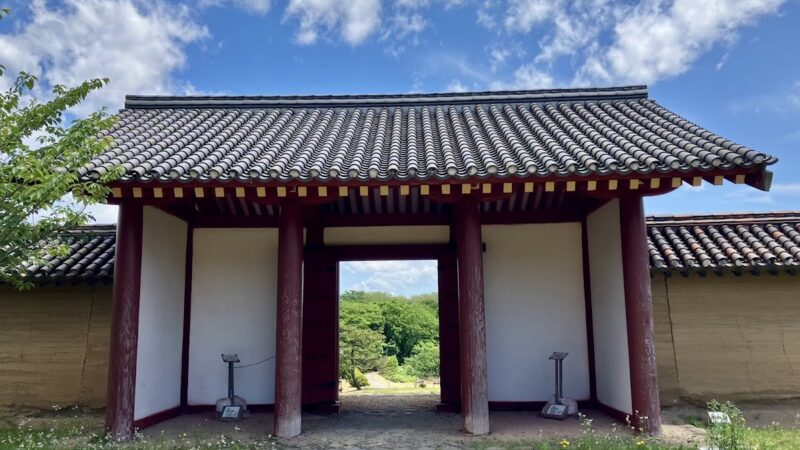
The earthworks were constructed by piling up the soil excavated from the moat, and it is believed that fences or walls were built on top of them. This double and triple defensive structure indicates that the manor possessed considerable defensive capabilities.
Building Remains and Traces of Life
Excavation surveys have uncovered postholes and foundation stones, gradually revealing what kinds of buildings existed within the manor. A relatively large building remains were found within the main enclosure, which is presumed to have been the residence of the manor’s lord.
Furthermore, the excavation unearthed fragments of ceramics, iron weapons and farming tools, and carbonized rice, providing concrete insights into daily life at the time. In particular, the discovery of fragments of Chinese ceramics and high-quality lacquerware suggests that the lord of the manor possessed a certain degree of economic power and cultural refinement.
Life at the Time as Seen from Excavated Artifacts
Ceramics and Evidence of Trade
The ceramics unearthed from the Shinano Manor site include Chinese celadon and white porcelain, as well as domestically produced Seto ware and Echizen ware. These high-quality ceramics are thought to have been brought in through trade routes along the Sea of Japan, indicating that the lord participated in a wide-area trade network.
The Akita region was one of the important centers of trade along the Sea of Japan during the medieval period. Seafood and furs from Hokkaido (Ezo), and handicrafts and luxury goods from Kyoto and Osaka were traded via ports along the Sea of Japan coast. It is highly probable that the owner of Shinano Manor also profited from this kind of trade.
Weapons, Armor, and Military Power
Weapons such as sword fragments, arrowheads, and musket bullets have been unearthed from the manor site. Of particular note are the firearm-related artifacts, estimated to date from the late 16th century onwards, indicating that firearms were already deployed at the manor during this period.
The introduction of firearms symbolizes the innovation in military technology during the Sengoku period, demonstrating that the owner of Shinano Manor actively adopted the latest technology of the time. Furthermore, the large number of arrowheads unearthed confirms that bows and arrows were still used as primary weapons.
Daily Life Items
In addition to weapons and luxury goods, numerous simple earthenware, stone mortars, and iron pots used in daily life have also been unearthed. These are evidence of daily life at the manor and provide clues to understanding the realities of daily living, such as cooking, eating, and food preservation.
Of particular interest is the discovery of carbonized rice and grain seeds, which provide valuable historical evidence for concretely reconstructing the diet and agricultural practices of the time.
The Decline and Abolition of Shinano-yakata
The End of the Sengoku Period and the Fate of the Yakata
From the late 16th to the early 17th century, the political situation in Japan changed dramatically with the unification of the country by Toyotomi Hideyoshi and the establishment of the Edo Shogunate by Tokugawa Ieyasu. In the Akita region, the Ando clan (Akita clan) followed the Toyotomi regime and later survived as the Akita Domain under the Tokugawa regime.
During this process, many small yakata and castles were forced to be abolished. This was because the Edo Shogunate’s “One Castle Per Province” decree required each domain to demolish castles and yakata other than their main castle. It is believed that Shinano-yakata also lost its function as a military facility and was abolished around this time.
Land Use in the Early Modern Period and Beyond
After the yakata was abolished, its site was used for farmland and settlements. The moats were filled in, the earthworks leveled, and the former appearance of the mansion gradually disappeared. However, traces of the former mansion remain in the place names and subtle undulations of the terrain.
In modern times, local historians and researchers rediscovered this site as the former mansion, and efforts to investigate and preserve it began.
Current Preservation Status and Utilization
Historic Site Designation and Preservation Activities
The Shinano Mansion Site is recognized as an important historical heritage site of the region, and preservation activities are being carried out by the local government. Part of the site has been designated as a historic site and is protected from development.
The local board of education and cultural property protection organizations regularly mow the grass and maintain the environment to preserve the remains. They are also working to convey the history of the mansion to visitors by installing explanatory signs and information boards.
Significance in Local History Research
The Shinano Mansion Site occupies an important position in the study of medieval history in Akita Prefecture. In medieval local history, where written historical sources are limited, information obtained through archaeological excavations is extremely valuable.
Data obtained from the investigation of the Shinano Castle site provides clues to understanding the social structure, economic activities, and cultural exchanges of the time, contributing to a richer understanding of the history of the Akita region.
Utilization as an Educational and Tourism Resource
Local schools sometimes hold field trips to the Shinano Castle site as part of their local history studies. This provides children with an opportunity to learn about local history and deepen their attachment to their hometown.
Furthermore, the Shinano Castle site is an interesting destination for history enthusiasts and castle fans. Although less well-known than nationally famous castle sites, it is valued as a valuable place where one can experience the atmosphere of the Middle Ages in a quiet environment.
Related Historical Sites in the Surrounding Area
Medieval Castles and Fortifications in Akita Prefecture
In addition to the Shinano Castle site, numerous other medieval castle and fortification sites remain in Akita Prefecture. Representative examples include the ruins of Yokote Castle in Yokote City, Iwasaki Castle in Yuzawa City, and Odate Castle in Odate City.
These castles were built at different times and by different powers, but they all share the commonality of being important legacies that tell the story of medieval history in the Akita region. Visiting them together with the Shinano Castle ruins allows for a more comprehensive understanding of the region’s history.
Related Historical Buildings
Around the castle ruins, temples, shrines, and private houses from the medieval to early modern periods remain, forming the region’s historical landscape. These buildings, like the castle ruins themselves, are important cultural assets that convey the history of the region.
Future Research and Study Prospects
Unresolved Issues
Many aspects of the Shinano Castle ruins remain unclear. There are many issues that need to be clarified through future research, such as the exact construction date of the castle, the lineage of its lord, its relationship with the surrounding area, and the detailed circumstances of its abandonment.
In particular, it is hoped that cross-referencing with historical documents will clarify the castle’s historical position. Furthermore, excavation using the latest archaeological research methods may lead to new discoveries.
Utilization of Digital Technology
In recent years, the use of digital technology has advanced in the preservation and utilization of cultural properties. By utilizing new technologies such as 3D scanning, drone photography for recording remains, and VR (virtual reality) for reconstructing the mansion, it becomes possible to convey the history of the mansion to a wider audience.
At the Shinano-kan site, introducing these technologies will enable accurate recording of the remains and effective information dissemination.
Contribution to Regional Development
Historical heritage is an important asset that forms the identity of a region and can be utilized as a tourism resource. Effectively utilizing the historical resources of the region, including the Shinano-kan site, can lead to regional development and an increase in the number of visitors.
Cooperation between local residents, researchers, and the government to advance the preservation and utilization of the mansion site is a crucial challenge for the future.
Summary
The Shinano-kan site (Akita Prefecture) is a valuable historical site that conveys the reality of samurai society and regional governance in the Akita region during the medieval period. During the turbulent Sengoku period, this fortified residence served as a regional base. Excavated artifacts and remains provide valuable historical insights into the life, culture, and military technology of the time.
Currently, local residents are actively working to preserve and utilize the site, which is used for local history education and research. Continued research and appropriate preservation management are expected to ensure this valuable cultural asset is passed down to future generations.
When visiting Akita Prefecture, we highly recommend visiting the Shinano-kan ruins and reflecting on medieval history. It will be a precious experience to feel the presence of the people who once lived in this tranquil environment.