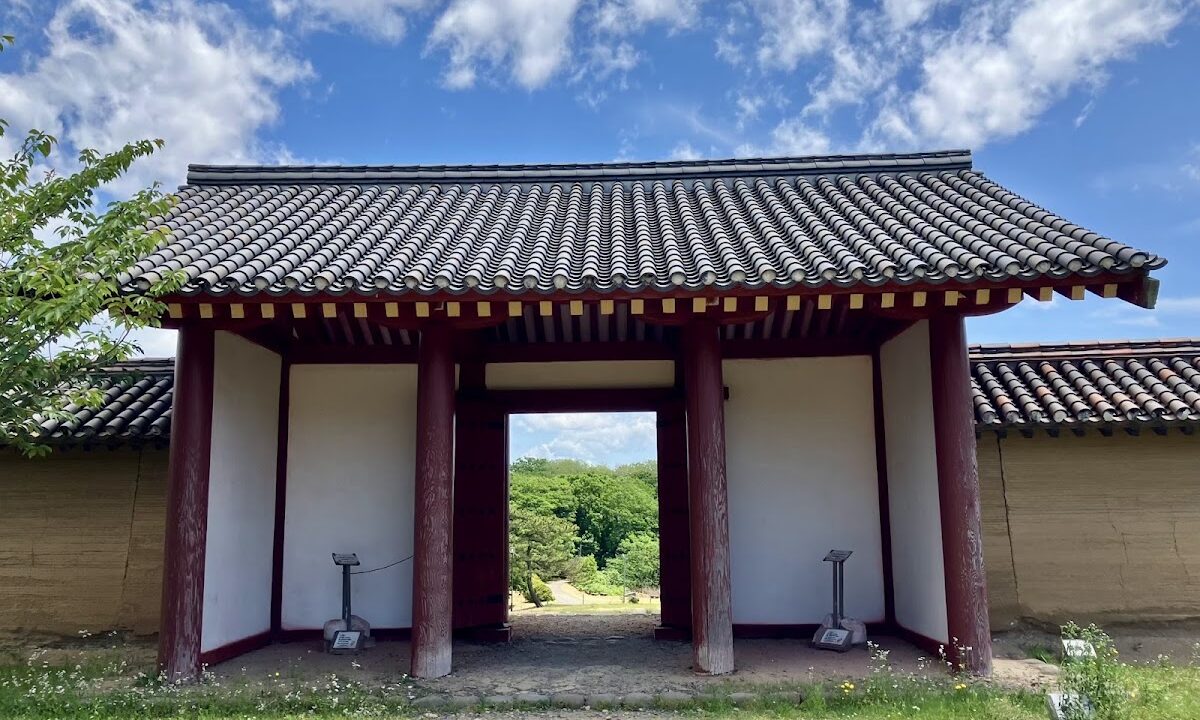
Dogasawa Castle Ruins (Akita Prefecture) Complete Guide: History, Remains, and Access Information
What are the Dogasawa Castle Ruins?
The Dogasawa Castle Ruins are a medieval castle site located in Akita Prefecture. As one of the many medieval castle sites remaining in the Tohoku region, it holds an important position in regional history research.
Medieval Akita was a region where local lords, including the Ando clan, competed for power. The Dogasawa Castle Ruins are thought to be a defensive structure built within this historical context. The castle ruins feature a layout that skillfully utilizes the terrain, making it a valuable cultural asset that conveys the castle-building techniques and regional governance of the time.
Historical Background of the Dogasawa Castle Ruins
Political Situation in Medieval Akita
Medieval Akita experienced a complex political situation from the Kamakura period to the Sengoku period. In particular, the Ando clan expanded its power mainly in northern Akita, and many local lords built castles under their rule.
The construction period of the Dōgasawa Castle ruins is estimated from the form of the remains and excavated artifacts, but it is thought to fall during the late medieval period, roughly between the 14th and 16th centuries. This period was a turbulent time, transitioning from the Nanboku-chō period to the Sengoku period, and local lords needed strong castles to protect their territories.
Builder and Role of the Castle
Regarding the builder of the Dōgasawa Castle ruins, there are no clear documentary records, so we cannot say anything definitively. However, based on the location and the characteristics of the layout, it is presumed that a powerful local lord built it as their residence or a subsidiary castle.
The manor house was not merely a living space, but possessed a variety of functions, including:
- Defensive Base: A military facility prepared for attacks from external enemies
- Administrative Center: A base for managing the territory
- Economic Foundation: Management of surrounding farmland and collection of land tax
- Symbol of Authority: A building demonstrating the lord’s power
Characteristics and Structure of the Remains
Location and Topographical Utilization
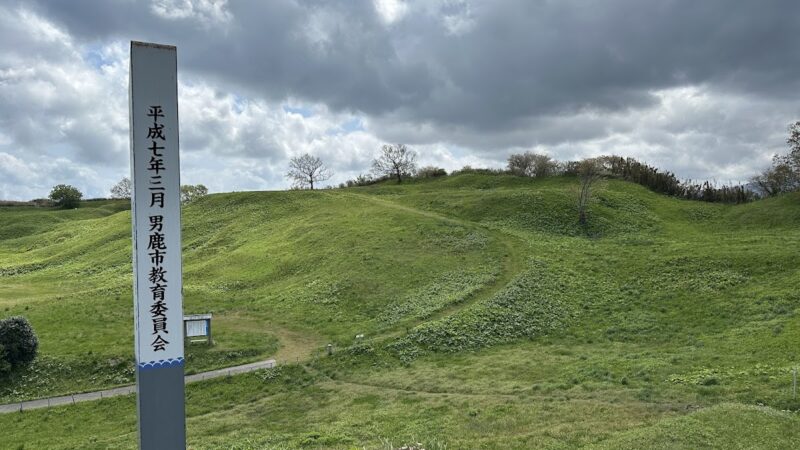
The Dōgasawa Manor Site is characterized by its skillful use of natural terrain. Like many medieval castles and manors, it was built in a location with the following topographical advantages:
- Plateau or Hill: High ground offering a panoramic view
- Natural Moat Formed by Rivers and Streams: Enhanced defensive capabilities
- Mountains Behind: Securing retreat routes and supply lines
This location was chosen as a “fortified site” where effective defense was possible even with a small force.
Layout and Major Remains
The layout (castle arrangement plan) of the Dōgasawa Castle site exhibits typical characteristics of a medieval castle. Major remains include the following:
Main Enclosure (Shukaku)
The main enclosure, the central part of the castle, housed the lord’s residence and important facilities. A flat surface, elevated above the surrounding area, enhanced its defensive capabilities. The size of the main enclosure serves as an indicator of the lord’s power and the importance of the castle.
Moats and Earthworks
Moats (dry or water moats) and earthworks were strategically placed as defensive structures. Moats prevented enemy intrusion, while earthworks acted as barriers against arrows and stones. Traces of these defensive structures may remain on the surface of the ground at the Dōgasawa Castle site.
Enclosures (Kuruwa)
Several enclosures (flat sections) are arranged surrounding the main enclosure. These enclosures were used as garrisons for soldiers and storage areas for supplies.
Koguchi (Entrance Gate)
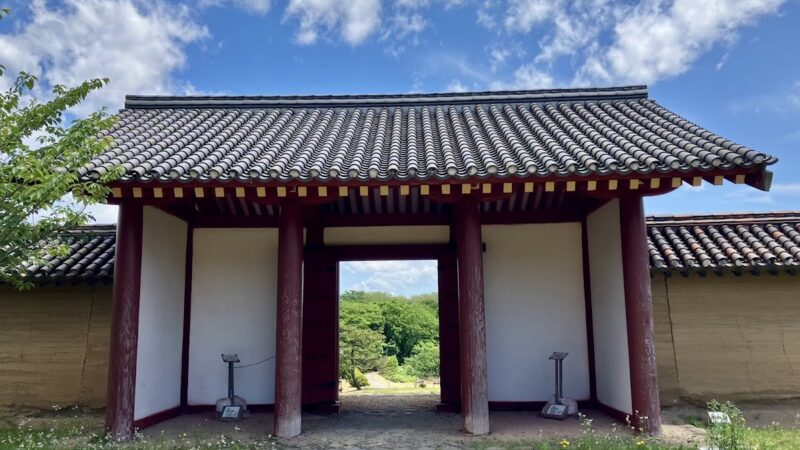
The koguchi, the entrance to the manor, is the most crucial point for defense. Instead of a straight line, it features winding passages and square-shaped spaces (masugata) to make enemy intrusion difficult.
Preservation Status of the Remains
The current state of preservation of the Dōgasawa Manor site varies depending on the surrounding land use. If the area has been developed as farmland or residential land, some of the remains may have been lost. However, if it remains as forest, the surface remains are often preserved in relatively good condition.
Excavation Surveys and Research Results
Previous Survey History
Information regarding archaeological surveys at the Dōgasawa Manor site, including whether or not they have been conducted and details, is managed by the Akita Prefectural Board of Education and the cultural property departments of local municipalities. Generally, the following methods are used in the investigation of medieval castle sites:
- Survey Investigation: Creation of a layout map based on topographic surveying
- Trial Excavation Investigation: Confirmation of remains through partial excavation
- Full-Scale Excavation: Detailed investigation of the layout of remains and the circumstances of artifact discovery
What can be learned from excavated artifacts
Medieval castle sites yield a variety of artifacts that reveal the lifestyle and culture of the time:
Ceramics
Pottery used daily and Chinese porcelain (celadon and white porcelain) brought in through trade indicate the living standards and trade networks of the castle’s inhabitants.
Weapons and Armor
Arrowheads, sword fragments, and parts of armor and helmets indicate the military nature of the castle.
Building Materials
Metal building materials such as nails and staples, and roof tiles (if used) provide clues to estimating the structure and size of the building. #### Daily Life Tools
Cooking utensils such as pots and kettles, millstones, and whetstones reveal the realities of daily life.
Dating and Chronology
The period of the castle’s existence is determined by scientific analysis, such as the style of excavated artifacts and radiocarbon dating. Comparative research with other medieval castle sites in Akita Prefecture is also important in chronological work.
Cultural Value of the Dōgasawa Castle Site
Importance in Regional History
The Dōgasawa Castle site is an important site for elucidating the medieval history of Akita Prefecture. In medieval local history, where documentary sources are limited, archaeological sites are a valuable source of information for understanding the social structure and living conditions of the time.
Contribution to Medieval Castle Research
Medieval castles in the Tohoku region developed uniquely, different from castles in the Kanto and Kinai regions. Research on the Dōgasawa Castle ruins contributes to the following academic challenges:
- Elucidation of unique castle-building techniques in the Tohoku region
- Research on the sphere of influence and forms of rule of local lords
- Reconstruction of medieval distribution and trade networks
- The relationship between regional conflicts and castles during the Sengoku period
Challenges of Protection and Utilization
Appropriate protection measures are necessary to pass on the Dōgasawa Castle ruins as a cultural property to future generations. At the same time, utilization as a resource for local history education and tourism is also an important challenge.
Medieval Castle Sites in Akita Prefecture
Major Castle Sites
In addition to the Dōgasawa Castle Site, numerous other medieval castle sites are distributed throughout Akita Prefecture:
- Wakimoto Castle Site (Oga City): National Historic Site, base of the Andō clan
- Hiyama Castle Site (Noshiro City): Main castle of the Andō clan
- Minato Castle Site (Akita City): Strategic point of Tsuchizaki Port
- Yokote Castle Site (Yokote City): Residence of the Onodera clan
These castle sites each possess different historical backgrounds and characteristics, offering a multifaceted picture of Akita Prefecture’s medieval history.
Regional Characteristics
Medieval castles and fortifications in Akita Prefecture have the following characteristics depending on the region:
- Northern Akita Prefecture: Concentration of castles and fortifications related to the Ando clan
- Central Akita Prefecture: Trading centers around ports
- Southern Akita Prefecture: Castles and fortifications of southern forces such as the Onodera clan
The Dōgasawa Castle Ruins also need to be understood within this regional context.
Access and Visiting Information
Location
The exact location of the Dōgasawa Castle Ruins can be confirmed by contacting the municipal boards of education or cultural property departments within Akita Prefecture. Many medieval castle and fortification sites still retain names such as “fortification,” “castle,” or “fortress” as place names.
Access by Car
There are generally the following ways to access medieval castle ruins in Akita Prefecture:
Access by Car
- Use local roads from the nearest expressway interchange
- Set nearby public facilities or place names as your destination on your car navigation system
- Check parking availability in advance
Public Transportation
- Take a local bus or taxi from the nearest JR Akita Shinkansen or conventional line station
- Check the timetable in advance as the number of services is often limited
Precautions When Visiting
When visiting medieval castle ruins, please note the following:
- Private Property: Obtain permission from the owner before entering
- Safety Check: If in a forest, check your footing and surroundings for safety
- Protection of Remains: Be careful not to damage earthworks or moats
- Manners: Take your trash with you, no open fires
- Season: In summer, vegetation may be overgrown and make the remains difficult to see
Best Season for Visiting
The best time to visit medieval castle ruins is generally as follows:
- Spring (April-May): Season of fresh greenery and mild weather
- Autumn (October-November): Beautiful autumn foliage, and the withered vegetation makes the ruins easier to see
- Winter: Be aware that the ruins may be buried by snow.
Nearby Historical Tourist Spots
Related Historical Sites
When visiting the Dōgasawa Castle Ruins, visiting nearby historical facilities will provide a deeper understanding:
- Local History Museums and Museums: Exhibits of local history and excavated artifacts
- Other Medieval Castle Ruins: Deeper understanding through comparative visits
- Medieval Temples and Shrines: Traces of the beliefs and culture of the time
Historical and Cultural Facilities in Akita Prefecture
- Akita Prefectural Museum (Akita City): Comprehensive exhibition of historical and archaeological materials from within the prefecture
- Akita Castle Ruins Historical Museum (Akita City): Exhibits on the ancient Akita Castle
- Local History Museums in Each City and Town: Historical materials closely related to the region
Future Prospects for Research on the Dōgasawa Manor Site
Unresolved Issues
Many mysteries remain regarding the Dōgasawa Manor Site:
- The exact date of construction and abandonment
- Identification of the builder and successive lords
- Relationship with other castles and manors
- Role in regional governance
Continued research is necessary to resolve these issues.
Directions for Research
Future research is expected to take the following approaches:
- Interdisciplinary Research: A comprehensive approach encompassing archaeology, history, geography, etc.
- Scientific Analysis: Dating, soil analysis, plant remains analysis, etc.
- Comparative Research: Comparison with similar sites in the Tohoku region and throughout Japan
- Reconstruction of Local History: Reconstruction of the medieval local community centered around the castle ruins
Collaboration with the Local Community
The understanding and cooperation of local residents are essential for the protection and utilization of the Dōgasawa Castle Ruins. As a regional historical heritage site, the following initiatives can be considered:
- History lectures and tours: Public awareness campaigns for local residents
- Collaboration with school education: Use as teaching material for local history studies
- Tourism resource development: Incorporation into historical tourist routes
- Preservation activities: Environmental maintenance by local volunteers
How to enjoy medieval castle ruins
How to interpret the remains
When visiting medieval castle ruins, paying attention to the following points will allow you to enjoy them more deeply:
Observing the topography
- What kind of terrain did the castle utilize?
- Surrounding visibility and defensive advantages
- Location of water sources (wells and streams)
Understanding the layout
- Relationship between the main enclosure and the baileys
- Scale and placement of moats and earthworks
- Location and structure of the entrance (koguchi)
Using your imagination
- Imagine the building layout at the time
- Imagine daily life and battle scenes
- Consider changes in the surrounding landscape
Photography Tips
Tips for capturing the charm of castle ruins in photographs:
- Emphasize the features of the remains: Clearly show the cross-sections of earthworks and moats.
- Aerial photography: Photograph the entire layout from a high vantage point.
- Utilize light: Emphasize the topography with the slanted light of morning and evening.
- Sense of the seasons: Combine the ruins with the scenery of each season.
Summary
The Dōgasawa Castle Ruins (Akita Prefecture) are a valuable cultural heritage site that tells the story of medieval history in the Tohoku region. The layout, which skillfully utilizes the natural terrain, conveys the castle-building techniques and the wisdom of the local lords of the time.
In medieval local history, where documentary sources are limited, archaeological sites like the Dōgasawa Castle Ruins provide important clues to understanding the social structure, living conditions, and inter-regional exchanges of the time. Further research is expected to reveal even more historical facts.
When visiting Akita Prefecture, why not explore the medieval castle ruins, including the site of the Dōgasawa Castle, and experience the region’s history? The time spent contemplating the lives of people in the Middle Ages, while feeling the romance of history as told by the remains, will surely be an unforgettable experience.
Protecting and utilizing historical heritage is our responsibility as people living in the present. We hope that the Dōgasawa Castle ruins will be preserved for future generations and become a beloved historical site for many.