Zenpukujihara Castle (Minoh City, Osaka Prefecture) Complete Guide | A Mountain Castle in Settsu Province that Functioned as a Branch Castle of the Aō Clan
What is Zenpukujihara Castle?
Zenpukujihara Castle is a mountain castle from the Muromachi period located in Aomadani-nishi, Minoh City, Osaka Prefecture. Also known as Aomadani Fort, it functioned as a branch castle of Aō Castle (Aomadani Castle), the main base of the Aō clan who ruled this region.
The castle ruins remain in the mountains south of the present-day Zenpukuji Temple, and it is a valuable historical site that shows a typical form of a medieval mountain castle in Settsu Province. Although not a large-scale castle, its location relative to the main castle, Aō Castle, suggests that it was an important military base that played a part in the defense system.
History and Construction Background of Zenpukujihara Castle
Construction in the Late Muromachi Period
Zenpukujihara Castle is estimated to have been built in the late Muromachi period. During this time, the northern part of Settsu Province was divided among several local lords, and the Aō clan was one of them, controlling the area around Minoo.
The Aō clan was a local lord based in the region stretching from Nose District to Minoo in Settsu Province, ruling the area from Aō Castle. Zenpukujihara Castle was built approximately 1 kilometer southwest of Aō Castle and is thought to have served to monitor and prevent approaches to the main castle.
The Aō Clan and the Situation in Settsu Province
During the Muromachi period, Settsu Province, while under the influence of the Hosokawa clan (the shugo, or governor), actually saw many local lords maintaining their own spheres of influence. The Aō clan was one such local lord, and powerful local lords such as the Ikeda, Shiokawa, and Itami clans were located in the surrounding area.
In this political situation, the Aō clan needed to establish several branch castles and forts in addition to their main castle, Aō Castle, to protect their territory. Zenpukujihara Castle functioned as a facility that formed part of this defensive network.
The Sengoku Period and Abandoned Castles
With the arrival of the Sengoku period, the rulers of Settsu Province changed hands from the Miyoshi clan to the Oda clan, and then to the Toyotomi clan. It is unclear how long the Aō clan ruled this region, but it is presumed that Zenpukujihara Castle, along with Aō Castle, was abandoned during the process of Oda Nobunaga and Toyotomi Hideyoshi’s conquest of Settsu Province during the Tenshō era (1573-1592).
While there are no definitive records of the year of its abandonment, it is believed to have lost its function around this time, given that many small mountain castles were abolished as part of the castle reorganization policies under the Toyotomi regime. ## Structure and Layout of Zenpukujihara Castle
Location and Topographical Features
Zenpukujihara Castle is a flatland castle (mountain castle) built in the mountainous area of Aomadani, Minoh City. It is located in the mountains south of present-day Zenpukuji Temple, and its elevation is estimated to be around 200 meters.
The most distinctive feature of this location is its excellent position overlooking the main castle, Aomadani. Being situated on high ground, it offered unobstructed views toward Aomadani Castle, allowing for early detection of enemy movements and communication to the main castle. It is also thought to have served the function of monitoring and defending against invasion routes from the southwest.
Castle Scale and Remains
Zenpukujihara Castle is estimated to have been a relatively small fort-type castle. Currently, it is difficult to confirm clear remains, but the following structure can be inferred from observation of the topography.
Main Structural Elements:
- Kuruwa (Enclosure): Several small, leveled areas may be identifiable.
- Horikiri (Moat): Traces of a defensive structure cutting off the ridge.
- Dorui (Earthwork): An earthen wall surrounding the enclosure.
- Kirigiri (Cut Slope): An artificially carved steep slope.
Given its strong characteristics as a fort, it is highly likely that this was a watchtower where garrison troops were stationed in times of conflict, rather than a facility that permanently stationed a large number of soldiers.
Relationship with Aōjō Castle
The most important feature of Zenpukujihara Castle lies in its location relative to Aōjō Castle. The two castles are approximately 1 kilometer apart and are visible to each other. This is a typical “main castle-sub-castle system” arrangement in medieval mountain castles.
Within the defense network centered around Aō Castle, Zenpukujihara Castle is thought to have played the following roles:
- Southwestern Surveillance: Guarding against incursions from the Nose area
- Early Warning System: Communicating enemy approach to the main castle
- Buying Time: Delaying small enemy units
- Securing Supply Routes: Protecting the supply routes to the main castle
Current State of Zenpukujihara Castle Ruins
Current Status of the Castle Ruins
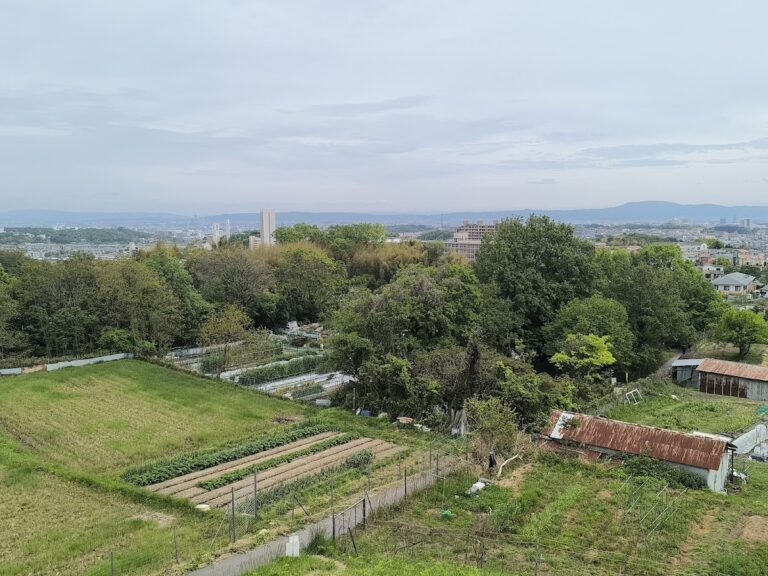
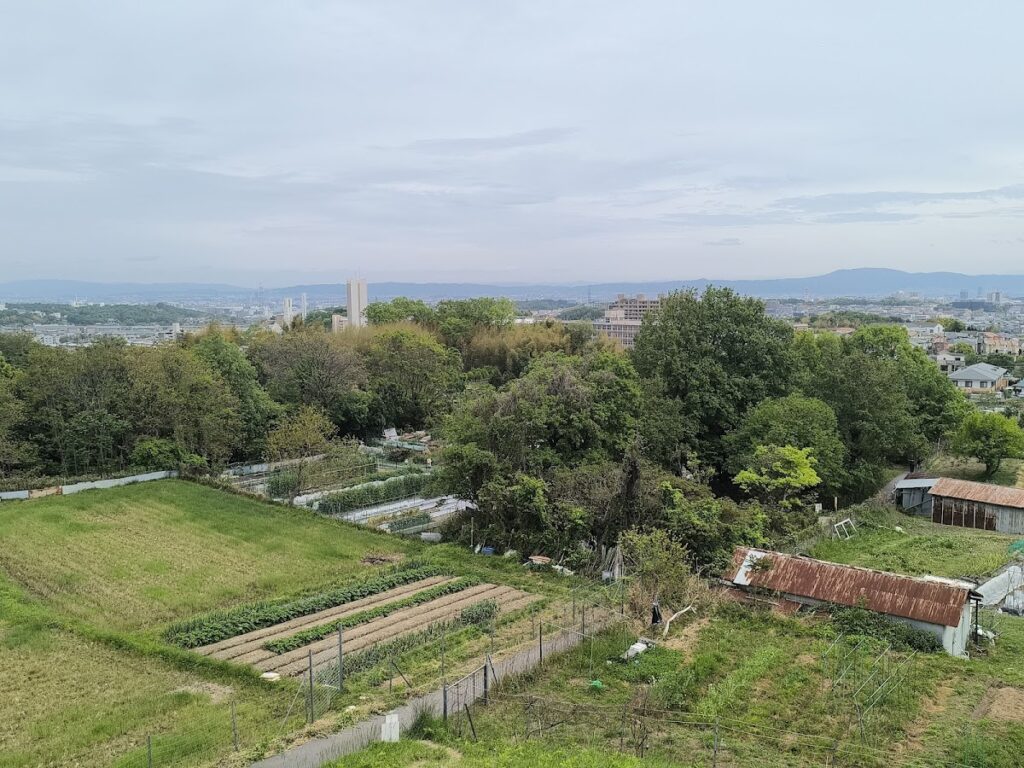
Currently, the Zenpukujihara Castle ruins are buried within a forest, making it difficult to clearly identify any castle remains. While its location in the mountains south of Zenpukuji has been identified, detailed investigations are needed to determine the specific state of preservation of the remains.
The area surrounding the castle ruins consists of private land and forest, and is not developed as a typical tourist destination. Therefore, sufficient preparation and consideration are necessary for visits.
Status as a Designated Cultural Property
Currently, the Zenpukujihara Castle Ruins have not been designated as a cultural property by the national government, Osaka Prefecture, or Minoh City. While it is a valuable historical site for understanding the history of medieval castles in Settsu Province, its evaluation as a cultural property remains a challenge due to issues with the state of preservation and clarity of the remains.
However, several medieval castle ruins exist within Minoh City, and they are gradually gaining attention as regional historical heritage. In the future, comprehensive research and preservation efforts, including those for Aō Castle, are expected.
Access to Zenpukuji Hara Castle
Access by Public Transportation
By Train and Bus:
- Approximately 3 kilometers north from Hankyu Minoo Line “Minoo Station”
- Take the Hankyu Bus bound for “Ao Danchi” from Minoo Station and get off at the “Aomadani” bus stop
- Approximately 15-20 minutes on foot from the bus stop (including mountain path)
Notes:
- Since the number of buses is limited, it is recommended to check the timetable in advance.
- Use Zenpukuji Temple as a landmark and head south into the mountains from there.
Access by Car
By Car:
- Approximately 15 kilometers from Meishin Expressway “Ibaraki IC”
- Head north on Prefectural Road 4 (Ibaraki-Nose Line) from National Route 171
- To the Aomadani area of Minoo City
Parking:
- There is no dedicated parking lot for the castle ruins.
- Parking around Zenpukuji Temple is limited, so we recommend using public transportation.
Notes for Visitors
When visiting Zenpukuji Hara Castle Ruins, please note the following:
- Mountain Trail Equipment: Hiking boots and comfortable clothing are necessary.
- Respect for Private Property: The area around the castle ruins may be private property, so please avoid trespassing.
- Season: In summer, the vegetation is dense, and in winter, the terrain tends to be easier to observe.
- Safety Assurance: Avoid going alone; visiting in a group is preferable.
- Prior Research: We recommend obtaining information at Zenpukuji Temple before heading there.
Related Historical Sites and Tourist Spots in the Surrounding Area
Aou Castle (Aoudani Castle)
Aou Castle, the main castle of Zenpukuji Hara Castle, is located approximately 1 kilometer northeast of Zenpukuji Hara Castle. It is believed to have been a larger castle, serving as the residence of the Aou clan. When visiting Zenpukujihara Castle, exploring the Aoba Castle ruins at the same time will provide a deeper understanding of the medieval castle network.
Other Medieval Castles in Minoh City
Besides Zenpukujihara Castle, several other medieval castle ruins exist within Minoh City:
- Kayano Castle: A castle located in the Kayano district of Minoh City
- Nyoitani Castle: A mountain castle built in the mountains of Minoh
- Sakurai Valley Castle: Castle ruins in the Sakurai district
These castles are important historical sites that tell the story of the power dynamics in northern Settsu Province during the Sengoku period.
Zenpukuji Temple (Existing Temple)
Zenpukuji Temple, a landmark for the castle ruins, is a temple that still exists in Aoba Valley, Minoh City. While its direct connection to the castle ruins is unclear, it is worth visiting for understanding the local history. You may also be able to ask temple staff for information about the castle ruins.
Minoo Falls and Minoo Park
Minoo Falls, a representative tourist attraction in Minoo City, is located approximately 5 kilometers south of the Zenpukujihara Castle ruins. A scenic spot selected as one of Japan’s Top 100 Waterfalls, it is particularly popular with tourists during the autumn foliage season. Visiting it in conjunction with exploring the castle ruins allows you to enjoy both the nature and history of Minoo.
Historical Significance of Zenpukujihara Castle
Position in the History of Medieval Castles in Settsu Province
Zenpukujihara Castle is a valuable example of the form of rule of medieval local lords in northern Settsu Province. Unlike the large-scale castles of Sengoku-era daimyo, it is a practical defensive facility built by a small local lord, conveying the military technology and strategic thinking of the time.
In particular, the defensive system consisting of a network of main castles and subsidiary castles is a typical defensive method of the era when mountain castles were dominant, and it tells the story of how the Aou clan tried to protect their territory.
Contribution to Local History Research
Research on Zenpukujihara Castle provides important clues to understanding the medieval history of Minoh City and northern Settsu Province. It is related to many historical themes, including the actual status of the Aō clan, a local lord, the influence of the Hosokawa and Miyoshi clans in Settsu Province, and the unification process under the Oda and Toyotomi regimes.
Further archaeological investigations may reveal more specific details about the castle’s appearance and usage period based on excavated artifacts and remains.
Highlights and How to Enjoy Zenpukujihara Castle
Points for Castle Enthusiasts
Unlike typical tourist-oriented castle ruins, Zenpukujihara Castle offers an experience that can be considered the origin of castle exploration:
- Topographic Reading: The enjoyment of inferring the castle structure from the mountain’s topography
- Positional Relationship with the Main Castle: Actually confirming the visual relationship with Aō Castle
- The Reality of Medieval Mountain Castles: The appearance of a practical mountain castle, not an ornate keep
- Historical Romance: The enjoyment of using your imagination precisely because the castle has few records
How to Enjoy as a Historical Walk
When visiting Zenpukujihara Castle ruins, you can enjoy it in the following ways:
Preparation:
- Gain basic knowledge about the medieval history of Settsu Province
- Research the Aō clan and surrounding local lords
- Prepare a topographic map and confirm the castle’s location
On-site Observation:
- Observe the topography from Zenpukuji towards the castle ruins
- Confirm the view towards Aō Castle
- Imagine the defensive line from the surrounding terrain
After the visit:
- Organize the photographs and records taken
- Comparative study with other castles in Settsu Province
- Supplementary research using local history materials from Minoh City
Current Status and Challenges of Zenpukuji Hara Castle Research
Limitations of Historical Materials
Documentary materials concerning Zenpukuji Hara Castle are extremely limited. Records of the Aō clan themselves are fragmentary, and the exact date of the castle’s construction, its lord, and the circumstances of its abandonment remain unknown.
Future research is expected to involve the following approaches:
- Archaeological Investigation: Confirmation of remains and artifacts through excavation
- Fortification Survey: Detailed topographic surveying by experts
- Comparative Study: Estimation of age through comparison with surrounding castles
- Historical Document Investigation: Excavation of historical materials related to the Ao clan
Challenges in Preservation and Utilization
There are several challenges in preserving and utilizing the Zenpukujihara Castle ruins:
- Ownership: Highly likely to be privately owned, making preservation and maintenance difficult
- Unclear Remains: Few clear remains, making it difficult to develop as a tourist resource
- Access: Limited public transportation, making it difficult to visit
- Awareness: Low general recognition, making it difficult to raise awareness for preservation
However, as a regional historical heritage site, it has the potential for the following uses:
- History Education: Utilization in local history education at local schools
- Ecotourism: A combination of nature walks and historical exploration
- Castle Network: Integrated preservation and utilization of surrounding castles such as Aō Castle
Summary: The Charm of Zenpukujihara Castle
Zenpukujihara Castle is a mountain castle ruin from the Muromachi period located in Minoh City, Osaka Prefecture, and is a valuable historical site that tells the story of the Aō clan’s rule. As its alternative name, Aōma Valley Fort, suggests, it functioned as a fort responsible for the defense of the main castle, Aō Castle.
Currently, it is difficult to confirm clear remains, but that is precisely why castle enthusiasts can enjoy imagining the castle’s form from the topography and deciphering medieval strategies. It is within easy reach from Osaka City, making it a historical site worth visiting for those interested in medieval mountain castles in the Kinki region.
By visiting the Zenpukujihara Castle ruins, you can experience the world of medieval mountain castles, which are different from the flamboyant castles of the early modern period, and are practical and robust. How did the local lords of Settsu Province protect their territories and survive? You can get a glimpse of that history from this small mountain castle ruin.