Complete Guide to Yonezawa Castle (Yamagata Prefecture) | From the Birthplace of Date Masamune to the Residence of the Uesugi Family: A Thorough Explanation of History and Highlights
What is Yonezawa Castle? | A Historically Significant Castle Representing Yamagata Prefecture
Yonezawa Castle is a flatland castle located in Marunouchi, Yonezawa City, Yamagata Prefecture. From the Sengoku period to the Edo period, it played a crucial role as a political and military stronghold in the Tohoku region. Also known as Matsugasaki Castle and Bukaku Castle, it was selected as one of the Continued Top 100 Japanese Castles (No. 109) in 2017.
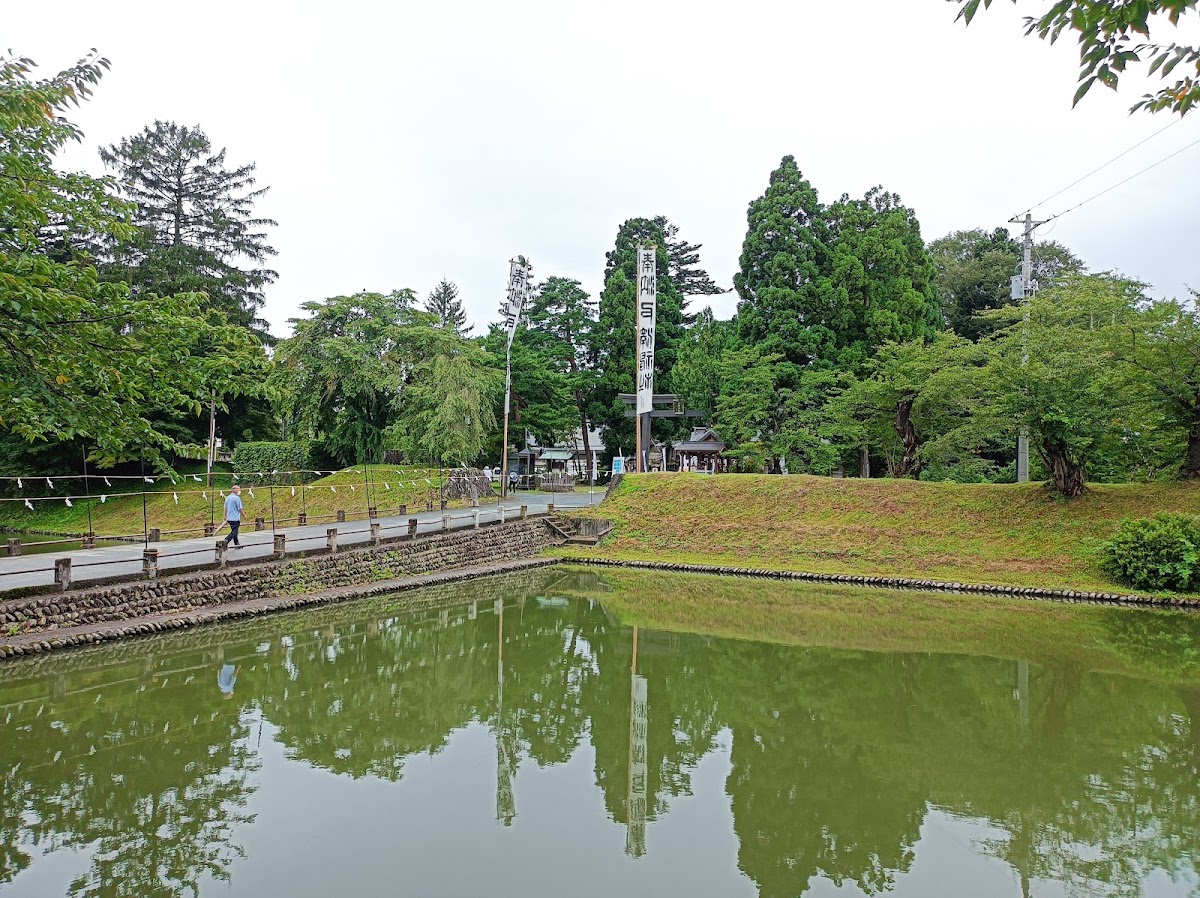
The current Yonezawa Castle site is maintained as Matsugasaki Park, and the Uesugi Shrine, dedicated to Uesugi Kenshin, stands on the site of the main keep. Surrounded by a moat, the castle ruins are a popular cherry blossom viewing spot in spring and a place of relaxation for the citizens of Yonezawa.
As the birthplace of Date Masamune and the residence of the Uesugi family, Yonezawa Castle is an indispensable part of the history of the Tohoku region. Let’s delve deeper into the charm of this magnificent castle while tracing the footsteps of the warlords of the Sengoku period.
History of Yonezawa Castle | From the Nagai Clan to the Date and Uesugi Clan
Medieval Period | Construction by the Nagai Clan and the Rule of the Date Clan
The history of Yonezawa Castle begins in 1238 (Ryakunin 1) when Nagai Tokihiro established his residence there. The Nagai clan was a powerful family that ruled the Okitama region from the Kamakura period to the Muromachi period, and they established their base in Yonezawa.
In the late Muromachi period, the Date clan, a powerful daimyo of Oshu, expanded their power, and Yonezawa Castle became the Date clan’s headquarters. In particular, after Date Harumune entered Yonezawa Castle in 1548 (Tenbun 17), the castle was developed as the residence of the Date family.
On September 5, 1567 (Eiroku 10), Date Masamune, later known as the “One-Eyed Dragon,” was born at Yonezawa Castle. Masamune spent his childhood and youth at this castle, and inherited the family headship in 1584 (Tensho 12). Using Yonezawa Castle as his base, Masamune expanded his power and became renowned as the ruler of the Tohoku region.
Early Modern Period | The Arrival of Uesugi Kagekatsu and the Establishment of the Yonezawa Domain
In 1590 (Tensho 18), following Toyotomi Hideyoshi’s pacification of Oshu, Date Masamune was ordered to relocate to Iwadeyama Castle (Miyagi Prefecture). Uesugi Kagekatsu, who took over Aizu-Wakamatsu Castle (Fukushima Prefecture), ruled the Okitama region, and his senior retainer, Naoe Kanetsugu, became the castle lord of Yonezawa Castle.
In 1598 (Keicho 3), Uesugi Kagekatsu became a daimyo with a domain of 1.2 million koku in Aizu, and Yonezawa Castle functioned as a branch castle of the Aizu territory. However, after the Battle of Sekigahara in 1601 (Keicho 6), the Uesugi family’s domain was drastically reduced by Tokugawa Ieyasu from 1.2 million koku in Aizu to 300,000 koku (later 150,000 koku) in Yonezawa.
Due to this reduction, Uesugi Kagekatsu made Yonezawa Castle his base, and for approximately 270 years until the Meiji Restoration, Yonezawa Castle remained an important base in the Tohoku region as the administrative center of the Uesugi clan of the Yonezawa Domain. Furthermore, the administrative center of the branch family’s Yonezawa Shinden Domain was also located in the second bailey.
Domain Reforms by Uesugi Yozan
In the mid-Edo period, the Yonezawa Domain faced financial difficulties and a crisis of survival. It was Uesugi Yozan (Harunori), who became the lord of the domain in 1767 (Meiwa 4), who saved it from this crisis.
Takayama left behind the famous words, “If you try, you can do it; if you don’t try, you can’t do it. Failure is only due to a lack of effort.” He rebuilt the domain’s finances through thorough frugality and industrial development. His reforms, characterized by his own simple lifestyle and promotion of industrial development policies, are still recounted today as the achievements of one of the most renowned rulers of the Edo period.
After the Meiji Restoration | Dismantling of the Castle and Founding of Uesugi Shrine
After the Meiji Restoration, the buildings of Yonezawa Castle were demolished due to the castle abolition decree. In 1873 (Meiji 6), Uesugi Shrine, dedicated to Uesugi Kenshin, was founded on the site of the main keep, and the castle ruins were developed into a park.
Uesugi Shrine was also destroyed in the Great Yonezawa Fire of 1876 (Meiji 9), but it was rebuilt in 1880 (Meiji 13). The current shrine building was constructed in 1919 (Taisho 8).
In the Showa era, it became a popular recreational area for citizens as Matsugamisaki Park, and remains so to this day. In 2017, it was selected as one of the Continued Top 100 Japanese Castles, and its historical value has been re-evaluated.
Structure of Yonezawa Castle | A Flatland Castle Primarily Based on Earthworks and Moats
Characteristics of the Castle Layout
Yonezawa Castle is a flatland castle built on an alluvial fan between the Mogami River and the Matsukawa River. It has a concentric layout with the main keep at the center, surrounded by the second and third baileys, and is characterized by its structure primarily based on earthworks and moats.
The castle’s dimensions were approximately 150 meters east-west and 120 meters north-south for the main keep, surrounded by the second bailey, and further outside, the third bailey. The total scale of the fortifications extended approximately 1.2 kilometers east-west and 1 kilometer north-south, creating a magnificent structure that surrounded the entire castle town with moats.
Moats and Stone Walls
The most distinctive feature of Yonezawa Castle is its well-preserved moats. The inner moat surrounding the main keep is approximately 30 meters wide and 3 meters deep, and holds a large amount of water. This water is drawn from the groundwater of the Mogami River, and the water level remained stable throughout the year.
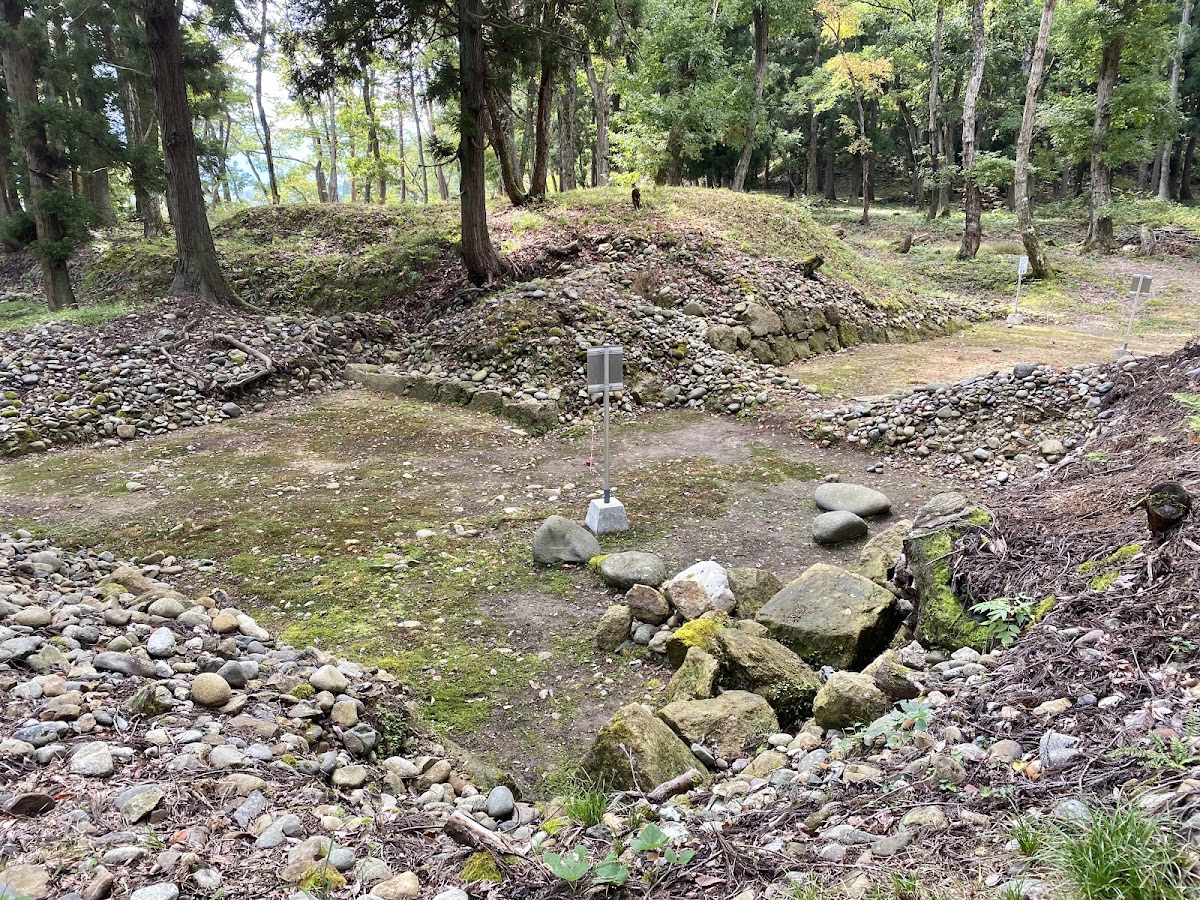
Regarding the stone walls, while earthen ramparts were the main feature of castles in the Tohoku region, some stone walls were used during the time of the Uesugi clan. Even today, remnants of stone walls can be seen around the main keep, giving a glimpse into its former glory.
Palace and Turrets
During the Edo period, the main keep of Yonezawa Castle housed the palace, the residence of the feudal lord. The palace was a dignified building in the Shoin-zukuri style, serving as both a place for conducting official business and the lord’s living quarters.
Several turrets were positioned within the castle grounds, providing defensive functions. Corner turrets, in particular, were built at the four corners of the main keep to strengthen the castle’s defenses, but all were demolished due to the Meiji-era decree abolishing castles.
Castle Gates and Bridges
Yonezawa Castle had multiple gates. The main gate (Otemon) was the entrance to the main keep, and was heavily guarded. This is the location of the current entrance to Uesugi Shrine.
Several bridges spanned the moat. The Maizuru Bridge, which still stands today, is a stone arch bridge completed in 1886 (Meiji 19), and is affectionately known locally as “Meganebashi” (Spectacles Bridge). This bridge is a symbolic landmark of the Yonezawa Castle ruins.
Highlights of Yonezawa Castle | Uesugi Shrine and Historical Remains
Uesugi Shrine | A Prestigious Shrine Dedicated to Uesugi Kenshin
Uesugi Shrine, located on the site of the main keep of Yonezawa Castle, is a central spot when visiting the Yonezawa Castle ruins. The enshrined deity is Uesugi Kenshin, and it is a prestigious shrine that was designated a special government-supported shrine in 1876 (Meiji 9).
The current shrine building was constructed in 1919 (Taisho 8) and exudes a solemn atmosphere. A statue of Uesugi Kenshin stands within the grounds, allowing visitors to feel the dignity of Kenshin, known as the strongest warlord of the Sengoku period.
In spring, cherry blossoms bloom profusely, and the shrine is bustling with many visitors throughout the year, including for New Year’s prayers and the Uesugi Festival. The shrine’s goshuin (stamped seal) is also popular, making it a must-see spot for history and castle enthusiasts.
Matsugasaki Shrine | Dedicated to Uesugi Yozan and His Famous Retainers
Within the grounds of Uesugi Shrine is Matsugasaki Shrine, dedicated to Uesugi Yozan and his famous retainers of the Yonezawa Domain. Among those enshrined are Naoe Kanetsugu, Takemata Tōtsuna, Hosoi Heishū, and Nishito Yoshimasa, who supported Yozan’s domain reforms.
Uesugi Yozan is known as one of the most renowned rulers of the Edo period, and his reformist spirit is valued as a lesson that resonates even today. Visiting Matsugasaki Shrine allows you to gain a deeper understanding of the history of the Yonezawa Domain and the achievements of Yozan.
Keishoden (Uesugi Family Treasure Hall) | Exhibiting the Uesugi Family’s Treasures
Keishoden, located within the grounds of Uesugi Shrine, is a museum exhibiting valuable treasures passed down through the Uesugi family. It displays armor, swords, and letters associated with Uesugi Kenshin, Uesugi Kagekatsu, and Naoe Kanetsugu.
Particularly impressive are the armor believed to have been worn by Uesugi Kenshin and the helmet bearing the character for “love” belonging to Naoe Kanetsugu. It is a valuable exhibition facility where you can experience the history of the Sengoku period firsthand.
Opening Hours: 9:00 AM – 5:00 PM (Hours may vary depending on the season)
Admission Fee: Adults 400 yen, High School/University Students 300 yen, Elementary/Junior High School Students 200 yen
Denkoku-no-Mori | Yonezawa City Uesugi Museum
Located within walking distance of the Yonezawa Castle ruins, Denkoku-no-Mori is a complex facility comprising the Yonezawa City Uesugi Museum and the Okitama Cultural Hall. The museum offers detailed information on the history of the Uesugi family and the Yonezawa Domain.
Valuable materials are on display, including the national treasure “Uesugi-bon Rakuchu Rakugai-zu Byobu” (the original is on display for a limited time), Uesugi family documents, armor, and furnishings. This is a must-see facility for anyone who wants to deeply understand the history of Yonezawa Castle.
Opening Hours: 9:00 AM – 5:00 PM (Last entry at 4:30 PM)
Closed: Fourth Wednesday of every month, New Year holidays
Admission Fee: Permanent Exhibition: General 410 yen, High School/University Students 200 yen, Elementary/Junior High School Students 100 yen
Uesugi Family Mausoleum | Burial Grounds of Successive Lords
Located approximately 1.5 kilometers from the Yonezawa Castle ruins, the Uesugi Family Mausoleum is the burial ground of successive lords of the Uesugi family. From the first lord, Uesugi Kenshin, to the twelfth lord, Nariaki, the mausoleums of successive lords are neatly arranged in a solemn space.
In the tranquil atmosphere surrounded by cedar trees, you can feel the history of the Uesugi family. Designated as a national historical site, it is a must-visit spot along with Yonezawa Castle.
Opening Hours: 9:00 AM – 4:00 PM (Closed during winter)
Admission Fee: Adults 350 yen, High School/University Students 200 yen, Elementary/Junior High School Students 100 yen
Moat and Stone Walls | Remains that Evoke the Past
The moat of Yonezawa Castle is still well-preserved, and you can walk around the inner moat surrounding the main keep. The scenery of the four seasons, such as cherry blossoms, fresh greenery, and autumn leaves reflected on the water’s surface, is beautiful and it is a popular spot for photography.
Stone walls remain around the main keep, and can be seen especially on the east and south sides. These are rare remains of stone walls for castles in the Tohoku region and provide valuable clues to the castle’s construction during the Uesugi clan era.
Monument to the Birthplace of Date Masamune
Yonezawa Castle is known as the birthplace of Date Masamune, and a monument commemorating his birth has been erected within the castle grounds. You can truly feel that the origins of the Sengoku period warlord feared as the “One-Eyed Dragon” are in this place.
This place is considered a sacred site for Masamune fans, and many history enthusiasts visit it.
Statues of Uesugi Kenshin and Uesugi Yozan
Within Matsugamisaki Park, there are statues of Uesugi Kenshin and Uesugi Yozan. The Kenshin statue is located in front of the Uesugi Shrine, and the Yozan statue is situated within the park. Both are beloved symbols of Yonezawa’s history.
Both statues are popular photo spots, and are especially crowded with tourists during the Uesugi Festival.
Access to Yonezawa Castle | How to Get There by Train, Bus, or Car
Access by Train
From JR Yonezawa Station
- Walking: Approximately 25 minutes (approximately 2 kilometers)
- Taxi: Approximately 5 minutes, fare approximately 1,000 yen
- Local Bus: Approximately 10 minutes by Yamako Bus “Shirabu Onsen” or “Onogawa Onsen,” get off at “Uesugi Shrine” bus stop.
Access from Major Cities
- From Tokyo Station: Approximately 2 hours and 10 minutes by Yamagata Shinkansen, get off at Yonezawa Station
- From Sendai Station: Approximately 1 hour and 30 minutes via JR Senzan Line and Ou Main Line, or approximately 1 hour and 30 minutes by express bus
- From Yamagata Station: Approximately 50 minutes by JR Ou Main Line
Access by Car
Using the Expressway
- Approximately 10 minutes (approximately 5 kilometers) from the Tohoku Chuo Expressway “Yonezawa Chuo IC”
- Approximately 15 minutes (about 7 kilometers) from the Yonezawa Hachimanbara Interchange on the Tohoku Chuo Expressway.
Travel time from major cities
- From Tokyo: Approximately 4 hours 30 minutes (via Tohoku Expressway and Tohoku Chuo Expressway)
- From Sendai: Approximately 1 hour 30 minutes (via Tohoku Chuo Expressway)
- From Yamagata City: Approximately 1 hour (via National Route 13)
Parking Information
Parking around Matsugamisaki Park
- Uesugi Shrine First Parking Lot: Free, approximately 80 spaces
- Uesugi Shrine Second Parking Lot: Free, approximately 50 spaces
- Yonezawa City Municipal Parking Lot: Paid, approximately 200 spaces
During cherry blossom season and the Uesugi Festival, parking lots become crowded, so we recommend using public transportation. Temporary parking lots may be set up, so it’s a good idea to check with the Yonezawa City Tourism Division or Tourism Association in advance.
Tourist Attractions Around Yonezawa Castle
Yonezawa Uesugi Museum (Denkoku no Mori)
As mentioned above, this museum is located about a 5-minute walk from the Yonezawa Castle ruins. It’s a facility where you can systematically learn about the history of the Uesugi family, and we recommend visiting it in conjunction with a visit to Yonezawa Castle.
Uesugi Family Mausoleum
Located about 1.5 kilometers from the Yonezawa Castle ruins, about a 20-minute walk. It’s the burial site of successive lords of the Uesugi family, a historical site with a solemn atmosphere.
Yonezawa Beef Restaurants
Yonezawa is a nationally famous production area for Yonezawa beef. There are many restaurants around the castle ruins where you can enjoy Yonezawa beef, making it one of the highlights of sightseeing. You can enjoy it prepared in various ways, such as sukiyaki, shabu-shabu, and steak.
Onogawa Onsen and Shirabu Onsen
Yonezawa City has several historic hot spring resorts. Onogawa Onsen is about 10 kilometers from Yonezawa Castle, and Shirabu Onsen is about 20 kilometers away. Relaxing in a hot spring after sightseeing is highly recommended.
Best Season to Enjoy Yonezawa Castle
Spring (Mid-April to Early May) | Cherry Blossom Viewing Spot
Matsugamisaki Park, located on the site of Yonezawa Castle, is known as a famous cherry blossom viewing spot. Approximately 200 Somei Yoshino cherry trees bloom along the moat, creating a beautiful landscape reflected on the water’s surface.
Every year from late April to early May, the “Yonezawa Uesugi Festival” is held, featuring events that allow visitors to experience the Sengoku period, such as a samurai procession and a reenactment of the Battle of Kawanakajima. This period is extremely crowded with tourists.
Summer (July to August) | Fresh Greenery and Yonezawa’s Summer Festival
Matsugamisaki Park, enveloped in fresh greenery, exudes a cool and refreshing atmosphere. In August, the “Yonezawa Summer Water Fireworks Festival” is held, a beloved summer tradition. ### Autumn (Late October to Early November) | The Beauty of Autumn Foliage
In autumn, the maple and ginkgo trees in the park change color, creating a beautiful landscape reflected in the moat. The weather is mild, making it the perfect season to enjoy a leisurely stroll through the castle ruins.
Winter (December to February) | The Fantastical Landscape of Snow
The Yonezawa Castle ruins, covered in snow, exude a fantastical atmosphere. While there are fewer tourists, you can reflect on history in a tranquil setting. However, as it is a region with heavy snowfall, warm clothing and caution are necessary when walking.
Information on the Yonezawa Castle Stamp for the Continued Top 100 Japanese Castles
Yonezawa Castle was selected as one of the Continued Top 100 Japanese Castles (No. 109) in 2017. The stamp can be obtained at the following location.
Stamp Locations
- Yonezawa Tourism Convention Association (2nd floor of Yonezawa Station)
- Yonezawa City Uesugi Museum (Denkoku no Mori)
- Tourist Information Center (Matsugamisaki Park, seasonal operation)
Stamp Hours
- Yonezawa Tourism Convention Association: 9:00 AM – 5:30 PM
- Yonezawa City Uesugi Museum: 9:00 AM – 5:00 PM (excluding closed days)
Those participating in the Continued 100 Famous Castles of Japan stamp rally are advised to bring their official stamp book.
Notes and Manners When Visiting Yonezawa Castle
Manners When Visiting a Shrine
Uesugi Shrine is an active shrine and receives many visitors. Please observe the following manners when visiting.
- Bow when passing through the torii gate.
- Walk along the edge of the path, as the center is the path for the gods.
- Cleanse your hands and mouth at the water basin.
- At the main hall, worship using the two bows, two claps, and one bow ritual.
Regarding Photography
Photography is generally permitted within the park and shrine grounds, but please note the following:
- There are areas inside the Keishoden (main hall) where photography is prohibited.
- Be considerate of other worshippers and tourists.
- Check your surroundings if using a tripod.
- Drone use is prohibited.
Request for Protection of the Castle Ruins
Yonezawa Castle Ruins are a valuable historical site. Please observe the following points when visiting:
- Do not climb on the stone walls or earthworks.
- Do not throw anything into the moat.
- Always take your trash with you.
- Do not collect or damage plants.
Museums and Historical Sites for Deeper Understanding of Yonezawa’s History
To gain a deeper understanding of the history of Yonezawa Castle, we recommend visiting the following facilities.
Yonezawa City Uesugi Museum (Denkoku no Mori)
As mentioned above, this facility allows you to systematically learn about the history of the Uesugi family and the Yonezawa Domain. The permanent exhibition introduces the history of Yonezawa in chronological order, and special exhibitions are held regularly.
Miyasaka Archaeological Museum
This is a private museum exhibiting the armor and furnishings of the Yonezawa Domain. It boasts a rich collection of armor and swords, making it recommended for those interested in Sengoku period (Warring States period) weaponry.
Yonezawa City Library Local History Museum
This museum collects and exhibits materials related to the history and culture of Yonezawa. You can also view ancient documents and maps related to Yonezawa Castle and the Yonezawa Domain (prior application required).
Summary | Yonezawa Castle: A Famous Castle Where You Can Experience the History of Tohoku
Yonezawa Castle played an important role in the history of the Tohoku region as the birthplace of Date Masamune and as the residence of the Uesugi family. Although no buildings remain today, the beautiful moat and stone walls, along with the historical space centered around the Uesugi Shrine, evoke the castle’s former glory.
Selected as one of the Continued Top 100 Japanese Castles, Yonezawa Castle is a valuable historical site where you can experience the history of Tohoku from the Sengoku period to the Edo period. As a place associated with famous generals and lords such as Uesugi Kenshin, Date Masamune, and Uesugi Yozan, it continues to fascinate not only history buffs but also many other visitors.
Its convenient location within walking distance of Yonezawa Station is also a major draw, and there are plenty of other attractions nearby, including the Uesugi family mausoleum, Denkoku no Mori, and Yonezawa beef restaurants. Be sure to visit the Yonezawa Castle ruins, where you can enjoy the beauty of each season, from cherry blossoms in spring to autumn leaves.
Enjoy a journey at Yonezawa Castle, a representative historical castle of Yamagata Prefecture, and feel the flow of history from the Sengoku period to the Edo period and into the present day.