Shinjo Castle (Shinjo City, Yamagata Prefecture) Complete Guide | History, Highlights, and Access Information
Shinjo Castle is a flatland castle located in Horibata-cho, Shinjo City, Yamagata Prefecture. Also known as “Numata Castle” and “Unuma Castle,” it is a designated historical site of Shinjo City. Built in 1625 by Tozawa Masamori, the founder of the Shinjo Domain, it served as the residence of the Tozawa clan for 243 years and 11 generations until the Meiji Restoration, holding a 68,200 koku (unit of rice production) domain. Currently, it is maintained as Mogami Park and serves as a place of relaxation for citizens.
History of Shinjo Castle
Construction History and the Tozawa Clan’s Entry into the Domain
The history of Shinjo Castle dates back to after the Battle of Sekigahara in 1600. Masamori Tozawa, who was transferred from Matsuoka in Hitachi Province to Dewa Province, initially resided at Mamuro Castle (present-day Kanayama Town). However, he decided to build a new castle in Shinjo, a strategically important location on the Mogami River’s waterway and situated in a plain.
Construction is believed to have been completed in 1625 (Kanei 2). The layout (design) is said to have been handled by Tadamasa Torii, Masamori’s brother-in-law, who was appointed to Yamagata Castle around the same time. Tadamasa Torii was known as a master castle builder, and his skills were utilized in the construction of Shinjo Castle.
Establishment and Development of the Shinjo Domain
The Shinjo Domain initially had a 60,000 koku (unit of rice production) yield, later increasing to 68,200 koku. The Tozawa clan ruled the territory for approximately 243 years, from the first lord, Masamori, to the eleventh lord, Masazane. The fact that the family continued to rule without being dispossessed throughout the Edo period indicates that the domain’s administration was relatively stable for a tozama daimyo (outside lord) in the Tohoku region.
As a castle town, Shinjo developed as a transportation hub where the Mogami River’s water transport and the Ushu Kaido’s land transport intersected, becoming a center of commerce and culture.
The Great Fire of 1636 and the Loss of the Keep
Shinjo Castle, at the time of its construction, was a magnificent flatland castle with a keep located at the rear of the main enclosure. The main enclosure boasted a size of approximately 94 meters (52 ken) east-west and 230 meters (127 ken) north-south, surrounded by a moat and earthen ramparts, with turrets positioned at the three corners, creating a robust structure.
However, the keep was destroyed in a great fire in 1636. This fire also caused significant damage to the castle town, but for reasons such as the inability to obtain permission from the shogunate or financial constraints, the keep was never rebuilt. From then on, Shinjo Castle existed without a keep until the end of the Edo period.
The Boshin War and the Fall of Shinjo Castle
The most dramatic event in the history of Shinjo Castle was its fall during the Boshin War in 1868 (Keio 4 / Meiji 1).
Initially, the Shinjo Domain joined the Ouetsu Reppan Alliance and fought on the side of the former shogunate. However, after the neighboring Kubota Domain (Akita Domain) defected to the new government, the Shinjo Domain also decided to leave the alliance and switch sides.
Enraged by this perceived betrayal, the Shonai Domain launched an attack on Shinjo Castle. The Shonai Domain was known as one of the most powerful domains in Tohoku, and its military strength far surpassed that of the Shinjo Domain. After fierce fighting, Shinjo Castle fell to the Shonai Domain’s attack, and many of its buildings were burned or destroyed.
This battle significantly damaged the appearance of Shinjo Castle, which had been maintained throughout the Edo period.
Changes Since the Meiji Era
With the abolition of the feudal domains and establishment of prefectures in 1871 (Meiji 4), the Shinjo Domain was abolished. After a temporary establishment of Shinjo Prefecture, it was incorporated into Yamagata Prefecture in September of the same year. Having lost its function as a fortress, Shinjo Castle gradually underwent dismantling during the Meiji era. Parts of the moat were filled in, and many of the buildings were demolished.
The current Mogami Park was developed in the late Meiji period, transforming the castle site into a place of recreation for citizens. To commemorate the achievements of the Tozawa clan, the Tozawa Shrine was founded in 1893 (Meiji 26) and is located on the site of the former main keep of Shinjo Castle.
Structure and Characteristics of Shinjo Castle
Layout and Castle Structure
Shinjo Castle was a typical flatland castle, with a structure in which the second and third baileys were arranged around the main keep. A distinctive feature is its unique layout: a small second bailey is positioned parallel to the south of the main bailey, resembling an outer fort, and the third bailey surrounds it.
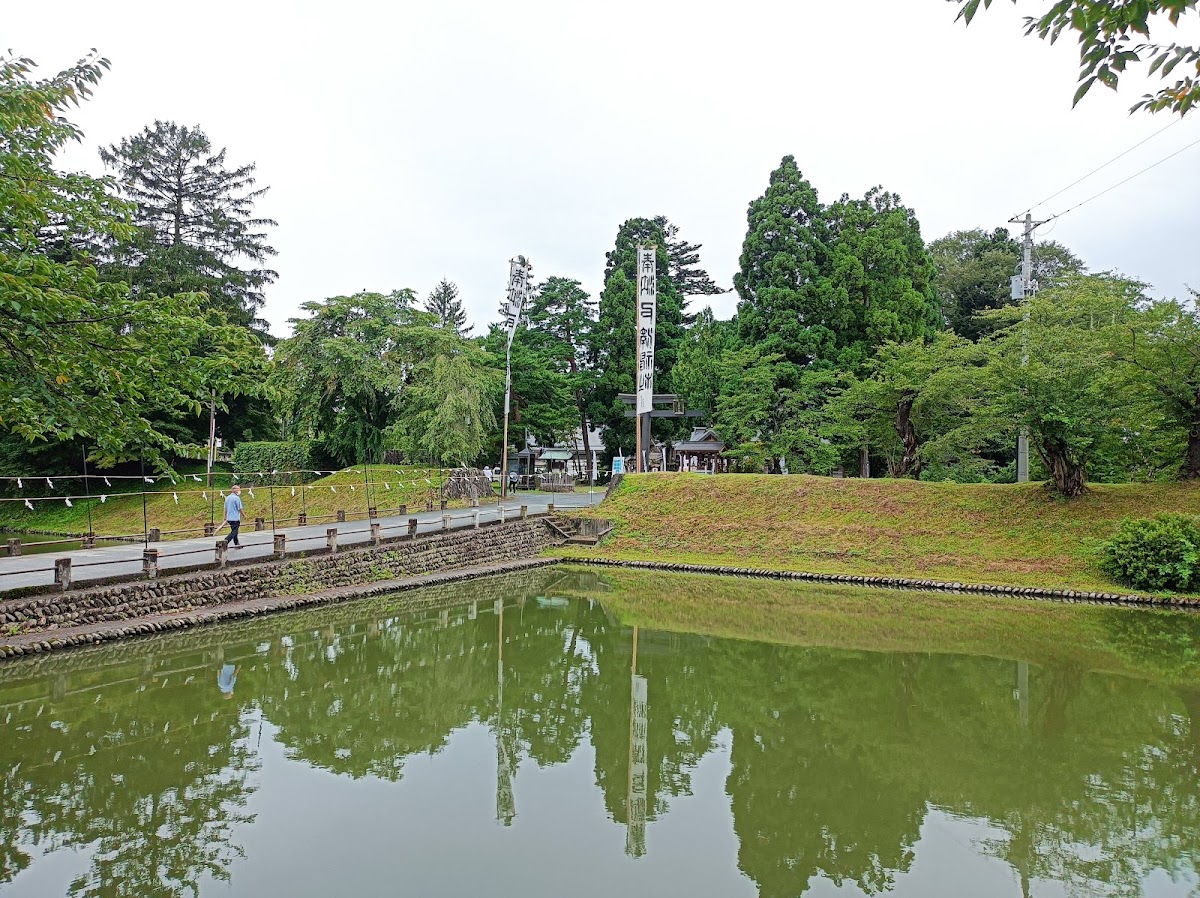
The entire castle is surrounded by a triple moat, demonstrating numerous defensive features for a castle built on flat land. The total length of the moats was considerable, and they functioned as water moats.
Structure of the Main Bailey
The main bailey was roughly rectangular, measuring 52 ken (approximately 94 meters) east-west and 127 ken (approximately 230 meters) north-south. A three-story keep towered at the rear of the main bailey (until the fire of 1636). It was surrounded by earthen ramparts several meters high, with towers positioned at the three corners.
Within the main bailey stood the lord’s residence, the center of government and daily life. The central part of the current Mogami Park corresponds to the site of this main bailey.
Characteristics of the Stone Walls
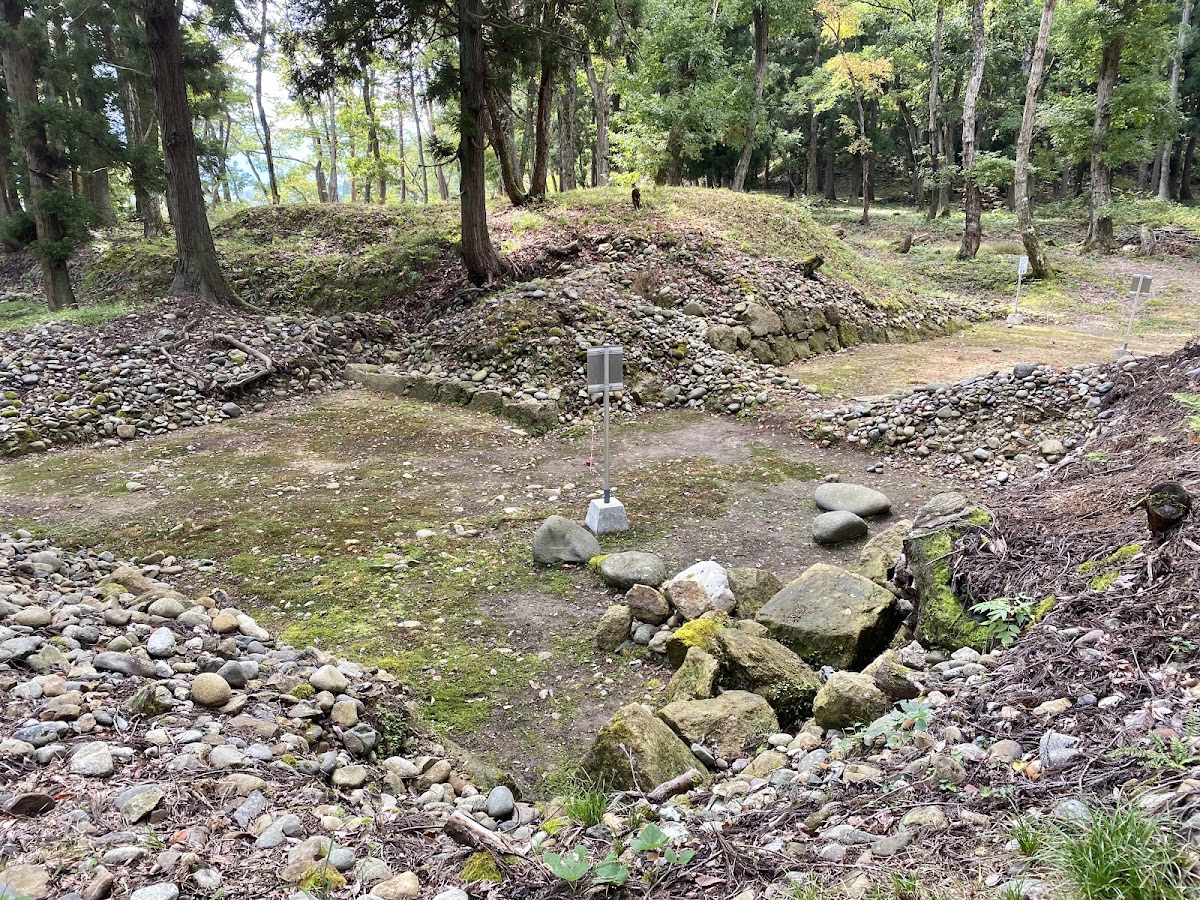
While some stone walls were used at Shinjo Castle, the structure was primarily based on earthen ramparts, as is common in castles in the Tohoku region. Even today, some of the original stone walls remain within Mogami Park, allowing visitors to imagine its former appearance.
The stone walls were mainly used in important areas around the main keep, employing techniques such as rough-hewn stonework and fitted stonework. These stone walls are valuable relics that convey the technical characteristics of the castle’s layout designed by Torii Tadamasa.
Highlights of the Current Shinjo Castle Site and Mogami Park
Overview of Mogami Park
The Shinjo Castle site is now developed as Mogami Park, a place of relaxation for the citizens of Shinjo. Numerous cherry trees are planted within the park, making it one of Tohoku’s leading cherry blossom viewing spots in spring, attracting many visitors.
The park covers approximately 10 hectares, and with well-maintained walking paths, visitors can leisurely explore the castle ruins and experience history.
Tozawa Shrine
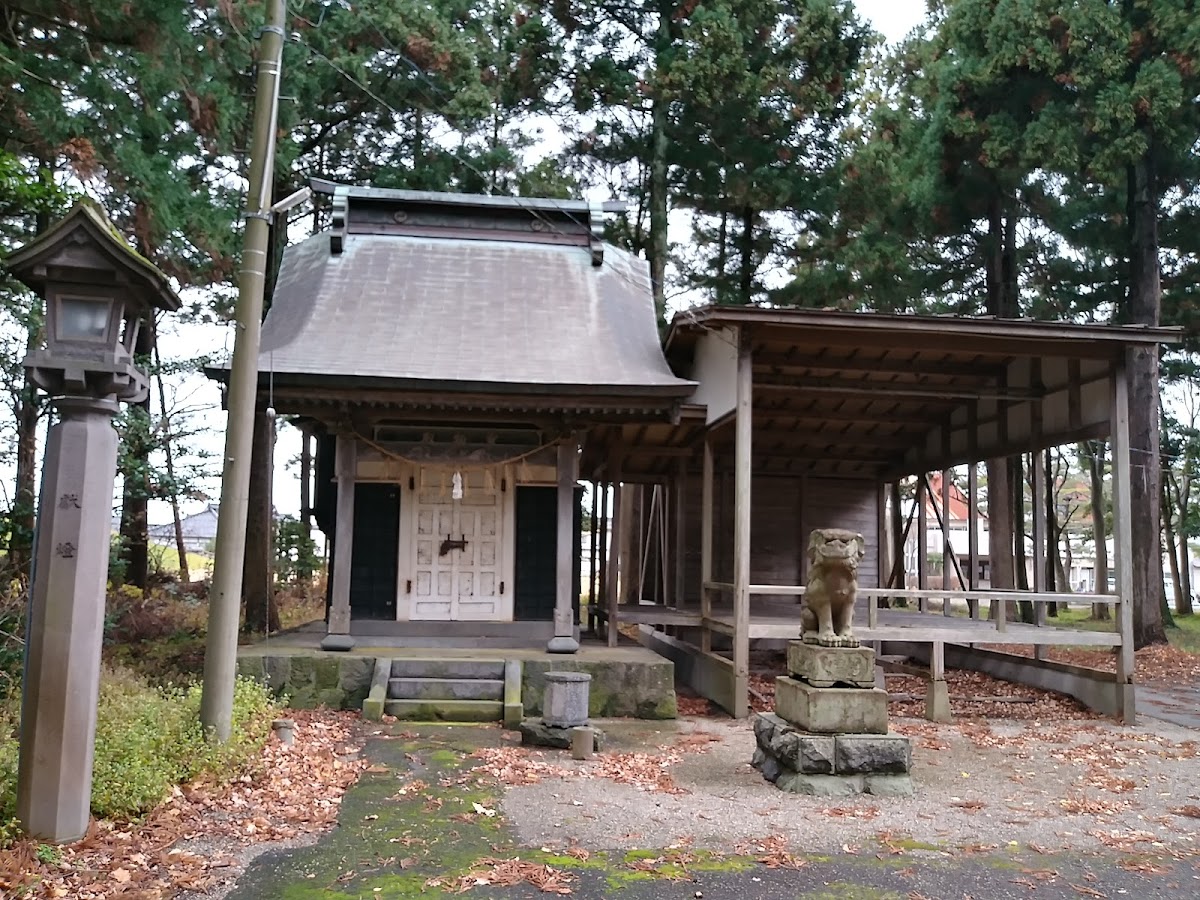
Located within Mogami Park, on the site of the former main keep of Shinjo Castle, stands the Tozawa Shrine, founded in 1893 (Meiji 26). This shrine was built by former retainers and those who wished to honor the virtues of the Shinjo lords, to enshrine the spirits of Tozawa Kōsei, the founder of the Tozawa family, and Masamori, the founder of the Shinjo domain.
From the shrine grounds, one can overlook the entire park, giving a real sense of the former location of the main keep. The annual festival is held in spring and autumn and is cherished by the local community.
Tenman Shrine
Another shrine, Tenman Shrine, is also located within Mogami Park. This shrine, dedicated to Sugawara no Michizane, the god of learning, has been a place of worship for the people of Shinjo since the castle town era. Many worshippers visit during exam season.
Remaining Structures
Several remains of Shinjo Castle remain within Mogami Park.
Earthworks and Moats: Parts of the earthworks around the main keep still remain, allowing visitors to experience the scale of the castle at the time. Part of the moat is also preserved as a water moat, conveying the appearance of a flatland castle surrounded by three layers of moats.
Stone Walls: Parts of the stone walls remain around the main keep, showcasing the stonework techniques of the early Edo period. While some parts are weathered, the powerful, rough-hewn stonework speaks to the technical prowess of the time.
Topography of the Enclosures: The layout of the main keep, second enclosure, and third enclosure is reflected in the current topography, allowing visitors to understand the castle’s structure by walking through the park.
Shinjo Hometown History Center
Nearby Mogami Park is the Shinjo Hometown History Center. Here, exhibits on the history of Shinjo Castle, the culture of the Shinjo Domain, and materials related to the Tozawa clan are displayed, deepening understanding when visited before or after visiting the castle ruins.
Restoration models, old maps, and excavated artifacts are on display, allowing visitors to visually understand the appearance of Shinjo Castle in its heyday. The exhibition on the Shinjo Festival is also extensive, allowing visitors to learn about the continuation of the castle town’s culture.
As a Cherry Blossom Spot
Mogami Park is known as one of the leading cherry blossom spots in Yamagata Prefecture. Approximately 300 Somei Yoshino cherry trees are planted in the park, reaching full bloom from late April to early May.
During the cherry blossom season, events such as the “Shinjo Kadoyaki Festival” are held, and the cherry blossoms are illuminated at night. The reflection of the cherry blossoms on the moat’s surface is fantastic, making it a popular spot for many photography enthusiasts.
Nearby Attractions and Tourist Spots
Shinjo Festival
The Shinjo Festival, held annually from August 24th to 26th, is the largest event that conveys the traditions of the Shinjo castle town. This festival, with a history of over 260 years, is said to have been started in 1756 by the then-feudal lord, Tozawa Masanobu, to encourage his people who were suffering from a severe famine the previous year. The sight of magnificent floats parading through the castle town is breathtaking, and in 2016 it was registered as a UNESCO Intangible Cultural Heritage. When visiting Shinjo Castle ruins, it’s worthwhile to time your visit to coincide with this festival.
Around Shinjo Station
Shinjo Station is a transportation hub where the Ou Main Line, Yamagata Shinkansen, Rikuu East Line, and Rikuu West Line intersect, and it has a history as a “railway town.” Information boards about the Tozawa clan and Shinjo Castle are installed in front of the station, making it a good place to gather information before heading to the castle ruins.
It’s about a 15-minute walk from the station to Mogami Park, where you can enjoy the streets that retain the atmosphere of a castle town.
Snow Village Information Center
Shinjo City is known as one of Japan’s leading heavy snowfall areas, and at the Snow Village Information Center you can learn about life and culture in a snowy region. Shinjo Castle was also covered in deep snow during the winter, exhibiting characteristics of a castle in a snowy region.
Mogami Regional Exchange Center Yumeria
This is a multi-purpose facility adjacent to Shinjo Station, housing a tourist information center and a local products shop. It has a wide selection of brochures for Shinjo Castle ruins and surrounding tourist attractions, making it a convenient starting point for your visit.
Access Information
Access by Train
Using the Yamagata Shinkansen: Approximately 3 hours and 30 minutes from Tokyo Station to Shinjo Station on the Yamagata Shinkansen “Tsubasa”. Approximately 15 minutes on foot from Shinjo Station to Mogami Park.
Using Local Trains: Approximately 2 hours and 30 minutes from Sendai Station to Shinjo Station via the Rikuu East Line. Approximately 1 hour from Yamagata Station to Shinjo Station on the Ou Main Line.
Access by Car
From the Tokyo Area: Take the Tohoku Expressway → Yamagata Expressway and exit at Shinjo IC. Approximately 10 minutes from the IC to Mogami Park.
From Sendai: Take the Tohoku Expressway to the Yamagata Expressway and exit at Shinjo IC.
Parking
Free parking is available around Mogami Park. During peak seasons such as cherry blossom season, early arrival is recommended.
Location
6-86 Horibata-cho, Shinjo City, Yamagata Prefecture (Mogami Park)
Visiting Information
Opening Hours & Admission Fee
Mogami Park is open year-round, and admission is free. While you can stroll through the park 24 hours a day, daytime visits are recommended due to limited lighting at night.
Estimated Visiting Time
A leisurely stroll through the park takes approximately one hour. If you plan to visit Tozawa Shrine or carefully observe the historical remains such as stone walls, allow 1 hour 30 minutes to 2 hours.
If you plan to visit the Shinjo Furusato History Center as well, please add another hour or so.
Points to Note When Visiting
Spring (Late April to Early May): The busiest time of year, with cherry blossoms in full bloom. Nighttime illuminations of the cherry blossoms are also held.
Summer (Late August): The Shinjo Festival takes place, and the entire castle town is immersed in the festive atmosphere.
Autumn (October to November): The autumn foliage is beautiful, and you can stroll around the castle ruins in a tranquil atmosphere.
Winter (December to March): You can enjoy the snowy scenery unique to this heavy snowfall area, but caution is needed when walking.
Cultural Value of Shinjo Castle
Position in Castle History
Shinjo Castle, a flatland castle built in the early Edo period, occupies an important position in the history of castles in the Tohoku region. The layout, designed by the master castle builder Torii Tadamasa, is noteworthy for its pursuit of defensiveness on flat ground.
Furthermore, as a castle that actually fought and fell during the Boshin War, it is a valuable historical site that conveys the true nature of the late Edo period.
As a Center of Regional Culture
Shinjo Castle was not merely a military facility; for 243 years, it functioned as the political, economic, and cultural center of the Shinjo Domain. The townscape of Shinjo, which developed as a castle town, and traditional events such as the Shinjo Festival, would not have existed without the castle and its lord.
Even today, it is cherished by citizens as Mogami Park and remains a core element of the region’s identity, demonstrating that its cultural value is being continuously passed down.
Summary
Shinjo Castle was built in 1625 by Tozawa Masamori and served as the residence of the Tozawa clan for 11 generations over 243 years, playing a central role in the Shinjo Domain. Its robust structure, surrounded by a triple moat, showcases the ingenious layout designed by Torii Tadamasa.
After a dramatic history that saw the castle tower lost in a great fire in 1636 and its fall to the Shonai Domain during the Boshin War, the site is now a beloved local park known as Mogami Park. Remnants such as stone walls, earthworks, and moats remain, attracting many visitors as a cherry blossom viewing spot in spring and the stage for the Shinjo Festival in summer.
When visiting Shinjo City in Yamagata Prefecture, why not experience the history and culture of a Tohoku castle town at Shinjo Castle Ruins/Mogami Park, conveniently located just a 15-minute walk from Shinjo Station? Combine your visit with a visit to Tozawa Shrine or Tenman Shrine, and a learning session at the Shinjo Hometown History Center for a fulfilling historical stroll.