Complete Guide to Tateyama Castle (Yonezawa City, Yamagata Prefecture) | Birthplace of Date Masamune, Highlights and History of a National Historic Site
What is Tateyama Castle? | The Residence of Three Generations of the Date Clan and a National Historic Site
Tateyama Castle is the site of a Sengoku period mountain castle located in Tateyama, Yonezawa City, Yamagata Prefecture. Situated on the eastern edge of the hills on the western edge of the Yonezawa Basin, built on Tateyama at an altitude of approximately 300 meters, the castle functioned as a political and military base for the Date clan from 1587 (Tensho 15) to 1591 (Tensho 19), during the period when the Date clan expanded their territory.
On March 1, 2016, the Tateyama Castle site was designated a national historic site, becoming the 5th national historic site in Yonezawa City and the 28th in Yamagata Prefecture. This is the result of the preservation and maintenance project that has been underway since fiscal year 2010.
The castle ruins retain well-preserved remains such as baileys, earthworks, moats, and stone walls, making it a valuable historical site for understanding the structure of medieval mountain castles. It is particularly known as the “birthplace of Lord Date Masamune,” and is a popular spot visited by many history enthusiasts and castle fans.
History of Tateyama Castle | The Date Clan’s Rule over Yonezawa and its Succession to the Uesugi Clan
Construction and Development by the Date Clan
The history of Tateyama Castle begins in 1548 when Date Harumune moved his base from Kuwori Nishiyama Castle (Fukushima Prefecture) to Yonezawa. While Yonezawa Castle was traditionally considered the Date clan’s residence, recent archaeological excavations suggest that Tateyama Castle was likely the Date clan’s main base in Yonezawa.
According to the “Date Family Records,” Tateyama Castle was originally the residence of the Nitta clan, vassals of the Date family. The 16th head of the family, Date Terumune, renovated it as his retirement residence. Later, the 17th head, Date Masamune, is said to have undertaken large-scale construction and expanded the castle.
Used by three generations of the Date family—Date Harumune, Date Terumune, and Date Masamune—Tateyama Castle became an important base for the Date family’s expansion of power in the Oshu region. In particular, the period from 1587 to 1591 coincided with Date Masamune’s most active military campaign, and Tateyama Castle functioned as one of the largest mountain castles in the Okitama region.
Legend of Tateyama Castle as the Birthplace of Date Masamune
Tateyama Castle is widely known as the “birthplace of Lord Date Masamune.” On August 3, 1567 (Eiroku 10), Date Masamune is believed to have been born in Yonezawa, and the prevailing theory is that his birthplace was Tateyama Castle. A marker indicating “Birthplace of Lord Date Masamune” stands at the site, evoking a sense of historical romance for visitors.
However, there is also a theory that Yonezawa Castle was his birthplace, and academic debate continues. Nevertheless, archaeological excavations suggest that Tateyama Castle was likely the main residence of the Date clan, making it the most likely location for the Date family’s base at the time of Masamune’s birth.
The Uesugi Clan Era and Castle Changes
In 1591 (Tensho 19), by order of Toyotomi Hideyoshi, Date Masamune was transferred to Iwadeyama Castle (Miyagi Prefecture), and Uesugi Kagekatsu took his place, moving from Aizu to Yonezawa. It has been suggested that Uesugi Kagekatsu may have initially resided in Tateyama Castle.
Subsequently, the Uesugi clan established Yonezawa Castle as their base and developed it, and Tateyama Castle gradually ceased to serve its purpose. The stone walls remaining at the western gate are thought to date back to the Uesugi era, preserving traces of their renovations.
Although it lost its function as a castle during the Edo period, the remains were preserved in good condition, making it a valuable historical site that conveys the appearance of a Sengoku period mountain castle to this day.
Structure and Layout of Tateyama Castle | A Complex Structure of a Mountain Castle and a Foothill Residence
Overall Composition | A Castle Consisting of Three Sections
Tateyama Castle takes the typical form of a medieval mountain castle, consisting of a main enclosure on the mountaintop and the remains of a residence at the foot of the mountain. The entire structure can be broadly divided into three sections.
- Main Enclosure on the Mountaintop: The main group of enclosures located on the summit of Mt. Tateyama, approximately 300 meters above sea level.
- North Enclosure of Tateyama: The site of a residence located at the northern foot of the mountain.
- East Enclosure of Tateyama: The site of a residence located at the southeastern foot of the mountain.
This structure exhibits the typical form of a medieval mountain castle, where administrative affairs and daily life were conducted at the residence at the foot of the mountain during peacetime, and the stronghold on the mountaintop was used for siege during wartime.
Arrangement of Enclosures on the Mountaintop
Multiple enclosures are arranged on the mountaintop, each clearly demarcated by earthworks and trenches. The layout features the main enclosure at its center, with enclosures lined up along the ridge between the Otaru River and the Kotaru River valleys.
Each enclosure is arranged with elevation differences, demonstrating various defensive measures. Masugata-koguchi (square-shaped gatehouses) are provided along the movement paths between the enclosures, a structure designed to prevent enemy intrusion. These Masugata-koguchi are one of the distinctive remains of Tateyama Castle. ### Defensive Structures | Earthworks and Moats
The greatest highlights of Tateyama Castle are its massive earthworks and deep moats. The earthworks surrounding the main enclosure reach several meters in height, making them one of the largest in the Okitama region. The top of the earthworks was leveled, suggesting the possibility of structures such as watchtowers being built there.
The moats are deep dry moats dug to cut across the ridge, serving to demarcate the enclosures and limit enemy incursion routes. Archaeological excavations have suggested the possibility of smaller compartments, similar to shoji-bori (screen-like moats), being constructed at the bottom of the moats.
Multiple horizontal moats have also been identified, forming a defensive line surrounding the enclosures. These moats remain clearly visible today, demonstrating the advanced civil engineering techniques of the Sengoku period.
Stone Walls and Gate
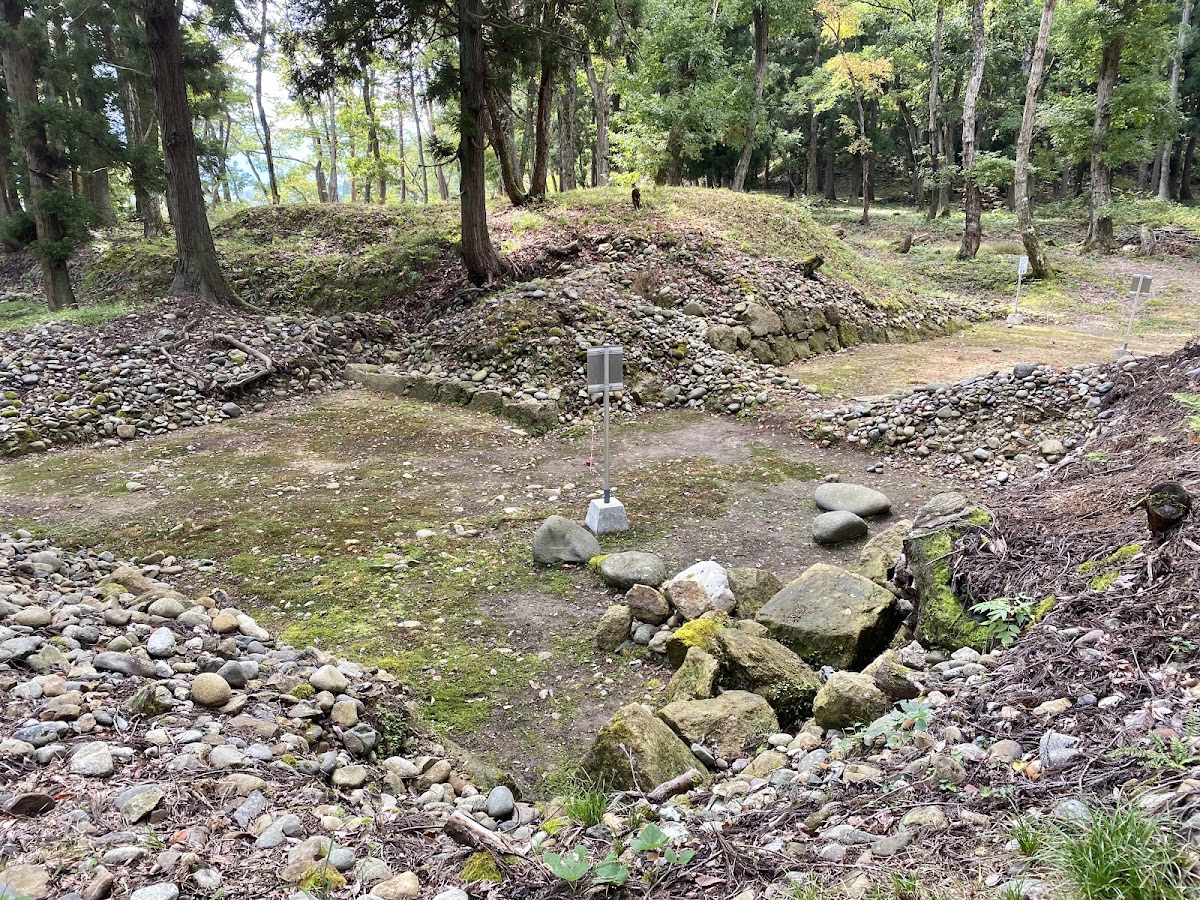
Stone walls remain at the western gate, believed to have been constructed during the Uesugi clan’s rule. This stone wall, constructed using the nozura-zumi method with natural stones, is a valuable historical site showcasing stonework techniques from the transitional period between the medieval and early modern eras.
The koguchi (gate) is the entrance to the castle and the most crucial area for defense. The koguchi of Tateyama Castle has a masugata (square-shaped) structure, designed to allow for flanking fire against invading enemies. This masugata koguchi is believed to have been constructed during the construction by Date Masamune and is noteworthy as an example of his castle-building techniques.
Structure of the Foothills Manor Site
The Tateyama North Manor and Tateyama East Manor at the foot of the mountain were used as living spaces during peacetime. Archaeological excavations have unearthed building remains, well remains, and daily life items such as pottery, confirming their function as manors.
In particular, multiple well remains have been identified, indicating the importance of securing water within the castle. The wells are constructed with stonework and some can still be viewed today.
Earthworks and moats surround the manor sites, suggesting they provided a certain level of defense even during peacetime. These remains, while not as extensive as those on the mountaintop, provide important information for understanding the structure of medieval castles.
Highlights of Tateyama Castle | Major Remains Visible on-site
Monument Marking the Birthplace of Date Masamune
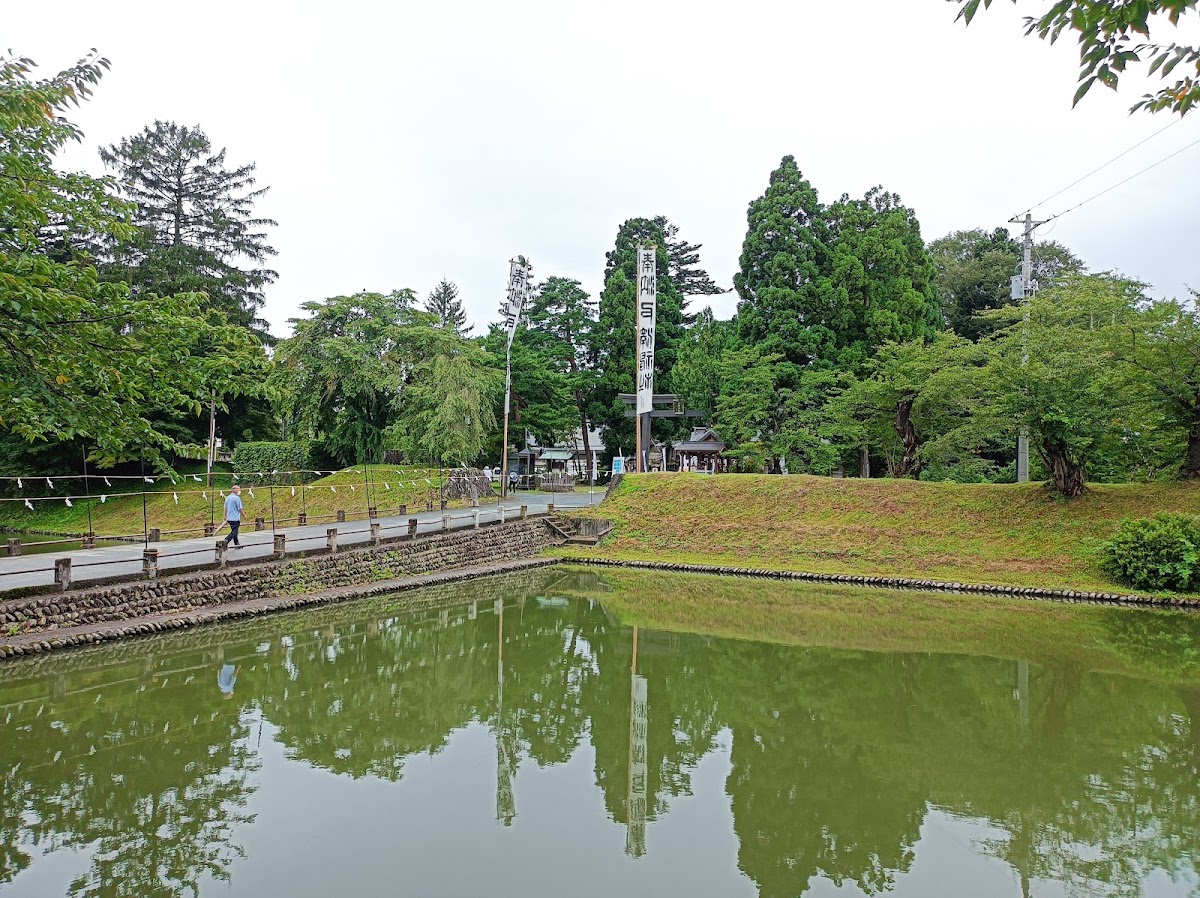
A monument marking the “Birthplace of Date Masamune” stands at the castle site, making it a popular spot for visitors to take commemorative photos. This monument symbolizes Tateyama Castle’s connection to Masamune.
From the area around the monument, you can enjoy a panoramic view of the Yonezawa Basin, allowing you to appreciate why the Date clan chose this location as their base. On clear days, you can see the mountain ranges of Azuma and Iide, making the scenery another highlight.
Massive Earthworks and Large Dry Moat
The massive earthworks surrounding the main enclosure are the greatest highlight of Tateyama Castle. Reaching a height of 3 to 5 meters, the earthworks are impressive, giving a real sense of the scale of civil engineering during the Sengoku period. You can walk along the top of the earthworks and experience the structure of the defensive facilities from that time.
The large dry moat reaches a depth of several meters and still clearly retains its shape. Looking up from the bottom of the moat, the height of the earthworks on both sides and the depth of the moat are even more striking, allowing you to truly appreciate the castle’s defensive capabilities.
Masugata Koguchi (Square Gate)
The Masugata Koguchi, a distinctive feature of Tateyama Castle, is valuable for learning about the technical ingenuity of castle construction. The structure, designed to prevent enemy intrusion and allow for flanking fire, is well-preserved, providing a concrete understanding of castle construction techniques from the Sengoku period.
Stone Wall (West Gate)
The stone wall remaining at the West Gate is thought to be a remnant from the Uesugi clan era. The rough-hewn stone wall, using natural stones, demonstrates the transitional technology from medieval mountain castles to early modern castles, making it an important relic for castle history research.
By observing the way the stones were stacked and the selection of stones, you can learn about the stonemasonry techniques of that time. ### Well Remains
Several well remains are found at the foot of the mountain castle site. The wells, constructed with stonework, illustrate the importance of securing water within the castle. Some wells are well-preserved, allowing visitors to see their original structure almost intact.
Enclosures
The multiple enclosures located on the mountaintop are clearly demarcated, making them excellent resources for understanding the layout of medieval mountain castles. Visitors can experience the overall structure and defensive system of the castle by touring each enclosure.
Archaeological Excavations and Research Results | The Date Clan’s Yonezawa Base Revealed
Archaeological Excavations in the Heisei Period
Full-scale archaeological excavations were conducted at the Tateyama Castle site from 2010, resulting in many important discoveries. The results of these investigations have increased the likelihood that Tateyama Castle was the Date clan’s base in Yonezawa, a location that had not been clearly established in historical documents.
Excavations have unearthed building remains, well remains, pottery, metal artifacts, and other items, confirming that the majority of the remains date to the Tensho period (1570s-1590s). This coincides with the period when Date Masamune was active, supporting the idea that Tateyama Castle was an important base for the Date clan.
Evidence for the Date Clan’s Headquarters Theory
Traditionally, Yonezawa Castle was considered the Date clan’s headquarters in Yonezawa. However, archaeological excavations and a re-examination of historical documents suggest that Tateyama Castle may have been the Date clan’s headquarters.
The “Date Jika Kiroku” (Records of the Date Family) records that Date Terumune used Tateyama Castle as his retirement residence and that Date Masamune oversaw its construction. Furthermore, the concentration of Tensho period artifacts unearthed strongly suggests that Tateyama Castle was actively used during this period.
The castle’s scale and structure are also befitting of a daimyo’s headquarters, clearly indicating that it functioned as one of the largest mountain castles in the Okitama region. ### Connection to the Uesugi Clan
Excavations have unearthed artifacts from the Uesugi clan era, suggesting the possibility that Uesugi Kagekatsu temporarily used Tateyama Castle after his arrival in Yonezawa. The stone walls of the western gate, believed to date from the Uesugi period, further support this theory.
However, since the Uesugi clan established Yonezawa Castle as their base relatively early, it is thought that Tateyama Castle was used only for a limited period.
Path to National Historic Site Designation
Based on the results of these investigations and research, Tateyama Castle ruins were designated a National Historic Site on March 1, 2016. This marks the fifth National Historic Site in Yonezawa City and the 28th in Yamagata Prefecture, officially recognizing it as a regional historical heritage site.
The designation as a National Historic Site legally guarantees the preservation and utilization of Tateyama Castle ruins, establishing a foundation for the transmission of this valuable historical heritage to future generations.
The designation as a National Historic Site legally guarantees its preservation and utilization, creating a foundation for the future inheritance of this precious historical heritage. ## Basic Information on Tateyama Castle | Location, Access, and Visitor Information
Location and Former Province Name
Location: Tateyama, Yonezawa City, Yamagata Prefecture
Former Province Name: Okitama District, Dewa Province (Uzen Province)
Map Coordinates: Approximately 37°55′N, 140°6′E
Tateyama Castle is located on a hill on the western edge of the Yonezawa Basin, built on Tateyama (approximately 300 meters above sea level) between the Otaru River and the Kotaru River. It is located about 3 kilometers west of Yonezawa city center, and the surrounding area is rich in natural beauty.
Castle Classification and Structure
Classification: Mountain Castle
Structure: Multi-bailey mountain castle, complex structure with a mountain base residence
Builder: Nitta clan (vassal of Date), refurbished and expanded by Date Terumune and Date Masamune
Construction Period: Details unknown (before the mid-16th century), large-scale renovation during the Tensho period (1573-1592)
Main Lords: Nitta clan, Date Harumune, Date Terumune, Date Masamune, Uesugi Kagekatsu (possible)
Abandonment Period: After Tensho 19 (1591), early Edo period
Condition of Remains
Existing Remains: Baileys, earthworks, moats, dry moats, stone walls, well remains, residence remains
Designated Cultural Property: National Historic Site (designated March 1, 2016)
Condition of Remains: Good. Major defensive structures remain clearly visible.
Access Information
Access by Train/Bus:
- Approximately 18 minutes by the “Tateyama Line” city bus from JR Yonezawa Station, get off at “Tateyama Castle Ruins Entrance,” then approximately 15 minutes on foot.
- Approximately 15 minutes by taxi from Yonezawa Station.
Access by Car:
- Approximately 10 minutes from the “Yonezawa Chuo IC” on the Tohoku Chuo Expressway.
- Parking: Several parking spaces available near the castle ruins entrance (free).
Visiting Information
Visiting Hours: No restrictions (daytime visits recommended)
Admission Fee: Free
Estimated Time Required: Approximately 60-90 minutes (when visiting the main remains)
Notes:
- As it is a mountain castle, comfortable shoes and clothing are recommended.
- Insect repellent is necessary in summer.
- Visiting may be difficult in winter due to snow.
- There are no restrooms within the castle ruins, so it is recommended to use the facilities beforehand.
Contact Information
Yonezawa City Board of Education, Cultural Affairs Division
Tel: 0238-21-6111 (Main)
Yonezawa City Tourism Division
Tel: 0238-22-5111
Yonezawa Tourism Convention Association
Tel: 0238-21-6226
Nearby Attractions | Historical Spots in Yonezawa
Yonezawa Castle Ruins (Uesugi Shrine)
Located approximately 3 kilometers from Tateyama Castle, in the heart of Yonezawa city, the Yonezawa Castle Ruins are known as the residence of the Uesugi clan. Currently, it is the Uesugi Shrine, a shrine dedicated to Uesugi Kenshin, attracting many visitors.
A bronze statue of Uesugi Kenshin stands on the site of the main keep, and remnants such as moats and earthworks remain. It is also known as a famous cherry blossom viewing spot in spring, making it a central tourist spot in Yonezawa.
Uesugi Family Mausoleum
This is the burial ground of successive heads of the Uesugi family, designated as a national historic site. The sight of the mausoleums of Uesugi Kenshin to the 12th lord, neatly arranged in a tranquil space surrounded by cedar trees, is truly impressive.
Yonezawa City Uesugi Museum
This museum allows you to learn about the history of the Uesugi clan and the Yonezawa domain. It houses and displays valuable cultural artifacts related to the Uesugi clan, including the national treasure “Uesugi-bon Rakuchu Rakugai-zu Byobu” (folding screen depicting scenes in and around Kyoto) (on display for a limited time). Materials related to Tateyama Castle are also on display, and visiting before or after your visit will deepen your understanding.
Monument to the Birthplace of Date Masamune (within Yonezawa Castle)
Within the Yonezawa Castle ruins, there is also a monument marking the “Birthplace of Lord Date Masamune,” which, along with Tateyama Castle, is traditionally considered Masamune’s birthplace. Visiting both and comparing them would be interesting.
Hosenji Temple
A temple associated with the Date family, it houses the tomb of Megohime, the principal wife of Date Masamune. It’s an important spot for understanding the relationship between the Date family and Yonezawa.
Rinsenji Temple
The family temple of the Uesugi family, it’s associated with Naoe Kanetsugu and Uesugi Kagekatsu. It features a temple gate moved from Kasugayama and the tomb of Kikuhime, the daughter of Takeda Shingen and principal wife of Uesugi Kagekatsu.
The Charm of Tateyama Castle | Reasons Why History Fans Should Visit
Discovering the Origins of Date Masamune
Tateyama Castle is highly likely to be the place where Date Masamune was born and spent his childhood. Considering that this is the origin of Masamune, who would later become the ruler of Oshu, visiting the castle ruins is a particularly moving experience.
Considering that Masamune inherited the family headship at the age of 17 and used this castle as a base for military operations in the surrounding area, Tateyama Castle can be said to be the place where Masamune took his first steps as a military commander.
Well-preserved Sengoku Period Remains
The remains of Tateyama Castle are well-preserved, allowing for a concrete understanding of the structure of a Sengoku period mountain castle, including massive earthworks, deep moats, and square-shaped gates. For castle enthusiasts, it is a valuable place to experience textbook-worthy remains firsthand.
While it lacks the stone walls and keeps of early modern castles, it is an ideal historical site for learning about the techniques of medieval mountain castles constructed from earth and wood.
A Quiet Environment for In-Depth Exploration
Compared to famous tourist destinations, Tateyama Castle has fewer visitors, allowing for a quiet environment to observe the remains at your leisure. Exploring the castle ruins at your own pace and reflecting on the Sengoku period will be a blissful experience for history lovers.
Spectacular Views of the Yonezawa Basin
From the mountaintop, you can enjoy a panoramic view of the Yonezawa Basin, and on a clear day, you can admire the beautiful scenery of the surrounding mountains. The landscape itself helps to understand why the Date clan chose this location as their base.
Value as a National Historic Site
Tateyama Castle, officially recognized as a national historic site, is a historical site of high academic value. New facts revealed through archaeological excavations have brought new perspectives to the study of the Date clan’s history, and further research is expected.
Summary | Tateyama Castle: A Must-Visit Historic Site for Understanding Date Masamune
Tateyama Castle is an indispensable historical site for understanding the history of the Tohoku region during the Sengoku period, as it is the birthplace of Date Masamune and the residence of three generations of the Date clan. Its designation as a national historic site in 2016 officially recognized its historical value, and preservation and utilization efforts are underway.
The well-preserved remains of the castle, including baileys, earthworks, and moats, are invaluable resources for understanding the structure of a Sengoku period mountain castle, and are well worth a visit even for those who aren’t castle enthusiasts. The massive earthworks and deep moats are particularly impressive, showcasing the advanced castle-building techniques of the time.
When visiting Yonezawa City, be sure to also visit the Tateyama Castle ruins, along with Uesugi Shrine (Yonezawa Castle ruins) and the Uesugi family mausoleum. You’ll be able to touch upon the origins of the hero Date Masamune and feel the spirit of the Sengoku period.
Standing quietly in the mountains, Tateyama Castle is a historical heritage site that Yonezawa is proud of, where the weight of history and the beauty of nature harmonize.