Yamairi Castle (Hitachiota City, Ibaraki Prefecture) Complete Guide – History, Remains, and Access Information
What is Yamairi Castle?
Yamairi Castle is a medieval mountain castle built on Yogaiyama Mountain (elevation 185.6m) in Kuniyasu-cho, Hitachiota City, Ibaraki Prefecture. Also known as Kuniyasu Castle, it is an important fortress that played a significant role in the “Yamairi Rebellion,” an internal conflict within the Satake clan in Hitachi Province, marking approximately 100 years of warfare.
Currently, it is a park designated as a city-designated historical site, with well-preserved remains such as moats and earthworks. Its defensive structure, cleverly utilizing the topography of Yogaiyama Mountain rising on the west bank of the Yamada River, is a typical example of a Sengoku period mountain castle and is a noteworthy site in castle research.
Basic Information on Yamairi Castle
- Location: Kuniyasu-cho, Hitachiota City, Ibaraki Prefecture (Yogaiyama)
- Castle Structure: Mountain Castle
- Elevation: 185.6m (Relative Height approx. 100m)
- Construction Period: Nanboku-cho period (mid-14th century)
- Builder: Yamairi Moriyoshi
- Main Lords: Yamairi clan (Moriyoshi, Yoshifuji, Ujiyoshi, etc.)
- Year of Abandonment: 1481 (Bunmei 13)
- Designated Cultural Property: Hitachiota City Designated Historic Site
- Remains: Earthworks, baileys, moats, watchtower bases
History of Yamairi Castle
Establishment of the Yamairi Clan and Construction
Yamairi Castle is believed to have been built by Yamairi Moriyoshi (the seventh son of Satake Sadayoshi), a member of the Satake clan. Moriyoshi was granted the territory of Kuniyasu-go in northern Hitachi Province (present-day Kuniyasu-cho, Hitachiota City), and established his residence there.
The Yamairi clan, though a branch of the Satake clan, built its own independent power base. Yamairi Castle, utilizing the natural fortifications of Yogaiyama, served as the Yamairi clan’s headquarters and became an important military base in Hitachi Province.
The Yamairi Rebellion – A 100-Year Family Conflict
The Yamairi Rebellion (Yamairi Uprising) is indispensable when discussing the history of Yamairi Castle. This was a conflict between the main Satake family and the Yamairi clan that lasted for approximately 100 years, from 1423 (Oei 30) to 1481 (Bunmei 13).
The Origin of the Rebellion
The conflict originated from a succession dispute within the Satake clan. After the death of Satake Yoshimori, a succession dispute arose between his son, Yoshinori, and Yamairi clan’s Sukeyoshi (son of Moriyoshi). The Yamairi clan sought to exert strong influence over the Satake main family, which deepened the conflict between the two.
The Era of Yamairi Yoshifuji and Ujiyoshi
Particularly fierce battles took place during the time of Yamairi Yoshifuji and his son, Ujiyoshi. They attacked Ota Castle (Hitachi Ota Castle), the stronghold of Satake Yoshishun, and for a time succeeded in capturing it.
In 1469 (Bunmei 1), the Yamairi clan occupied Ota Castle and expelled Satake Yoshishun. This temporarily gave the Yamairi clan real power in northern Hitachi Province, but this situation did not last long.
The Downfall of the Yamairi Clan
Satake Yoshishun launched a counterattack with the support of surrounding local lords. In 1481 (Bunmei 13), Yoshimasa Odano, a retainer of Yoshishun, succeeded in capturing Ujiyoshi Yamairi, leading to the downfall of the Yamairi clan.
With Ujiyoshi’s capture, the Yamairi Rebellion, which had lasted for approximately 100 years, came to an end. Yamairi Castle was subsequently abandoned, and the rule of the Satake main family was established.
History after Abandonment
After the fall of the Yamairi clan, Yamairi Castle lost its strategic value and was abandoned. During the Edo period, it was used as forest land, and the castle ruins became buried in nature.
In modern times, as local history research progressed, the historical value of Yamairi Castle was re-evaluated, and it was designated a historical site by Hitachiota City. Currently, it is maintained as a park and is a historical spot visited by citizens and castle enthusiasts.
Layout and Structure of Yamairi Castle
Overall Layout
Yamairi Castle is a typical medieval mountain castle built on the ridge from the summit of Yogaiyama Mountain. Multiple enclosures are arranged around the main enclosure, with defensive lines formed by trenches.
The Yamada River serves as a natural moat protecting the west side, while the steep slopes on the east side provide defense. The ridge extending to the northeast is the only weak point, and this is where key defensive structures are located.
Main Enclosure (Honmaru)
The main enclosure, located at the summit, is the central facility of Yamairi Castle. It measures approximately 40m east-west and 30m north-south, and is level. It is believed that the lord’s residence and command post were located here.
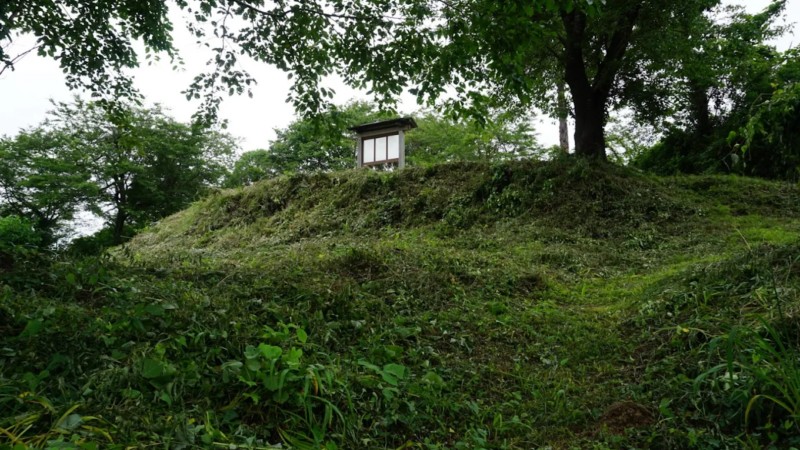
At the northeastern end of the main enclosure, a raised watchtower-like earthen platform remains. This earthen platform measures approximately 3m x 4m and is presumed to have housed a watchtower or observation post. From this position, it was possible to monitor the ridge to the northeast, allowing for early detection of approaching enemies.
Traces of earthen ramparts can be seen around the main enclosure, indicating enhanced defensive capabilities.
Moats
The most notable feature of Yamairi Castle is the three moats located on the northeast ridge. These defensive structures were built to block the ridge extending northeast from the main enclosure, playing a crucial role in preventing enemy intrusion.
- First Moat: The moat closest to the main enclosure, approximately 4m deep and 6m wide.
- Second Moat: Located approximately 20m from the first moat, approximately 3m deep.
- Third Moat: The outermost moat, marking the boundary of the castle grounds.
These moats are still clearly visible today and are valuable remains that allow us to experience the defensive techniques of a medieval mountain castle.
Enclosures
Several enclosures (kuruma) are arranged around the main enclosure. These functioned as the second and third enclosures and were used as garrisons for soldiers and storage areas for supplies.
Each enclosure is demarcated by a cliff (artificial steep slope), creating a defensive structure utilizing the difference in elevation. The area of each enclosure is smaller than the main enclosure, approximately 15m x 20m each.
Earthworks
Traces of earthworks remain in various places within the castle grounds. Earthen ramparts were built surrounding the enclosure, preventing enemy intrusion and serving as a foundation for fences and walls.
Even today, earthen ramparts 1-2 meters high can be seen, allowing us to imagine the defensive structure of the time.
Highlights of Yamairi Castle
1. Three Moats
A must-see when visiting Yamairi Castle are the three moats remaining on the northeast ridge. These are important remains that demonstrate the defensive techniques of mountain castles during the Sengoku period, and their forms can still be clearly seen today.
Standing at the bottom of the moats, you can appreciate the height of the cliffs on both sides, experiencing the high level of defense at the time. The first moat, in particular, is large and impressive.
2. Watchtower Base of the Main Enclosure
The watchtower-like earthen platform at the northeast end of the main enclosure is also not to be missed. Climbing this small earthen platform allows you to survey the surrounding terrain and understand why a watchtower was placed in this location.
3. Views
From the summit of Yogaiyama Mountain, you can see the city of Hitachiota and the surrounding mountains. On clear days, you can even see the Kuji River in the distance, giving you a real sense of Yamairi Castle’s strategic location controlling a key transportation hub.
4. Harmony with Nature
Although developed as a park, Yamairi Castle is situated in a rich natural environment. The fresh greenery in spring and the vibrant autumn foliage are beautiful, allowing you to enjoy both historical exploration and nature observation simultaneously.
5. Information Boards and Explanation Panels
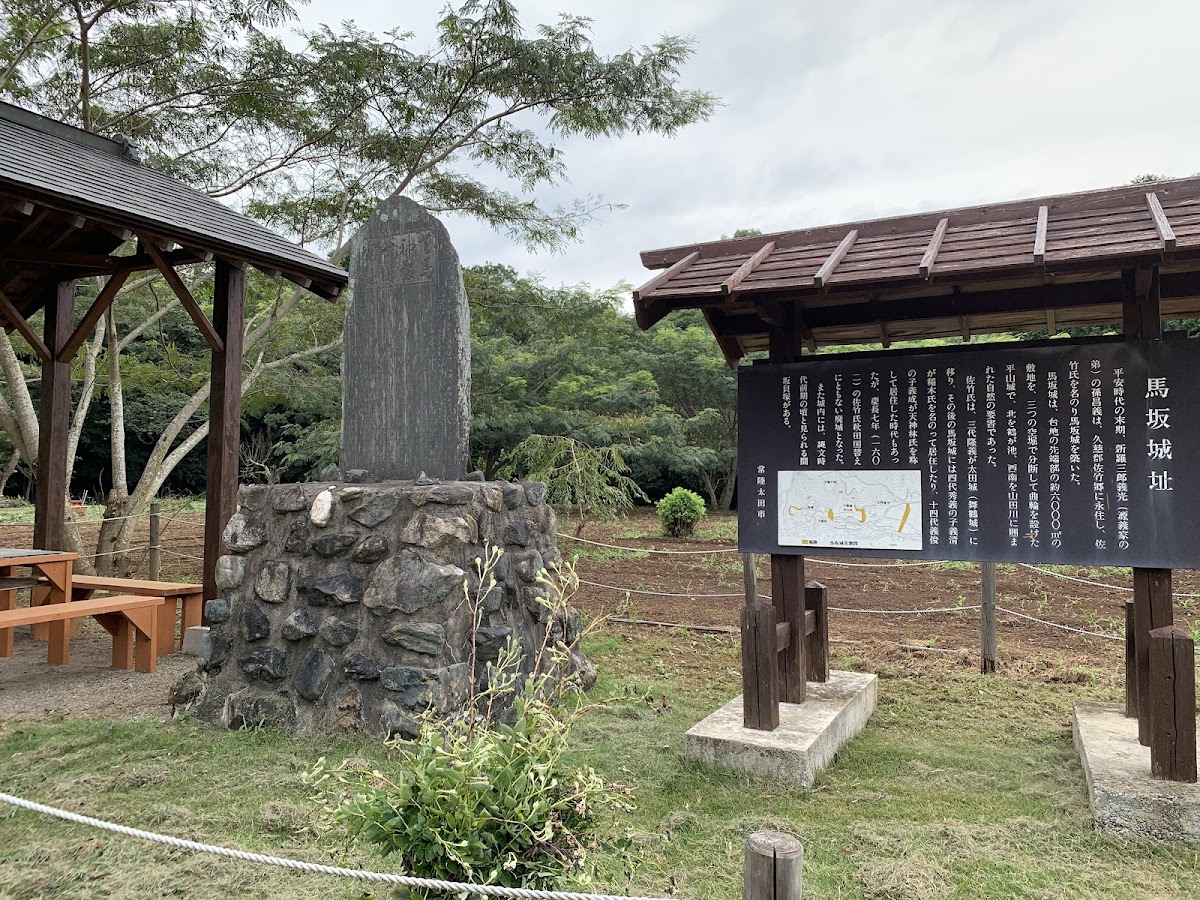
Information boards and explanation panels placed throughout the castle grounds clearly explain the history and structure of Yamairi Castle. Reading these while exploring will allow you to gain a deeper understanding of Yamairi Castle.
Access Information
Access by Car
Joban Expressway
- Approximately 25km from Naka IC, about 35 minutes by car
- Approximately 15km from Hitachi Minami-Ota IC, about 25 minutes by car
Parking
- Several parking spaces available near the entrance to Yamairi Castle Ruins Park (free)
- Approximately 15-20 minutes on foot from the parking lot to the main enclosure
Access by Public Transportation
JR Suigun Line
- Get off at Hitachi-Ota Station, about 15 minutes by taxi
- Buses are also available from Hitachi-Ota Station (infrequent service, so prior confirmation is recommended)
Ibaraki Kotsu Bus
- Take a bus bound for “Kuniyasu” from Hitachi-Ota Station, get off at “Kuniyasu” bus stop, about 15 minutes on foot
Ascent Route
A trail to the castle is maintained from the parking lot or the Kuniyasu area. The trail is relatively easy to walk, but as it is a mountain castle, the following equipment is recommended.
- Comfortable walking shoes (trekking shoes or sneakers)
- Drinking water
- Insect repellent spray (spring to autumn)
- Long-sleeved shirt and long pants (for protection against vegetation)
The climb to the castle takes approximately 15-20 minutes one way. Allow 1-1.5 hours including time to explore the castle.
Nearby Tourist Attractions
Castles in Hitachiota City
Ota Castle (Hitachiota Castle)
- Distance: Approximately 8km from Yamairi Castle
- A castle that flourished as the base of the Satake clan. The site of fierce battles with the Yamairi clan
Tanatani Castle
- Distance: Approximately 5km from Yamairi Castle
- One of the Satake clan’s branch castles
Takefu Castle (Takakura Castle)
- Distance: Approximately 10km from Yamairi Castle
- An important base in the northern part of Hitachiota City
Historical and Cultural Facilities
Hitachiota City Local History Museum
- A facility where you can learn about materials related to the Yamairi Rebellion and the history of the Hitachiota region
- Opening Hours: 9:00 AM – 5:00 PM
- Closed: Mondays (or the following day if Monday is a public holiday)
- Admission Fee: 200 yen for adults
Nishiyama-so
- The retirement residence of Tokugawa Mitsukuni, known as Mito Komon
- Distance: Approximately 12km from Yamairi Castle
Natural Spots
Ryujin Suspension Bridge
- One of Japan’s largest pedestrian-only suspension bridges
- Distance: Approximately 15km from Yamairi Castle
- Popular as a scenic spot
Fukuroda Falls
- One of Japan’s three most famous waterfalls
- Distance: Approximately 25km from Yamairi Castle
Points to note when visiting
Safety measures
- Watch your step: As it is a mountain castle, there are places where the footing is unstable.
- Caution in rainy weather: It becomes slippery on rainy days and after rain.
- Wild animals: Be careful of wild boars and venomous snakes.
- Avoid going alone: Visiting in groups is recommended if possible.
Visitor etiquette
- Protection of remains: Be careful not to damage the earthworks or moats.
- Take your trash home: To protect the natural environment, be sure to take your trash home.
- Consideration for private property: There is private property around the castle ruins. Please do not enter restricted areas.
Photography Tips
- Moat: Photographing from the side will best convey its depth.
- Main Enclosure: An angle overlooking the entire castle grounds from the watchtower platform is recommended.
- View: Sunny mornings offer the best lighting conditions.
Relationship between Yamairi Castle and the Satake Clan
The Satake Clan’s Rule of Hitachi Province
The Satake clan was a prestigious family descended from the Minamoto clan, and ruled northern Hitachi Province from the late Heian period. They expanded their power as vassals during the Kamakura period and as powerful daimyo in the Kanto region during the Muromachi period.
Power Struggle within the Family
In medieval samurai society, power struggles within families were frequent. The Yamairi Rebellion is a typical example; the conflict between the main family and branch families lasted for approximately 100 years, demonstrating the complexity of the Satake clan’s power base in Hitachi Province.
The Satake Clan After the Fall of the Yamairi Clan
After defeating the Yamairi clan, the Satake clan proceeded to unify Hitachi Province. Especially during the time of Satake Yoshishige and Yoshinobu, they brought almost the entire Hitachi Province under their control, growing into one of the leading Sengoku daimyo in the Kanto region.
During the Edo period, they were ordered to relocate to Akita, but they continued as lords of the Akita domain until the Meiji Restoration, and descendants of the Satake clan still exist today.
Research and Evaluation of Yamairi Castle
Position in Castle Research
Yamairi Castle is attracting attention from castle researchers as a typical example of a medieval mountain castle. The following points are particularly valued:
- Arrangement of Moats: A multi-layered defensive structure using three moats
- Utilization of Topography: A layout that skillfully utilizes the natural terrain
- State of Preservation: The remains are relatively well-preserved
Historical Significance
The Yamairi Rebellion is an important case study for understanding the power struggles of the Sengoku period. The fact that the internal conflict within the family lasted for 100 years illustrates the complexity of samurai society at the time and the difficulty of governing a region.
Importance in Local History
Yamairi Castle and the Yamairi Rebellion are indispensable elements when discussing the history of Hitachiota City. They have contributed to the formation of the region’s identity and are important material for local history education.
Summary – The Charm of Yamairi Castle
Yamairi Castle is a medieval mountain castle that Hitachiota City, Ibaraki Prefecture, is proud of. It has witnessed a turbulent history as the stage for the 100-year-long Yamairi Rebellion.
The clearly remaining moats and earthworks are valuable legacies that convey the mountain castle technology of the Sengoku period. You can enjoy a historical walk amidst the rich natural environment of Yogaiyama Mountain.
This is a recommended spot for those interested in the medieval history of Hitachi Province, castle enthusiasts, and anyone who wants to enjoy hiking in nature. Why not climb Yogaiyama Mountain while reflecting on the fierce battle between the Satake and Yamairi clans? Points to check during your visit:
- Defensive structure of the Sanjo moat
- View from the main enclosure’s watchtower
- Layout of each enclosure and the cliffs
- Remaining state of the earthworks
- Relationship with the surrounding topography
Yamairi Castle is a valuable historical site where you can experience the medieval history of Ibaraki Prefecture. Please visit it at least once and feel its history and charm.

-800x450.png)