Complete Guide to Mazaka Castle | History, Remains, and Access Information of the Birthplace of the Satake Clan
What is Mazaka Castle?
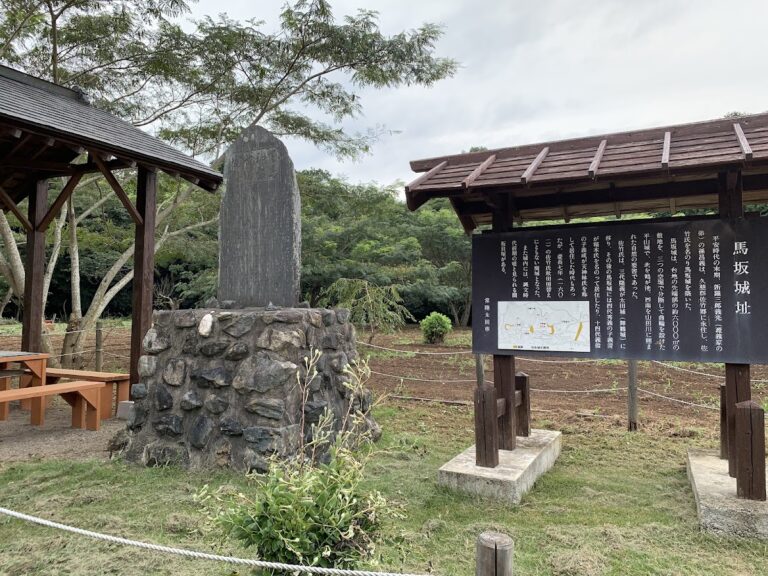
Mazaka Castle (Mazaka-jo) is a hilltop castle located in Tenjinbayashi-cho, Hitachiota City, Ibaraki Prefecture. Also known as Masaka Castle, Satake Castle, and Tenjinbayashi Castle, it is a historical fortress. Built on a tongue-shaped plateau approximately 40m above sea level and 35m above ground, this castle is known as the “birthplace of the Satake clan,” the origin of the Satake clan who ruled Hitachi Province for over 400 years.
It is a multi-bailey hilltop castle with three baileys on a site of approximately 6,032 square meters (approximately 1,828 tsubo). Surrounded by Tsurugaike Pond to the north and the Yamada River to the southwest, it functioned as a natural stronghold. Even today, remains such as dry moats and earthworks are well preserved, making it a valuable historical site that conveys the appearance of a medieval castle.
History of Masaka Castle
Late Heian Period: Construction by the Tenjinbayashi Clan
The initial construction of Masaka Castle is believed to have been carried out during the Heian period by Tenjinbayashi Masatsune, a member of the Fujiwara clan of the Hidesato lineage. The Tenjinbayashi clan, as local lords ruling this region, built the castle on a plateau suitable for defense.
1133 (Chosho 2): First Entry of the Satake Clan
Satake Masayoshi, grandson of Shinra Saburo Minamoto no Yoshimitsu (younger brother of Minamoto no Yoshiie), moved from Kyoto to Hitachi Province and seized Masaka Castle in 1133 (Chosho 2), making it his residence. Masayoshi decided to settle permanently in Satake-go, and adopted the name “Satake” after the place name. This marked the beginning of the Hitachi Satake clan, and Masaka Castle became the Satake clan’s first base in their ancestral homeland.
Masayoshi chose Masaka Castle because of its superior defensive capabilities. The Tsuruga Pond to the north and the Yamada River to the southwest acted as natural moats, and the tongue-shaped plateau topography created a structure that was difficult to attack.
The Era of the Second Generation, Takayoshi: Relocation to Ota Castle
During the era of Satake Takayoshi, the second generation of the Satake clan, as their power expanded, it became necessary to relocate to a larger, more politically suitable location. Takayoshi seized Ota Castle, which had been under the control of Fujiwara (Ota) Michinobu, and moved the Satake clan’s base there.
After this relocation to Ota Castle, Masaka Castle became the residence of the Inagi clan, a branch of the Satake clan, and while retaining symbolic significance as the birthplace of the Satake clan, it also served as a subsidiary castle.
The Sengoku Period: Re-entry of the Tenjinbayashi Clan
As time passed, Yoshinari, the son of the 14th generation Satake clan, Yoshitoshi, adopted the name Tenjinbayashi and returned to this land associated with his ancestors, making Masaka Castle his residence. The Tenjinbayashi clan, as a powerful branch of the Satake clan, is believed to have been entrusted with governing this region.
Keicho 7 (1602): Castle Abandonment
After the Battle of Sekigahara, Tokugawa Ieyasu revised the allocation of daimyo, and in Keicho 7 (1602), the Satake clan was ordered to relocate from Hitachi Province (540,000 koku) to Akita Province (200,000 koku). With this relocation of the Satake clan to Akita, Masaka Castle was abandoned, bringing to an end its approximately 470-year history.
Structure and Layout of Masaka Castle
Characteristics of a Concentric Hilltop Castle
Masaka Castle is a typical concentric hilltop castle with a tongue-shaped plateau divided by dry moats. It has a structure with three interconnected baileys running east-west, consisting of “Nishijo,” “Oshiro,” and “Oshibahira” from west to east.
Oshiro was considered the main bailey (honmaru) and played a central role in the castle’s functions. The main enclosure still retains the place name “Oshiro” (御城), indicating that it was the central part of the castle.
Defensive Structures
The defensive system of Masaka Castle consisted of the following elements:
Dry Moats: Deep dry moats separated each enclosure, serving as the main line of defense to prevent enemy intrusion. Clear remains of the moats can still be seen today.
Earthworks: Earthworks were built around the enclosures to enhance defensive capabilities.
Utilization of Natural Terrain: Tsuruga Pond to the north, the Yamada River to the southwest, and the surrounding wetlands functioned as natural moats, making attacks from three directions difficult.
Tongue-Shaped Plateau: The long, narrow, protruding plateau itself limited the directions from which attacks could be launched.
Castle Area Size
The castle area covered approximately 6,032 square meters, a standard size for castles from the late Heian period to the early Kamakura period. This represents the scale of the castle during the early stages when the Satake clan used it as their base. While smaller than Ota Castle, to which they later relocated, it was still large enough to serve as the family’s ancestral home.
Existing Remains and Highlights
Dry Moats and Moats
The greatest highlight of Masaka Castle is its well-preserved dry moats and moats. The moats separating the baileys are deep, allowing visitors to experience the actual defensive structures of the time. The moats around the main bailey are particularly clear, making them valuable remains for understanding the defensive structure of medieval castles.
Bailey Remains
The remains of the three baileys can still be seen in the topography, and the sections of Nishijo, Oshiro, and Oshibahira are identifiable. The flat area of Oshiro (main bailey) is relatively large, suggesting that the lord’s residence and important facilities were located there.
Earthworks
Traces of earthworks remain around the baileys, and elevations can be seen in places. Although some parts have been lost due to weathering and development, the remaining features provide clues to inferring the defensive lines of the time.
Natural Topography
Tsurugaike Pond on the north side still exists, preserving the waterside landscape that was used for the castle’s defense. The lowlands to the southwest are part of the Yamada River basin, and remnants of the former wetlands can still be seen.
Relationship with Satake-ji Temple
Near Masaka Castle is an ancient temple called Satake-ji. This temple had deep ties to the Satake clan and served as their family temple.
Satake-ji Temple is officially called “Myofukuzan Myoin-in Satake-ji” and is a Shingon Buddhist temple. It is believed that when Masayoshi, the first head of the Satake clan, established Masaka Castle, it was considered an important spiritual pillar for the family. Valuable buildings, including the thatched-roof main hall, still remain today and are designated as important national cultural properties.
When visiting Masaka Castle, visiting Satake-ji Temple at the same time will allow you to gain a deeper understanding of the history of the birthplace of the Satake clan.
Inamura Shrine and Masaka Castle
Near the Masaka Castle ruins is Inamura Shrine, which is the center of faith in this region. It has been suggested that Inamura Shrine may be related to the Inagi clan, who made Masaka Castle their residence, and the relationship between the castle and the shrine is an interesting topic in local history research.
In medieval castles, it was common for the castle lord to protect local shrines, using them as a spiritual foundation for praying for victory in battle and governing the people. Inamura Shrine likely played such a role, making it an important related facility when considering the history of Masaka Castle.
Access Information
Location
Tenjinbayashi-cho, Hitachiota City, Ibaraki Prefecture
Access by Car
- Approximately 20 minutes from Naka IC on the Joban Expressway
- Approximately 15 minutes from Hitachi Minamiota IC on the Joban Expressway
- Accessible via Prefectural Road from National Route 293
Parking
There is no dedicated parking lot for the castle ruins, but there is a parking lot for visitors at the nearby Satake-ji Temple, from which you can access the site on foot. Please avoid street parking and observe proper etiquette during your visit.
Access by Public Transportation
- Approximately 10 minutes by car from Hitachi-Ota Station on the JR Suigun Line
- Taking a taxi from Hitachi-Ota Station is convenient
- As the number of local buses is limited, it is recommended to check the timetable in advance.
Points to Note When Visiting
- The castle ruins may include private property, so caution is required when entering.
- As information boards and explanatory signs are limited, researching materials beforehand will deepen your understanding.
- As some areas have uneven ground, it is recommended to wear comfortable shoes.
- In summer, vegetation grows thickly, making it difficult to see the remains, so spring and autumn are more suitable times to visit.
Related Historical Sites in the Surrounding Area
Ota Castle Ruins
Ota Castle, to which the Satake clan relocated from Masaka Castle, was located in the center of Hitachi-Ota City. Although urbanization is progressing, some remains are preserved, conveying the history of the Satake clan’s base. Visiting Masaka Castle and Satake-ji Temple together allows you to truly appreciate the development of the Satake clan.
Satake-ji Temple
As mentioned above, this temple is associated with the Satake clan and boasts a main hall and gate designated as a National Important Cultural Property. The thatched-roof main hall dates back to the Muromachi period and is highly valuable as a representative example of medieval temple architecture in the Hitachi region, making it a must-see spot.
Castles Related to the Satake Clan
Many castles related to the Satake clan are scattered around Hitachiota City. Visiting castle ruins such as Nukata Castle, Onozaki Castle, and Yamagata Castle, which tell the story of the Satake clan’s expansion, allows you to understand the state of Hitachi Province during the Sengoku period.
Historical Significance of Masaka Castle
Value as the Birthplace of the Satake Clan
The most important historical significance of Masaka Castle is that it is the birthplace of the Hitachi Satake clan. Masayoshi, the grandson of Shinra Saburo Yoshimitsu, adopted the name Satake in this area, marking the beginning of the Satake clan’s history, which lasted for over 400 years.
The Satake clan later grew into a powerful daimyo family controlling most of Hitachi Province, and at its peak, it ruled over 540,000 koku. The fact that its origins lie in this small hilltop castle is a fascinating episode in Japanese medieval history.
Research on Castles from the Late Heian to Early Kamakura Periods
Masaka Castle retains many characteristics of castles from the late Heian to early Kamakura periods, making it a valuable example in the research of castles from this era. Its features include dry moats for division, utilization of natural terrain, and a relatively small-scale arrangement of baileys, resulting in a simple and practical structure that differs from the complex castles of the later Sengoku period.
Importance in Regional History
The existence of the Satake clan is extremely important in the medieval history of Hitachi Province. Masaka Castle is the starting point of the Satake clan and is an indispensable historical site when discussing the history of the Hitachi region. Place names such as “Tenjinbayashi” and “Oshiro” (御城) still remain today, continuing to tell the history of the castle.
Points to Note When Visiting Masaka Castle
Preparation
- Obtaining a Layout Map: Obtaining a layout map from the internet or castle-related books will deepen your understanding on site.
- Historical Preparation: Studying the history of the Satake clan and the situation in Hitachi Province at the end of the Heian period will make your visit more interesting.
- Equipment: Prepare comfortable shoes, insect repellent (in summer), and drinks.
Tips for Visiting
- Observing the Topography: Observe the relationship between the natural terrain and the castle, such as the shape of the plateau, the surrounding lowlands, and the waterfront.
- Checking the Dry Moats: Check the dry moats and trenches separating each enclosure and imagine the defensive lines.
- Identifying the Main Enclosure: Look for places where the place name “Oshiro” (castle) remains, and confirm the central part of the castle.
- Connection with Surrounding Facilities: Visiting surrounding related facilities such as Satake-ji Temple and Inamura Shrine will provide a more comprehensive understanding.
Photo Points
- Cross-section of dry moats and trenches
- Flat areas of the enclosures
- Positional relationship between Tsurugaike Pond and the castle ruins
- Places offering panoramic views of the surrounding terrain
Summary
Masaka Castle is a memorable place where the prestigious Satake clan of Hitachi Province made their appearance on the historical stage. Built by Satake Masayoshi at the end of the Heian period, this small hilltop castle became the origin of the Satake clan’s prosperity, which lasted for over 400 years.
The remaining dry moats, enclosure ruins, and natural features such as Tsurugaike Pond and Yamada River still convey the appearance of the castle at that time. Although not large in scale, Masaka Castle, possessing the essential characteristics of a medieval castle, occupies an important position in the history of Japanese castles. When you visit Hitachiota City in Ibaraki Prefecture, be sure to stop by Masaka Castle, the birthplace of the Satake clan, and experience the romance of history. Visiting it along with the nearby Satake Temple and Ota Castle ruins will allow you to gain a deeper understanding of the Satake clan’s history.