Complete Guide to Okubo Castle (Hitachi City, Ibaraki Prefecture): 200 Years of History and Highlights of the Castle of a Satake Clan’s Senior Retainer
Okubo Castle, located in Okubo-cho, Hitachi City, Ibaraki Prefecture, is an important castle from the medieval to Sengoku period in Hitachi Province. Also known as Okubo Castle, it is known as the residence of the Okubo clan, senior retainers of the Satake clan, for 200 years across eight generations. This article will introduce the charm of this castle in its entirety, from its history and structure to its highlights and access methods.
History of Okubo Castle: From the Taira Clan to a Satake Clan’s Senior Retainer
Construction in the Late Heian Period and the Daijo Clan
The history of Okubo Castle dates back to the late Heian period. It is said to have begun when Munemoto, son of Hitachi Daijo Tadamoto, built the first castle on Mount Atago. The Daijo clan was a branch of the Taira clan and wielded considerable power in Hitachi Province.
Munemoto established his control over this region from Atagoyama Castle (Okubo Atagoyama Castle). This Atagoyama Castle formed the foundation for the later development of Okubo Castle.
Turning Point in the Oei Era: Adoption from the Ishikawa Clan
A major turning point in the history of the Okubo clan occurred during the Oei era (1394-1428). They adopted Ishikawa Shigemitsu, the son of Ishikawa Akimitsu of Mutsu Province. Shigemitsu adopted the name Okubo and constructed two new castles: Tenjinyama Castle (Okubo Tenjinyama Castle) and Okubo Castle.
Okubo Castle, built during this period, was developed as a fortress with improved defensive and habitable features compared to Atagoyama Castle. With the arrival of Ishikawa Shigemitsu, the Okubo clan evolved to a new stage.
Relationship with the Satake Clan and Development
With the arrival of the Sengoku period (Warring States period), the Okubo clan came to serve as important retainers of the Satake clan, a powerful daimyo family in Hitachi Province. The Satake clan, based at Mito Castle, aimed to unify Hitachi Province. The Okubo clan played a crucial role as an important branch castle in the northern part of the Satake clan’s territory, and was entrusted with the control of the Hitachi region.
Okubo Castle was developed as the Satake clan’s power expanded, and it functioned as the residence of the Okubo clan for eight generations. For these 200 years, Okubo Castle continued to play a vital role as the political and military center of the region.
The Keicho Era Transfer and the Plan to Recapture Mito Castle
The history of Okubo Castle reached a major turning point in 1602 (Keicho 7). Having maintained a neutral stance during the Battle of Sekigahara, the Satake clan was ordered by Tokugawa Ieyasu to transfer to Akita in Dewa Province.
Many Satake retainers moved to Akita with their lord, but the last lord of the castle, Okubo Hisamitsu, did not accompany them. Hisamitsu, along with his brother-in-law, Kuruma Suketada, attempted to recapture Mito Castle, but this plan failed.
As a result of this incident, Okubo Castle was abandoned, and the 200-year rule of the Okubo clan came to an end. It is said that the tomb of Okubo Hisamitsu remains on the grounds of a private house where the third bailey is believed to have stood.
Structure and Layout of Okubo Castle
Location as a Hilltop Castle
Okubo Castle is classified as a hilltop castle. A hilltop castle is a castle built on a hill or plateau in a flat area, possessing characteristics intermediate between a flatland castle and a mountain castle. Okubo Castle was built on a hill in Okubo-cho, Hitachi City, occupying a strategic location overlooking the surrounding plains.
This location allowed for early detection of approaching enemies, and because it was not as steep as a mountain castle, daily life and the transportation of supplies were relatively easy.
Structure and Features of the Main Enclosure
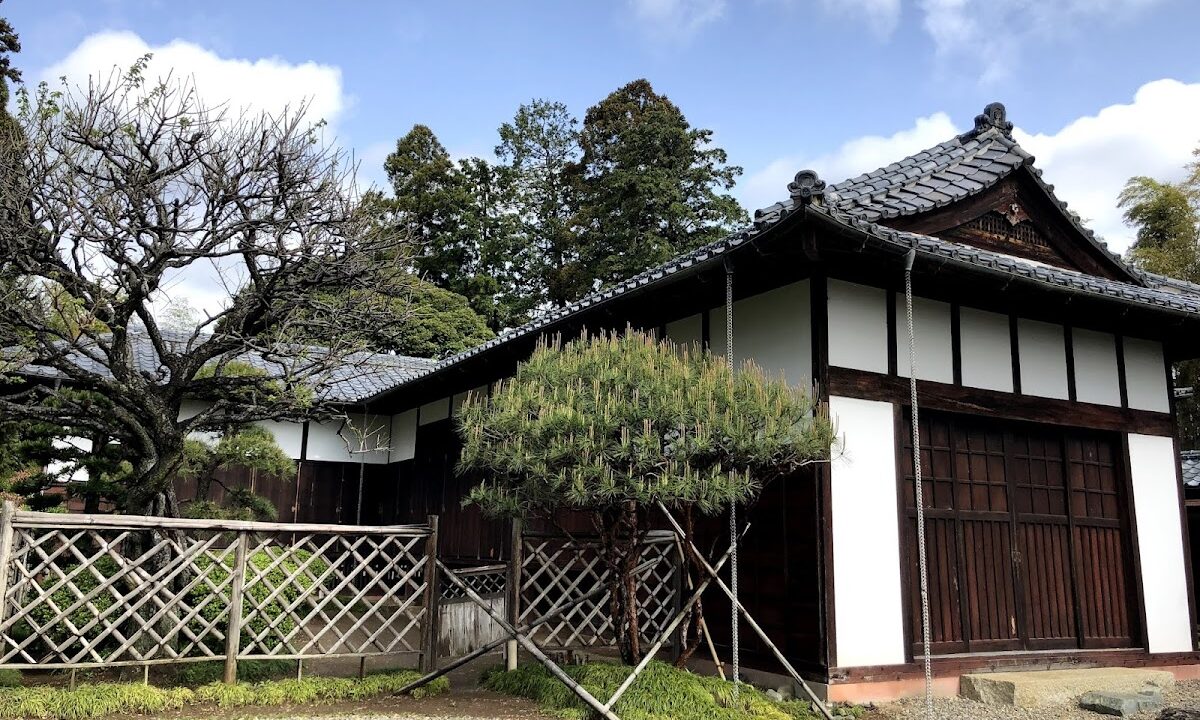
The main enclosure (Honmaru), the heart of Okubo Castle, is currently maintained as a historical site. A building called the Kashukan has been restored within the Honmaru, allowing visitors to experience the atmosphere of castle architecture from that era.
The Honmaru is surrounded by earthen ramparts, which still serve as a defensive structure. These ramparts played a crucial role in preventing enemy intrusion and protecting the castle from arrow and gunfire.
Of particular note is the deep dry moat remaining on the west side of the Honmaru. This dry moat is still well-preserved and is one of Okubo Castle’s greatest attractions. Its depth and scale give a real sense of the castle’s strong defenses.
Arrangement of the Second and Third Enclosures
To the east of the Honmaru, the second and third enclosures were once arranged in a continuous line. This is a type of layout called a “renkaku-shiki” (reinforced enclosure style), where multiple enclosures are lined up in a row, forcing the enemy to break through multiple layers of defense before reaching the Honmaru.
The site where the third bailey is believed to have stood is now the grounds of a private house, and it is said that the tomb of the last lord of the castle, Okubo Hisamitsu, remains there. While the remains of the second and third baileys are not as clearly preserved as those of the main bailey, the topography allows us to imagine the layout of the baileys at the time.
工夫s in Defensive Structures
It is believed that Okubo Castle had various defensive structures in addition to earthworks and dry moats. Steep slopes called “kirigishi” (cut cliffs) were constructed between the baileys, making it difficult for enemies to move.
Furthermore, the entrances called “koguchi” (tiger’s mouths) were also cleverly designed, presumably to prevent easy enemy intrusion. These defensive structures are valuable remains that demonstrate the development of castle construction technology during the Sengoku period.
Highlights of Okubo Castle
Restored Himashukan
One of the biggest highlights when visiting Okubo Castle is the restored Himashukan, located in the main bailey. This building is a reconstruction of the Okubo clan’s residence, a valuable facility where you can experience the atmosphere of a samurai residence from that era.
The name “Himashukan” means a place where samurai devoted themselves to academics and martial arts during peacetime. Inside the building, materials related to the history of the Okubo clan and Okubo Castle are displayed, allowing you to learn deeply about the castle’s history.
Earthworks surrounding the main keep
The earthworks surrounding the main keep are important remnants of Okubo Castle’s defensive structure. The height and thickness of the earthworks give a real sense of how sturdily this castle was built.
There are places where you can walk on top of the earthworks, and by viewing the castle grounds and surrounding scenery from there, you can experience the perspective of the castle lord and soldiers of that time. The earthworks were not merely defensive structures, but also symbols of the castle’s authority.
Deep dry moat on the west side
The most impressive remnant of Okubo Castle is the deep dry moat remaining on the west side of the main keep. This dry moat is still well-preserved today, and its depth and width demonstrate the advanced civil engineering techniques of the time.
A dry moat is a moat that does not contain water, serving both to physically prevent enemy intrusion and as a facility for attacking enemies who descended to the bottom of the moat from above. The dry moat of Okubo Castle is among the best-preserved castle ruins in Ibaraki Prefecture, making it a must-see for castle enthusiasts.
Walking around the dry moat allows you to experience its depth and appreciate the high level of its defenses at the time. Depending on the season, vegetation grows in the moat, creating a beautiful landscape where nature and history blend seamlessly.
Status of Historical Site Preservation
Okubo Castle is designated as a historical site by Hitachi City and is appropriately maintained and preserved. Information boards are installed around the main keep, allowing visitors to learn in detail about the castle’s history and structure.
Walking paths are also maintained, allowing for safe exploration of the castle ruins. However, some areas have steep slopes and uneven footing, so it is recommended to wear comfortable shoes when visiting.
Related Castles to Okubo Castle
Relationship with Atagoyama Castle
Atagoyama Castle (Okubo Atagoyama Castle), considered the predecessor of Okubo Castle, was the first base of the Okubo clan. Located near Okubo Castle, Atagoyama Castle retains features of an older castle period.
When visiting Okubo Castle, visiting the site of Atagoyama Castle as well will help you understand how the Okubo clan’s castles developed.
Relationship with Tenjinyama Castle
Tenjinyama Castle (Okubo Tenjinyama Castle) is a castle believed to have been built by Ishikawa Shigemitsu along with Okubo Castle. Tenjinyama Castle and Okubo Castle functioned as important bases within the Okubo clan’s territory.
Comparing the location and structure of the two castles will provide insight into the reality of the castle network during the Sengoku period.
Relationship with the Satake Clan’s Major Castles
Okubo Castle functioned as a branch castle of the Satake clan, making its relationship with the Satake clan’s main base, Mito Castle, and other major strongholds such as Kasama Castle and Tsuchiura Castle, crucial.
Okubo Castle is positioned as an important base in the northern region for understanding the Satake clan’s sphere of influence in Hitachi Province. Visiting Satake-related castles within Ibaraki Prefecture provides a deeper understanding of the political and military situation in Hitachi Province during the Sengoku period.
Access and Visiting Information
Location and Basic Information
Location: Near 4-chome, Okubo-cho, Hitachi City, Ibaraki Prefecture
Castle Classification: Hilltop Castle
Construction Period: Around the Oei era (1394-1428)
Builder: Ishikawa Shigemitsu (Okubo Shigemitsu)
Main Lords: Okubo Clan
Remains: Earthworks, baileys, dry moats
Designation: Hitachi City Designated Historic Site
Access by Public Transportation
Approximately 20 minutes on foot from JR Joban Line “Omika Station”. From the station, head northwest and take the route through a residential area. If using the bus, you can use the Hitachi Dentetsu Bus routes, but since the number of buses is limited, it is recommended to check the timetable in advance.
Access by Car
Approximately 15 minutes from Joban Expressway “Hitachi Chuo IC”. If accessing from National Route 6, head towards Hitachi city center and follow the signs.
There are a few parking spaces around the Himashukan building, but spaces are limited, so be aware of potential congestion.
Notes for Visitors
While you can generally visit the Okubo Castle ruins freely, please note the following:
- Visiting Time: We recommend visiting during daylight hours. The average visit time is 30 minutes to 1 hour.
- Clothing: Comfortable shoes and clothing are recommended. The footing around the dry moat can be uneven in some areas.
- Season: Spring to autumn is the best time to visit, but in summer, the vegetation is lush, so insect repellent is recommended.
- Photography: You are free to photograph the remains such as earthworks and dry moats, but please be considerate of the privacy of the surrounding residents.
- Okubo Hisamitsu’s Tomb in the Third Enclosure: This is located on private property, so please avoid unauthorized entry.
Nearby Tourist Attractions
Hitachi City Local History Museum
Located about a 10-minute drive from Okubo Castle, the Hitachi City Local History Museum offers insights into the history and culture of the Hitachi region. Exhibits related to Okubo Castle are also on display, making a visit before or after exploring the castle ruins a valuable experience.
Other Castle Ruins in Hitachi City
Besides Okubo Castle, many other castle ruins remain in Hitachi City:
- Ouseyakata
- Ogitsu Castle (Ogitsu Castle)
- Kuji Castle
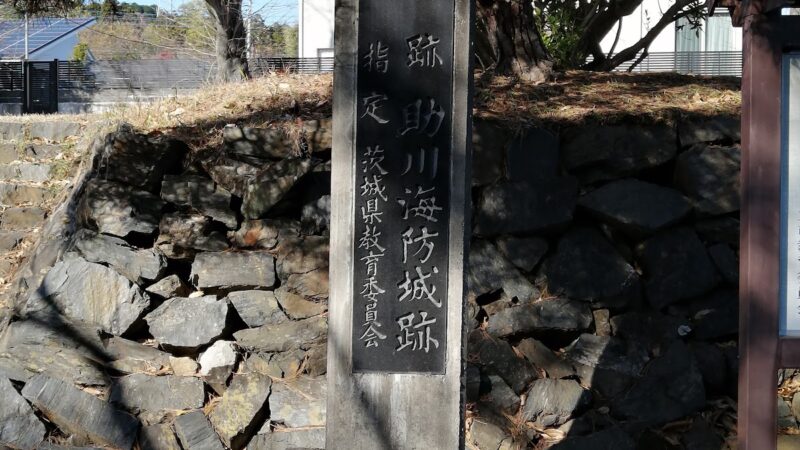
- Sukegawa Kaibo Castle
Visiting these castle ruins will provide a deeper understanding of the history of the Hitachi region from the medieval to early modern periods.
Major Castles of Hitachi Province
Other major castles in Ibaraki Prefecture are also worth visiting:
- Mito Castle (Mito City): The base of the Satake clan, and later the Mito Domain, one of the Tokugawa’s three main branches.
- Kasama Castle (Kasama City): An important stronghold in Hitachi Province.
- Tsuchiura Castle (Tsuchiura City): A strategic point around Lake Kasumigaura.
Comparing these castles with Okubo Castle will help you understand the diversity and characteristics of castles in Ibaraki Prefecture.
Evaluation and Appeal of Okubo Castle
Evaluation from Castle Enthusiasts
Okubo Castle has a certain level of recognition among castle enthusiasts. According to data from Kojodan, the average rating is ★★★☆☆ (3.07), and the average visiting time is about 38 minutes. While the number of visitors is not particularly large, it can be considered a hidden gem where you can quietly enjoy the castle ruins.
Excellent State of Preservation
The greatest appeal of Okubo Castle is that the earthworks surrounding the main keep and the dry moat on the west side are well-preserved. While many castle ruins have lost their remains due to development, Okubo Castle is a valuable example of a castle from the Sengoku period (Warring States period).
In particular, the depth and scale of its dry moats are impressive even among castles in Ibaraki Prefecture, making it an important learning tool for understanding castle defense systems.
Historical Value
Okubo Castle is not merely a local castle, but an important historical site for understanding the expansion of the Satake clan’s power and the process of unifying Hitachi Province. The fact that the Okubo clan resided there for 200 years across eight generations indicates that this castle functioned not merely as a military base, but as a center of regional control.
Furthermore, the anecdote of Okubo Hisamitsu attempting to recapture Mito Castle during the Keicho era’s transfer is an interesting episode that illustrates the loyalty of the Satake clan’s retainers and the turmoil caused by the transfer.
Summary: The Value of Visiting Okubo Castle
Okubo Castle in Hitachi City, Ibaraki Prefecture, is not large in scale, but it is an attractive castle ruin with well-preserved remains and a fascinating history. The castle boasts numerous points of interest, including the earthen ramparts surrounding the main keep, the deep dry moat on the west side, and the reconstructed Himashukan.
The history of the Okubo clan, who resided there for 200 years across eight generations and served as important retainers of the Satake clan, controlling northern Hitachi Province, is a valuable example for understanding the realities of local samurai during the Sengoku period. The dramatic ending of their failed attempt to recapture Mito Castle after the Battle of Sekigahara adds depth to the castle’s history.
For those planning a castle tour in Ibaraki Prefecture, those interested in Sengoku period history, and those who wish to enjoy castle ruins in a peaceful environment, Okubo Castle is a highly recommended spot. Visiting it along with other famous castles such as Mito Castle and Kasama Castle will allow you to gain a deeper understanding of Hitachi Province’s castle culture.
Okubo Castle may not be flashy, but it is a hidden gem with a solid history and well-preserved remains. Why not visit this quiet hilltop castle and reflect on the 200-year history of the Okubo clan?

-800x450.png)