Wakijo Castle, Mima City (Tokushima Prefecture) Complete Guide | A Thorough Explanation of the History of the Nine Castles of Awa and the Charm of the Castle Town
Wakijo Castle, located in Wakimachi, Mima City, Tokushima Prefecture, is also known as Torafusejo Castle and played an important role in the history of Tokushima Prefecture as one of the Nine Castles of Awa. Currently preserved as a castle ruin, the remains that evoke its former prosperity, along with the beautiful townscape of Wakimachi, which developed as a castle town, attract many history enthusiasts and tourists.
This article comprehensively explains everything you need to know when visiting Mima City, Tokushima Prefecture, including the historical background, structure, highlights, access methods, and surrounding tourist spots of Wakijo Castle.
What is Wakijo Castle? | A Famous Castle that Flourished as One of the Nine Castles of Awa
Overview of Wakijo Castle
Wakijo Castle was a flatland castle located in Wakimachi, Mima City, Tokushima Prefecture, built on a hill approximately 100 meters above sea level. The castle’s alternative name, “Torafushi Castle,” is said to derive from its shape, which resembles a crouching tiger. It was one of the major castles in Awa Province (present-day Tokushima Prefecture) and is a historically significant castle, counted among the “Nine Castles of Awa.”
From the castle ruins, one can enjoy a panoramic view of the Yoshino River and the townscape of Mima City, highlighting its strategic importance. Even today, traces of earthworks and baileys remain, allowing us to imagine its former glory.
The Position of Waki Castle within the Nine Castles of Awa
The Nine Castles of Awa refer to the nine major castles located within Awa Province by the Tokushima Domain. Among them, Waki Castle held a special status as the residence of the Inada clan, the chief retainers of the Tokushima Domain. The other nine castles of Awa included Tokushima Castle, Ichinomiya Castle, and Kawashima Castle, each serving as an important base supporting the domain’s governance system.
Waki Castle was located at a key point for logistics utilizing the Yoshino River’s water transport and developed as a commercial center, thus playing an important role not only militarily but also economically.
History of Waki Castle | From the Inada Clan’s Residence to its Abandonment
Construction and Early History
There are various theories regarding the construction period of Waki Castle, but it is believed to have been built around the 16th century during the Sengoku period by a local powerful family. Initially a small mountain castle, its size was expanded through subsequent renovations.
In 1585, after Toyotomi Hideyoshi’s conquest of Shikoku, Awa Province was given to Hachisuka Iemasa. Iemasa established Tokushima Castle as his base and stationed his chief retainer, Inada Uemoto, at Waki Castle. This marked a major turning point in the history of Waki Castle.
The Inada Clan’s Era and the Development of the Castle Town
Upon entering Waki Castle, Inada Uemoto established the “San-Nana Market,” modeled after Oda Nobunaga’s free market policy. This was a regular market held on the 3rd and 7th of each month, aiming to revitalize commercial activity. This policy led to the rapid development of Waki Town as a merchant town. In particular, the trade in indigo, a specialty of Awa Province, flourished, and Wakimachi prospered as a center for the collection and distribution of indigo in the middle reaches of the Yoshino River. Merchants amassed great wealth and built magnificent merchant houses. This formed the basis of the beautiful townscape now known as the “Udatsu Townscape.”
Throughout the Edo period, the Inada clan used Waki Castle as their residence and, as powerful retainers with a domain of approximately 14,000 koku, maintained strong influence within the Tokushima Domain.
From the End of the Edo Period to the Meiji Restoration and the Abolition of the Castle
During the end of the Edo period, the Inada clan was deeply involved in the Sonno Joi (Revere the Emperor, Expel the Barbarians) movement and exhibited independent actions within the Tokushima Domain. After the Meiji Restoration, the Tokushima Domain ceased to exist due to the abolition of the feudal domains and the establishment of prefectures, and Waki Castle also ceased to serve its purpose.
In the early Meiji period, much of the castle was demolished, and almost all of the buildings were lost. Currently, only the remains of earthworks and baileys remain as castle ruins, but their historical value is highly regarded. In recent years, preservation activities by local volunteers have become more active, and there are also movements to aim for designation as a historical site.
Structure and Layout of Waki Castle
Basic Structure of the Castle
Waki Castle is a flatland castle, with a layout that skillfully utilizes the topography of the hilly area. Multiple baileys are arranged around the main bailey, and defenses were strengthened by earthworks and moats.
Although the castle is relatively compact in size, it used the Yoshino River as a natural moat to strengthen its northern defenses. Mountains spread out to the south, also providing a natural stronghold.
Major Remains
The main remains that can be confirmed today are as follows:
- Main Bailey Site: The central part of the castle, located at the highest point. The area is currently flat, and it is presumed that a palace and watchtower once stood there.
- Earthworks: The earthworks surrounding each enclosure are remnants of the defensive structures of the time.
- Enclosures: These can be seen as multiple steps, indicating the castle’s layered structure.
- Moats: Traces of defensive structures built to cut across the ridge can be seen.
The absence of stone walls indicates that it was an earthen fortress. This is a common characteristic of castles in the Awa region.
Relationship with the Castle Town
A planned town layout developed around Waki Castle, forming a merchant town. Waki Town, which developed along the Yoshino River north of the castle, prospered as a commercial city with the castle as its backdrop. The way the castle and town functioned as one unit can be seen from the current topography and townscape.
Highlights of Waki Castle | Points for Visiting the Castle Ruins
Views from the Castle Ruins
One of the greatest attractions of visiting Waki Castle ruins is the view from the main enclosure. From an elevation of approximately 100 meters, you can enjoy a panoramic view of the majestic Yoshino River, the townscape of Mima City, and the mountains of the Shikoku Mountains.
Especially on clear days, you can experience the view that the castle lords once saw, and truly appreciate its strategic location. You can also enjoy the beauty of nature throughout the seasons, with cherry blossoms in spring and autumn leaves in fall.
Remains of Earthworks and Enclosures
As you explore the castle ruins, you can see the earthworks and terraced features remaining in various places. These are valuable remains that convey the appearance of the castle from over 400 years ago. The earthworks around the main enclosure, in particular, are relatively well-preserved and provide clues to understanding the defensive structure of the time.
By carefully observing the remains, you can enjoy deciphering the castle’s structure and defensive ingenuity. Even those unfamiliar with history can grasp the overall picture of the castle by referring to the information boards and explanations.
Stone Monuments and Information Boards
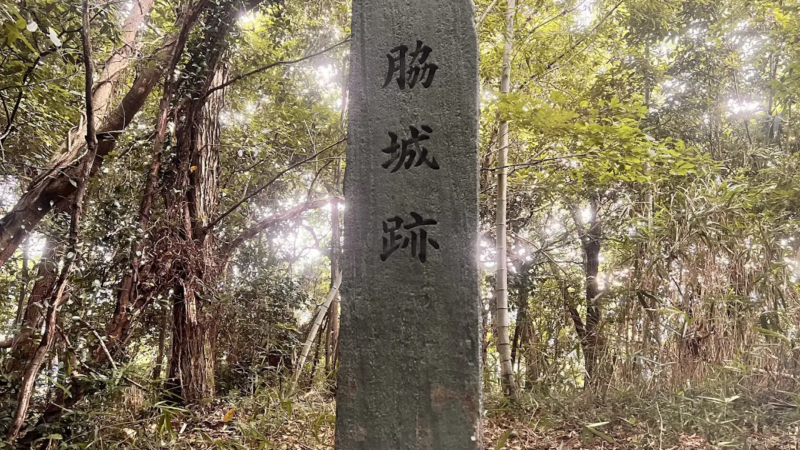
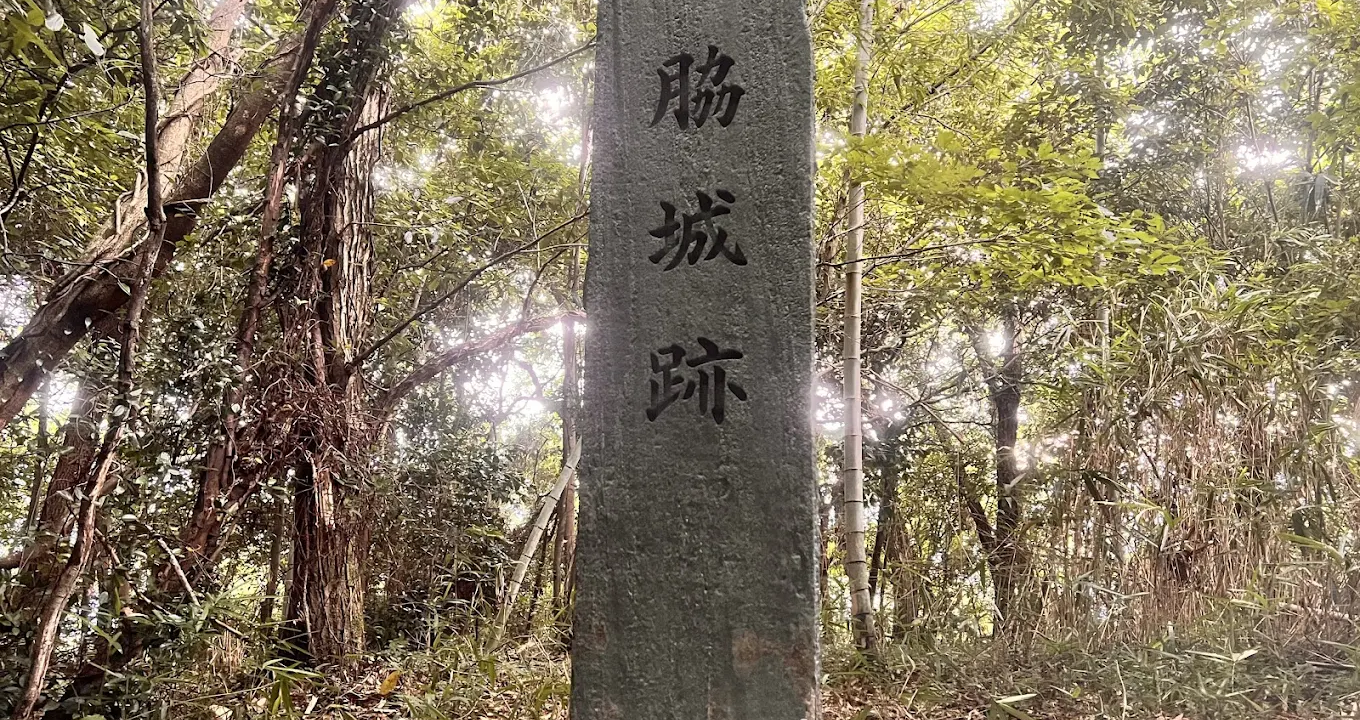
In recent years, the castle ruins have been maintained by volunteers, mainly the presidents of local companies. The newly installed stone monuments and information boards are valuable sources of information for learning about the history of Waki Castle.
In particular, the monuments indicating that it was one of the “Nine Castles of Awa Province” and the residence of the Inada clan convey the importance of the castle to visitors. These maintenance activities are also part of the efforts to have Waki Castle ruins designated as a historical site.
Estimated Time Required for Visit
A visit to Waki Castle ruins takes approximately 45 minutes to 1 hour if you take your time to look around. Walking around and examining each of the remains takes more time than you might expect. It is recommended to allow ample time for photography and enjoying the views.
Udatsu Townscape | The Culture of the Merchant Town Born from Waki Castle
What is the Udatsu Townscape?
Waki Town, which developed as a castle town of Waki Castle, retains a beautiful group of traditional buildings known as the “Udatsu Townscape.” In 2000, it was designated as a National Important Preservation District for Groups of Traditional Buildings and has become a representative tourist spot in Tokushima Prefecture.
“Udatsu” refers to a firewall built at the boundary between neighboring houses, and was a symbol of wealthy merchant families. It is also the origin of the idiom “udatsu ga agaranai” (unable to rise in the world), indicating that it was an architectural element that demonstrated economic power.
Characteristics of the Townscape
The townscape of Wakimachi Minami-machi stretches approximately 430 meters from east to west, with merchant houses built from the Edo period to the Meiji period lining the streets. Even today, about 85 houses retain their magnificent udatsu, conveying the prosperity of that time.
Many of the buildings have a heavy, tiled roof, and the white plaster walls create a beautiful landscape. Each house’s udatsu is adorned with family crests and intricate carvings, expressing the individuality of each merchant family.
Prosperity of Indigo Merchants
Wakimachi’s particular prosperity stemmed from the trade in Awa indigo. Indigo was a specialty product of Awa Province and was in demand nationwide as a dye. Indigo was collected using the Yoshino River’s boat transport and shipped from Wakimachi to various locations.
Indigo merchants amassed immense wealth and poured their fortunes into constructing magnificent merchant houses. The townscape that remains today is a testament to the prosperity brought about by indigo.
Efforts to Preserve the Townscape
Mima City is actively engaged in preservation activities to pass on this valuable townscape to future generations. They are promoting repair and restoration projects for traditional buildings and working with residents to maintain the townscape’s appearance.
It is also utilized as a tourist resource and has been used as a filming location for many movies and dramas. Visitors can experience what it’s like to travel back in time to the Edo period.
Cultural Value of Waki Castle and its Castle Town
Historical Significance
Waki Castle was not merely a military facility; it functioned as the political, economic, and cultural center of the region. The commercial policies of the Inada clan promoted the development of the castle town and laid the cultural foundation for Mima City, which continues to this day.
Its role as one of the nine castles of Awa Province, supporting the Tokushima Domain’s governing system, is also important. It is a prime example of how closely local castles were connected to their communities.
Cultural Heritage Evaluation
While the Wakijo Castle ruins themselves are not currently designated as a national or prefectural cultural property, their historical and cultural value is highly regarded. A movement to have them designated as a historical site is underway locally, and formal protection as a cultural property is expected in the future.
Meanwhile, the Udatsu townscape of the castle town has already been designated as a nationally important traditional building preservation district, and is recognized as a cultural landscape where the castle and town are integrated.
Core of Regional Identity
The history of Wakijo Castle and its castle town is at the core of the identity of the citizens of Mima. It is cherished as a source of regional pride and actively utilized in education and tourism.
Preservation activities by local businesses and residents are also active, demonstrating a strong will to connect history to the future. These citizen efforts represent an ideal model for cultural property protection.
Access Information | How to Get to Wakijo Castle
Access by Public Transportation
By JR
- Nearest Station: JR Tokushima Line “Anabuki Station” or “Awa-Handa Station”
- Walking time from the station: Approximately 20-30 minutes
- Taxi: Approximately 5-10 minutes from the station
By Bus
- Tokushima Bus routes are available
- Get off at “Wakimachi” bus stop, approximately 15 minutes on foot
Access by Car
From Tokushima City
- Approximately 5 minutes from Tokushima Expressway “Wakimachi IC”
- Approximately 40 minutes via National Route 192
From Kochi
- Approximately 1 hour 30 minutes via National Route 32 and National Route 192
From Kagawa
- Approximately 1 hour via National Route 318 and National Route 192
Parking Information
- Free parking available for sightseeing in the Udatsu townscape.
- Limited parking space also available near the castle ruins.
Points to Note When Visiting
- Since you will need to climb a mountain path to reach the castle ruins, comfortable walking shoes are recommended.
- Insect repellent is recommended during the summer months.
- While there are signposts, it’s a good idea to check a map beforehand.
- There are no restaurants or restrooms at the castle ruins, so please prepare accordingly.
Nearby Tourist Attractions
Udatsu Townscape (Important Preservation District for Groups of Traditional Buildings)
If you visit Wakijo Castle, you should definitely stop by the Udatsu townscape. It’s within walking distance of the castle ruins, and you can fully experience the atmosphere of an Edo-period merchant town.
Highlights
- Merchant houses with 85 traditional udatsu (firewalls)
- Mansion of an indigo merchant
- Traditional townhouse architecture
- Museum and souvenir shops
Estimated time required: 1-2 hours
Wakimachi Theater (Odeon Theater)
A theater built during the Taisho era, designated as a National Registered Tangible Cultural Property. A valuable building that conveys the entertainment culture of the time, interior tours are available.
Opening hours: 9:00-17:00
Closed: New Year holidays
Admission fee: Adults 200 yen, Elementary and junior high school students 100 yen
Yoshino River Cruise
Experience the majestic flow of the Yoshino River, one of Japan’s three most turbulent rivers, up close. You can stroll along the riverside promenade, or enjoy a river cruise depending on the season.
Mima City Tourism Exchange Center
A convenient facility for gathering tourist information and taking a break. You can purchase local specialties, and there are exhibits where you can learn about the history and culture of Mima City.
Nearby Castle Ruins
Ichinomiya Castle Ruins
- One of the nine castles of Awa Province, like Waki Castle
- Approximately 30 minutes by car
- Remains of a larger mountain castle remain
Kawashima Castle Ruins
- A flatland castle ruin located along the Yoshino River
- Approximately 20 minutes by car
Best Season to Visit Waki Castle
Spring (March-May)
The area around the castle ruins is beautifully colored during cherry blossom season. The fresh greenery is also vibrant, and the weather is perfect for a stroll. Spring festivals are sometimes held in the Udatsu townscape.
Summer (June-August)
The greenery is lush and the views are beautiful, but temperatures are high and there are many insects, so precautions are necessary. Visiting in the early morning or evening is recommended.
Autumn (September-November)
The autumn leaves are beautiful, and the weather is mild, making it the most suitable season to visit. Late October to early November is especially recommended. Autumn events are held in the Udatsu townscape.
Winter (December to February)
The air is clear, allowing for expansive views. With fewer visitors, it’s a quiet season to appreciate history. Be sure to dress warmly.
Preservation Activities and Future Prospects for Wakijo Castle
Initiatives by Local Volunteers
In recent years, the preservation and development of the Wakijo Castle ruins have been progressing, primarily led by the president of a cosmetics manufacturing and sales company headquartered in Mima City. Concrete activities such as land acquisition, the installation of stone monuments, and the construction of information boards are underway.
These privately led preservation activities are attracting attention as a new model for cultural property protection. It is a good example of how affection for and responsibility towards local history translates into concrete actions.
Expectations for Historic Site Designation
Currently, there are movements to have the Wakijo Castle ruins designated as a national or prefectural historic site. If designated, more comprehensive preservation and development will be possible, and academic research is expected to progress.
The castle possesses ample elements worthy of designation, including its historical value as one of the nine castles of Awa Province, its integrated cultural landscape with the castle town, and its importance as the residence of the Inada clan.
Utilization as a Tourism Resource
Tourism promotion is underway, utilizing the Wakijo Castle ruins and the surrounding townscape. It is crucial to convey its appeal to a wide range of tourists, not just history buffs.
New utilization methods are also being considered, such as the creation of restored CG using digital technology and castle experiences using AR (augmented reality).
Experiencing the History and Culture of Mima City
Indigo Dyeing Experience
There is a facility where you can experience Awa indigo, which supported the prosperity of Wakimachi. You can learn traditional indigo dyeing techniques and create your own original work.
Traditional Crafts
In addition to indigo-dyed products, Mima City retains traditional crafts such as washi paper and bamboo crafts. You can also visit local workshops and observe the skills of artisans.
Local Cuisine
Enjoy local cuisine unique to Tokushima Prefecture, including regional dishes and ayu (sweetfish) dishes from the Yoshino River. Around the Udatsu townscape, you’ll find cafes and restaurants housed in renovated old houses.
Summary | Rediscovering the Charms of Wakijo Castle and Mima City
Wakijo Castle in Mima City, Tokushima Prefecture, is a castle ruin with significant historical importance as one of the nine castles of Awa Province. For approximately 300 years, it served as the center of the region as the residence of the Inada clan, and the town of Waki, which developed as its castle town, still retains its beautiful Udatsu townscape.
The views from the castle ruins, the remaining structures, and the culture of the merchant town born from the castle convey to visitors the richness of Japanese history and tradition. Local people are actively engaged in preservation efforts, and expectations for its designation as a historical site are high.
When visiting Tokushima Prefecture, be sure to visit Wakijo Castle and its castle town in Mima City. You’ll be able to spend a relaxing time while feeling the breath of history. This is a valuable place where you can experience the history and culture of Awa.