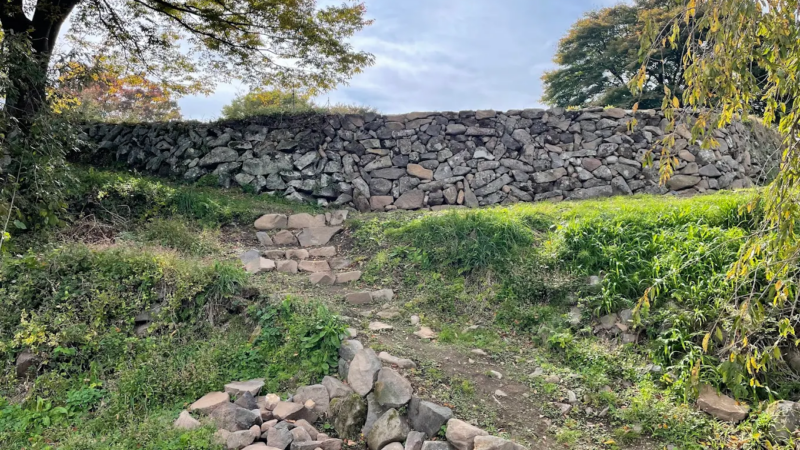
Complete Guide to Uehara Castle (Chino City, Nagano Prefecture) | The Full Picture of a Mountain Castle Where the Histories of the Suwa Clan and Takeda Shingen Intersect
What is Uehara Castle? | A Strategic Sengoku Period Fortress Built by the Head of the Suwa Clan
Uehara Castle is a Sengoku period mountain castle located in Uehara, Chino City, Nagano Prefecture. Built on the summit of Mt. Konpira (approximately 1,040m above sea level), this castle was constructed in the late Muromachi period as the base of the head of the Suwa clan and later became an important base for Takeda Shingen’s conquest of Shinano Province.
Currently, it is protected as a Nagano Prefecture designated historical site, “Suwa Clan Castle Ruins,” along with its subsidiary castle, Kuwahara Castle. From the summit, you can enjoy a panoramic view of Chino city and the Suwa Basin, making it a valuable historical site where you can truly appreciate its strategic importance at the time.
The castle’s scale is typical of a mountain castle, with the main enclosure at its center and the second and third enclosures arranged in a stepped pattern, preserving the castle-building techniques of the Sengoku period. During the Edo period, the Konpira Shrine was established there, and the site is affectionately known locally as Konpira-yama (Konpira Mountain).
History of Uehara Castle | From the Suwa Clan to the Takeda Clan
As the Headquarters of the Suwa Clan’s Main Branch
Uehara Castle is estimated to have been built during the late Muromachi period. The Suwa clan was a prestigious samurai family that ruled Suwa County in Shinano Province. It is believed that they built Uehara Castle to establish their position as the head branch of the clan, amidst complex relationships with the Kami-sha Ohoori (chief priest) family and the Shimo-sha (lower shrine).
The Suwa clan had a unique structure, with a lineage of Shinto priests, producing the Ohoori (chief priest) of the Suwa Grand Shrine’s Kami-sha, coexisting with a samurai head branch. Uehara Castle served as the residence of this samurai head branch, becoming a political center of the Suwa region.
The castle’s location, overlooking the Suwa Basin, was a strategic point, and it is believed to have been gradually fortified during the course of conflicts with the Suwa Lower Shrine and the Upper Shrine’s chief priest family. Its development as a robust mountain castle made it an important military facility supporting the Suwa clan’s power base.
Capture by Takeda Shingen in 1542
The most important turning point in the history of Uehara Castle was its capture by Takeda Shingen (then known as Harunobu) in 1542. The Takeda clan of Kai Province, advancing their invasion of Shinano Province, aimed to control the Suwa region.
The lord of Uehara Castle at that time was Suwa Yorishige. In his battle against the Suwa clan, Takeda Shingen first forced Suwa Yorishige to surrender, thus destroying the main branch of the Suwa clan. This battle marked a crucial step in the Takeda clan’s control of Shinano.
After surrendering to the Takeda clan, Suwa Yorishige was taken to Kofu and forced to commit suicide. This event resulted in Uehara Castle, which had served as the Suwa clan’s base for approximately 70 years, falling into the hands of the Takeda clan.
Establishment of Uehara Castle as a Base for the Takeda Clan’s Control of Suwa
Takeda Shingen, having acquired Uehara Castle, utilized it as a political base for his control of Suwa County. For approximately 40 years, the Takeda clan made Uehara Castle the center of their Suwa rule, appointing important retainers to govern the area.
The first lord of Uehara Castle was Itagaki Nobukata, a hereditary chief retainer of the Takeda clan. Itagaki Nobukata was entrusted with governing the Suwa region as the Suwa County Magistrate, establishing the Takeda clan’s system of control from Uehara Castle.
After Itagaki Nobukata, Shingen’s younger brother, Takeda Nobukage, and other hereditary retainers such as Murozumi Torato, Nagasaka Torafusa, and Akiyama Mitsukata were successively appointed to the castle. The deployment of these powerful Takeda retainers demonstrates how important Uehara Castle was as a base for controlling Suwa.
The Fall of the Takeda Clan and the Castle’s Demise
In 1582, when the Takeda clan was destroyed by Oda Nobunaga’s conquest of Kai Province, the strategic value of Uehara Castle changed. The Suwa region subsequently came under the rule of the Oda and Toyotomi clans, and during the Edo period, the Suwa clan built Takashima Castle, where the Suwa Domain’s administrative center was relocated.
With the construction of Takashima Castle, Uehara Castle ceased to function as a political center and was abandoned. During the Edo period, a Konpira Shrine from Sanuki Province was established on the mountaintop, becoming a place of worship cherished by the local community.
Currently, the castle ruins are well-preserved, with the remains of the main enclosure and baileys intact, making it a valuable historical site that allows us to imagine the appearance of a mountain castle from the Sengoku period.
Structure and Highlights of Uehara Castle | Exploring the Layout of a Mountain Castle
Features of the Main Enclosure (Honkuruwa)
The heart of Uehara Castle is the main enclosure (Honkuruwa), located on the summit of Mt. Konpira. It was created by leveling the mountaintop at an altitude of approximately 1,040m, and is believed to have been the site of the lord’s residence and command post.
The main enclosure is a relatively large, flat area, and currently, the Konpira Shrine stands there. From this location, one can enjoy a panoramic view of Chino city and the Suwa Basin, and it is easy to imagine that the castle lord and warriors of the time strategized while gazing at this view.
Remnants of earthworks remain around the main enclosure, confirming its function as a defensive structure. The layout cleverly utilizes the natural terrain to enhance the castle’s defensive capabilities as a mountain castle.
Arrangement of the Second and Third Enclosures
Below the main enclosure, the second and third enclosures are arranged in a stepped fashion. This layout is typical of mountain castles from the Sengoku period, a design intended to gradually prevent enemy incursions.
Each enclosure is a leveled, flat area, likely used for troop garrisons and supply storage. The elevation differences between enclosures provided a defensive advantage, effectively preventing attacks from below.
Even today, the elevation differences and flat areas of the enclosures can be observed, making it a valuable historical site where one can experience the castle-building techniques of the Sengoku period firsthand.
Defensive Structures: Moats and Earthworks
Uehara Castle retains traces of moats and earthworks, defensive structures characteristic of mountain castles. Moats are ditches dug to cut across ridges, serving as an important defensive line to prevent enemy incursions.
Earthworks are earthen walls built around the enclosures, protecting soldiers from arrows and stones. Parts of the earthworks at Uehara Castle are well-preserved, allowing for estimation of their original height and shape.
These defensive structures indicate that Uehara Castle was not merely a residence, but a military fortress designed for actual combat. It is evident that this castle functioned as a strategic stronghold throughout the periods of the Suwa and Takeda clans.
Relationship with Kuwahara Castle | Branch Castle Network
Uehara Castle did not function in isolation; it formed a castle network in conjunction with its branch castle, Kuwahara Castle. Kuwahara Castle is located approximately 2 km northeast of Uehara Castle and played a complementary role in its defense.
Both castles are protected together as the Nagano Prefecture designated historical site “Suwa Clan Castle Ruins,” demonstrating the importance of the castle system in the Suwa clan’s rule. Such branch castle networks were a common method for feudal lords to effectively control their territories during the Sengoku period.
Through its cooperation with Kuwahara Castle, Uehara Castle was able to monitor and defend a wide area, strengthening its function as a strategic base overlooking the entire Suwa Basin.
Access and Visiting Guide to Uehara Castle
Access by Car
The most convenient way to access Uehara Castle is by car. From the Suwa Interchange on the Chuo Expressway, take National Route 20 and turn onto the mountain road at the Raigakuji Temple traffic light. It takes approximately 3 minutes from the Suwa Interchange to reach the Raigakuji Temple traffic light.
From the Raigakuji Temple traffic light, it’s about a 3.5km uphill paved mountain road to the Uehara Castle ruins. The road is somewhat narrow, so you need to drive carefully, paying attention to oncoming traffic. If using a car navigation system, setting “Eimeiji-yama Park” as your destination is convenient.
There is a parking space near the castle ruins, and from there, it’s about a 5-minute walk to the main enclosure (honkuruwa). The path from the parking lot to the castle ruins is well-maintained and relatively easy to climb.
Access by Public Transportation
If using public transportation, the nearest station is Chino Station on the JR Chuo Main Line. From Chino Station, you can take a local bus or taxi, but since public transportation does not go directly to the castle ruins, access by car is recommended.
If using a taxi, it takes about 15 minutes from Chino Station to the entrance of the Uehara Castle ruins. However, since you will need to climb a mountain path, it is recommended to consult with a taxi company in advance.
Estimated Visit Time and Attire
The estimated time required for visiting Uehara Castle Ruins is approximately 30-40 minutes, including time for photography, walking from the parking lot to the main enclosure and back. If you wish to carefully observe the enclosures and defensive structures, allow about an hour.
As it is a mountain castle, comfortable walking shoes and clothing are essential. Especially after rain, the ground can become slippery, so trekking shoes are recommended. In summer, insect repellent spray is necessary, and in winter, warm clothing is also recommended.
Precautions During Visit
Uehara Castle Ruins are protected as a historical site, so please be careful not to damage the remains or collect plants. The remains such as earthworks and moats are valuable cultural assets, so please view them carefully.
As it is a mountain castle, there is a possibility of encountering wild animals such as bears. Visiting in a group is safer than visiting alone. Also, since there are areas with poor cell phone reception, it is recommended to inform family and friends of your planned visit in advance.
Tourist Spots Around Uehara Castle
Suwa Grand Shrine (Upper and Lower Shrines)
Suwa Grand Shrine, which has a deep connection with Uehara Castle, is the head shrine of approximately 25,000 Suwa shrines nationwide. It consists of four shrines: Kamisha Honmiya, Kamisha Maemiya, Shimosha Akimiya, and Shimosha Harumiya, each with its own unique architectural style and history.
The Suwa clan was a family closely associated with Suwa Grand Shrine, and visiting Suwa Grand Shrine in conjunction with Uehara Castle will allow you to gain a deeper understanding of the history and culture of the Suwa region.
Takashima Castle
Takashima Castle is a flatland castle located in Suwa City, and served as the administrative center of the Suwa Domain during the Edo period. After Uehara Castle was abandoned, the political center of the Suwa region moved to Takashima Castle.
Currently, a reconstructed keep has been built, and the interior is open to the public as a museum. You can learn about the history of the base’s relocation from Uehara Castle to Takashima Castle, and visiting both castles provides an overview of the castle history of the Suwa region.
Chino City Togariishi Jomon Archaeological Museum
Chino City is a region rich in Jomon period ruins, and is known for the discovery of the national treasures “Jomon Venus” and “Masked Goddess.” These national treasure clay figurines can be viewed at the Togariishi Jomon Archaeological Museum.
Although it’s a different era from the Sengoku period of Uehara Castle, it’s a facility worth visiting in conjunction with a castle visit, as it offers insights into Chino City’s long history.
Yatsugatake and Tateshina Highlands
Chino City is also a tourist destination rich in nature, including the Yatsugatake Mountains and Tateshina Highlands. After visiting Uehara Castle, you can enjoy nature at these highland resorts.
Spots such as Lake Shirakaba and Kurumayama Highlands offer beautiful scenery throughout the seasons, and you can enjoy activities such as hiking and skiing. A fulfilling trip combining historical exploration and nature walks is possible.
Cultural Property Designation and Preservation Status of Uehara Castle
Nagano Prefecture Designated Historic Site “Suwa Clan Castle Ruins”
Uehara Castle, along with Kuwahara Castle, is protected under the Cultural Properties Protection Law as the Nagano Prefecture Designated Historic Site “Suwa Clan Castle Ruins.” This designation restricts development of the castle ruins, ensuring the preservation of valuable Sengoku period remains for future generations.
The historic site designation was made in 1973, and since then, preservation and utilization efforts have continued, primarily led by the Chino City Board of Education. Regular grass cutting and the installation of information boards are carried out to improve the environment for visitors to comfortably view the site.
Archaeological Excavations and Research Results
Several archaeological excavations have been conducted at Uehara Castle in the past, and academic research on the castle’s structure and age is progressing. These investigations have revealed details of the layout of the baileys and defensive facilities.
Excavated artifacts have provided information on the differences in lifestyle between the Suwa clan and Takeda clan periods, as well as information on the period of use of the castle. It is hoped that continued research will further shed light on the history of Uehara Castle.
How to Enjoy Your Visit to Uehara Castle
A Stroll Through a Mountain Castle Filled with Historical Romance
The greatest charm of Uehara Castle is the opportunity to experience firsthand the atmosphere of a mountain castle from the Sengoku period. As you stroll through the baileys, you can enjoy imagining what historical figures such as Suwa Yorishige, Takeda Shingen, and Itagaki Nobukata thought and what strategies they devised in this place.
The view from the main bailey is exceptional; the panoramic view of the Suwa Basin is the same view that the warlords of the time also saw. While enjoying this view, you can reflect on the history of the Suwa region during the Sengoku period.
Photography Tips
Uehara Castle is also an attractive photography spot. There are various subjects to photograph, including the view of the Suwa Basin from the main bailey, the remains of earthworks and moats, and the Konpira Shrine.
The autumn foliage season and the winter snowscape are particularly beautiful, allowing you to enjoy the castle’s ever-changing scenery throughout the seasons. Early mornings and evenings offer excellent lighting conditions, potentially allowing for dramatic photographs.
Routes Combined with Castle Ruins Tours
Nagano Prefecture boasts numerous castle ruins from the Sengoku period, making it possible to create castle ruin tour routes starting from Uehara Castle. Nearby, Takashima Castle, Komoro Castle, and Matsumoto Castle are particularly well-known.
Themed tours focusing on castle ruins associated with Takeda Shingen are especially popular, and Uehara Castle is an essential spot as a crucial base in the Takeda clan’s control of Shinano Province. Visiting other sites such as Tsutsujigasaki-kan (Takeda Clan Residence) in Kofu will provide a deeper understanding of the Takeda clan’s history.
Summary | Historical Value and Modern Significance of Uehara Castle
Uehara Castle is a historically important mountain castle built as the headquarters of the Suwa clan’s main branch and a base for Takeda Shingen’s conquest of Shinano Province. The remains of Uehara Castle, located on the summit of Mt. Konpira in Chino City, Nagano Prefecture, are a valuable cultural asset that conveys the castle-building techniques of the Sengoku period and the complex political situation of the Suwa region.
The history of the castle, which transformed from the residence of Suwa Yorishige to a base for the Takeda clan’s rule over Suwa, illustrates the realities of power struggles and regional control during the Sengoku period. The successive placement of Takeda clan retainers and important vassals, including Itagaki Nobukata, indicates the castle’s extremely important role as a political center in Suwa County.
Currently, the Uehara Castle ruins are protected as a Nagano Prefecture designated historical site, and the appearance of a Sengoku period mountain castle is well preserved. The stepped arrangement of the main enclosure, second enclosure, and third enclosure, as well as defensive structures such as earthworks and moats, are valuable learning materials that allow visitors to see and learn about the castle-building techniques of the time.
When visiting Chino City, be sure to visit the Uehara Castle ruins and experience the romance of the Sengoku period at this place where the histories of the Suwa and Takeda clans intersected. The view from the mountaintop and the tranquil atmosphere, combined with the time spent reflecting on history from over 450 years ago, will surely be an unforgettable experience.