Ueda Castle Complete Guide: The History and Highlights of the Impregnable Castle Built by Sanada Masayuki
Located in Ueda City, Nagano Prefecture, Ueda Castle is a historically significant castle built by the renowned Sengoku period general Sanada Masayuki. It gained worldwide fame as an “impregnable castle” that repelled the Tokugawa army twice. Although it was once demolished after the Battle of Sekigahara, it was rebuilt by the Sengoku clan and later protected and passed down by the Matsudaira clan. This guide thoroughly explains the charm of Ueda Castle, from its history to its highlights and tourist information.
History of Ueda Castle: From the Sanada Clan to the Edo Period
Construction by Sanada Masayuki (1583)
Construction of Ueda Castle began in Tensho 11 (1583). Sanada Masayuki skillfully utilized the topography of the Ueda Basin, specifically the tip of a river terrace facing the Amagafuchi, a branch of the Chikuma River, to build his castle. This location selection was the reason it later became known as “impregnable.”
It is believed that the Sanada clan moved their base of operations from the Sanada residence and Toishi Castle around 1585. This flatland castle, surrounded by moats and earthen ramparts, and featuring stone walls at its entrances, was relatively simple in structure, yet strategically brilliantly designed. Because it utilized the cliffs of Amagafuchi as a natural fortress, Ueda Castle is also known as “Amagafuchi Castle.”
First Battle of Ueda (1585): Repelling 7,000 Tokugawa Soldiers
In 1585, Sanada Masayuki refused to obey Tokugawa Ieyasu’s orders and attempted to maintain his independence, leading to an attack on Ueda Castle by approximately 7,000 Tokugawa soldiers. However, Masayuki, through skillful tactics and utilizing the castle’s terrain, succeeded in repelling the Tokugawa forces despite the overwhelming numerical disadvantage.
In this battle, Masayuki employed tactics of luring the enemy in and then annihilating them, establishing his reputation as a brilliant strategist. Every aspect of the castle’s structure functioned as a device to deceive and defeat the enemy.
Second Battle of Ueda (1600): Holding back Hidetada’s 38,000-strong army
In 1600 (Keicho 5), Sanada Masayuki and his son Nobushige (Yukimura), with only 3,500 troops, faced the Eastern Army of 38,000 men led by Tokugawa Hidetada, the third son of Tokugawa Ieyasu, on their way to the Battle of Sekigahara.
Masayuki’s clever tactics delayed Hidetada’s army in capturing Ueda Castle, resulting in them missing the decisive battle of Sekigahara. This battle is recorded in history as a prime example of Sanada Masayuki’s strategic abilities.
Destruction and Reconstruction: Restoration by the Sengoku Clan
After the Battle of Sekigahara, Sanada Masayuki and his son Nobushige, who belonged to the Western Army, were defeated and exiled to Kudoyama in Wakayama. Meanwhile, Sanada Nobuyuki, the eldest son who sided with the Eastern Army, successfully defended his territory, but Ueda Castle was thoroughly demolished by order of Tokugawa Ieyasu, and its moats were filled in.
Later, in 1626, Ueda Castle was rebuilt by the Sengoku clan, who became the lords of Ueda Domain. Structures built at this time, such as the West Turret and the East Tiger Gate, still remain in Ueda Castle Ruins Park today. Through the Sengoku clan’s restoration, Ueda Castle was reborn in a new form.
The Matsudaira Clan Era: Late Edo Period
After the Sengoku clan, Ueda Castle was protected and passed down by the Matsudaira clan. Throughout the Edo period, it functioned as the political and economic center of the Ueda Domain, and the castle town also flourished. Even after the Meiji Restoration, the remains of Ueda Castle were preserved, and its magnificent appearance remains to this day.
Structure and Features of Ueda Castle: Defensive Design Utilizing the Topography
Location Utilizing River Terraces
The most distinctive feature of Ueda Castle lies in its construction on the tip of a river terrace created by the Chikuma River and its tributary, the Yazome River. This topography resulted in steep cliffs on the north and east sides of the castle, functioning as a natural defensive wall.
Sanada Masayuki maximized the advantages of the terrain, designing a castle capable of defending against large armies even with a small force. The Amagafuchi River flowing below the cliffs served as a natural moat, making it difficult for enemies to approach.
Arrangement of Gates and Stone Walls
Stone walls were used at the gates (entrances) of Ueda Castle, a design feature intended to prevent enemy intrusion. The East Gate Tower, in particular, is one of the important surviving structures, conveying the defensive techniques of the time.
The layout of the castle gate employs a “masugata koguchi” (square-shaped gate) structure, designed to lure the enemy into a narrow space and capture them all at once, reflecting Sanada Masayuki’s tactical thinking.
Moat and Earthwork System
Ueda Castle is a flatland castle surrounded by moats and earthworks. The moats, which were filled in after the Battle of Sekigahara, were restored during the reconstruction by the Sengoku clan. The depth and width of the moats were designed to slow down enemy approaches and enable attacks from within the castle.
Earthworks are more resistant to destruction than stone walls and are also more resistant to artillery fire, demonstrating the characteristics of castle construction techniques from the late Sengoku period.
Highlights of Ueda Castle: Existing Remains and Restored Structures
West Turret (Important Cultural Property)
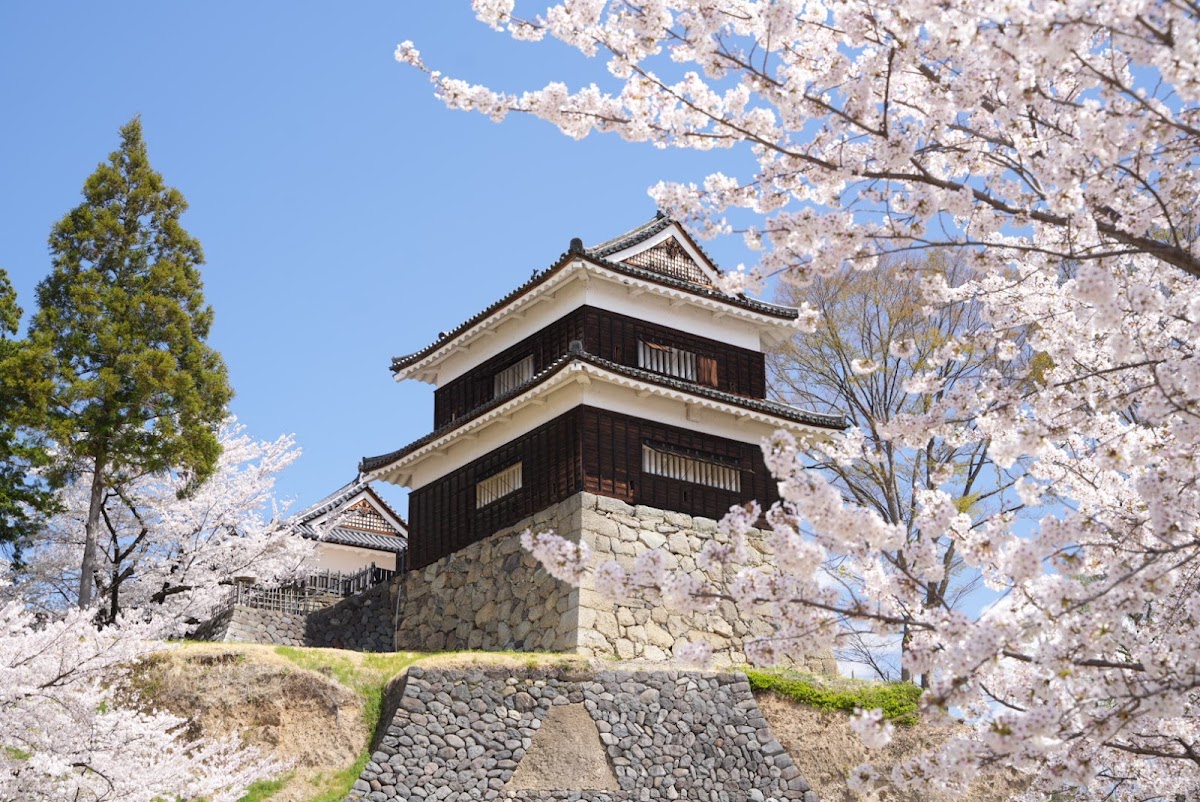
The West Turret was built during the reconstruction by the Sengoku clan and is one of the valuable structures still existing at Ueda Castle. The two-story turret serves both defensive and surveillance functions, conveying the architectural techniques of the time.
From the West Turret, you can enjoy a panoramic view of Ueda city, truly appreciating its importance in the castle’s defenses. The interior is open to the public during special viewings, allowing you to observe the architectural structure and the materials used, showcasing early Edo period construction techniques up close.
East Tiger Gate and South/North Turrets
The East Tiger Gate is located at the main entrance of Ueda Castle, flanked by the South and North Turrets. These structures were built during the Sengoku clan’s era and are symbolic representations of the castle’s grandeur.
The turret gate’s structure incorporates numerous features designed to prevent enemy intrusion, reflecting the tactical philosophy of Sanada Masayuki. During cherry blossom season, the contrast between the turret and the blossoms is beautiful, making it a popular photo spot for many tourists.
Sanada Stone
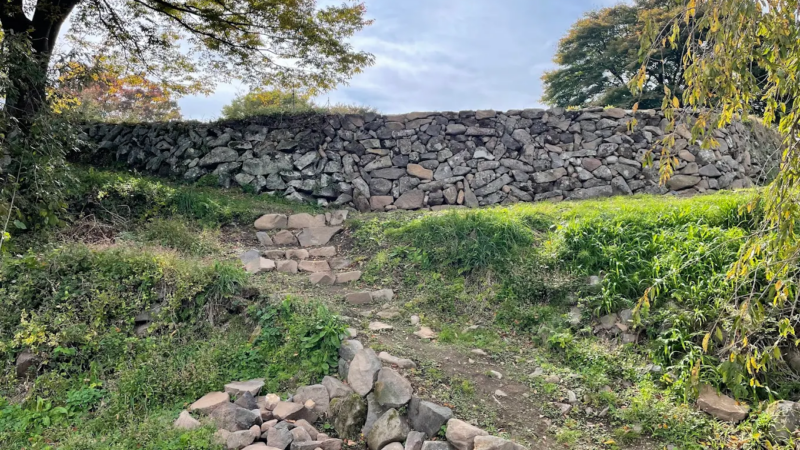
Ueda Castle retains a massive stone known as the “Sanada Stone.” This stone is said to have been brought in by Sanada Masayuki during the construction of the castle, and it stands out as a particularly large and eye-catching feature within the castle’s stone walls.
The Sanada Stone symbolizes the power and technical prowess of the Sanada clan, making it a popular spot for many history enthusiasts.
Main Enclosure and Second Enclosure Sites
The main enclosure site is now a grassy plaza, allowing visitors to experience what the castle’s central area once was. The second enclosure site has also been developed into a park, serving as a place of relaxation for citizens.
From the main enclosure site, one can overlook the Ueda Basin, offering a panoramic view that makes one understand why Sanada Masayuki chose this location.
Ueda City Museum
Within the Ueda Castle Ruins Park is the Ueda City Museum, which exhibits valuable materials related to the history of Ueda Castle and the Sanada clan. It is a facility where you can learn deeply about the history of Ueda Castle and the Sanada clan, displaying armor, weapons, and ancient documents belonging to Sanada Masayuki and his son, Nobushige.
The museum regularly holds special exhibitions, allowing visitors to learn about the latest research findings on Ueda Castle and the history of the Sengoku period. Admission is 300 yen for adults (as of 2024), and it’s recommended to visit in conjunction with a stroll around the castle ruins.
Ueda Castle Ruins Park: Scenery Through the Seasons
Spring: Senbonzakura Festival
Ueda Castle Ruins Park is known as one of Nagano Prefecture’s leading cherry blossom viewing spots, with approximately 1,000 cherry trees in full bloom in spring. The “Ueda Castle Senbonzakura Festival” is held annually from early to mid-April, with nighttime illuminations.
The fantastical scenery created by the illuminated turrets and the full-blooming cherry blossoms captivates many tourists. While it gets crowded during cherry blossom season, you can enjoy a more relaxed viewing experience by visiting early in the morning or on weekdays.
Autumn: Famous for Autumn Foliage
In autumn, the zelkova and ginkgo trees in the park change color, making it a popular spot for viewing autumn foliage. The best time to visit is especially from early to mid-November, when the contrast between the stone walls, turrets, and autumn leaves creates a beautiful landscape.
Autumn foliage season is the second most popular time of year after cherry blossom season, and many people visit to take photographs.
Park Facilities: Baseball Field and Athletics Stadium
Ueda Castle Ruins Park is equipped with sports facilities such as a baseball field and athletics stadium, and is used as a place for sports and recreation for citizens. It is a unique space where historical castle ruins and modern public facilities coexist.
How to Access Ueda Castle
Access by Train
- From JR Ueda Station: Approximately 12 minutes on foot from Ueda Station on the Hokuriku Shinkansen and Shinano Railway
- Ueda Electric Railway Bessho Line: Approximately 5 minutes on foot from Shiroshita Station
From Tokyo, it takes about 1 hour and 30 minutes by Hokuriku Shinkansen, and from Nagoya, it takes about 3 hours by Limited Express Shinano. It is within walking distance from Ueda Station, but buses and taxis are also available.
Access by Car
- Joshinetsu Expressway: Approximately 15 minutes from “Ueda Sugadaira IC”
- Parking: Several paid parking lots are available around Ueda Castle Ruins Park (approximately 500 yen per car).
During events such as the Cherry Blossom Festival, parking lots can become crowded, so using public transportation is recommended.
Ueda Castle Tourist Information: Opening Hours and Admission Fees
Opening Hours
- Ueda Castle Ruins Park: Always open (Free admission)
- Viewing the Interior of the Turret: 8:30 AM – 5:00 PM (Last entry 4:30 PM)
- Ueda City Museum: 8:30 AM – 5:00 PM (Last entry 4:30 PM)
Closed Days
- Turret and Museum: Wednesdays (or the following day if Wednesday is a public holiday), New Year holidays
- The day after a public holiday (open if it falls on a Saturday or Sunday)
Admission Fees
- Interior of the Turret: General admission 300 yen, High school and university students 200 yen, Elementary and junior high school students 100 yen
- Ueda City Museum: General admission 300 yen, High school and university students 200 yen, Elementary and junior high school students 100 yen
- Combined Ticket: General admission 500 yen (Turret + Museum)
Tourist Attractions Around Ueda Castle
Exploring Ueda Castle Town
A castle town that retains the atmosphere of the Edo period spreads around Ueda Castle. Strolling through the old streets of Yanagi-machi and Unno-machi allows you to feel the atmosphere of that time.
There are shops selling local specialties, famous Shinshu soba restaurants, and souvenir shops related to the Sanada clan, making it enjoyable to combine with a visit to Ueda Castle.
Sanada Shrine
Sanada Shrine, located on the site of the former main keep of Ueda Castle, is a shrine dedicated to the successive lords of Ueda Castle: the Sanada, Sengoku, and Matsudaira clans. Many worshippers visit, seeking blessings for good fortune and success in battles, inspired by the martial prowess of Sanada Masayuki and his son Nobushige.
Amulets and goshuin (shrine stamps) featuring the Sanada family crest, the “Rokumonsen” (six coins), are popular, making it a pilgrimage site for Sanada fans.
Bessho Onsen
Located about 30 minutes from Ueda city center via the Ueda Electric Railway Bessho Line, Bessho Onsen is known as the oldest hot spring in Shinshu (Nagano Prefecture). A plan combining a visit to Ueda Castle with a soak in the hot springs is highly recommended.
Experiential Programs for Deeper Understanding of Ueda Castle
Utilization of Digital Archives
Ueda City is developing a project called “Digital Ueda Castle,” which uses VR and AR to restore lost structures and provide content that allows visitors to experience battles from that era.
Using smartphones and tablets, you can overlay the historical appearance of the site onto the digital archives, allowing for a deeper understanding of Ueda Castle’s history.
Guided Tours
The Ueda Castle Town Tourism Association offers guided tours by volunteer guides (reservations required). With explanations from guides possessing specialized knowledge about the history of the Sanada clan, episodes from the Battle of Ueda, and the castle’s structure, you can more deeply appreciate the charm of Ueda Castle.
Ueda Castle and the Legacy of the Sanada Clan: A Spirit Passed Down to the Present
Ueda Castle is more than just a tourist spot; it symbolizes the wisdom of Sanada Masayuki, an extraordinary strategist, and his courage in the face of adversity, offering many lessons that continue to be valuable today.
The story of the Battle of Ueda, where overwhelming military disparity was overcome through sheer strategy, is studied as a “strategy for the underdog” in the modern business and sports worlds, continuing to inspire many.
The Sanada Boom and Ueda Castle
The 2016 NHK Taiga drama “Sanada Maru” (Sanada Maru) aired, significantly increasing interest in the Sanada clan and Ueda Castle nationwide. The drama led to a surge in tourists visiting Ueda Castle, and it continues to attract many fans as a place associated with the Sanada clan.
Ueda City is actively promoting tourism by leveraging the history of the Sanada clan, and tourist routes centered around Ueda Castle, such as the “Sanada-related Sites Tour,” have been developed.
Summary: Experience the Charm of Ueda Castle
Ueda Castle holds a special place in the history of Japanese castles as an “impregnable fortress” built by Sanada Masayuki, a renowned general of the Sengoku period. The historical fact that it repelled the Tokugawa army twice speaks to the castle’s structure, its skillful use of the terrain, and Sanada Masayuki’s exceptional strategic vision.
After being demolished following the Battle of Sekigahara, Ueda Castle was rebuilt by the Sengoku clan and later protected and passed down through the Matsudaira clan. Today, it retains remnants such as the West Turret and the East Tiger Gate, and is a popular Ueda Castle Ruins Park enjoyed by citizens and tourists alike.
With its cherry blossoms in spring and autumn foliage, Ueda Castle offers beauty throughout the seasons, making it a recommended tourist spot not only for history buffs but also for nature lovers and photography enthusiasts. A variety of sightseeing experiences centered around Ueda Castle are available, including learning at the Ueda City Museum, strolling through the castle town, and visiting the Sanada Shrine.
Its easy accessibility, just about 1 hour and 30 minutes from Tokyo by Shinkansen, is one of its attractions. For a weekend getaway or as part of your Shinshu sightseeing, be sure to visit Ueda Castle and experience the strategic brilliance of Sanada Masayuki and the spirit of the Sengoku period. The magnificent sight of this “impregnable castle,” which made a name for itself throughout Japan, still awaits you.