Complete Guide to Kakushu Castle (Okayama Prefecture) | A Thorough Explanation from the Mimura Clan’s Base to the History of the Nariwa Domain
What is Kakushu Castle?
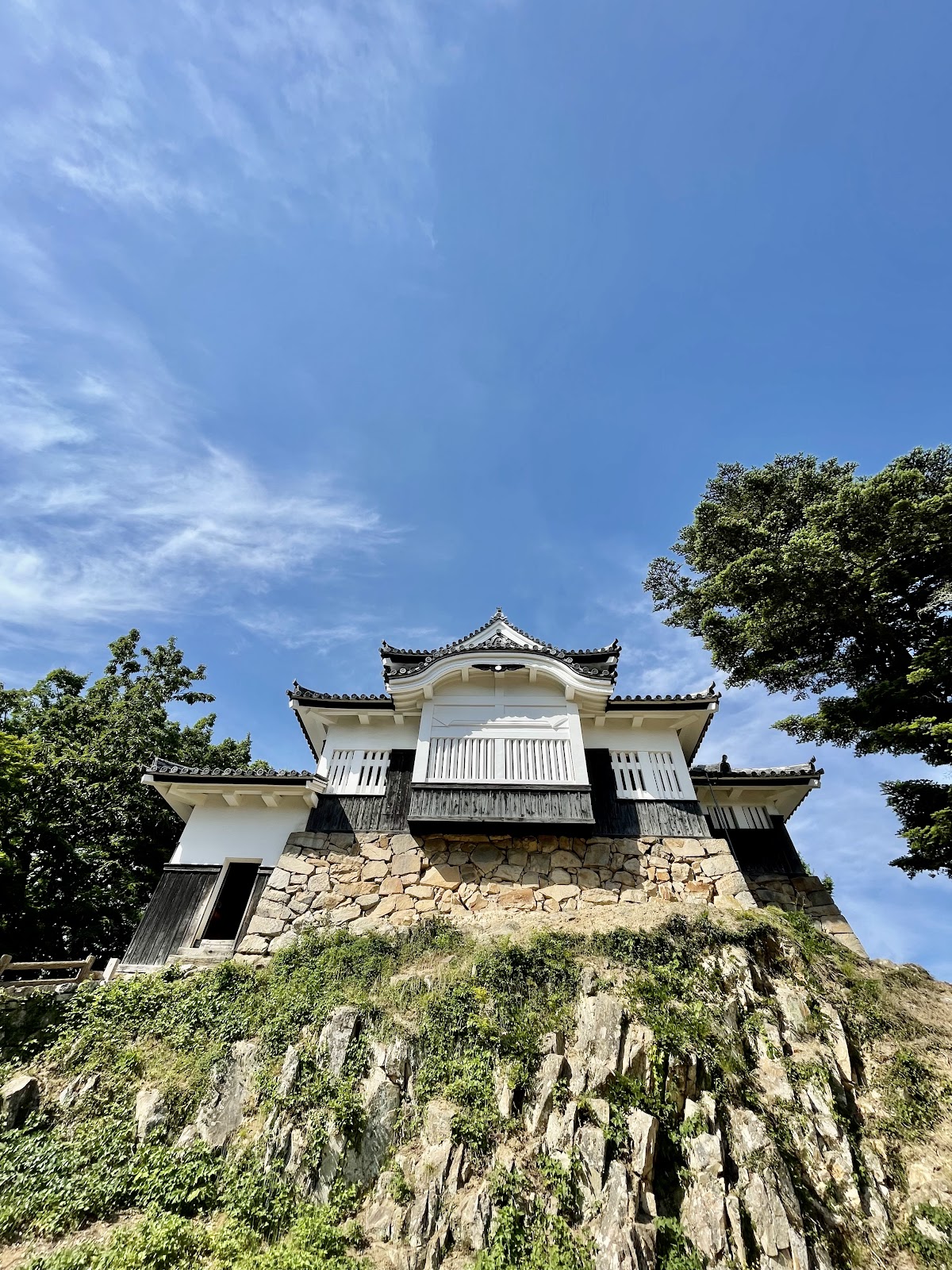
Kakushu Castle is a Sengoku period mountain castle located in Nariwa-cho, Takahashi City, Okayama Prefecture. Also known as Nariwa Castle, it was a strong fortress built on the summit of Mt. Kakushu, at an altitude of 331 meters and a relative height of approximately 250 meters. Known as an important base for the Mimura clan, a Sengoku daimyo in Bitchu Province, it is an indispensable historical site when discussing the history of Bitchu.
Even today, the remains of stone walls, earthworks, moats, ridged vertical moats, and wells remain in good condition, making it a valuable place to experience the structure of a Sengoku period mountain castle, attracting attention from castle enthusiasts and history fans.
History of Kakushu Castle
Legend of its Construction in the Late Heian Period
The founding of Kakushu Castle is said to date back to Bunji 5 (1189), in the late Heian period. It is said that Tsurukubi Castle was built by Kawamura Shiro Hidekiyo, who distinguished himself in the Oshu War (the pacification of Oshu), and this is considered the origin of Tsurukubi Castle. However, detailed records from this period are scarce, and some parts remain in the realm of legend.
Full-scale castle development by Mimura Iechika
Tsurukubi Castle was fully developed as a fortress around 1533 (Tenbun 2) during the Sengoku period. Mimura Iechika, a Sengoku daimyo of Bitchu Province who was based in Hoshida (present-day Ibara City, Okayama Prefecture), seized Nariwa Manor and then extensively improved and expanded Tsurukubi Castle.
Iechika expanded his power from Tsurukubi Castle and strengthened his influence in Bitchu by forming an alliance with the Mori clan of Aki Province. He continued to expand the castle throughout the Tenbun era, and Tsurukubi Castle came to function as the main base of the Mimura clan. During this period, Iechika brought the surrounding local lords under his control, building the largest power in western Bitchu Province.
Relocation of the Headquarters to Bitchu Matsuyama Castle and the Entry of Mimura Chikashige
Between 1560 and 1561, Mimura Iechika attacked and captured Bitchu Matsuyama Castle, which was held by Sho Takasuke, the castle’s lord. Bitchu Matsuyama Castle was a central fortress in Bitchu Province, and Iechika sought to establish his control over Bitchu by making it his new headquarters.
After relocating his headquarters to Bitchu Matsuyama Castle, Iechika appointed his younger brother, Mimura Chikashige, as the lord of Tsurukubi Castle. Chikashige played a strategic role as a military advisor to the Mimura clan and defended Tsurukubi Castle together with his son, Chikanobu. Tsurukubi Castle continued to serve as an important branch castle of the Mimura clan and a key base in western Bitchu.
The Assassination of Mimura Iechika and the Bitchu Rebellion
In 1566, Mimura Iechika suffered a tragic death when he was assassinated at Myozenji Temple in Bitchu Province by an assassin sent by Ukita Naoie. This assassination became a turning point that significantly altered the political situation in Bitchu.
Iechika was succeeded by his son, Mimura Motochika, but Motochika reconsidered his father’s alliance with the Mori clan and adopted a policy of rapprochement with Oda Nobunaga. This change in policy divided the Mimura clan, creating conflict with those who advocated maintaining the alliance with the Mori clan.
From 1571 to 1575, the so-called “Bitchu Rebellion” broke out. Fierce battles raged between the combined forces of the Mori and Ukita clans and the Mimura clan. Ultimately, Mimura Motochika committed suicide at Bitchu Matsuyama Castle, and the Mimura clan was destroyed. Tsurukubi Castle was also attacked by the Mori forces, and the Mimura father and son, Chikashige and Chikanobu, were unable to defend the castle, marking the end of the Mimura clan’s rule.
Mori and Ukita Clan Era
After the Bitchu Rebellion, Bitchu Province came under the influence of the Mori and Ukita clans. It is believed that Tsurukubi Castle was also under the Mori clan’s influence during this period, but detailed records do not remain.
After the Honnoji Incident in 1582, the situation in the Chugoku region became fluid again, and in the process of Toyotomi Hideyoshi’s unification of Japan, Bitchu Province was incorporated into the Toyotomi regime.
Early Edo Period and the Appointment of Yamazaki Ieharu
After the Battle of Sekigahara, Bitchu Province was reorganized by Tokugawa Ieyasu after the Ukita clan, who had sided with the Western Army, was dispossessed of their domain. In 1617 (Genna 3), Yamazaki Ieharu was appointed to Nariwa with a 50,000 koku stipend from Wakasa Onigajo Castle in Inaba Province (present-day Wakasa-cho, Yazu-gun, Tottori Prefecture), establishing the Nariwa Domain.
Yamazaki Ieharu did not enter Tsurukubi Castle, but instead built a new residence (Nariwa Jinya) at the foot of the mountain. This was because, in the peaceful Edo period, Tsurukubi Castle, being a mountain castle, was deemed impractical and unsuitable for peacetime governance. As a result, Tsurukubi Castle was abandoned and subsequently disappeared from the stage of history.
After Yamazaki Ieharu, the Nariwa Domain saw several changes of lords, but the Nariwa Jinya continued to function as the domain’s administrative center, and Tsurukubi Castle was never used again.
Structure and Layout of Tsurukubi Castle
Characteristics of a Consecutive-Enclosure Mountain Castle
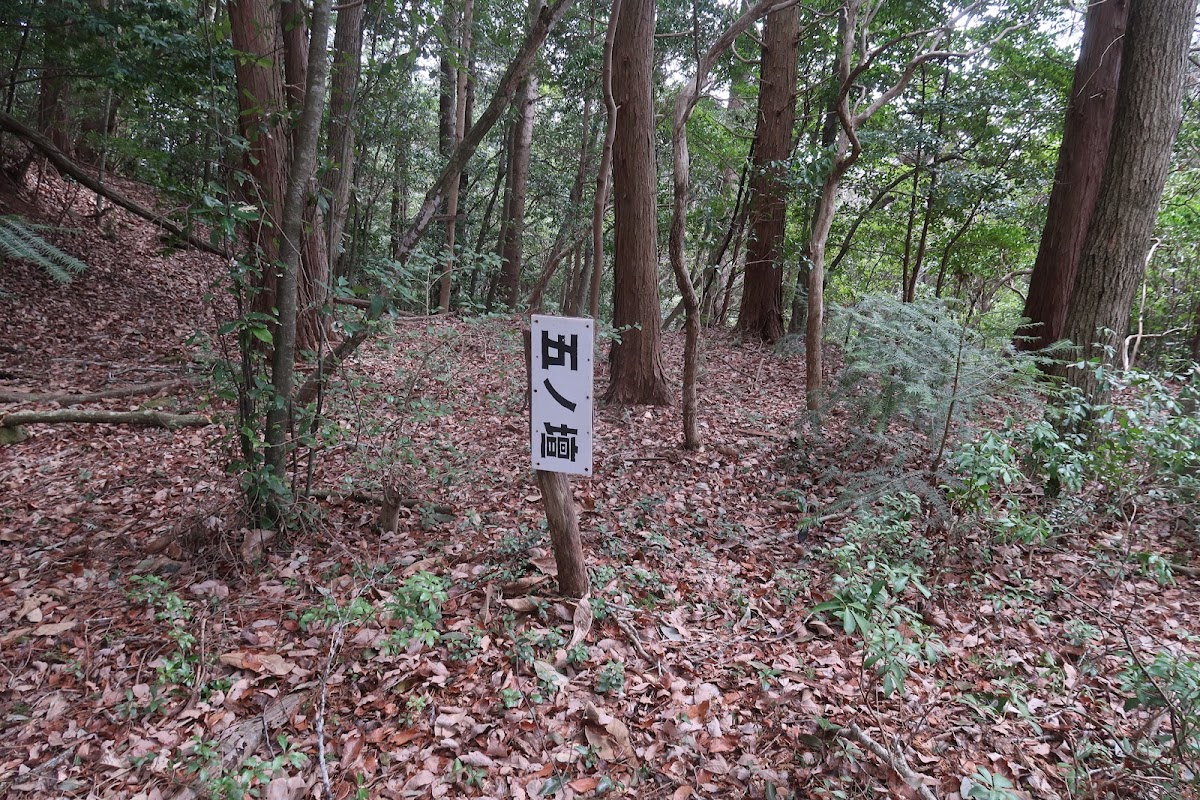
Tsurukubi Castle was designed as a consecutive-enclosure mountain castle, with five main enclosures (kuruma) arranged in a sequence along the ridge from the mountaintop. This structure makes maximum use of the mountainous terrain while incorporating numerous features designed to enhance defensive capabilities.
Centered around the main keep (Honmaru) located at the highest point, the castle is followed by the second and third baileys, each separated by earthworks and stone walls. Moats are provided between the baileys, preventing enemy intrusion.
Major Remains
Main Keep Site
The main keep, located at the summit of Tsurukubiyama, functioned as the central part of the castle. Even today, the remains of earthworks are clearly visible, allowing us to confirm the former boundaries of the bailey. From the main keep, one can enjoy a panoramic view of the town of Nariwa and the surrounding mountains, suggesting its importance as a lookout point during the Sengoku period.
Stone Walls
Stone walls remain throughout Tsurukubi Castle. These are relatively large stone walls for a mountain castle of the Sengoku period and are thought to be traces of a large-scale renovation by Mimura Iechika. The use of the nozurazumi technique (stacking natural stones) makes them valuable historical documents for understanding the castle construction techniques of the time.
Moat
Moats dug to cut across the ridge were important defensive structures designed to hinder enemy advances. Several moats have been identified at Tsurukubi Castle, and the moat separating the main enclosure from the outer enclosure is particularly deep and clearly preserved.
Ridge-shaped Vertical Moats
Ridge-shaped vertical moats, constructed to prevent enemies climbing the slope, are another distinctive feature of Tsurukubi Castle. Multiple vertical moats were dug in parallel, effectively making lateral movement difficult. This structure is noteworthy as it demonstrates castle construction techniques from the late Sengoku period.
Taiko-maru
Located on the northern slope, Taiko-maru was an important enclosure protecting the route to the main enclosure. Currently, the area around Taiko-maru is maintained as Taiko-maru Park and serves as the starting point for the ascent to the castle. The name Taiko-maru is thought to originate from the fact that drums were once beaten here to announce the time or send signals.
Outpost
An outpost was positioned on the northeast ridge, serving to complement the defenses of the main castle. It is presumed to have functioned as an outpost for quickly detecting enemy movements, allowing for surveillance of the northeast direction.
Well Remains
Securing water was a critical issue for mountain castles, and Tsurukubi Castle also had a well. The remains of the well can still be seen today, indicating that facilities were in place for siege warfare.
Highlights of Tsurukubi Castle
Well-Preserved Remains
The greatest highlight of Tsurukubi Castle is its well-preserved remains, even after more than 400 years. In particular, the stone walls, earthworks, and moats are clearly visible, allowing visitors to experience the structure of a Sengoku period mountain castle. For those interested in castles, this will be a valuable opportunity to directly observe the construction techniques and defensive ingenuity of the time.
Magnificent Views
From the main keep ruins at an altitude of 331 meters, you can enjoy a panoramic view of the town of Nariwa, the flow of the Takahashi River, and the surrounding mountains. On a clear day, you can even see the distant mountain ranges, giving you a real sense of why the castle was built in this location. During the Sengoku period, Mimura Iechika must have watched the situation in Bitchu Province from this very view.
Well-Maintained Ascent Route
The ascent route from Taikomaru Park to the main keep is well-maintained and relatively easy. The environment is well-suited for beginners to mountain castles, allowing you to easily experience a Sengoku period mountain castle. However, since it involves a 250-meter elevation gain, appropriate equipment and physical fitness are necessary.
Historical Value
Tsurukubi Castle is an indispensable historical site when discussing the Sengoku period history of Bitchu Province. It was the base of Mimura Iechika, a powerful Sengoku daimyo of Bitchu, and the stage for the Bitchu Rebellion, a regional conflict. This castle holds significant historical value for understanding Japan’s Sengoku period from a regional perspective.
Photo Spots at Tsurukubi Castle
Overlooking View from the Main Enclosure
The main enclosure is the best photo spot when visiting Tsurukubi Castle. The angle overlooking the town of Nariwa conveys the importance of the castle’s location. The light is particularly beautiful in the early morning and at dusk, allowing for evocative photographs.
Close-up of the Stone Walls
The rough-hewn stone walls are an important subject that conveys the technology of the Sengoku period. Photographing the details, such as the way the stones are stacked and the moss-covered appearance due to aging, creates works that convey the weight of history.
The Impressive Moat
Looking up at the deeply dug moat from below, or photographing the enclosure across the moat, conveys its impressive defensive capabilities. Including people in the shot is effective in conveying the depth and scale of the moat.
Distant View from Taikomaru Park
The view of Tsurukubiyama Mountain from Taikomaru Park offers a panoramic view of the castle you’re about to climb. It’s also a perfect spot for commemorative photos before your ascent.
Seasonal Scenery
Tsurukubi Castle, with its ever-changing scenery—fresh greenery in spring, deep green in summer, vibrant autumn foliage, and snowy winter landscapes—is worth visiting in different seasons. The autumn foliage season, in particular, offers a beautiful contrast between the stone walls, earthworks, and colorful leaves, making for stunning and photogenic pictures.
Access and Visiting Guide
Location
Shimohara, Nariwa-cho, Takahashi City, Okayama Prefecture
Transportation Access
Access by Car
- Approximately 40 minutes from Okayama Expressway “Kayo IC”
- Approximately 30 minutes from Chugoku Expressway “Hokubo IC”
- Approximately 25 minutes by car from JR Hakubi Line “Bitchu-Takahashi Station”
Access by Public Transportation
- Take a bus from JR Hakubi Line “Bitchu-Takahashi Station” and get off at “Nariwa,” then walk approximately 10 minutes to the Taikomaru Park entrance.
Parking
There is parking space around the Nariwa Town Art Museum. There is also some parking space at Taikomaru Park, but since the number of spaces is limited, we recommend using the museum’s parking lot.
Time to Visit
From Taikomaru Park to the main keep, it takes approximately 30-40 minutes one way at a normal hiking pace. It is advisable to allow 1.5 to 2 hours round trip. If you wish to carefully observe the remains, it will take even more time. ### Precautions for Visiting the Castle
- As it is a mountain castle, appropriate clothing and shoes for hiking are necessary.
- Don’t forget insect repellent in summer and warm clothing in winter.
- Bring drinking water with you.
- Be careful as the ground can be slippery during and after rain.
- Cell phone reception may be unstable in some areas.
- If you are visiting alone, it is recommended to inform someone of your plans to visit the castle.
Visiting Hours
The castle ruins are open 24 hours a day, but for safety reasons, visiting during daylight hours is recommended. Especially for first-time visitors, the morning to early afternoon is ideal.
Admission Fee
Free
Nearby Tourist Attractions
Nariwa Town Art Museum
This art museum is located near the entrance to Tsurukubi Castle and primarily exhibits works by local painter Torajiro Kojima. Its convenient location makes it easy to visit before or after visiting the castle.
Naruba Jinya Ruins
The ruins of the Naruba Jinya (fortified residence) built by Yamazaki Ieharu remain within Naruba town. Here you can learn about the history of the Naruba domain after the abandonment of Tsurukubi Castle.
Bitchu Matsuyama Castle
Bitchu Matsuyama Castle, where Mimura Iechika moved his base, is famous as a mountain castle with an existing keep. Visiting it together with Tsurukubi Castle will allow you to understand the history of the Mimura clan more deeply. It is about a 30-minute drive away.
Fukiya Furusato Village
The Fukiya district, near Naruba town in Takahashi City, was a town that prospered from the Edo period to the Meiji period through the production of bengara (red pigment) and copper. The townscape, with its beautiful red Sekishu tiles and bengara-colored exterior, has been preserved and is designated as an Important Preservation District for Groups of Traditional Buildings.
Historical Significance of Tsurukubi Castle and the Mimura Clan
The Role of the Mimura Clan in Bitchu Province
The Mimura clan, as a Sengoku daimyo who ruled western Bitchu Province, left a significant mark on the region’s history. Based at Tsurukubi Castle, Mimura Iechika expanded his power through an alliance with the Mori clan, eventually controlling most of Bitchu Province.
The rise and fall of the Mimura clan is a classic example of a regional daimyo navigating the conflict between the powerful Mori, Ukita, and Oda clans in the Chugoku region, and holds a significant place in the study of Sengoku history.
As the Stage of the Bitchu Rebellion
The Bitchu Rebellion was a regional conflict between the Mimura clan and the Mori-Ukita allied forces, but it was rooted in the larger historical context of Oda Nobunaga’s expansion into western Japan. This conflict, triggered by Mimura Motochika’s allegiance to the Oda, marked a crucial turning point in the Sengoku history of the Chugoku region.
Tsurukubi Castle functioned as one of the Mimura’s important strongholds during this rebellion, and ultimately fell to the Mori forces. As the stage of this historical event, Tsurukubi Castle is an important historical site that tells the story of Bitchu’s Sengoku history.
Transition from Mountain Castle to Jinya (Fortified Residence)
The transition from Tsurukubi Castle to Nariwa Jinya is a symbolic event representing the shift from the Sengoku period (Warring States period) to the Edo period. Mountain castles, necessary during times of war, lost their practicality in times of peace, and the shift of administrative centers to flatland jinya was a phenomenon seen throughout Japan.
The history of Tsurukubi Castle is significant in castle history research as a concrete example illustrating this historical transition.
Summary
Tsurukubi Castle is a Sengoku period mountain castle located in Nariwa-cho, Takahashi City, Okayama Prefecture. It is an important historical site in Bitchu Province, developed by Mimura Iechika as his base. Built on Tsurukubi Mountain at an altitude of 331 meters, the castle’s remains, including stone walls, earthworks, moats, and rows of vertical trenches, are well-preserved, making it a valuable place to experience the structure of a Sengoku period mountain castle.
Beginning with the legend of its construction by Kawamura Hidekiyo at the end of the Heian period, followed by its full-scale renovation by Mimura Iechika, the relocation of its base to Bitchu Matsuyama Castle, its fall during the Bitchu Rebellion, and its abandonment in the early Edo period, the history of Tsurukubi Castle tells the very story of the Sengoku period in Bitchu Province.
Currently, there is a well-maintained path leading to the castle from Taikomaru Park, making it a relatively accessible mountain castle that attracts many castle enthusiasts and history buffs. The view from the main keep is magnificent, offering a panoramic view of the town of Nariwa and the surrounding mountains.
Visiting Tsurukubi Castle is not merely about viewing the ruins; it is a valuable opportunity to experience firsthand the rise and fall of the Mimura clan, a regional Sengoku daimyo, the reality of the Bitchu Rebellion, and the transition from the Sengoku period to the Edo period, all within the context of the actual terrain. Visiting nearby historical sites such as Bitchu Matsuyama Castle and the Nariwa Jinya Ruins will allow for a deeper understanding of the history of Bitchu Province.
When you visit Okayama Prefecture, why not stop by Tsurukubi Castle and experience the atmosphere of the Sengoku period?