Tsukiore Castle (Ibaraki Prefecture) | A Thorough Explanation of the History and Remains of a Mountain Castle Overlooking Fukuroda Falls
Tsukiore Castle (also known as Fukuroda Castle) is a mountain castle located in Fukuroda, Daigo-machi, Kuji-gun, Ibaraki Prefecture. Built on the summit of Mt. Tsukiore (404m above sea level), this castle played a strategic role from the medieval to the early modern period as an important branch castle of the Satake clan in northern Hitachi Province. Located near Fukuroda Falls, a well-known tourist attraction, it is a historical site that attracts attention from history buffs and castle enthusiasts.
Basic Information on Tsukiore Castle
Tsukiore Castle is a Japanese castle (mountain castle) located in Fukuroda, Daigo-machi, Kuji-gun, Ibaraki Prefecture (formerly Daigo-mura, Kuji-gun, Hitachi Province). Basic information is summarized below.
Location: Fukuroda, Daigo-machi, Kuji-gun, Ibaraki Prefecture
Former Province: Hitachi Province, Kuji-gun
Common Name/Alternate Name: Fukuroda Castle
Classification/Structure: Mountain Castle
Keep Structure: None (As it is a medieval mountain castle, there is no keep)
Builder: Fukuroda clan (a branch of the Satake clan and Kitazake clan)
Construction Period: Oei era (1394-1425)
Main Lords: Fukuroda clan, Odano clan, Takagaki clan, Nouchi clan
Year of Abandonment: Keicho 7 (1602)
Elevation: 404m
Current Status: Castle ruins (remains still exist)
For access, take an Ibaraki Kotsu bus from JR Suigun Line Fukuroda Station and get off at the “Fukuroda Falls (Takimoto)” bus stop, then walk for about 50 minutes. This location allows for a visit in conjunction with sightseeing at Fukuroda Falls.
History and Background of Tsukii Castle
The history of Tsukii Castle is closely related to the expansion of the Satake clan’s power in Hitachi Province. A detailed chronological explanation of its history, from construction to abandonment, is provided below.
Construction during the Oei Era and the Fukuroda Clan
Tsukii Castle is believed to have been built during the Oei era (1394-1425). The builder was the Fukuroda clan, a branch family of the Kitazakeide clan, a collateral branch of the Satake clan, the shugo (military governor) of Hitachi Province. The Fukuroda clan, entrusted with governing the northern part of Kuji County as a member of the Satake clan, recognized the strategic importance of Mount Tsukii and established their castle there.
Initially called Fukuroda Castle, this castle was strategically located overlooking the Kuji River basin and functioned as a base for the Satake clan’s northern defense and expansion into the Oshu region. The Fukuroda clan, as a member of the Satake clan, was responsible for governing this region.
Temporary Abandonment and the Era of the Odano Clan
However, the Fukuroda clan had no heirs and the line died out. As a result, Tsukii Castle was temporarily abandoned. Later, the Odano clan, also a branch of the Satake clan, inherited the land and is believed to have rebuilt the castle. During the Odano clan’s era, Tsukii Castle continued to function as a branch castle of the Satake clan.
The Yamairi Rebellion and the Invasion of the Shirakawa Yuki Clan
From the mid-15th to the early 16th century, an internal conflict known as the “Yamairi Rebellion” occurred in Hitachi Province between the main Satake family and the Yamairi clan. This rebellion significantly weakened the Satake clan’s power and led to invasions by surrounding forces.
Tsukii Castle was no exception, and there was a period when it came under the influence of the Shirakawa Yuki clan. The Shirakawa Yuki clan moved south from the Oshu region and brought the northern part of Kuji County under their control. During this period, it is believed that Tsukii Castle was separated from the Satake clan and functioned as a branch castle of the Shirakawa Yuki clan.
Recapture in Eisho 1 and the Guard Duty of the Takagaki and Nouchi Clans
In Eisho 1 (1504), the Satake main family successfully recaptured Yurikamiho. This military action brought Tsukii Castle back under the control of the Satake clan. After the recapture, the Satake clan considered Tsukii Castle important as a frontline base for their advance into Nango (present-day southern Fukushima Prefecture) and appointed their retainers as castle lords.
Satake retainers such as the Takagaki and Nouchi clans were dispatched as garrison commanders. The Nouchi clan, in particular, defended Tsukii Castle for a long time as castle lord, supporting the Satake clan’s northern operations. During the Nouchi clan’s time, Tsukii Castle increasingly took on the character of a military base for the Nango region.
Transfer to Akita and Abandonment of the Castle in Keicho
In Keicho 7 (1602), as part of the aftermath of the Battle of Sekigahara, the Satake clan was ordered to transfer from Hitachi Province to Akita in Dewa Province. Following the transfer to Akita, the Nouchi clan, the lords of the castle, also moved to Akita, accompanying the Satake clan. It is said that Nouchi Daizen-no-suke was transferred to the castle town of Odate in Dewa Province and adopted the name Tsukioisai.
Without a lord, Tsukioi Castle fell into ruin again and was never rebuilt. The history of Tsukioi Castle, spanning approximately 200 years, came to an end here.
Remains of Tsukioi Castle
The current Tsukioi Castle site contains various remains that exhibit the characteristics of a medieval mountain castle. Centered around the summit of Mount Tsukioi (404m above sea level), it is a valuable historical site that conveys the castle’s structure at that time.
Arrangement of the Enclosures
The central part of Tsukioi Castle is the main enclosure (honmaru) at the mountaintop. The main enclosure is a relatively flat, leveled area, and it is presumed to have been the lord’s residence and command post. Multiple enclosures are arranged around the main enclosure, forming a stepped layout.
These enclosures are thought to have functioned as defensive structures and troop garrisons. Their layout, utilizing the unique terrain of a mountain castle, speaks to the formidable nature of Tsukii Castle.
Moats and Earthworks
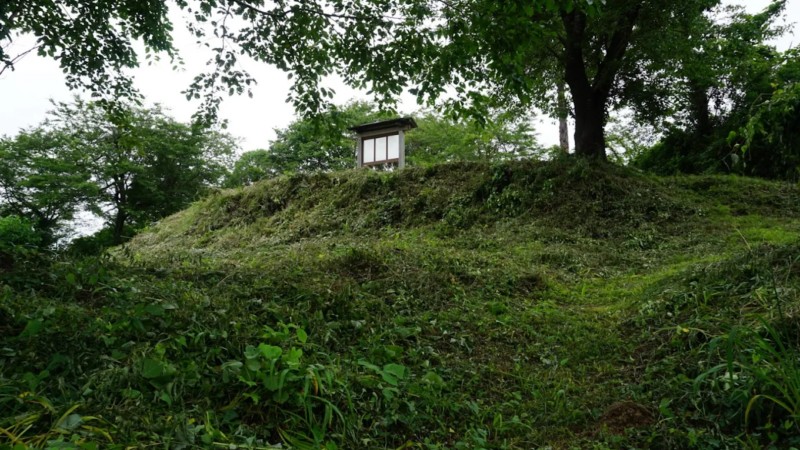
As defensive structures of Tsukii Castle, the remains of moats (horikiri) can be confirmed. Moats were dry moats dug to cut across ridges, serving as an important defensive line to prevent enemy intrusion. Even today, traces can be seen in the undulations of the terrain.
Furthermore, the remains of earthworks are also found around the enclosures. Earthworks were defensive walls constructed by piling up earth, serving to protect against arrows and firearms, and to obstruct the enemy’s line of sight. In some places, the rises of the earthworks remain clearly visible, providing clues to understanding the castle’s structure at the time.
Entrance Gates and Passages
The remains of entrance gates (koguchi) to the castle have also been confirmed. Because entrance gates were a weak point of a castle, they were generally fortified with complex structures. At Tsukii Castle, the access roads to the baileys are winding and narrow in places.
The paths leading to the mountaintop are also strategically placed with defense in mind, utilizing the steep terrain to make enemy attacks difficult.
Stonework and Artifacts
Traces of stonework remain in some areas, and can be found at the edges of the baileys and around the entrance gates. While full-scale stone walls are rare in medieval mountain castles, stone reinforcement was used in important areas.
Fragments of pottery and ceramics have also been unearthed from the castle site, providing clues to the lifestyle of those who lived there during the period when the castle was functional.
Archaeological Materials
Archaeological materials concerning Tsukii Castle are limited, but several important discoveries have been made.
Excavated Artifacts
Fragments of pottery, ceramics, and earthenware dating from the medieval to early modern periods have been unearthed from the castle site and its surroundings. These artifacts are important for determining the period when the castle was functional.
In particular, the types and dates of the ceramics found at Tsukii Castle confirm that it was actively used from the 15th to the 16th centuries. Fragments of Tokoname ware and Seto ware have also been found, providing insight into the distribution network of the time.
Castle Layout Maps and Surveys
Recent surveys by castle researchers have resulted in the creation of detailed layout maps of Tsukii Castle. These maps accurately record the arrangement of baileys, the locations of moats, and the scale of earthworks, making them indispensable resources for understanding the structure of Tsukii Castle.
With the development of GPS and laser surveying technologies, precise topographic data can now be obtained even for mountain castles covered in trees, advancing research on Tsukii Castle.
Historical Documents and Illustrations
Historical documents related to the Satake clan contain scattered descriptions of Tsukii Castle. In particular, documents concerning the organization of the Satake clan’s retainers and the distribution of territories record the names of the castle lord and garrison personnel of Tsukii Castle, making them important historical sources for understanding the castle’s history.
Furthermore, Tsukii Castle is mentioned in national maps and local historical documents created during the Edo period, indicating that it was recognized as an important historical site in the region even after its abandonment.
Military and Strategic Value of Tsukii Castle
The fact that Tsukii Castle was maintained for approximately 200 years is due to its high military and strategic value.
Geographical Location
Tsukii Castle was located on a mountaintop at an altitude of 404m, overlooking the Kuji River basin, making it an ideal location for monitoring and controlling the surrounding area. The Kuji River was an important waterway in northern Hitachi Province, and controlling its basin was essential for regional control.
In addition, its proximity to the Oshu Kaido (highway) allowed for monitoring and control of land routes. Tsukii Castle played an important role as a base for expansion towards Nango (present-day southern Fukushima Prefecture) and as a defensive base against invasions from the Shirakawa area.
The Satake Clan’s Northern Strategy
For the Satake clan, Tsukii Castle was an indispensable base for governing northern Hitachi Province and expanding their influence northward. Especially during the period of territorial recovery after the Yamairi Rebellion, it functioned as a frontline base for advances into Nango, contributing to the expansion of the Satake clan’s sphere of influence.
The Takagaki and Nouchi clans, dispatched as garrison guards, were not only responsible for defending the castle but also for governing the surrounding area and directing military operations. Tsukii Castle was a crucial base for the Satake clan’s northern strategy.
A Highly Defensive Mountain Castle
Built on a steep terrain at an altitude of 404m, Tsukii Castle was an extremely difficult fortress to conquer. The limited access to the summit allowed the defenders to hold it with a small force.
Combined with defensive structures such as moats and earthworks, Tsukii Castle boasted a strong defensive capability. In fact, although it was invaded by the Shirakawa Yuki clan at one point, its long-term retention as an important base speaks to its high level of defensiveness. ## Tsukii Castle and Fukuroda Falls
Near Tsukii Castle lies Fukuroda Falls, one of Japan’s three most famous waterfalls. This waterfall boasts a magnificent scale, standing 120 meters high and 73 meters wide, and is also known as “Shido no Taki” (Four-Tiered Waterfall) because it falls in four stages.
Tourism Connection
Currently, Fukuroda Falls is a major tourist attraction in Ibaraki Prefecture, drawing many visitors throughout the year. Tsukii Castle ruins are within walking distance of Fukuroda Falls, making it easy to visit both.
For history buffs and castle enthusiasts, it’s a valuable spot where you can enjoy both beautiful natural scenery and historical castle ruins simultaneously. Reflecting on the history of Tsukii Castle while visiting Fukuroda Falls would also be interesting.
Tsukii Mountain and Tsukii Kannon
Tsukii Mountain also houses the Tsukii Kannon Hall, which has been an object of worship since ancient times. The name Tsukii Castle is thought to originate from this Tsukii Mountain. It’s a place that conveys the medieval atmosphere where mountain worship and castles coexisted.
Current Status and Preservation of Tsukii Castle
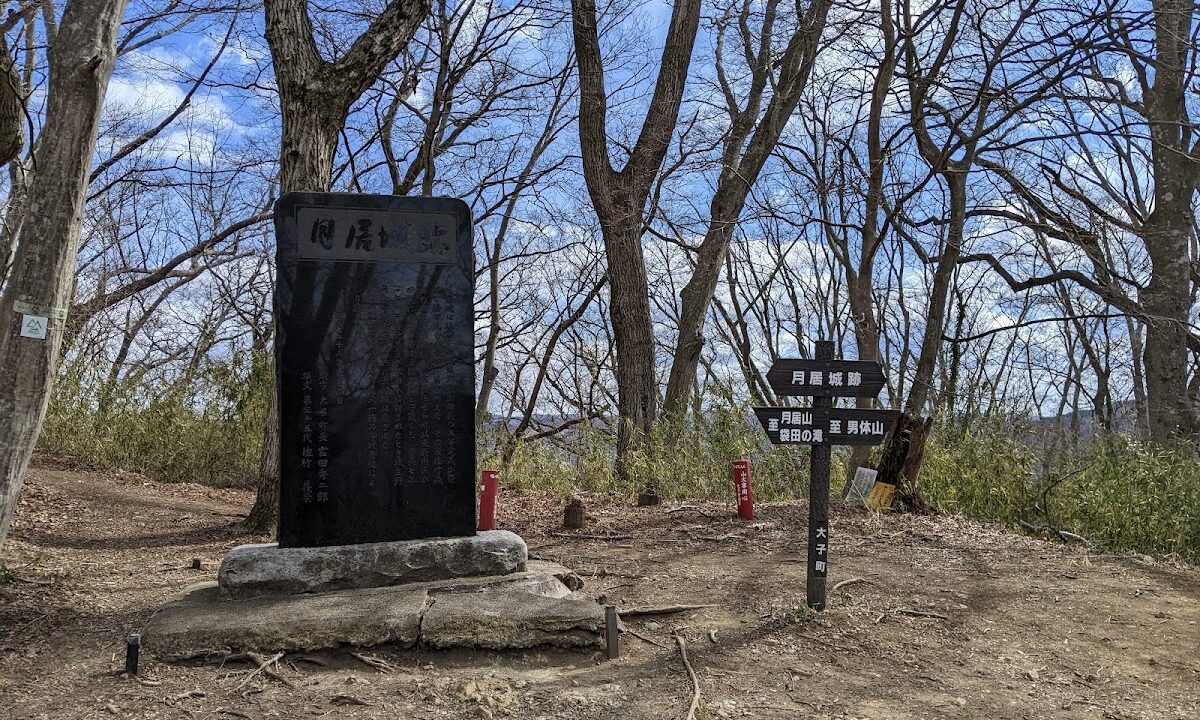
Tsukii Castle ruins are currently protected as a historical site by Daigo Town. Although the castle site is now a forested area, the remains are relatively well-preserved, and features such as baileys and moats can be seen.
Climbing and Visiting
Climbing to Tsukii Castle ruins is possible, but it requires climbing mountain paths, so appropriate equipment and physical fitness are necessary. While some parts of the trail are maintained, there are also steep slopes and slippery areas, so caution is advised.
When visiting, it is important to be considerate of the remains and observe basic manners such as taking your trash with you. Furthermore, climbing during winter or in bad weather is dangerous and should be avoided.
Local Initiatives
Daigo Town is working to promote tourism by utilizing local historical assets, including Tsukii Castle ruins. By combining it with Fukuroda Falls, a nationally renowned tourist resource, they are aiming to enhance the appeal of the area as a tourist destination where visitors can enjoy both history and nature.
Local history enthusiasts are conducting research and preservation activities, and efforts to pass on the history of Tsukii Castle to future generations continue.
The Satake Clan and the Lords of Tsukii Castle
The history of Tsukii Castle is closely related to the history of the Satake clan and their retainers. Here, we will look in detail at the main lords of the castle.
The Fukuroda Clan
The Fukuroda clan, the builders of the castle, were a branch family of the Kitazakede clan, a collateral branch of the Satake clan. As a member of the Satake clan, they were entrusted with governing the northern part of Kuji County and used Tsukii Castle as their base. However, they became extinct due to a lack of heirs, and the castle was temporarily abandoned.
While historical records are limited regarding the detailed genealogy and activities of the Fukuroda clan, it is certain that they built Tsukii Castle during the Oei era and contributed to the development and governance of the region.
The Odano Clan
After the extinction of the Fukuroda clan, the Odano clan, also a member of the Satake clan, inherited Tsukii Castle. The Odano clan was also an important branch of the Satake clan, governing several strongholds within Hitachi Province.
While details of how Tsukii Castle was managed during the Odano clan’s time are unclear, it is believed that its function as a branch castle of the Satake clan was maintained.
Takagaki Clan
After the recapture of Irikami-ho in Eisho 1 (1504), the Satake clan dispatched a retainer to Tsukii Castle as its castellan. One of them was the Takagaki clan. The Takagaki clan defended Tsukii Castle as a garrison and supported military operations toward Nango.
The Takagaki clan were hereditary retainers of the Satake clan, and records show they were active in other important strongholds as well. Further research is needed to determine their specific period of activity and achievements at Tsukii Castle.
Nouchi Clan
The Nouchi clan was the last lord of Tsukii Castle. As a senior retainer of the Satake clan, the Nouchi clan served as the castellan of Tsukii Castle for a long period. They managed Tsukii Castle as a frontline base for the advance toward Nango, supporting the Satake clan’s northern operations. When the Satake clan was transferred to Akita in 1602 (Keicho 7), the Nouchi clan also moved to Akita with their lord. It is said that Nouchi Daizen-no-suke was transferred to the castle town of Odate in Dewa Province and adopted the name Tsukiisai. This name, “Tsukiisai,” is thought to commemorate his time stationed at Tsukii Castle, indicating that Tsukii Castle was an important base for the Nouchi clan.
Cultural Value of Tsukii Castle
Tsukii Castle is not merely a military facility, but also an important historical site for understanding the culture and society of medieval Hitachi Province.
A Typical Example of a Medieval Mountain Castle
Tsukii Castle possesses a typical structure of a medieval mountain castle, making it a valuable example in castle research. Unlike early modern castles that used stone walls, its defensive facilities, primarily earthworks and moats, are a good example of medieval castle construction techniques.
Comparative research with mountain castles throughout Japan can reveal the characteristics of castle construction techniques in different regions and their changes over time. Tsukii Castle holds high academic value as a representative example of a medieval castle in northern Ibaraki Prefecture.
Historical Materials for the Study of the Satake Clan
The history of Tsukii Castle is an important historical source for understanding the expansion of power and governance methods of the Satake clan, a Sengoku period daimyo of Hitachi Province. It provides a concrete example of how the Satake clan positioned their family members and vassals and managed their territory.
In particular, by examining the role that Tsukii Castle played at each stage of the Satake clan’s history—from the recovery process after the Yamairi Rebellion, to the expansion of their power into Nango, and finally to their transfer to Akita—we can gain a deeper understanding of regional history during the Sengoku period.
Core of Regional Identity
Tsukii Castle, as a historical site symbolizing the history of Daigo Town, contributes to the formation of the region’s identity. Along with the natural asset of Fukuroda Falls, Tsukii Castle is a historical asset that is a source of pride for the region.
The history of Tsukii Castle is also covered in local school education, providing children with opportunities to learn about local history. Through these educational activities, the region’s history is being passed down to the next generation.
Summary
Tsukiore Castle is a mountain castle located at an altitude of 404m in Fukuroda, Daigo-machi, Kuji-gun, Ibaraki Prefecture. It was built during the Oei era (1394-1425) by the Fukuroda clan, a branch of the Satake clan. Also known as Fukuroda Castle, this castle functioned as an important branch castle of the Satake clan in northern Hitachi Province for approximately 200 years.
After the extinction of the Fukuroda clan, the Odano clan inherited the castle. During the turmoil of the Yamairi Rebellion, it came under the control of the Shirakawa Yuki clan, but the Satake main family recaptured it in Eisho 1 (1504). After that, Satake clan vassals such as the Takagaki and Nouchi clans served as castle lords, and it was used as a frontline base for their advance into Nango.
With the Satake clan’s transfer to Akita in Keicho 7 (1602), the castle lord Nouchi also moved to Akita, and Tsukiore Castle was abandoned. Even today, remnants such as baileys, moats, and earthworks remain, making it a valuable historical site that conveys the structure of a medieval mountain castle.
Located near the popular tourist attraction Fukuroda Falls, Tsukioi Castle ruins are a place worth visiting, offering a chance to enjoy both nature and history. For those interested in the medieval history of Ibaraki Prefecture, especially the history of the Satake clan, Tsukioi Castle is a must-see historical site.

-800x450.png)