
Tokujiro Castle (Tochigi Prefecture) Complete Guide: A Strategic Fortress of the Utsunomiya Clan with Remaining Double Dry Moats
What is Tokujiro Castle?
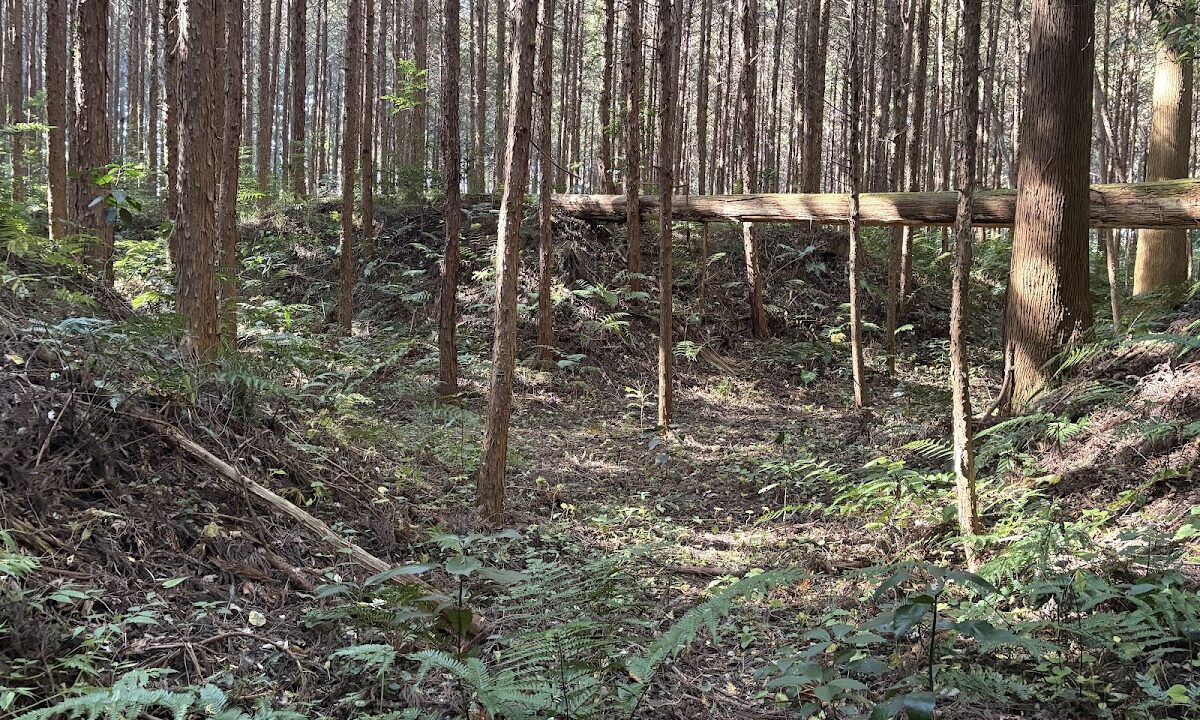
Tokujiro Castle is a flatland castle from the Sengoku period located in Tokujiro-cho, Utsunomiya City, Tochigi Prefecture. Also known as “Oshiroyama,” it was built on a slight elevation on the west bank of the Tagawa River. Even today, the remains, measuring approximately 200 meters east-west and 400 meters north-south, remain in excellent condition. The massive dry moats and double horizontal moats, in particular, are highly regarded among castle enthusiasts.
The castle site is preserved as a forest and is carefully protected by locals as a valuable historical heritage of Utsunomiya City. Located a short distance from the Nikko Kaido (National Route 119), it is an important historical site that conveys the tension of the Sengoku period.
History of Tokujiro Castle
Background and Purpose of Construction
The construction of Tokujiro Castle was rooted in the tense relationship between the Utsunomiya clan and the Nikkozan forces during the Sengoku period. During the time of Utsunomiya Kunitsuna, the Nikkozan warrior monks, who allied themselves with the Later Hojo clan and plotted invasions of Utsunomiya territory, became increasingly active. To counter this threat, it is believed that Nitta Tokujiro Masakoto, a retainer of Utsunomiya Kunitsuna, constructed Tokujiro Castle.
Nikkozan was known at the time as a powerful religious force with formidable military strength, and its warrior monks were a formidable military presence. Tokujiro Castle served as an important base protecting the northern side of Utsunomiya Castle, playing a crucial role in preparing for invasions from the Nikko area.
Changes in Castle Lords
The first lord of Tokujiro Castle is believed to be the builder, Nitta Tokujiro Masakoto. The Nitta clan served as important retainers of the Utsunomiya clan and were entrusted with the defense of this region. It is believed that the castle lord changed several times, but records indicate that the lord in 1597 (Keicho 2) was Nitta Yoshisada.
The Nitta clan, under a strong lord-vassal relationship with the Utsunomiya clan, used Tokujiro Castle as their base to guard the northern region. Judging from the castle’s size and the structure of its moats, it appears to have been a full-fledged castle with a strong emphasis on military function, rather than merely a residence for a local lord.
The Road to Abandonment
The fate of Tokujiro Castle was closely linked to the actions of its lord, the Utsunomiya clan. In 1597 (Keicho 2), when the Utsunomiya clan was dispossessed of their territory, their retainers were forced to disperse. It is believed that Tokujiro Castle was abandoned following the Utsunomiya clan’s downfall.
As Toyotomi Hideyoshi’s unification of Japan progressed, the Utsunomiya clan experienced political downfall, bringing an end to their long and distinguished history. Tokujiro Castle, too, ceased to exist with the end of the Sengoku period. After its abandonment, the land was used for farming and forestry, and its function as a castle was completely lost throughout the Edo period.
Origin of the Place Name Tokujiro
The place name “Tokujiro” has an interesting history. Originally, this area was an outer territory of the Kujira clan of Nikko, and was called “Soto-Kujira.” It is believed that this later evolved into the pronunciation “Tokujira.”
Later, it is said that the kanji spelling “Tokujiro” became established after Nitta Tokujiro, a retainer of the Utsunomiya family, built Tokujiro Castle. Interestingly, the town name is pronounced “Tokujiro,” while the castle ruins are pronounced “Tokujirajo.” This difference in pronunciation reflects the history of the place name’s evolution.
Structure and Layout of Tokujiro Castle
Overall Scale and Arrangement
Tokujiro Castle is a flatland castle built on a slightly elevated area facing the Tagawa River. The existing remains are based on a rectangular layout approximately 200 meters east-west and 400 meters north-south, boasting a considerable scale for a flatland castle of the Sengoku period.
The castle consists of five baileys (kuruma), each clearly demarcated by a dry moat approximately 10 meters wide and over 4 meters deep. The scale of these moats is surprisingly large, encircling the castle grounds in a way that is unimaginable from the entrance.
Characteristics of the Main Enclosure (Honmaru)
The main enclosure is located at the eastern end of the castle, facing the Tagawa River. It has a slightly elongated rectangular plan running north-south, with a distinctive shape where the southwest corner is an inward-facing corner. This inward-facing corner is a defensive feature, designed to allow for attacks on approaching enemies from the flank.
An L-shaped moat runs from the north to the east side of the main enclosure. This moat is closed off at both ends by earthen ramparts, indicating that it was not merely an obstacle but a carefully designed defensive structure.
Highlights of the Double Dry Moat
The greatest highlight of Tokujiro Castle is the double dry moat located on the north side of the main enclosure. An inner moat separates the main enclosure from the second enclosure, and a further double dry moat separates the main enclosure from the third enclosure. This double structure is a sophisticated defensive system designed to prevent enemy intrusion in two stages.
The double moat on the north side dramatically enhances its defensive capabilities by placing an additional dry moat outside the inner moat. The moat is over 4 meters deep and approximately 10 meters wide, making it extremely large-scale. Such extensive civil engineering work required considerable effort and skill, demonstrating the high military and economic power of the Utsunomiya clan.
Earthworks and Outer Moat
Earthworks remain throughout the castle grounds, with the earthworks surrounding the baileys (kuruma) being particularly impressive, some reaching a height of 2-3 meters. It is believed that fences or walls were built on top of these earthworks, forming a strong defensive line in combination with the moat.
A deeper outer moat surrounded the third bailey, suggesting that the entire castle was protected by multiple lines of defense. This outer moat was also sufficiently wide and deep, making it a formidable obstacle that would have been difficult to breach.
Arrangement and Function of the Baileys
The five baileys are thought to have each had a different function. The main bailey may have housed the lord’s residence and command post, the second bailey the residences of senior retainers and soldiers’ quarters, and the third bailey and beyond may have contained logistical facilities such as granaries and stables.
Movement between baileys was via earthen and wooden bridges, which could be destroyed in times of emergency, allowing each bailey to function as an independent defensive stronghold. This design philosophy is a common feature of castles from the Sengoku period, and it is clear that Tokujiro Castle incorporated the latest castle-building techniques of the time.
Current State of Tokujiro Castle Ruins
Preservation Status of Remains
Currently, the Tokujiro Castle ruins are well-preserved as a forest. Fortunately, development has not occurred, and major remains such as dry moats and earthworks retain their Sengoku period appearance. The scale of the dry moats is particularly impressive; standing at the bottom of the moat, which is over 4 meters deep, gives a real sense of the castle’s defensive strength at the time.
Many parts of the earthworks remain, allowing for a clear view of the castle’s layout. However, some areas have suffered from collapse and erosion due to centuries of weathering, making future preservation measures a challenge.
Information Board and Guide
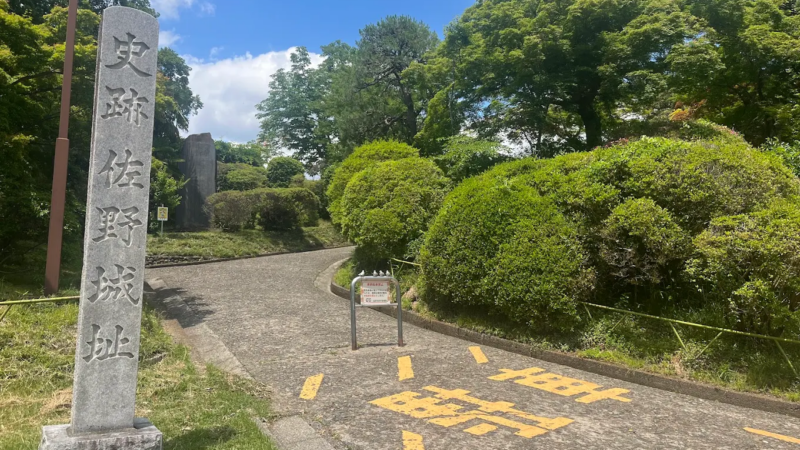
An information board explaining Tokujiro Castle is located a short distance from the Nikko Kaido (National Route 119). This board concisely summarizes the castle’s history and structure, allowing even first-time visitors to understand its overview.
There is parking available near the information board, making it accessible by car. However, since the castle site is an undeveloped forest, it is recommended to wear comfortable shoes and clothing when visiting.
Points to Note During Your Visit
When visiting Tokujiro Castle, paying attention to the following points will allow you to appreciate the castle’s charm more deeply.
Inner Moat Between the Main and Second Enclosures: This is an important defensive line protecting the central part of the castle. There are places where you can descend to the bottom of the moat and experience its depth.
Double Horizontal Moat: The double moat structure on the north side of the main enclosure is the greatest highlight of Tokujiro Castle. Looking at the inner moat from the outer moat reveals the ingenuity of the multi-layered defense.
Outer Moat Outside the Third Enclosure: This deep moat protects the outer perimeter of the castle, and its sheer size is astonishing.
Status of Earthworks: The earthworks surrounding each enclosure vary in their state of preservation depending on the location. In the well-preserved sections, you can walk along the earthworks and experience the perspective of the castle soldiers of that time. ## Access and Tourist Information
Location
Tokujiro-cho, Utsunomiya City, Tochigi Prefecture
Transportation Access
Access by Car: Located along the Nikko Kaido (National Route 119), approximately 10 kilometers north of central Utsunomiya. Parking is available near the information board.
Public Transportation: Buses are available from JR Utsunomiya Station or Tobu Utsunomiya Station, but service is limited, so it is recommended to check the timetable in advance.
Precautions During Visits
- The castle ruins are in an undeveloped forest, so please be careful of your footing.
- The bottom of the moat becomes slippery during and after rain, so please be especially careful.
- In summer, vegetation can grow thick, making it difficult to see the remains.
- Insect repellent and wearing long sleeves and long pants are recommended.
- There are no toilets or rest facilities within the castle ruins.
Nearby Tourist Attractions
The following tourist attractions are located near Tokujiro Castle. Utsunomiya Castle Ruins Park: The former base of the Utsunomiya clan. Visitors can see restored earthworks and turrets. As it was the castle of the main family of Tokujiro Castle, visiting both together will deepen your understanding.
Nikko Toshogu Shrine: Approximately 20 kilometers north of Tokujiro Castle. A magnificent shrine registered as a World Heritage Site, and a representative tourist destination of Tochigi Prefecture.
Oya Stone Museum: A museum utilizing the site of the former Oya stone quarry in Utsunomiya City. Its fantastical underground space is popular.
Historical Value of Tokujiro Castle
Position in Regional History during the Sengoku Period
Tokujiro Castle is an important historical site that tells the story of the tension between two forces: the Utsunomiya clan and the Nikko Mountain forces. In northern Kanto during the Sengoku period, religious forces were also important political and military players, and their actions greatly influenced the regional situation.
The existence of Tokujiro Castle demonstrates that the Utsunomiya clan took the threat from the Nikko region seriously and undertook large-scale construction work to establish a defensive system. This is valuable physical evidence for understanding the political situation at the time.
From the Perspective of Castle Construction Technology
The layout of Tokujiro Castle demonstrates the high level of castle construction technology in the late Sengoku period. In particular, the structure of the double moat is not merely a moat for obstacles, but a clever design that maximizes defensive efficiency.
The fact that it is a flatland castle, yet achieves defensive capabilities comparable to a mountain castle by skillfully combining moats and earthworks, is highly commendable from a technical standpoint. Flatland castles with this kind of large-scale moat are limited in the Kanto region, making it an important example in castle research.
Significance of Preservation
The Tokujiro Castle ruins are a valuable example of a site that escaped development and whose remains are preserved in good condition. While many flatland castles have been lost due to urban development and agricultural land development, Tokujiro Castle serves as a living textbook that conveys the reality of castles from the Sengoku period.
This historical site, carefully preserved by locals and castle enthusiasts, requires continued appropriate preservation and management. It is crucial to balance utilization and preservation, such as installing explanatory signs and improving viewing paths, to pass it on to future generations.
Evaluation by Castle Fans
Tokujiro Castle enjoys high praise among castle enthusiasts. Castle information websites such as Kojodan (Castle Attack Group) have received numerous positive comments, including “I was surprised by the scale of the dry moat, which was larger than I imagined,” “The double moat is magnificent,” and “The remains are well-preserved.”
The following points are particularly praised:
- Scale and Preservation of the Dry Moat: A large dry moat, over 4 meters deep and approximately 10 meters wide, remains in excellent condition.
- Structure of the Double Horizontal Moat: The defensive ingenuity is clearly understandable.
- Ease of Access: Relatively easy access from the national highway.
- Quiet Environment: Not commercialized as a tourist spot, allowing for thorough observation of the remains.
On the other hand, some areas for improvement have been pointed out, such as “insufficient signage” and “difficulty seeing due to overgrown vegetation in summer.”
Recommended Plans for Visiting Tokujiro Castle
Basic Course (Duration: Approx. 1 hour)
- Check the castle overview on the information board (10 minutes)
- Visit the inner moat between the main enclosure and the second enclosure (15 minutes)
- Observe the double horizontal moat from the outside to the inside (20 minutes)
- Visit the outer moat outside the third enclosure (15 minutes)
In-depth Course (Duration: Approx. 2 hours)
In addition to the basic course, walk around the earthworks of each enclosure to understand the overall layout. If possible, it is recommended to descend to the bottom of the moat to experience the difference in impression from above. If you enjoy taking photos, allocate more time.
Plan Combining Tokujiro Castle with Surrounding Castles
Visiting Tokujiro Castle in combination with Utsunomiya Castle Ruins Park makes it easier to understand the relationship between the main castle and branch castles of the Utsunomiya clan. A recommended one-day plan is to visit Tokujiro Castle in the morning and Utsunomiya Castle Ruins Park in the afternoon.
Summary
Tokujiro Castle is a full-fledged flatland castle built amidst the tense political situation of the Sengoku period. Built by Nitta Tokujiro Masanori, a retainer of Utsunomiya Kunitsuna, it functioned as an important military base to defend against the threat of Nikkozan warrior monks.
The remaining structures, such as the double dry moats and earthworks, attest to the high level of castle-building technology of the time, making it a fascinating spot for castle enthusiasts. It’s a hidden gem of a castle that you should definitely visit when you’re in Utsunomiya City, Tochigi Prefecture.
The vast dry moats crisscrossing the site are far more impressive than you’d imagine from the entrance with its explanatory sign, surprising visitors. Why not immerse yourself in the romance of history at the Tokujiro Castle ruins, where you can feel the spirit of the Sengoku period?
--765x450.png)

