

Complete Guide to Taki Castle | The History and Highlights of the Utsunomiya Clan’s Fortress and Tochigi Prefecture’s Premier Mountain Castle
What is Taki Castle?
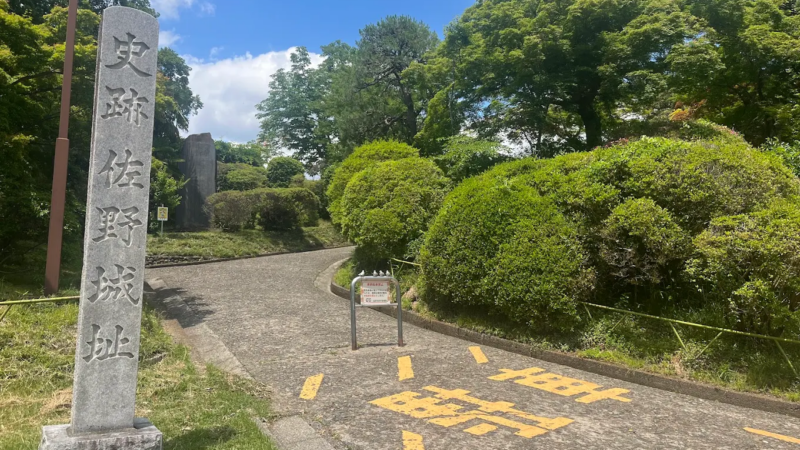
Taki Castle (Tage-jo) is a medieval mountain castle located in Tashimo-cho, Utsunomiya City, Tochigi Prefecture, also known as “Takiyama Castle.” It is a large-scale mountain castle representative of the Kanto region, encompassing the entire 377m-high Takiyama mountain, and boasting the largest scale in Tochigi Prefecture.
As an important branch castle of Utsunomiya Castle, the residence of the Utsunomiya clan, it served as a strategic base protecting the western side of their territory. At the end of the Sengoku period, Utsunomiya Kunitsuna moved his base from the flatland castle of Utsunomiya Castle to Taki Castle to counter the Hojo clan’s expansion into northern Kanto, making it a historically significant castle.
The current castle site retains well-preserved remains such as earthworks and dry moats, allowing visitors to imagine the magnificent appearance of the mountain castle in its heyday. Takiyama Fudo-son is erected at the summit, making it a popular place of worship.
History and Development of Taki Castle
Heian to Kamakura Periods
Regarding the construction of Taki Castle, there is a tradition that it was built in 1063 by Fujiwara no Soen, but there is no conclusive evidence. It is believed to have functioned as an important base for the western defense of the territory of the Utsunomiya clan, a prominent family whose main castle was Utsunomiya Castle in Kawachi District, Shimotsuke Province, from the late Heian period.
The Utsunomiya clan was a prestigious samurai family descended from Fujiwara no Hidesato, and they wielded considerable power as a powerful local clan in Shimotsuke Province from the Heian period. It is highly probable that Taki Castle existed in some form from an early period as a defense for the western part of the Utsunomiya clan’s sphere of influence.
Renovation and Establishment as a Residence at the End of the Sengoku Period
Taki Castle first appears on the historical stage at the end of the Sengoku period. In the latter half of the 16th century, during the time of Utsunomiya Kunitsuna, the 22nd head of the Utsunomiya clan, the Utsunomiya clan faced a serious threat.
From the south, the Hojo clan, rising to power as the rulers of the Kanto region, expanded their influence and attempted to advance into northern Kanto. From the north, they were also threatened by invasions from warrior monks of Nikkozan, who took advantage of the situation. Because Utsunomiya Castle, their base, was a flatland castle unsuitable for defense, Utsunomiya Kunitsuna made a crucial decision to overcome the critical situation.
Utsunomiya Kunitsuna entrusted Utsunomiya Castle to his vassal, Tamano Mino-no-kami, and extensively renovated Taki Castle, moving his residence there. This was not merely a temporary refuge, but rather an intention to establish a permanent base, as is evident from the development of the castle town, which will be discussed later.
Development of the Castle Town
Many place names from the Utsunomiya castle town remain as sub-district names in the town of Taki. Place names such as Kamigawara, Shimogawara, Kogawauchi (Kogawa-dera), Seiganji (Seigan-ji), Uramachi (Ikegamiura-machi), Hanawada, Ogimachi, and Genishimachi (Motoishimachi) are important evidence that Utsunomiya Kunitsuna planned and developed Taki Castle not as a temporary base, but as a permanent one.
The relocation of the castle town is thought to have involved not only a change in place names, but also a large-scale population shift including merchants, artisans, temples, and shrines. This indicates that the Utsunomiya clan aimed to establish a new system of rule centered on Taki Castle.
The Turning Point of 1590
In 1590, Toyotomi Hideyoshi launched the Odawara campaign. This historical event would drastically change the fate of Taki Castle.
Utsunomiya Kunitsuna participated in Toyotomi Hideyoshi’s siege of Odawara, and for his achievements, his territory was secured in the Utsunomiya Settlement. With the fall of the Hojo clan and the easing of military tensions in the Kanto region, the need to maintain his residence at Taki Castle, a mountain castle, diminished.
As a result, Utsunomiya Kunitsuna returned his base to Utsunomiya Castle. Taki Castle reverted to its status as a subsidiary castle, but its importance remained.
The Road to Abandonment
In 1597 (Keicho 2), a turning point arrived for the Utsunomiya clan. Utsunomiya Kunitsuna was dispossessed of his domain by Toyotomi Hideyoshi. There are various theories as to the reason for this dispossession, but it is believed to have been related to Hideyoshi’s invasion of Korea and political maneuvering within the Toyotomi regime.
Simultaneously with the Utsunomiya clan’s dispossession, Taki Castle was abandoned. Having served as an important base for the Utsunomiya clan for over 400 years, Taki Castle thus disappeared from the stage of history.
Taki Castle in Modern Times
After its abandonment, the Taki Castle site returned to nature over many years. However, the Takiyama Fudōson temple was built on the mountaintop and has been cherished by local people as a place of worship.
Currently, the castle site retains well-preserved remains such as earthworks, dry moats, and baileys, and is attracting attention as a valuable historical site representing a medieval mountain castle in the Kanto region. Local preservation societies and history enthusiasts are also carrying out maintenance activities, creating an environment that makes it easier for visitors to view the remains.
Structure and Layout of Taki Castle
A Magnificent Structure Fortifying the Entire Mountain
The most distinctive feature of Taki Castle is that the entire 377m-high Takiyama mountain was fortified as a massive castle complex. From the mountaintop to the foot of the mountain, a continuous series of defensive structures such as earthworks, moats, and baileys were built, making it the largest mountain castle in Tochigi Prefecture and one of the most prominent in the Kanto region.
By utilizing the multiple peaks of Mount Taki and placing baileys on each, a multi-layered defensive system was constructed. Even if an attacking force captured one bailey, they would be thwarted by the successive defensive positions, giving it the function of an impregnable fortress.
Main Enclosure (Goten-daira)
At the mountaintop lies the main enclosure (honmaru), known as “Goten-daira.” It is believed that this was the residence of Utsunomiya Kunitsuna, and it functioned as the central part of the castle.
The main enclosure retains solid earthworks, conveying the appearance of the defensive structures in its heyday. The height and thickness of the earthworks indicate that considerable civil engineering work was carried out. From the main enclosure, the surrounding area could be seen in its entirety, and it played an important role as a military surveillance base.
Eastern Peak and View
The view from the upper part of the eastern peak to the main enclosure has been improved in recent years due to the clearing of trees. From here, you can see the city of Utsunomiya and the surrounding mountains, allowing you to experience the view the castle lord had at the time.
During the Sengoku period (Warring States period), this view was militarily extremely important. It is thought to have functioned as a surveillance base to detect enemy movements early and prepare defensive positions.
Arrangement of Enclosures
Numerous enclosures are arranged on each peak of Mt. Taki. Some are overgrown with bushes, but by carefully observing the terrain, the presence of enclosures can be confirmed from flat areas, terraces, and cliffs.
These enclosures are thought to have been used not only as defensive structures, but also as garrisons for soldiers, storage facilities for weapons and food, and even residences for retainers. This indicates that Taki Castle functioned not merely as a military facility, but as a “mountain city.”
Earthworks and Dry Moats
Earthworks and dry moats are well-preserved throughout the castle site. The earthworks prevented enemy intrusion and functioned as a defensive wall against arrows and firearms. Dry moats were important defensive structures that hindered enemy advances and reduced the momentum of attacks.
In particular, around the main enclosures, there are areas where a “multi-layered moat” structure can be seen, demonstrating the advanced castle-building techniques of the late Sengoku period.
Design of the Entrance (Koguchi)
The entrances to the castle, known as koguchi, incorporated various features to make enemy intrusion difficult. Avoiding straight approaches, winding passages and structures that allow for attacks from the flanks demonstrate a strong emphasis on defense.
Highlights of Taki Castle
Earthworks of the Main Enclosure
The earthworks remaining in the main enclosure at the mountaintop are one of the most impressive remains of Taki Castle. The earthen ramparts, several meters high, have withstood over 400 years of wind and rain and remain clearly visible, a testament to the advanced civil engineering techniques of the time.
Walking along the top of the ramparts allows you to survey the surroundings from the perspective of the castle lord, experiencing the tension of the Sengoku period.
Dry Moats and Cut Slopes
The dry moats and cut slopes remaining throughout the castle grounds are impressive defensive structures unique to mountain castles. The deep moats, in particular, are constructed to cut across the mountain ridge, and their sheer scale is astonishing.
The steep slopes of the cut slopes clearly show the traces of artificial excavation, demonstrating the large-scale civil engineering work that took place.
A Series of Enclosures
The series of enclosures arranged along the mountain slope are an important element demonstrating the scale of Taki Castle. Visiting each enclosure allows you to experience the complex layout.
Takiyama Fudo-son Temple
At the summit stands Takiyama Fudo-son Temple, creating a unique atmosphere where historical castle ruins and a place of worship blend seamlessly. Visiting the castle ruins in conjunction with a visit to the temple allows you to appreciate the layered history of Takiyama.
Views
The views from the eastern peak and the main enclosure are magnificent, offering panoramic views of Utsunomiya city and the surrounding mountains. On clear days, you can see distant mountain ranges, allowing you to imagine the castle lords of the Sengoku period strategizing while gazing at this scenery.
The Utsunomiya Clan and Taki Castle
History of the Utsunomiya Clan
The Utsunomiya clan was a prestigious samurai family descended from Fujiwara no Hidesato, and they wielded considerable power as a powerful local clan in Shimotsuke Province from the Heian period. During the Kamakura period, they served the shogunate as gokenin (vassals), and during the Muromachi period, they reigned as a powerful shugo daimyo (provincial governor) of the Kanto region.
During the Sengoku period (Warring States period), the Utsunomiya clan became embroiled in conflicts with surrounding daimyo (feudal lords), but they managed to survive as an independent force until the time of Utsunomiya Kunitsuna.
Utsunomiya Kunitsuna’s Decision
Utsunomiya Kunitsuna’s decision to renovate Taki Castle and move his residence there was not merely a military decision, but a crucial one that determined the very survival of the Utsunomiya clan. He judged that Utsunomiya Castle, a flatland castle, could not withstand the large army of the Hojo clan, and therefore chose a siege strategy that utilized the defensive capabilities of a mountain castle.
This decision allowed the Utsunomiya clan to withstand the pressure of the Hojo clan and maintain their independence until Toyotomi Hideyoshi’s siege of Odawara.
The Mystery of the Dispossession
The reason for Utsunomiya Kunitsuna’s dispossession in 1597 (Keicho 2) remains unclear. Various theories have been proposed, including issues related to Toyotomi Hideyoshi’s invasion of Korea, political conflicts within the Toyotomi regime, or problems with territorial management.
After their downfall, the Utsunomiya clan temporarily declined, but later revived as hatamoto (direct retainers of the shogun) during the Edo period.
Main Branch Castles of Taki Castle
The Utsunomiya clan’s defense network, centered around Taki Castle, included several branch castles. These branch castles worked in conjunction with Taki Castle to defend the territory.
Utsunomiya Castle
This was the main castle of the Utsunomiya clan and remained an important base even after Taki Castle became their residence. Tamano Minokami served as the castle lord, and it continued to function as the political and economic center during peacetime.
Other Branch Castles
The Utsunomiya clan’s territory included several branch castles, such as Tobiyama Castle and Katsuyama Castle, forming a defense network centered around Taki Castle. These castles communicated with each other and were equipped with a system to cooperate in dealing with enemy invasions.
Visitor Guide
Access
Public Transportation
- Approximately 30 minutes by bus from JR Utsunomiya Station, get off at Takiyama Entrance, then approximately 40 minutes on foot to the summit.
By Car
- Approximately 20 minutes from Utsunomiya IC on the Tohoku Expressway
- Parking available at Takiyama Fudōson
Precautions for Visiting the Castle
- As it is a mountain castle, comfortable shoes and clothing are essential.
- Insect repellent is recommended during the summer months.
- Bring drinking water with you.
- Some areas are overgrown with bushes, so avoid unnecessary exploration.
- Allow approximately 1.5 to 2 hours for the climb.
Points to Note During Your Visit
- First, visit Takiyama Fudōson and examine the earthworks of the main enclosure.
- Enjoy the view from the eastern peak.
- If time permits, explore each enclosure to experience the scale of the castle.
- Observe the defensive features such as dry moats and steep slopes.
Nearby Tourist Attractions
Utsunomiya Castle Ruins Park
- The site of the Utsunomiya clan’s main castle, where you can see reconstructed earthworks and turrets.
Utsunomiya City Museum
- Exhibits materials related to the Utsunomiya clan and Taki Castle.
Oya History Museum
- A facility where you can learn about the history of Utsunomiya City, including exhibits related to castles.
Current Status and Challenges of Taki Castle Research
Limitations of Historical Materials
Regarding Taki Castle, there are relatively few existing historical materials and artifacts, leaving many points unclear about its detailed history. In particular, the history from the Heian period to the early Sengoku period relies heavily on oral tradition.
Importance of Archaeological Investigations
It is hoped that archaeological approaches, such as excavation surveys, will further clarify the true nature of Taki Castle. In particular, investigations of the castle town’s remains are important for clarifying the actual state of the castle town’s development by Utsunomiya Kunitsuna.
Preservation and Utilization
Taki Castle Ruins are a valuable historical heritage site, and appropriate preservation and utilization are required. Various initiatives are underway, including maintenance activities by local preservation societies and utilization as a tourist resource.
Summary
Taki Castle, the largest mountain castle in Tochigi Prefecture, is an important historical site that conveys the history of the Utsunomiya clan at the end of the Sengoku period. The history of Utsunomiya Kunitsuna moving his residence from the flatland Utsunomiya Castle and extensively renovating it to counter the threat of the Hojo clan speaks to the tension and strategic thinking of the Sengoku period.
The magnificent structure that fortified the entire 377m-high Taki Mountain, the well-preserved remains such as earthworks and dry moats, and the wonderful view from the summit deeply impress visitors.
Taki Castle, as the largest mountain in Tochigi Prefecture, boasts a magnificent structure, well-preserved earthworks and dry moats, and offers stunning views from the summit. After Toyotomi Hideyoshi’s siege of Odawara, the Utsunomiya clan returned their base to Utsunomiya Castle. Although Taki Castle was abandoned in 1597 with the confiscation of the Utsunomiya clan’s domain, it remained a beloved site for local worshippers as the Takiyama Fudōson temple.
Currently, Taki Castle ruins are attracting attention from history enthusiasts and castle fans as a representative medieval mountain castle of the Kanto region. When visiting Utsunomiya City, be sure to visit Taki Castle ruins and experience the glory of the Utsunomiya clan during the Sengoku period and the magnificent appearance of this mountain castle.
References
For those who wish to learn more about the history and structure of Taki Castle, please refer to the following references.
- “Medieval Castle Sites in Tochigi Prefecture,” Tochigi Prefectural Board of Education
- “History of Utsunomiya City,” Utsunomiya City
- “Comprehensive Survey of Japanese Castles,” Volume 4, Shin Jinbutsu Oraisha
- Articles related to Taki Castle in various castle research journals
- Survey reports from local history research societies
These documents provide detailed information about the history of Taki Castle and the latest research findings.
--765x450.png)