Toishi Castle (Ueda City, Nagano Prefecture) Complete Guide | History and Highlights of a Strategic and Impregnable Mountain Castle of the Sengoku Period
What is Toishi Castle?
Toishi Castle is a Sengoku period mountain castle located in Ueno, Ueda City, Nagano Prefecture. Also known as Toishi Castle, Masugata Castle, Honjo Castle, and Yoneyama Castle, it is designated as a Nagano Prefecture Historic Site. Built on the ridge of Higashi Taro Mountain, this castle occupies a strategic location overlooking the Ueda Plain to the south and the Sanada region to the northeast. It holds a special place in the history of Japanese castles as the site of the “Toishi Collapse,” the only major defeat suffered by Takeda Shingen.
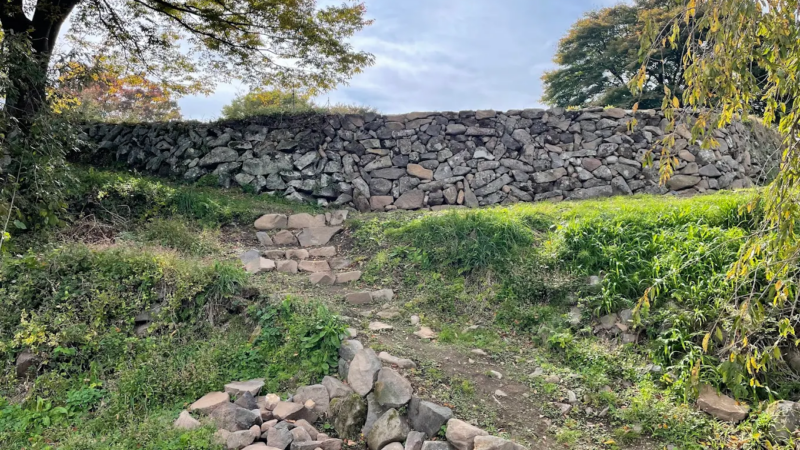
Even today, the remains of the castle, such as baileys, earthworks, and stone walls, are well-preserved, making it a valuable historical site that conveys the appearance of a Sengoku period mountain castle. Deeply intertwined with the history of the Sanada clan, Toishi Castle, along with Ueda Castle, is a representative historical heritage site of Ueda City, attracting many castle enthusiasts and history lovers.
Basic Information about Toishi Castle
Common Names and Alternate Names
Toishi Castle is known for having several alternative names. The most common alternative name is “Toishi Castle,” which is thought to originate from the geology and shape of the mountain on which the castle was built. Other names used include “Masugata Castle,” “Honjo Castle,” “Yoneyama Castle,” and “Isesaki Castle.” These names stem from the fact that the names of the various baileys and fortifications that make up the castle complex were used independently as the castle’s name.
Location
Location: Ueno, Ueda City, Nagano Prefecture
Former Province: Chiisagata District, Shinano Province
Toishi Castle is located approximately 5 kilometers northeast of Ueda city center, built on a ridge extending southwest from Higashitaro Mountain (elevation 1,164 meters). To the west, the Kankawa River flows southwest, near its confluence with the Chikuma River, making it a strategic point for water transport.
Classification and Structure
Castle Classification: Mountain Castle
Builder: Sanada Clan (Various theories exist)
Main Lords: Murakami Clan, Takeda Clan, Sanada Clan
Keep Structure: None (As it is a mountain castle, there is no keep)
Toishi Castle is a typical medieval mountain castle, a defensive structure that skillfully utilizes the natural terrain. It has a linear structure with multiple interconnected baileys, and the main castle (Toishi Castle) was at the center, with subsidiary castles such as Masugata Castle and Yoneyama Castle forming a unified defensive network.
Topography
Location and Geographical Characteristics
The ridge of Higashi Taro Mountain, where Toishi Castle was built, is located at an altitude of approximately 800 meters, offering an excellent vantage point overlooking the Ueda Basin. To the south lies the Ueda Plain, to the northeast you can see Sanada-go (present-day Sanada-cho, Ueda City), and to the southeast you can see Kita-Saku. This geographical location was a crucial transportation hub in Shinano Province, serving as an important military base connecting northern and eastern Shinano.
The Kangawa River, flowing west of the castle, acted as a natural moat, and the steep mountains to the east made it an extremely difficult terrain for attackers. This topography is the primary reason why Toishi Castle was considered “impregnable.”
Views and Strategic Value
The views from the castle were magnificent; on clear days, the entire Ueda Basin could be seen. This excellent visibility meant that enemy movements could be detected early, and the castle also functioned as an intelligence gathering base. Its position overlooking both Sanada Village and the Ueda Plain made it extremely important for the Sanada clan as an outer fortress protecting their base, and for the Murakami and Takeda clans as a key point for controlling Shinano.
History
Construction and Early History
The exact date of construction of Toishi Castle is unclear, but the prevailing theory is that it was built in the late 15th or early 16th century as an outer castle of the Sanada clan, who rose to power in Sanada-go. However, there are various theories regarding the builder, including one that claims the Murakami clan initially constructed it.
In the early Sengoku period, this region was within the sphere of influence of Murakami Yoshikiyo, a powerful local lord of northern Shinano, and Toishi Castle was also under the control of the Murakami clan. The Murakami clan was based at Katsuo Castle (Sakaki-machi, Hanishina-gun) and controlled their territory by strategically placing several branch castles, including Toishi Castle.
The Toishi Collapse – Takeda Shingen’s Defeat
The greatest event that etched Toishi Castle’s name into history was the “Toishi Collapse,” which occurred in 1550 (Tenbun 19). Takeda Shingen (then known as Harunobu), who was advancing his invasion of Shinano Province, planned to capture Toishi Castle in order to weaken the power of Murakami Yoshikiyo.
The Takeda army surrounded Toishi Castle with overwhelming force, but the rugged terrain and the Murakami forces’ skillful defensive tactics made the capture difficult. Furthermore, when reinforcements led by Murakami Yoshikiyo himself arrived, the Takeda army was caught in a pincer attack and fell into complete disarray. In this battle, the Takeda army suffered heavy casualties, including the deaths of prominent generals such as Yokota Takamatsu, resulting in a crushing defeat.
This defeat was the greatest defeat for Takeda Shingen, who had been on a winning streak up until then, and would be remembered for generations as the “Collapse of Toishi.” As one of the few defeats Shingen experienced in his life, it served as a testament to the formidable strength of Toishi Castle and the bravery of Murakami Yoshikiyo.
Sanada Yukitaka’s Stratagem and the Takeda Clan’s Rule
Three years after the Toishi Fall, around 1551-1553, Takeda Shingen attempted to capture Toishi Castle using Sanada Yukitaka (Yukitsuna). Instead of a direct military attack, Sanada Yukitaka employed a strategy of stratagem.
Yukitaka contacted influential figures within the castle, encouraging defection and simultaneously instigating internal divisions within the Murakami clan. Through this skillful stratagem, Toishi Castle fell into the hands of the Takeda clan without a battle. This achievement earned Sanada Yukitaka the deep trust of Takeda Shingen, leading to an improvement in the Sanada clan’s status.
Having acquired Toishi Castle, the Takeda clan positioned it as a crucial base for controlling Shinano Province and appointed the Sanada clan as its lord. From then on, Toishi Castle functioned as an outer fortress protecting Sanada-go, the Sanada clan’s base.
The Sanada Clan Era
During the time of Sanada Masayuki, son of Sanada Yukitaka, Toishi Castle was maintained as an important fortress supporting the Sanada clan’s power base. After the fall of the Takeda clan in 1582, Sanada Masayuki began to act as an independent Sengoku daimyo, but Toishi Castle continued to function as a defensive base for the Sanada territory during this period.
In 1583, Sanada Masayuki built Ueda Castle. Ueda Castle was built as a flatland castle on the plains along the Chikuma River, and was a fortress that placed greater emphasis on its function as a political and economic center. After the construction of Ueda Castle, Toishi Castle was positioned as a subsidiary castle of Ueda Castle and continued to play a military role as a mountain castle.
From the Edo Period Onward
With the start of the Edo period, Toishi Castle is thought to have gradually ended its military role and been abandoned. Following the “One Castle Per Province” decree of 1622, which led to the demolition of many subsidiary castles, it is highly likely that Toishi Castle was also officially abandoned.
However, the castle ruins continued to be recognized as a local historical heritage site, and in 1963, it was designated a Nagano Prefecture historical site. Currently, Ueda City is carrying out maintenance work, including improving the access road and installing information boards.
Structure and Remains of Toishi Castle
Castle Structure
Toishi Castle is not a single castle, but rather a complex of castles consisting of multiple baileys and subsidiary castles working together. The main components are as follows:
Main Castle (Toishi Castle): The main bailey forming the center of the castle complex, located at the highest elevation. It is believed that the lord’s residence and command post were located here.
Masugata Castle: A subsidiary castle located northeast of the main castle, it played a role in preventing invasions from the Sanada area.
Yoneyama Castle: Located southwest of the main castle, it served to monitor the Ueda Plain area.
These three castles worked together organically to form a defensive network capable of responding to attacks from all directions. Communication routes were established along the ridges between the castles, allowing for the mutual sending of reinforcements.
Existing Remains
The remains of Toishi Castle are well-preserved from the time of its construction.
Enclosures: Multiple enclosures are arranged in a stepped pattern, exhibiting a typical structure of a medieval mountain castle. The main enclosure, as well as the second and third enclosures, can be identified.
Earthworks: Earthworks surround the enclosures, with some sections exceeding 2 meters in height still existing. These earthworks prevented enemy intrusion and also functioned as foundations for buildings.
Stone Masonry: Stone masonry in the nozurazumi style remains around the edges of the enclosures and the entrances. These features demonstrate late Sengoku period technology and are believed to be traces of renovations carried out by the Sanada clan.
Moat: Multiple moats, cut across the ridge, remain, serving as important defensive structures to prevent enemy intrusion.
Gate Entrance: Remains of gate entrances to the castle can be confirmed, some of which have a square-shaped structure.
Remains of Residences: Within the enclosure, traces of what appear to be building foundations and post holes remain, indicating the presence of the lord’s residence and soldiers’ quarters.
Access Route and Points of Interest
Currently, the Toishi Castle ruins can be accessed via a well-maintained access route. The route begins in the Iseyama settlement and takes approximately 30 minutes to an hour to reach the main castle ruins.
Along the ascent, you can observe the moats and earthworks, which were defensive structures of the time, up close, allowing you to experience the structure of a mountain castle. The view from the castle ruins is magnificent, offering a panoramic view of the Ueda Basin and Sanada Village, allowing you to truly appreciate the strategic value of this castle.
Access Methods
Using Public Transportation
Nearest Station: Ueda Station (Hokuriku Shinkansen, Shinano Railway, Ueda Electric Railway Bessho Line)
From Ueda Station, take the Ueda Bus bound for Sanada and get off at the Iseyama bus stop. It’s about a 5-minute walk from the bus stop to the castle entrance, and then about a 30-minute to 1-hour walk to the castle ruins.
Since bus service is limited, it is recommended to check the timetable in advance.
Using a Car
It’s about a 20-minute drive from the Ueda-Sugadaira Interchange on the Joshinetsu Expressway. There are a few parking spaces near the Iseyama settlement, but space is limited, so early arrival is recommended, especially on holidays.
If using a car navigation system, it is recommended to search for “Toishi Castle Ruins, Ueno, Ueda City, Nagano Prefecture” or “Iseyama Settlement.”
Precautions for Visiting
Since Toishi Castle Ruins is a mountain castle, please note the following:
- Clothing: Wear comfortable clothing and non-slip shoes (such as trekking shoes).
- Items to Bring: We recommend bringing drinking water, a towel, insect repellent, and rain gear.
- Season: In winter, there is a possibility of snow and ice, so caution is necessary when climbing the castle.
- Time: Plan your trip with ample time to descend before sunset.
- Solo Visit: If possible, it is preferable to climb the castle in a group.
Attractions Around Toishi Castle
Ueda Castle Ruins Park
Located about 15 minutes by car from Toishi Castle, Ueda Castle is a flatland castle built by Sanada Masayuki and is known as an “impregnable castle” that repelled large Tokugawa armies twice. Currently, it is maintained as a park, with turrets, stone walls, and moats remaining. It is also famous as a cherry blossom viewing spot in spring, attracting many tourists.
Sanada Clan History Museum
At the Sanada Clan History Museum in Sanada-cho, Ueda City, you can learn in detail about the history of the three generations of the Sanada clan (Yukitaka, Masayuki, and Nobuyuki) and the culture of Sanada village. Materials related to Toishi Castle are also on display, helping to understand the historical background of the castle.
Sanada Clan Main Castle Ruins
The Sanada Clan Main Castle Ruins, the early base of the Sanada clan, is another spot worth visiting along with Toishi Castle. Located on a mountain overlooking Sanada village, it allows you to feel the roots of the Sanada clan.
Hase-dera Temple and Shintsuna-ji Temple
Hase-dera Temple and Shintsuna-ji Temple, both associated with the Sanada clan, are located in Sanada Town. Shintsuna-ji Temple houses the grave of Sanada Nobutsuna (Yukitaka’s eldest son) and is an important historical site as the Sanada clan’s family temple.
The Relationship Between Toishi Castle and the Sanada Clan
Toishi Castle is inextricably linked to the history of the Sanada clan. Sanada Yukitaka’s achievement of securing Toishi Castle under the control of the Takeda clan through strategic maneuvering was a key factor in the Sanada clan’s rise to an important position within the Takeda vassal group.
Later, Sanada Masayuki, while using Toishi Castle as one of his bases, built Ueda Castle and established his position as a Sengoku daimyo (feudal lord). Toishi Castle continued to serve as a subsidiary castle of Ueda Castle, playing a vital role in protecting the northeastern part of the Sanada territory.
The strategic thinking of the Sanada clan, who were described as “cunning and manipulative,” is also evident in their flexible castle management, combining sturdy mountain castles like Toishi Castle with flatland castles serving as political centers like Ueda Castle.
The Cultural Value of Toishi Castle
Toishi Castle ruins were designated a Nagano Prefecture Historic Site in 1963, officially recognizing its cultural value. Its value lies in the following points:
- A Typical Example of a Sengoku Period Mountain Castle: It retains the structure of a medieval mountain castle in excellent condition, making it a valuable resource for studying the castle-building techniques and defensive philosophies of the time.
- The Stage of Historical Events: It was the site of the important historical event known as the “Toishi Collapse,” and is linked to important events of the Sengoku period, such as the conflict between Takeda Shingen and Murakami Yoshikiyo, and Sanada Yukitaka’s stratagems.
- Important Center for Sanada Clan Research: This historical site is indispensable for understanding the development process of the Sanada clan and occupies an important position in Sanada clan research.
- Regional Historical Identity: This is an important element in forming the historical identity of Ueda City and Sanada Town, and is utilized as a resource for local history education and tourism.
References
For more detailed information about Toishi Castle, please refer to the following publications:
- “Mountain Castles and Residences of Shinano” (Kyodo Publishing Co.)
- “Three Generations of the Sanada Clan and Shinano” (Yoshikawa Kobunkan)
- “Medieval Castle Sites in Nagano Prefecture” (Nagano Prefectural Board of Education)
- “Ueda City History” (Ueda City)
- “Toishi Castle Site Survey Report” (Ueda City Board of Education)
- “Takeda Shingen and Sanada Yukitaka” (PHP Institute)
Furthermore, detailed materials and exhibits about Toishi Castle can be seen at the Ueda City Museum and the Sanada Clan History Museum.
Summary
Toishi Castle, located in Ueda City, Nagano Prefecture, is a mountain castle from the Sengoku period. It holds a significant place in the history of Japanese castles as the site of the “Toishi Collapse,” the only major defeat suffered by Takeda Shingen, and as a castle that marked the beginning of the Sanada clan’s rise to power.
Toishi Castle, with its structure as an impregnable fortress utilizing the rugged terrain, the martial prowess of Murakami Yoshikiyo, the strategic maneuvering of Sanada Yukitaka, and the historical drama of the Sanada clan’s development, is a historical site of value far beyond mere stone walls and earthworks.
The well-preserved remains and the panoramic view of the Ueda Basin from there allow visitors to feel the spirit of the Sengoku period. Along with Ueda Castle, it is a must-visit castle, a historical site associated with the Sanada clan.
Toishi Castle is a must-see spot for history buffs, castle enthusiasts, those interested in the Sanada clan, and anyone wanting to experience the charm of a mountain castle. With the right equipment and preparations, why not visit this historic mountain castle and experience the atmosphere of the Sengoku period?