Tofukuji Castle (Kagoshima Prefecture) Complete Guide | A Historic Mountain Castle that Became the Starting Point of the Shimazu Clan’s Conquest of Kyushu
What is Tofukuji Castle?
Tofukuji Castle is a mountain castle located in Shimizu-cho, Kagoshima City, Kagoshima Prefecture (formerly Shimizu-baba-cho, Kagoshima District, Satsuma Province). It was built on a hill 58.9 meters above sea level overlooking Kinko Bay. With a relative height of approximately 53 meters, it is a historical castle that was used for about 550 years, from the Heian period to the early Edo period.
Currently, it is maintained as Tagayama Park and serves as a place of relaxation for citizens. However, it was once an extremely important military base in the Shimazu clan’s conquest of southern Kyushu, serving as the starting point for their rule over the three provinces of Satsuma, Osumi, and Hyuga. A stone monument marking the “Tofukuji Castle Ruins” and a bronze statue of Togo Heihachiro stand at the castle site, making it a valuable historical site that conveys the history of Kagoshima to the present day.
History of Tofukuji Castle
Founded in the Heian Period
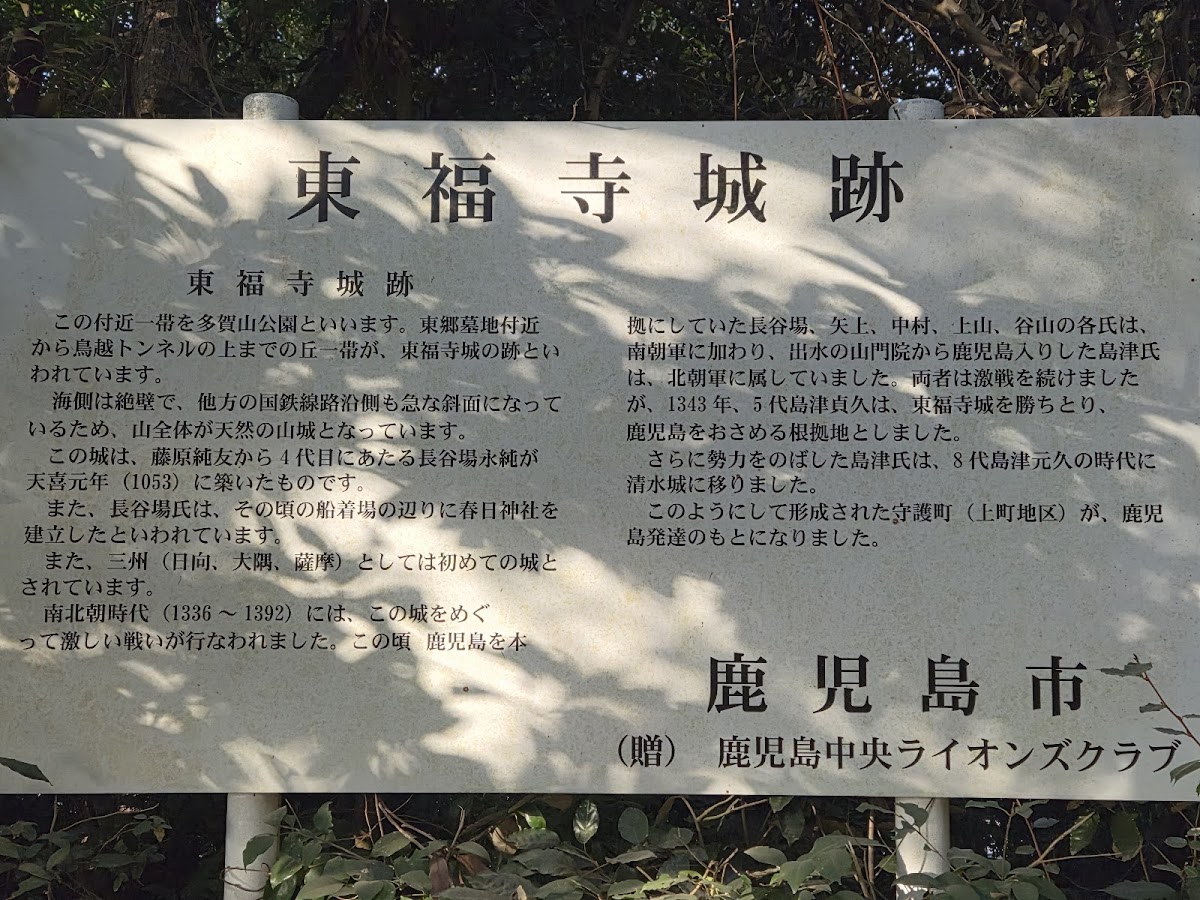
Tofukuji Castle is said to have been built in 1053 (Tenki 1) by Haseba Nagazumi, who claimed to be a descendant of Fujiwara no Sumitomo four generations later, after he fled to Satsuma Province. This castle is considered the first castle built in the three provinces of Satsuma, Osumi, and Hyuga, and occupies an extremely important position in the history of castles in southern Kyushu.
Because it was built by Haseba Nagazumi, it was initially called “Haseba Castle.” It is also known by the alternative name “Hamasaki Castle” due to its proximity to the Hamasaki area. From the late Heian period to the Kamakura period, it functioned as the residence of the local powerful families, the Haseba and Yagami clans.
The Nanboku-cho Period and the Shimazu Clan’s Entry
The most important turning point in the history of Tofukuji Castle was the events of the Nanboku-cho period. In 1341 (Ryakuō 4 / Kōkoku 2), Shimazu Sadahisa, the fifth head of the Shimazu clan and governor of Satsuma Province, sided with the Northern Court and captured Tōfukuji Castle, which was held by the Yagami clan, the Kagoshima district magistrates of the Southern Court.
At this time, the Shimazu clan’s base was in Izumi, but by capturing Tōfukuji Castle, they succeeded in gaining a foothold in Satsuma and Ōsumi Provinces. Sadahisa summoned his fourth son, Shimazu Ujihisa (the sixth head of the Shimazu clan), who was at Shibushi Castle, and had him reside at Tōfukuji Castle, making it the base for governing Satsuma and Ōsumi.
This capture significantly expanded the Shimazu clan’s power base in southern Kyushu. Tōfukuji Castle holds special significance in the history of the Shimazu clan as the starting point of their conquest of southern Kyushu.
Relocation to Shimizu-yama Castle and its Role as a Reserve Castle
In 1387 (the first year of the Kakei era and the fourth year of the Genchū era), the Shimazu clan further expanded their power and built Shimizu-yama Castle, moving their main base there. However, Tōfuku-ji Castle was not abandoned and continued to play an important military role as a “reserve castle” for Shimizu-yama Castle.
A reserve castle refers to a castle used for retreat when the main castle is under attack or for waiting for reinforcements. Tōfuku-ji Castle, with its strategically advantageous location overlooking Kinkō Bay, played a crucial role in supporting Kagoshima’s defense system in conjunction with Shimizu-yama Castle.
From the Sengoku Period to the Early Edo Period
During the Sengoku period, Shimazu Takahisa built Uchijō (a square-shaped mansion) and moved his residence there, but Tōfuku-ji Castle continued to function as a “reserve castle.” Uchijō served as the political center, while Tōfuku-ji Castle was positioned as a military stronghold.
The Shimazu clan grew to become the largest power in Kyushu throughout the Sengoku period, and at one point controlled almost the entire region. Throughout this process, Tofukuji Castle continued to function as one of the Shimazu clan’s strongholds.
In 1602 (Keicho 7), when Shimazu Tadatsune (later Shimazu Iehisa) moved his residence to Kagoshima Castle (Tsurumaru Castle), Tofukuji Castle ceased to serve its purpose and was finally abandoned. This marked the end of its long history, spanning approximately 550 years since its construction in the Heian period.
Structure and Layout of Tofukuji Castle
Location and Topographical Characteristics
Tofukuji Castle is a mountain castle built on a hill 58.9 meters above sea level, boasting a strategically advantageous location facing Kinko Bay. Its height of approximately 53 meters provides a balanced design, ensuring defensive advantages while reducing the burden of climbing to the castle.
From the castle, one can enjoy a beautiful panoramic view of Kinko Bay, with the view of Sakurajima being particularly magnificent. This excellent view held significant importance not only for its scenic beauty but also for its military surveillance function. Its location, allowing for early detection of approaching enemies from the sea, was extremely advantageous in the Middle Ages when maritime traffic was crucial.
Castle Structure
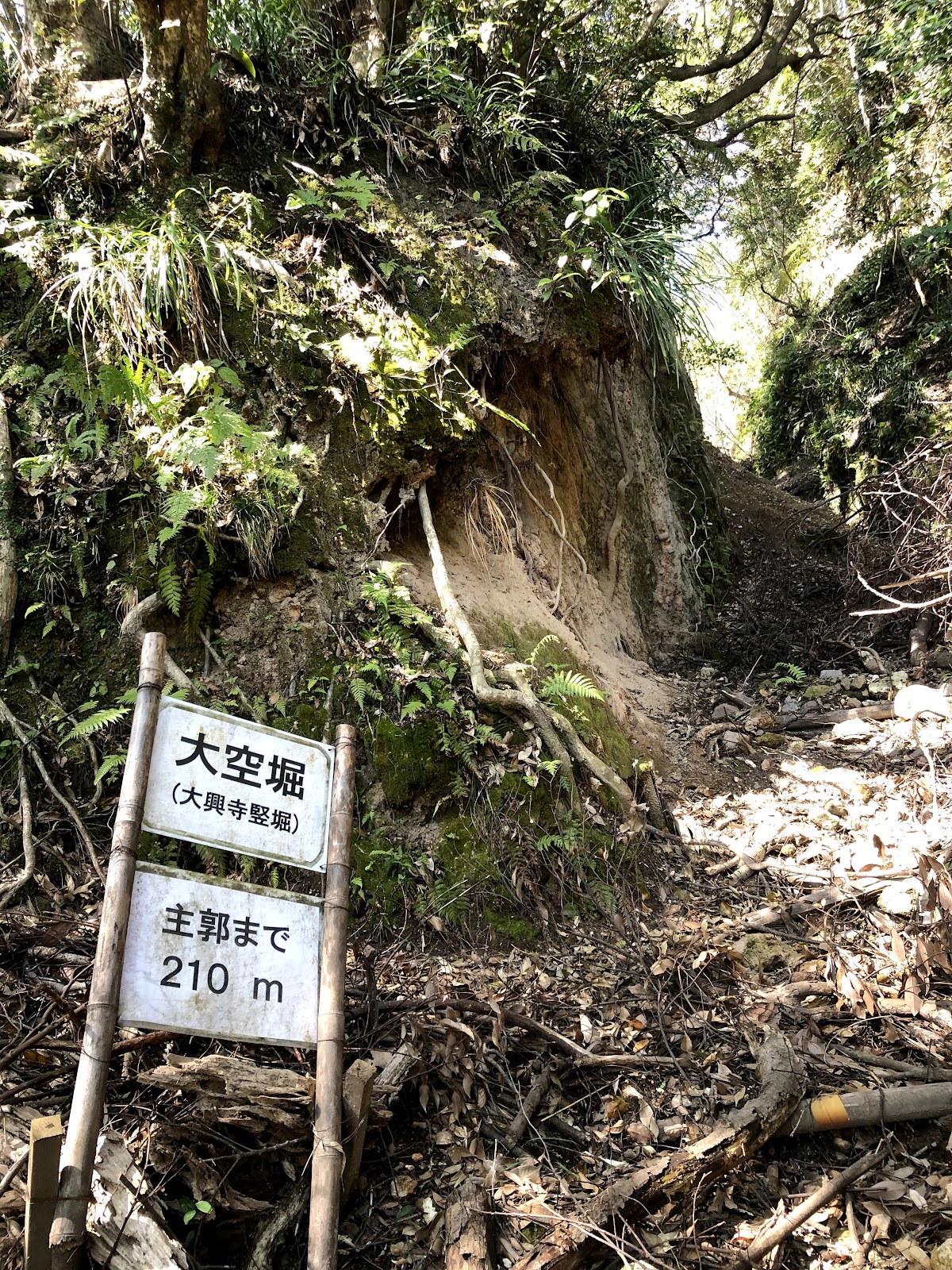
Tofukuji Castle had a typical structure for a mountain castle. It is believed that multiple baileys were arranged around the main bailey, and defensive structures such as earthworks and moats were constructed.
Even today, careful observation of the terrain reveals traces of baileys and earthworks. The main bailey area, in particular, retains a relatively flat terrain, suggesting the presence of buildings there in the past.
There are various theories regarding its relationship with Hamasaki Castle; one theory suggests it was a bailey of Tofukuji Castle. The relative locations and structures of the two castles suggest the possibility of them forming an integrated defensive system.
Current State of the Remains
Currently, the Tofukuji Castle site is maintained as Tagayama Park, and due to extensive alterations, it is difficult to fully restore its original appearance. However, the undulations of the terrain and remnants of some earthworks still give a glimpse of the former castle.
A stone monument marking the “Tofukuji Castle Ruins” stands within the park, indicating that this is a historical castle site. The presence of a bronze statue of Togo Heihachiro is related to Togo’s background as a samurai from the Satsuma Domain.
Highlights of Tofukuji Castle
Views of Kinko Bay and Sakurajima
One of the greatest attractions of visiting the Tofukuji Castle ruins is the magnificent view of Kinko Bay and Sakurajima. The view from an altitude of approximately 59 meters is breathtaking, and on a clear day, you can see the majestic figure of Sakurajima up close.
This view is not merely a tourist attraction; it is also important for understanding the former military function of the castle. This location, which allowed for monitoring a key point of maritime traffic, is one of the reasons why Tofukuji Castle was considered important for a long period of time.
Tofukuji Castle Ruins Monument
The Tofukuji Castle Ruins monument, erected within Tagayama Park, is an important marker indicating that this site is a historical castle ruin. Standing before the monument, one can reflect on the long history that spanned from the Heian period to the early Edo period.
Togo Heihachiro Bronze Statue
Within the park stands a bronze statue of Togo Heihachiro, who played a key role in the Battle of Tsushima during the Russo-Japanese War. Togo was a samurai from the Satsuma Domain and one of Kagoshima’s proud historical figures. The placement of this statue at the Tofukuji Castle ruins symbolically connects the history of Satsuma with the history of modern Japan.
The Charms of Tagayama Park
Currently, the castle ruins have been developed into Tagayama Park, a place of relaxation for citizens. The park is lush with greenery and features well-maintained walking paths suitable for strolling. In spring, cherry blossoms bloom, making it a popular spot for cherry blossom viewing.
This place is popular with both locals and tourists, as it offers the opportunity to enjoy both historical exploration and nature walks.
Traces of Earthworks and Enclosures
With careful observation, you can see traces of earthworks and topographical undulations that appear to be the remains of enclosures within the park. These remains are valuable traces that allow us to imagine the appearance of the castle in its heyday.
For castle enthusiasts, bringing a topographic map and imagining the layout while strolling around will allow for a deeper understanding of the structure of Tofukuji Castle.
Access to Tofukuji Castle
Access by Public Transportation
By JR
- Approximately 20 minutes on foot from JR Kagoshima Main Line “Kagoshima Station”
- Head northwest from Kagoshima Station towards Shimizu-cho
By Tram/Bus
- Accessible on foot from the nearest tram stop using the Kagoshima City Tram
- If using a local bus, get off at a bus stop around Shimizu-cho
Access by Car
From Kagoshima City Center
- Approximately 10 minutes by car from Kagoshima City Center
- Accessible via National Route 10
From Kyushu Expressway
- Approximately 20 minutes from Kagoshima Kita IC
- Approximately 15 minutes from Kagoshima IC
Parking
- There is parking space at Tagayama Park, but the number of spaces is limited
- It may be crowded on holidays and during cherry blossom season, so please consider using public transportation.
Address and Map Information
Location 891-0102 Tanoura, Shimizu-cho, Kagoshima City, Kagoshima Prefecture
GPS Coordinates
Entering the latitude and longitude into a map application will allow you to navigate to the exact location. Searching for “Tagayama Park” or “Tofukuji Castle Ruins” will display the location.
Nearby Tourist Attractions and Related Historical Sites
Shimizu-yama Castle
Shimizu-yama Castle, where the Shimazu clan relocated their base from Tofukuji Castle, is also located within Kagoshima City. It’s a historical site worth visiting along with Tofukuji Castle when tracing the history of the Shimazu clan. Shimizu-yama Castle was a larger fortress than Tofukuji Castle and had a more developed layout.
Kagoshima Castle (Tsurumaru Castle)
Kagoshima Castle (Tsurumaru Castle), the final residence of the Shimazu clan, is located in the center of Kagoshima City. Currently, it is housed as the Kagoshima Prefectural Historical Materials Center Reimeikan, where you can learn about the history of the Shimazu clan and the Satsuma Domain. By tracing the shifts in the Shimazu clan’s bases—from Tofukuji Castle to Shimizu-yama Castle, Uchijo Castle, and finally Kagoshima Castle—you can experience the history of the Shimazu clan’s development.
Sengan-en Garden (Iso Garden)
Built as a villa for the Shimazu clan, Sengan-en Garden is a beautiful Japanese garden that incorporates Kinko Bay and Sakurajima volcano as its borrowed scenery. It was registered as a World Cultural Heritage site in 2015 as part of the “Sites of Japan’s Meiji Industrial Revolution.” It’s a must-see spot for understanding the cultural aspects of the Shimazu clan.
Sakurajima
While the view of Sakurajima from the Tofukuji Castle ruins is exceptional, actually visiting Sakurajima is also highly recommended. It’s accessible in about 15 minutes by ferry, allowing you to experience the power of the active volcano up close.
Terukuni Shrine
Terukuni Shrine, dedicated to Shimazu Nariakira, is an important shrine located in the heart of Kagoshima City. It’s an important spot for understanding the history of the Satsuma Domain, which played a significant role from the end of the Edo period to the Meiji Restoration.
Points to Note and Recommended Time to Visit
Best Time to Visit
Spring (March-May)
The cherry blossoms in the park are in full bloom during cherry blossom season. The best time to visit is especially from late March to early April. The weather is mild, making it an ideal time for a stroll.
Autumn (October-November)
The autumn foliage is also beautiful, and the stable weather makes it a suitable time to visit. The summer heat has subsided, making for a comfortable stroll.
Winter (December-February)
Kagoshima has a relatively mild climate, so it is possible to visit even in winter. The air is clearer, allowing for a more vivid view of Sakurajima.
What to Wear and Bring When Visiting
- Please wear comfortable walking shoes (the park is paved, but there are some uneven areas).
- In summer, please bring a hat, sunscreen, and drinks.
- Even in winter, Kagoshima is relatively mild, but it can be windy, so it’s a good idea to bring a jacket.
- We recommend bringing a camera to photograph the view of Sakurajima.
Estimated Visiting Time
If you only want to see the castle ruins, it will take about 30 minutes. However, if you want to stroll around the park and enjoy the views, it’s best to allow about an hour. If you plan to visit other historical sites in the area, we recommend scheduling a half-day to a full-day visit.
Historical Significance of Tofukuji Castle
The Starting Point of the Shimazu Clan’s Development
The most important historical significance of Tofukuji Castle is that it was the starting point for the Shimazu clan’s conquest of southern Kyushu. In 1341, Shimazu Sadahisa captured Tofukuji Castle, which allowed the Shimazu clan to gain a foothold in Satsuma and Osumi provinces. For the Shimazu clan, who had previously been based in Izumi, the acquisition of Tofukuji Castle, located in the heart of Kagoshima County, marked a decisive turning point in their expansion of power in southern Kyushu. Using this castle as their base, the Shimazu clan grew to become the largest daimyo in Kyushu during the Sengoku period.
A Key Base During the Nanboku-cho Period
During the Nanboku-cho period, Tofukuji Castle was a crucial base fought over by the Shimazu clan (Northern Court) and the Yagami clan (Southern Court). The fate of this castle significantly impacted the balance of power between the Northern and Southern Courts in southern Kyushu.
The Shimazu clan’s capture of Tofukuji Castle established the Northern Court’s dominance in Satsuma Province, ultimately determining the political situation in southern Kyushu.
Significance as the First Castle in the Three Provinces
Tofukuji Castle is considered the first castle built in the three provinces of Satsuma, Osumi, and Hyuga. This is not merely a legend, but holds significant importance as the starting point of castle history in southern Kyushu.
From the late Heian period to the Kamakura period, samurai groups rose to prominence throughout Japan, and castles and fortresses were built in various locations. In southern Kyushu, Tofukuji Castle was a pioneer in this regard.
Long-Term Use
One remarkable aspect of Tofukuji Castle is that it was used continuously for approximately 550 years, from its construction in 1053 during the Heian period until its abandonment in 1602 during the early Edo period.
Such a long period of use is rare throughout Japan, demonstrating the superior location and structure of this castle. While its role shifted from a main castle to a reserve castle and then a final stronghold over time, it consistently maintained an important position in the Shimazu clan’s defense system.
History of Tofukuji Castle and the Shimazu Clan
Origins of the Shimazu Clan
The Shimazu clan was a prestigious samurai family descended from Shimazu Tadahisa, who was appointed governor of Satsuma, Osumi, and Hyuga provinces by Minamoto no Yoritomo during the Kamakura period. They are said to have originated from the Korezumi clan and later adopted the Fujiwara surname.
From the Kamakura period to the Muromachi period, the Shimazu clan grew to become the largest power in southern Kyushu, and the acquisition of Tofukuji Castle was of extremely important significance in this process.
Shimazu Sadahisa and the Capture of Tofukuji Castle
Shimazu Sadahisa, the fifth head of the Shimazu clan, sided with the Northern Court during the Nanboku-cho period and actively pursued territorial expansion. The capture of Tofukuji Castle in 1341 was one of Sadahisa’s most important military successes.
After capturing Tofukuji Castle, Sadahisa had his fourth son, Shimazu Ujihisa, reside in the castle, making it the base for governing Satsuma and Osumi provinces. This greatly strengthened the Shimazu clan’s power base and laid the foundation for their later development.
The Shimazu Clan in the Sengoku Period
In the Sengoku period, the Shimazu clan reached its peak during the time of Shimazu Takahisa and Shimazu Yoshihisa. At one point, the Shimazu clan controlled almost the entire Kyushu region, reigning as the largest power in Kyushu until Toyotomi Hideyoshi’s Kyushu campaign.
During this period, Tofukuji Castle ceased to be a major stronghold, but it continued to play a vital role as a defensive outpost. Tofukuji Castle remained a crucial element throughout the history of the Shimazu clan’s development.
The Satsuma Domain in the Edo Period
During the Edo period, the Shimazu clan ruled the Satsuma Domain, a large domain with over 720,000 koku (a unit of land measurement). Although Tofukuji Castle was abandoned after the completion of Kagoshima Castle (Tsurumaru Castle) in 1602, its historical role remains deeply etched in the history of the Satsuma Domain.
At the end of the Edo period, the Satsuma Domain played a central role in the Meiji Restoration, making a significant contribution to the formation of modern Japan. Tofukuji Castle, as a castle marking the starting point of the Satsuma Domain’s long history, continues to hold historical significance.
Summary
Tofukuji Castle (Kagoshima City, Kagoshima Prefecture) is a historical mountain castle built during the Heian period and used for approximately 550 years until the early Edo period. It is considered the first castle built in the three provinces of Satsuma, Osumi, and Hyuga, and occupies an important position in the history of castles in southern Kyushu.
In particular, Shimazu Sadahisa’s capture of Tofukuji Castle during the Nanboku-cho period marked the starting point of the Shimazu clan’s conquest of southern Kyushu and had a decisive impact on their subsequent development. Even after the relocation to Shimizu-yama Castle, it continued to be used for a long time as a reserve and final stronghold, playing a crucial role in the Shimazu clan’s defense system.
Currently, it is maintained as Tagayama Park, a place of relaxation for citizens where they can enjoy magnificent views of Kinko Bay and Sakurajima. While the remains of the castle are limited, the stone monument marking the “Tofukuji Castle Site” and the topography allow us to imagine the former appearance of the castle.
Easily accessible from central Kagoshima City, and surrounded by numerous historical sites associated with the Shimazu clan, such as Shimizu-yama Castle and Kagoshima Castle, Tofuku-ji Castle is a must-see for anyone interested in the history of the Shimazu clan or Satsuma, as well as castle enthusiasts and history buffs.
Enjoying the view of Sakurajima while reflecting on the Shimazu clan’s conquest of Kyushu—this is the romantic historical experience that Tofuku-ji Castle offers.