Taniyama Castle (Kagoshima Prefecture) Complete Guide: The Full Picture and Highlights of a Mountain Castle Marking the History of Satsuma
What is Taniyama Castle?: A Mountain Castle Telling the Story of Satsuma’s History
Taniyama Castle is a medieval mountain castle located in Shimofukumoto-cho, Kagoshima City, Kagoshima Prefecture. Also known as Chijiwa Castle, Taniyama Honjo, Atago Castle, Yumiba-ga-jo, and Jin-no-o Castle, it was built on a hill approximately 50 meters above sea level. From the Kamakura period to the Sengoku period, it played a crucial role as a central military base in Taniyama County, Satsuma Province.
Although currently located close to Kagoshima city, it is cherished as a valuable historical site where history and nature harmonize, and has been selected as one of Kagoshima’s 100 Natural Wonders. From the castle ruins, one can enjoy a panoramic view of Kagoshima city and Kinko Bay, conveying its strategic importance in the past.
History of Taniyama Castle: From the Kamakura Period to the Sengoku Period
Kamakura Period: Built as the Residence of the Taniyama Clan
The history of Taniyama Castle dates back to 1203 (Kennin 3). In this year, Taniyama Nobutada, a member of the Satsuma Taira clan, was appointed to the position of district magistrate of Taniyama County and is said to have built the main castle. The Taniyama clan ruled this area for approximately 200 years as development lords, using Taniyama Castle as their residence.
The Taniyama clan maintained their own power as a powerful local lord in Satsuma Province. The castle had a complex defensive system consisting of three castles: the main castle, Yumiba Castle, and Jinno-o Castle, boasting a robust structure utilizing dry moats and natural eroded valleys.
Nanboku-cho Period: A Stage of Fierce Battles
Taniyama Castle plays a major role on the historical stage during the Nanboku-cho period. During this period, Prince Kaneyoshi, a supporter of the Southern Court, traveled to Kyushu and entered Satsuma Province, seeking refuge with the Taniyama clan. Taniyama Takanobu, the head of the Taniyama clan, sided with the Southern Court and fiercely opposed the Shimazu clan, who supported the Northern Court.
During the Nanboku-cho period, Taniyama Castle became one of the Southern Court’s important strongholds in Satsuma. Taniyama Takanobu fought against the Shimazu clan in support of Prince Kaneyoshi, but the Shimazu clan’s power gradually grew. During this time, Taniyama Castle was the stage for numerous battles and functioned as a crucial castle influencing the political situation of Satsuma.
Oei Era: Surrender to the Shimazu Clan
After a long period of conflict, in 1397 (Oei 4), the Taniyama clan surrendered to Shimazu Motohisa. This marked the end of approximately 200 years of Taniyama clan rule, and Taniyama County became a direct territory of the Shimazu clan. From then on, a local administrator (jitō) dispatched by the Shimazu clan was appointed to Taniyama Castle. ### Sengoku Period: Internal Conflicts within the Shimazu Clan and Taniyama Castle
During the Sengoku period (Warring States period), Taniyama Castle became the stage for succession disputes and internal conflicts within the Shimazu clan. As the Shimazu main family gained control of southern Satsuma, conflicts frequently occurred around Taniyama Castle. During this period, Taniyama Castle continued to function as an important military base for the Shimazu clan’s control of southern Satsuma.
Even during the Shimazu clan’s unification of the three provinces of Satsuma, Osumi, and Hyuga, Taniyama Castle maintained its strategic importance.
Structure and Characteristics of Taniyama Castle
Three-Castle Structure: Honjo, Yumiba Castle, and Jinnoo Castle
The most distinctive feature of Taniyama Castle is its complex defensive system, consisting of three castle fortifications: Honjo (Chijiwa Castle), Yumiba Castle, and Jinnoo Castle. These were separated by dry moats and natural eroded valleys, and while each had an independent defensive function, they formed a single castle complex as a whole.
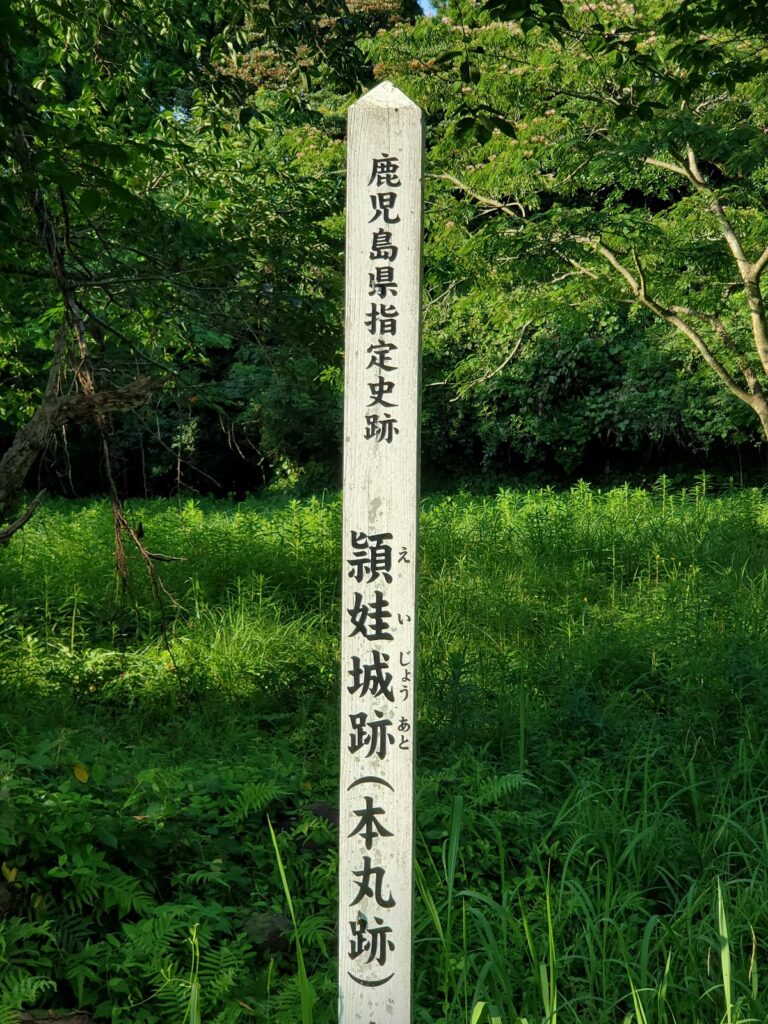
Honjo (Chijiwa Castle) is the main enclosure that forms the core of Taniyama Castle, located on the top of a hill 49.7 meters above sea level. This is believed to be the site of the Taniyama clan’s residence and was the most important defensive stronghold.
Yumiba Castle functioned as an outpost responsible for the defense of Honjo and may have also been used as an archery training ground. Its name suggests it was a base for long-range attacks using bows and arrows.
Jinno-o Castle was similarly established as an outer fortress protecting Honjo, playing a role in detecting and defending against enemy invasions at an early stage.
Defensive Structures: Utilization of Dry Moats and Natural Terrain
Taniyama Castle is a mountain castle that skillfully utilizes the natural terrain. Dry moats were dug between each castle enclosure, and natural eroded valleys were used as defensive lines, making it difficult for attackers to penetrate.
The steep slopes of the hill also functioned as natural barriers, creating a structure that allowed for effective defense even with limited forces. These features demonstrate typical construction techniques of medieval mountain castles and are valuable remains for understanding the level of military technology at the time.
Strategic Location
The location of Taniyama Castle is militarily advantageous. From a hill approximately 50 meters above sea level, it offered panoramic views of the surrounding area, allowing for early detection of enemy movements. Furthermore, its proximity to Kinko Bay enabled monitoring of maritime traffic.
Taniyama is located in the southern part of Satsuma Province and was a crucial transportation hub to the Osumi Peninsula and southern Satsuma. This geographical condition was a major factor in making Taniyama Castle an important military base in Satsuma.
Highlights and Current Status of Taniyama Castle
Remains of the Castle Site
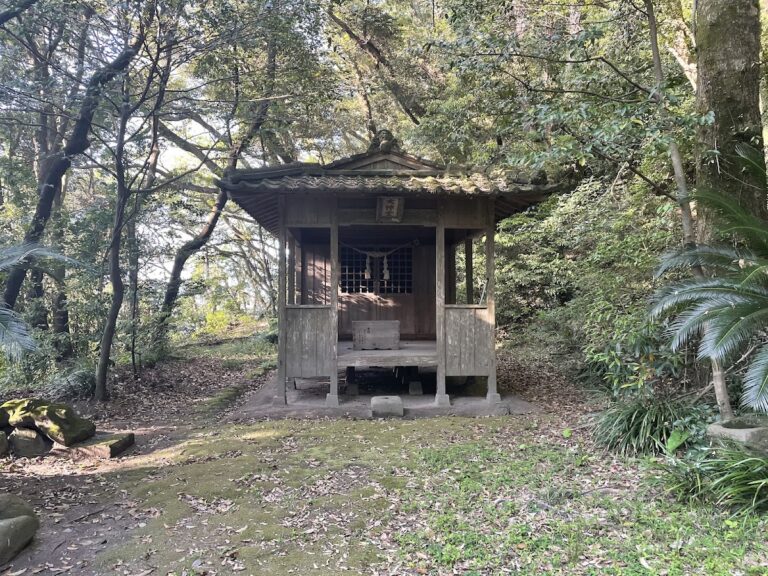
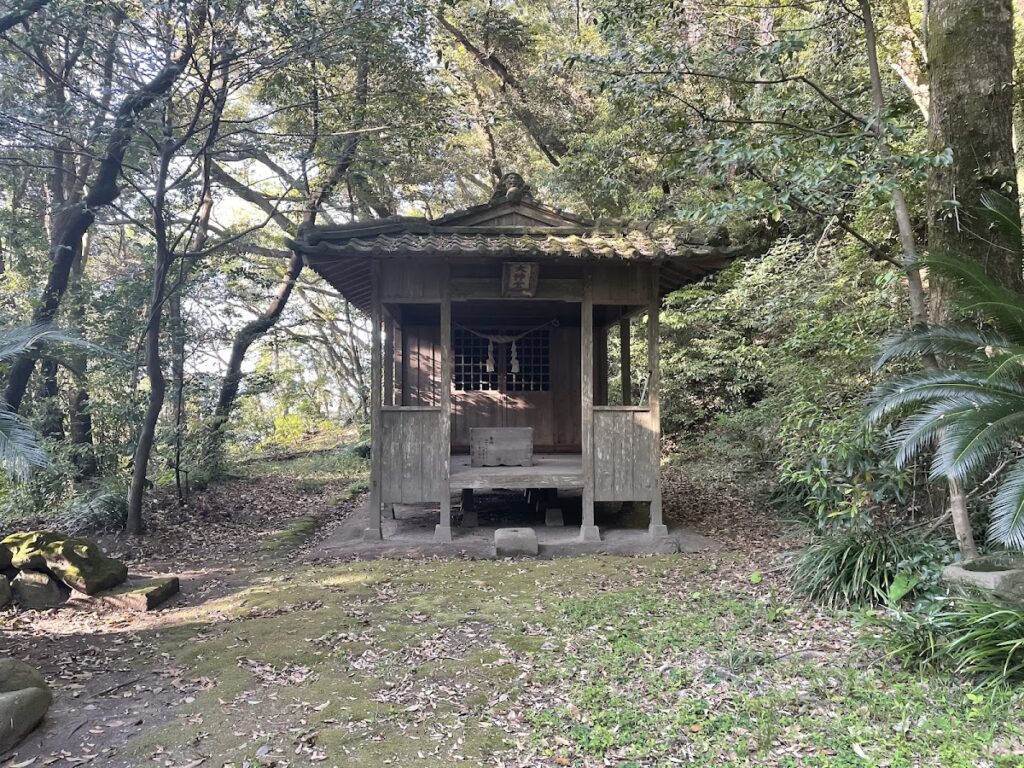
The current Taniyama Castle site contains scattered remains that retain the appearance of a medieval mountain castle. A flat enclosure remains at the top of the main castle site, suggesting the former residence. Traces of dry moats can also be found in some areas, providing clues to understanding the castle’s defensive structure.
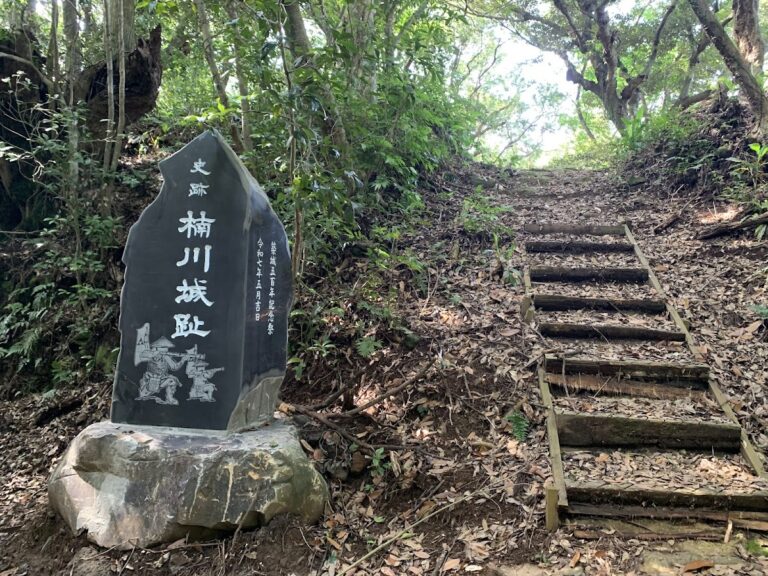
An information board is installed at the entrance to the castle, where visitors can read detailed explanations about the history and structure of Taniyama Castle. This board is a valuable source of information for visitors to understand the historical background of the castle.
Natural Environment: Kagoshima’s Top 100 Natural Sites
Taniyama Castle Ruins have been selected as one of Kagoshima’s Top 100 Natural Sites, recognizing their value not only as a historical heritage site but also as a natural environment conservation area. Rich vegetation spreads around the castle ruins, allowing visitors to enjoy nature throughout the seasons.
Especially in spring, cherry blossoms bloom, making the castle ruins a popular spot for cherry blossom viewing. This space, where history and nature harmonize, offers visitors peace and learning opportunities.
View: Kagoshima City and Kinko Bay
The view from the castle ruins is another major attraction of Taniyama Castle. From the top, you can enjoy a panoramic view of Kagoshima City and Kinko Bay, and on clear days, you can even see the majestic Sakurajima volcano. This view allows you to experience the strategic perspective of the era when the Taniyama clan ruled this land.
Taniyama Foothills and Samurai Residences
The Outer Castle System and Taniyama Foothills
The existence of Taniyama Foothills is indispensable when discussing the history of Taniyama Castle. After Taniyama became a direct territory of the Shimazu clan, the Outer Castle (Tojo) system was established in this area. The Outer Castle system consisted of local administrative centers established by the Shimazu clan throughout their territory, forming samurai settlements called Fumoto (foothills).
Taniyama Foothills is a region with a history of transformation from the medieval Taniyama Castle to a samurai settlement in the early modern period. A Shimazu clan jito (land steward) was stationed here, and it functioned as a base for governing the surrounding area.
Samurai Residence Townscape
A townscape of samurai residences formed in Taniyama Foothills, and some of it remains today. The remains of the residences, surrounded by stone walls and hedges, are a valuable legacy that conveys the samurai culture of the Satsuma Domain.
The townscape at the foot of Taniyama is one of the components of Kagoshima’s Japan Heritage site, “The Town Where Satsuma Samurai Lived – Walking Through the Samurai Residences at the Foot of the Mountain,” and is highly valued for its historical significance. Visiting it together with the Taniyama Castle ruins allows for a comprehensive understanding of Taniyama’s history from the medieval to the early modern period.
Access and Visiting Guide
Location
Address: Shimofukumoto-cho, Kagoshima City, Kagoshima Prefecture
Access by Public Transportation
Taniyama Castle ruins can be accessed by public transportation.
If using the JR Ibusuki-Makurazaki Line, the nearest station is Jigenji Station. The castle ruins are within walking distance from the station, taking approximately 15-20 minutes. Jigenji Station is located a few stops south of Kagoshima-Chuo Station, making access relatively easy.
If using a city bus, take a bus bound for Taniyama, get off at the nearest bus stop, and then walk to the castle ruins. ### Access by Car
If traveling by private car, head south on National Route 226 from downtown Kagoshima City towards Taniyama. Parking is limited around the castle ruins, so using public transportation is recommended.
If using a car navigation system, searching for “Taniyama Castle Ruins” or “Shimofukumoto-cho, Kagoshima City” is recommended.
Visiting Hours and Precautions
For a visit to Taniyama Castle Ruins, including climbing up and exploring the ruins, allow approximately 45 minutes to 1 hour. Since the castle ruins are located on a mountaintop, a certain level of physical fitness is required.
Notes for Visitors:
- We recommend wearing comfortable shoes and clothing.
- In summer, bring insect repellent, a hat, and drinking water.
- Be careful as the ground can be slippery during and after rain.
- As the castle ruins are a historical site, please be considerate and avoid damaging the remains.
Nearby Tourist Attractions
When visiting Taniyama Castle Ruins, you can make your historical exploration more fulfilling by also visiting nearby tourist attractions.
Taniyama Foothills Samurai Residences: A group of samurai residences located close to Taniyama Castle, where you can experience the samurai culture of the Satsuma Domain.
Jigenji Park: A park known for its cherry blossoms, it is bustling with many visitors in spring.
Kagoshima City Center: Heading north from Taniyama, you will reach the city center around Kagoshima Chuo Station, which offers convenient access to major Kagoshima tourist attractions such as Sakurajima and Sengan-en Garden.
The Relationship Between Taniyama Castle and the Shimazu Clan
The Shimazu Clan’s Rule of Southern Satsuma
The history of Taniyama Castle is closely intertwined with the history of the Shimazu clan, a prestigious family of Satsuma. After the Taniyama clan surrendered to the Shimazu clan during the Nanboku-cho period, Taniyama became an important base of control for the Shimazu.
The surrender of the Taniyama clan by Shimazu Motohisa was a crucial turning point in the Shimazu clan’s control of southern Satsuma. From then on, Taniyama Castle functioned as a military and administrative base for the Shimazu clan’s rule of southern Satsuma.
The Shimazu Clan and Taniyama in the Sengoku Period
During the Sengoku period, the Shimazu clan expanded their power with the aim of unifying the three provinces of Satsuma, Osumi, and Hyuga. In this process, Taniyama Castle played an important role as a base for military operations in southern Satsuma.
Even during the internal conflicts of the Shimazu clan, known as the “Shimazu Succession Struggle,” the area around Taniyama Castle frequently became a battlefield. Through these conflicts, the Shimazu clan gradually grew into a unified and powerful Sengoku daimyo.
Establishment of the Outer Castle System
In the early modern period, the Shimazu clan established the Outer Castle System for governing their territory. Under this system, the foot of Taniyama was formed, and a local administrator (jitō) was appointed to govern the surrounding area. This system transformed Taniyama from a military base to an administrative center.
The Outer Castle System was a unique governing system of the Satsuma Domain. Samurai gathered at the foot of various mountains, engaging in agriculture during peacetime and being mobilized as military force in times of emergency. The Taniyama foot of the mountain played a part in this system, supporting the governance of the Satsuma Domain.
Cultural Value of Taniyama Castle
Japan Heritage and Taniyama
The Satsuma samurai residence district “Fumoto,” including the Taniyama foot of the mountain, was designated a Japan Heritage site in 2018 as “The Town Where Satsuma Samurai Lived – Walking Through the Samurai Residence District ‘Fumoto’.” This recognized the high value of the Satsuma Domain’s unique Outer Castle System and the resulting townscape in the foot of the mountain to Japanese history and culture. The Taniyama Castle ruins are a crucial element in this Japanese Heritage story, demonstrating the historical continuity from the medieval to the early modern period. Preserving and utilizing the castle ruins and the surrounding foothills as a whole allows for the conveyance of the overall picture of Satsuma’s samurai culture.
Local Historical Education Resources
The Taniyama Castle ruins are also utilized as a site for local historical education. Local elementary and junior high schools provide opportunities for students to visit the Taniyama Castle ruins as part of their local history studies.
With the provision of explanatory signs and directional markers, an environment has been created where visitors can learn independently, making it a historical site open not only to history enthusiasts but also to the general public and tourists.
Current Status and Challenges of Taniyama Castle Research
Archaeological Surveys
Several archaeological surveys have been conducted on the Taniyama Castle ruins. However, many aspects of the castle’s overall structure and detailed changes remain unclear.
Further detailed excavation and surveying are expected to reveal more about Taniyama Castle’s construction techniques, defensive systems, and living spaces.
Balancing Preservation and Utilization
Balancing the preservation of historical sites with tourism is a challenge faced by many historical sites, not just Taniyama Castle. While an increase in visitors can revitalize the region, it also increases the risk of damage to the remains.
A sustainable preservation and utilization system is needed, including the development of appropriate viewing paths, the installation of guide signs, and regular maintenance.
Utilization of Digital Technology
In recent years, efforts to utilize digital technology for the preservation and public access of historical heritage have been progressing. By utilizing new technologies such as 3D scanning to record remains and VR/AR to recreate the castle’s appearance in its heyday, it becomes possible to convey the value of Taniyama Castle to a wider audience.
Summary: The Historical Significance of Taniyama Castle
Taniyama Castle is an important mountain castle that witnessed the history of Satsuma Province from the Kamakura period to the Sengoku period. Taniyama Castle played a diverse historical role, serving as the residence of the Taniyama clan for approximately 200 years, a battleground during the Nanboku-cho period, and a base for the Shimazu clan’s control of southern Satsuma.
Its unique structure, composed of three castles, its defensive system skillfully utilizing the natural terrain, and its location with excellent views are typical characteristics of a medieval mountain castle. The remaining structures are valuable historical materials that convey the castle-building techniques and military ideology of the time.
Taniyama Castle Ruins are highly regarded for their natural environment, having been selected as one of Kagoshima’s 100 Best Natural Sites. This place, where history and nature harmonize, is a place of relaxation and historical learning for the citizens of Kagoshima.
When you visit Kagoshima, be sure to visit Taniyama Castle Ruins and reflect on the history of Satsuma. Its convenient access, within walking distance from Jigenji Station, is another attractive feature. While enjoying the views from the castle ruins, you can experience the history of Taniyama that has continued for approximately 800 years.
Taniyama Castle is an important historical site that is indispensable when talking about the history of Satsuma, and it is hoped that it will continue to be carefully preserved and utilized as a treasure of the region and as a historical heritage of Japan.